Choose a diesel generator by listing the equipment you need to keep running, checking its startup demands, and matching the generator’s rating to how long and how often it will operate. There is no reliable one-size-fits-all kilowatt rating for a “typical” home or small business. Before buying, also settle the installation method, fuel storage, safety arrangements, and local requirements.
Start with the backup job—not a generator size
A generator that can run a few essential circuits may be a poor fit for a site that expects to operate most of its equipment. First decide what must remain on during an outage, what can be switched off, and whether the generator is for occasional emergency use or more regular operation. For a business, include the vital systems and equipment that allow it to operate safely and limit disruption.
Make an essential-load list
List each appliance, machine, or system you expect to power. Separate essential loads from equipment you could leave off or operate at a different time. Include the equipment’s running demand and its startup demand: motors and other equipment can draw more power when starting than while running. Note which devices may start at the same time, since simultaneous startup affects the capacity the system must supply.
Do not choose a generator from a household label, floor area, or a guess about what a small business “usually” needs. A qualified designer or installer can check the load inventory and proposed operating pattern before you commit to a model.
Free tools Windows power users keep installed
One-click scans. No signup required.
#1 Best Overall

- Robust and Portable: The generator features a sturdy steel frame with an integrated lifting eye, making it easy to transport and secure on the jobsite. It's a reliable power source for both remote locations and professional use
- Clean and Smooth Operation: With only 6% total harmonic distortion, this generator ensures the smooth operation of tools, appliances, and even sensitive electronics, offering peace of mind for your power needs
- Extended Runtime: The XD5000E from Generac features a 12-gallon diesel fuel tank provides an impressive run-time of 32.4 hours at 50% load, minimizing the need for frequent refueling and ensuring uninterrupted power supply for extended periods
- Industrial-Grade Diesel Engine: Equipped with a Yanmar LW Series 435cc air-cooled direct injection diesel engine, this generator is built to withstand heavy-duty use and provide reliable performance even in demanding environments
- Durable and Strong: The 1-1/4-inch steel cradle adds strength and durability to the generator, ensuring it can handle the rigors of the job site or other challenging situations. A dependable power source engineered to keep running when you need it most
Decide what can be shed
Load shedding means turning off or delaying nonessential equipment when demand is high. Decide in advance which loads can be dropped, rather than assuming every appliance or machine will run together. This can change the generator capacity and connection design you need.
Understand standby, prime, and continuous ratings
Generator ratings describe different duty applications; they are not interchangeable labels for the same capacity. A DOE-hosted technical primer describes standby sets as backup or emergency units intended for limited outage duration, and distinguishes them from prime and continuous applications. Because that presentation is older, do not treat generic numerical limits from it as current rules for every generator.
Rank #2
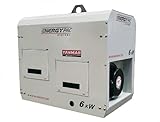
- - Electric Start - Yanmar Heavy Duty L100 9.3HP Industrial 3600 RPM Air Cooled Electric Start Diesel Engine - Recoil Backup - Industrial Generator End - Automatic Voltage Regulator - 3.5 Gallon Fuel Tank (8 Hr Run Time) - Roll bar skid - 12 Volt Starter - Alternator - Control Panel (Key Switch & Low Oil Shutdown) - Receptacle Panel with 120V Duplex - 120V 30A twist lock - 240V 20A Twist lock plug - 12VDC Receptacle (8.3A Battery Charging) - Engine Oil - Fuel & Oil Filters - Battery Included Shop Tested.
| Rating | What it indicates | What to verify before buying |
|---|---|---|
| Standby | A backup or emergency application for outages, rather than an assumption of unrestricted ongoing use. | Permitted operating hours, capacity, load factor, and overload capability in the current manufacturer data sheet and on the rating plate. |
| Prime | A duty category distinct from standby; its suitability depends on the planned operating conditions. | The manufacturer’s stated capacity and operating conditions for the exact model and intended duty. |
| Continuous | A duty category for continuous operation, not a synonym for standby or prime. | The manufacturer’s stated capacity and conditions for continuous use, and whether they match the actual load. |
Ask the seller or installer to identify the rating that applies to your use and show the specification for the exact model. Check capacity, load factor, permitted hours, and overload capability against the nameplate and current manufacturer documentation; a headline kilowatt figure alone does not tell you whether the set is suited to your duty.
Is diesel the right fuel for your site?
Diesel is one option, not a universal recommendation for home or business backup. A sound comparison depends on the location, required loads, operating pattern, fuel arrangements, installation, and applicable rules. Do not assume diesel will be cheaper, quieter, cleaner, or more reliable than another fuel for your particular site without evidence for the models and conditions being compared.
Rank #3

- 13,000 Watts of Reliable Power for Home Power Backup – Keep your home, job site, or RV powered during storms and outages with dual fuel capability and a heavy-duty build.
- Dual Fuel Technology – Gasoline or Propane – Choose between gasoline for maximum power or propane for longer run times and cleaner emissions, ensuring fuel flexibility in any emergency.
- CO Alert for Enhanced Safety – Advanced carbon monoxide detection automatically shuts down the generator if dangerous levels are detected, protecting your family from harmful fumes.
- Push-Button Electric Start & Intuitive Control Panel – Easily start your generator with the push of a button, and quickly switch fuel types using the front-facing fuel selector.
- Transfer Switch-Ready with 50-Amp Outlet – Power your entire home by connecting directly to a transfer switch, thanks to the 50A heavy-duty outlet.
Compare diesel with the alternatives available to you using the same load and duty assumptions. Evaluate:
- Purchase and installation cost: compare the complete system, not just the generator set.
- Fuel availability and storage: establish how fuel will be obtained and stored, and which local requirements apply.
- Runtime and expected load: use manufacturer data for the model and load you expect, rather than assuming a single runtime figure applies in all conditions.
- Cold-weather provisions: ask what starting arrangements the manufacturer specifies for your climate and site.
- Noise and emissions: check model-specific information and applicable local rules or certification requirements.
- Service and parts: confirm that qualified service and replacement parts are accessible where the generator will be used.
- Maintenance and operating hours: compare the maintenance schedule and permitted duty with your intended use.
Current prices, model availability, warranty terms, emissions certification, and dealer support vary and need to be verified for the specific generator and location. A category listing or broad fuel comparison cannot establish those details for a particular purchase.
Rank #4
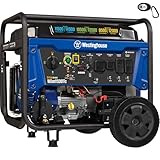
- Perfect as a backup power source for larger homes or a dependable source of portable power
- 14,500 peak watts, 11,500 running watts (gasoline); 13,500 peak watts, 10,500 running watts (propane); 12,000 peak watts, 9,500 running watts (natural gas)
- Powered by a heavy duty 550cc 4-Stroke OHV Westinghouse Engine constructed with a durable cast iron sleeve; Runs for up to 19 hours on a 9.5 gal. fuel tank with built-in fuel gauge; up to 7 hours on a 20 lb. propane tank
- Engineered with low THD, so it's safe for sensitive electronics. Power phones, computers, TVs and more. Stay connected with people, news and entertainment during power outages, or on jobsites and campsites. Durable copper windings help your generator produce cleaner power, run cooler and last longer
- All Westinghouse portable generators are gunctionally tested in the factory and may contain minimum residual oil and/or fuel odor; EPA compliant; Backed by 3-Year limited service, labor, and parts coverage and Nationwide Customer Service Network
Plan the electrical connection and installation
Decide how the generator will connect to the building before buying it. A permanently connected system needs suitable transfer equipment and an installation designed around the building, utility requirements, manufacturer instructions, and applicable electrical and building codes. A portable unit also needs a safe, approved method of powering the intended loads.
OSHA warns: “Never attach a generator directly to the electrical system of a structure (home, office, trailer, etc.) unless a qualified electrician has properly installed the generator with a transfer switch.” Improper connection can put occupants and utility workers at risk. A transfer switch is part of a properly designed connection, not a do-it-yourself shortcut.
Quick wins for a faster PC:
Fix the driver behind crashes, sound loss and screen glitchesFind Drivers →Clear out junk files and repair common Windows errorsFree Scan →Scan for outdated or missing drivers - takes under a minuteDriver Scan →Best Value

- Gasoline: 5300 Running Watts & 6500 Peak Watts; Propane: 4800 Running Watts & 5800 Peak Watts; 4.7 Gallon Fuel Tank with Fuel Gauge; Up to 14.5 Hours of Run Time with 120/240V Volt Selector Switch
- Features One 5–20R 120V 20V Household Duplex Receptacle, One RV-Ready TT-30R 30A Receptacle, and One Transfer Switch Ready L14-30R 30A Receptacle; All Outlets Have Rubber Covers for Added Safety
- Plug-and-Play: Comes with Oil, an Oil Funnel, Propane Hose, Tool Kit, Wheel Kit, and a User’s Manual to Get You Started Right Out of the Box (Minimal Assembly Required)
- Powered by a 274 CC Westinghouse 4-Stroke OHV Engine Featuring a Long-Lasting Cast Iron Sleeve with Automatic Low Oil and Carbon Monoxide (CO) Shutdown
- All Westinghouse Portable Generators are Functionally Tested in the Factory and May Contain Minimum Residual Oil and/or Fuel Odor; EPA Compliant; Backed By 3-Year Limited Service, Labor, and Parts Coverage and Nationwide Customer Service Network
Discuss the site, connection method, transfer equipment, grounding, utility specifications, permits, and local code requirements with a qualified electrician or generator installer. Confirm who is responsible for approvals and inspections before scheduling the work.
Make carbon-monoxide safety part of the purchase decision
Fuel-powered portable generators produce carbon monoxide (CO). The U.S. Environmental Protection Agency says to operate them outdoors, at least 20 feet from buildings, and away from openings. Never operate a portable generator inside a home or garage, on a balcony, or near doors, vents, or windows. Follow the specific generator manual and local fire and electrical guidance as well.
Keep working CO alarms installed. EPA identifies digital display and battery backup as useful alarm features. An alarm is an added warning, not permission to place or operate a generator unsafely. Before purchasing a portable unit, identify a safe outdoor location that meets the distance and opening-clearance guidance; if the site cannot accommodate safe placement, reconsider the setup rather than relying on an alarm to compensate.
Quick Recap
Use this checklist before placing an order
- Write down the loads: identify essential equipment, optional equipment, running demand, startup demand, and which items might start together.
- Set the operating plan: decide which loads can be shed and whether the generator is for occasional standby or more regular operation.
- Confirm the rating: match the duty category to the plan and verify the exact model’s capacity, load factor, permitted hours, and overload capability in current manufacturer information.
- Compare fuel and ownership factors: check fuel supply and storage, runtime at the expected load, cold-weather starting provisions, noise, emissions, service, parts, and maintenance.
- Arrange the installation: have a qualified professional confirm the connection, transfer equipment, site, utility requirements, permits, and applicable codes.
- Check safety arrangements: establish compliant outdoor placement for a portable generator and working CO alarms; follow the model’s instructions.
- Verify the purchase details: confirm current price, availability, warranty, service support, and any required emissions or local approvals for the exact model and location.
Product prices and availability are accurate as of the date/time indicated and are subject to change. Any price and availability information displayed on Amazon at the time of purchase will apply.




