AI adoption is rising, not stopping—but spending and experimentation have moved faster than many organizations’ ability to integrate AI into core work and demonstrate business results. The gap is between investment and reported use on one side, and scaled workflows and measurable value on the other. The available figures use different definitions, so they do not support a single ratio for how far investment is “ahead” of adoption.
What the latest figures say—and what they measure
Three recent indicators illustrate why headlines about an AI boom can coexist with reports of slow organizational change. They measure different things: capital activity, survey respondents’ accounts of organizational use, and a firm-level adoption series.
| Indicator | Reported figure | What it tells you |
|---|---|---|
| Global corporate AI investment | $581.69 billion in 2025, reported by Stanford HAI in its 2026 AI Index. The total includes $344.66 billion in private investment and $214.44 billion in mergers and acquisitions. | Capital activity, including acquisitions—not the number of firms with AI in production or the returns they earn. |
| Organizational use in at least one business function | 88% in 2025, according to the Stanford HAI 2026 AI Index summary of survey data; generative AI use in at least one function was 70%. | Reported use somewhere in an organization. A trial or limited application can qualify; this is not a measure of enterprise-wide integration. |
| Firms reporting AI use | 20.2% in 2025, up from 14.2% in 2024 and 8.7% in 2023, according to the OECD’s 2026 topic page. | A separate firm-level series. Its rate should not be treated as directly comparable to the broader organizational-function survey measure. |
The contrast is not evidence that one of these figures is wrong. “Any use in a business function” and “firms using AI” come from different evidence streams and definitions. The OECD also notes that international comparability needs improvement. Neither series alone establishes whether adoption is deep, sustained or profitable. Stanford HAI’s 2026 AI Index, economy chapter; OECD’s AI topic page.
Are companies using AI at scale?
Not yet, according to the distinction between broad reported use and enterprise-wide scaling in McKinsey’s 2025 survey. About one-third of respondents said their organizations had begun scaling AI programs; nearly two-thirds said they had not begun scaling across the enterprise. McKinsey’s survey was an online survey of 1,993 respondents in 105 nations, fielded June 25–July 29, 2025, with country results weighted by contribution to global GDP. These are respondent reports about their organizations, not audited counts of firms.
Quick wins for a faster PC:
Fix the driver behind crashes, sound loss and screen glitchesFind Drivers →Repair Windows errors before they cause bigger problemsFix Now →Scan for outdated or missing drivers - takes under a minuteDriver Scan →#1 Best Overall
![Arduino® UNO™ Q 4GB [ABX00173]- Hybrid Board, Qualcomm Dragonwing QRB2210 microprocessor (MPU) & STM32U585 Microcontroller(MCU), AI Vision, Voice, IoT, Robotics, Linux Debian OS, Wi-Fi 5, USB-C](https://m.media-amazon.com/images/I/51cl4xygwGL._SL160_.jpg)
- Dual-Brain Hybrid Power: Combines the Qualcomm Dragonwing QRB2210 MPU (Quad-core Arm Cortex-A53 @ 2.0 GHz CPU, Adreno GPU, AI acceleration) and the real-time, low-power STM32U585 MCU for advanced applications like object recognition, voice commands, and motion detection.
- AI & Linux Capabilities: Unlocks AI-powered vision and sound solutions; runs Linux Debian OS for coding in Python and supports the Arduino ecosystem with libraries and Sketches; quick start with Arduino App Lab.
- Advanced Features: Equipped with 4 GB LPDDR4 RAM, 32 GB eMMC built-in storage, ideal for single-board computer (SBC) mode, running multiple simultaneous high-level processes, more complex AI or ML models, extensive logs. Dual-band Wi-Fi 5 (2.4/5 GHz), Bluetooth 5.1, and high-speed headers for vision, audio, and display peripherals.
- Seamless Expansion & Connectivity: Features the classic UNO form factor for shields compatibility, an 8x13 LED matrix, and a Qwiic connector for easy expansion with Modulino nodes; power and connect via the USB-C connector.
- Intended Use & Development: The perfect platform for prototyping robotics or IoT projects, empowering innovators with a unified development experience to mix Arduino Sketches, Python scripts, and containerized AI models in a single interface.
The survey’s headline finding that almost nine in ten respondents reported regular AI use in at least one business function can therefore sit alongside limited enterprise scaling. A tool may be used by one team, or in a pilot, while the organization has yet to redesign processes, connect systems, set operating controls or extend a proven use case across departments. McKinsey says larger companies are more likely to be scaling, another reason not to assume every organization follows the same path. McKinsey, “The state of AI in 2025”.
How much business value is showing up?
In McKinsey’s 2025 survey, 39% of respondents said AI had some impact on enterprise-level EBIT. Most respondents in that group attributed less than 5% of EBIT to AI. This is self-reported attribution, not causal proof that AI produced the change: it does not isolate AI from other business conditions or establish what would have happened without it.
That distinction matters for personal-finance readers assessing claims about AI’s economic payoff. A company can report use, investment or a promising case study without showing that the technology improved its overall financial performance. A use-case-level saving, an employee productivity estimate, a respondent’s attribution and a measured causal effect are not equivalent forms of evidence.
Rank #2
- Dual-Brain Hybrid Power: Combines the Qualcomm Dragonwing QRB2210 MPU (Quad-core Arm Cortex-A53 @ 2.0 GHz CPU, Adreno GPU, AI acceleration) and the real-time, low-power STM32U585 MCU for advanced applications like object recognition, voice commands, and motion detection.
- AI & Linux Capabilities: Unlocks AI-powered vision and sound solutions; runs Linux Debian OS for coding in Python and supports the Arduino ecosystem with libraries and Sketches; quick start with Arduino App Lab.
- Advanced Features: Equipped with 2 GB LPDDR4 RAM, 16 GB eMMC built-in storage, ideal to develop in PC-connected mode, running the OS, Python scripts, and basic network services (SSH) without a demanding GUI or heavy multitasking; great for lightweight AI and memory-optimized TinyML applications, needing local storage for basic OS and core libraries. Dual-band Wi-Fi 5 (2.4/5 GHz), Bluetooth 5.1, and high-speed headers for vision, audio, and display peripherals.
- Seamless Expansion & Connectivity: Features the classic UNO form factor for shields compatibility, an 8x13 LED matrix, and a Qwiic connector for easy expansion with Modulino nodes; power and connect via the USB-C connector.
- Intended Use & Development: The perfect platform for prototyping robotics or IoT projects, empowering innovators with a unified development experience to mix Arduino Sketches, Python scripts, and containerized AI models in a single interface.
Why investment and use can outpace results
Moving from a demonstration to repeatable operating value requires more than access to a model. OECD and McKinsey publications identify several recurring obstacles; these are reported barriers and enabling conditions, not a single proven explanation for every company’s experience.
Unclear returns make investment hard to prioritize
The OECD’s review of public institutions supporting digital diffusion says uncertainty about return on investment is a critical obstacle firms cite when considering AI. If leaders cannot identify a costly, frequent problem and a credible way to measure improvement, pilots can multiply without a clear basis for deciding which deserve further funding. OECD, BCG and INSEAD, “The Adoption of Artificial Intelligence in Firms: New Evidence for Policymaking”.
Data and workflow readiness are not automatic
The same OECD publication identifies low data maturity as a fundamental implementation barrier and notes that managers can struggle to see how AI addresses real workplace problems. Even a capable tool may not fit a process if the required information is incomplete, scattered or poorly governed—or if the process itself has not been adapted to use the output.
Rank #3
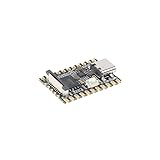
- Single core ARM Cortex-A7 32-bit core, integrated with NEON and FPU
- Built in Micro's self-developed 4th generation NPU, with high computational accuracy and support for mixed quantization of int4, int8, and int16. Among them, int8 has a computing power of 0.5 TOPS and int4 has a computing power of up to 1.0 TOPS
- Built in self-developed 3rd generation ISP3.2, supports 4 million pixels, and supports various image enhancement and correction algorithms such as HDR, WDR, and multi-level denoisin
- It has powerful encoding performance, supports intelligent encoding, adapts to save bit rates according to the scene, and saves more than 50% of the bit rate compared to conventional CBR mode, making the captured images high-definition, smaller in size, and doubling the storage space
- The design with built-in RISC-V MCU supports low-power fast startup, 250ms fast capture, and simultaneous loading of AI model library, enabling facial recognition to be completed within 1 second
McKinsey’s 2025 survey associates workflow redesign with high-performing organizations. That is an association in a survey, not proof that redesign alone causes better results, but it points to a practical difference between adding a tool and changing how work gets done.
Skills and leadership shape what makes it past a pilot
The OECD, BCG and INSEAD report cites shortages of skills, particularly specialized talent, and describes business-specific training on real projects as valuable. McKinsey’s workplace report, based mainly on U.S. findings, says employees were more ready for AI than leaders imagined and identifies leadership as the biggest barrier to success. Those findings suggest that successful adoption depends on people understanding where AI fits, how to evaluate its output and who is accountable—not just on technical access. McKinsey, “Superagency in the workplace”.
Recommended Free Tools
Risks require operating controls
In McKinsey’s 2025 survey, 51% of respondents at organizations using AI said they had seen at least one negative consequence, with inaccuracy frequently cited. This is a survey-reported risk signal, not an incidence rate for all companies. It nevertheless underlines why adoption requires review, escalation and accountability arrangements suited to the task, rather than treating every generated answer as reliable.
Rank #4

- 【POWERFUL ESP32‑S3 CONTROLLER】Built‑in Xtensa 32‑bit LX7 dual‑core processor, 512KB SRAM, 8MB PSRAM, 16MB Flash for stable AI voice computing and multitask processing.
- 【Preloaded Dual AI Platforms】Comespre-installed with complete Deepseek and OpenAI voice dialogue projects.Experience intelligent voice interaction instantly. (Note: OpenAI functionality requires your own API key.)
- 【STABLE WIRELESS & CLEAR AUDIO】Integrated 2.4GHz Wi‑Fi + Bluetooth 5 (LE); dedicated audio decoding module for natural, responsive voice interaction.
- 【USER‑FRIENDLY VISUAL & PLUG‑AND‑PLAY】2” TFT‑SPI color screen shows real‑time chat; modular design, no extra wiring, ready to use after setup.
- 【FULL LEARNING SUPPORT】45 programmable GPIOs, rich interfaces, online web tutorials, free technical support for beginners & developers.
How to judge claims that AI adoption is “stagnating”
Ask what the claim actually measures before interpreting a percentage or investment total. A sound comparison keeps these distinctions visible:
- Money: Stanford HAI’s $581.69 billion is a global corporate AI investment activity total that includes M&A; it is not the same as a company’s operating budget or spending on a specific deployment.
- Adoption definition: “Any use,” regular use in one function, number of functions and use in core production or service delivery are different thresholds.
- Deployment depth: Personal experimentation, a pilot, scaling within one function and enterprise-wide integration indicate progressively broader operating change.
- Value evidence: A local efficiency claim, self-reported EBIT attribution and a measured causal effect provide different strengths of evidence.
- Organization and sector: Adoption varies by industry and company size. The OECD reports 57.3% AI use among ICT firms and 36.8% among professional and scientific services in 2025; these sector figures come from its firm-level series, not the McKinsey respondent survey.
- Readiness: Data maturity, skills, leadership, workflow design and governance affect whether use can become durable and valuable.
On this evidence, “AI stagnation” is best understood as a bottleneck in converting growing investment and widespread early use into organization-wide workflows and demonstrated results—not as proof that adoption has stopped. The reported measures show use rising, but they do not provide a standardized figure for the gap or establish a market-wide return on investment.
Quick Recap
Product prices and availability are accurate as of the date/time indicated and are subject to change. Any price and availability information displayed on Amazon at the time of purchase will apply.




