What’s actually slowing this PC down?
Pick the symptom - the matching free tool is one click away.
Intel canceled Tejas, its planned Pentium 4 Prescott successor, and the related Jayhawk server design on May 7, 2004. Instead of extending its high-frequency single-core roadmap, the company redirected engineering teams toward dual-core processors for mobile, desktop, and server markets. By February 2005, Intel said it had completed initial dual-core production runs and planned Pentium-class products for the second quarter.
What Intel canceled in May 2004
Tejas was intended to follow Prescott in Intel’s Pentium 4 desktop line. Jayhawk was a related server processor effort. Neither reached commercial release: Intel announced that both projects were canceled on May 7, 2004, and said the teams in Austin, Portland, and Santa Clara would be reassigned to dual-core work. Intel said no layoffs were planned (EE Times, May 7, 2004).
This was a change in the direction of Intel’s processor roadmap, not the launch of a finished Tejas design under another name. The company’s replacement strategy centered on building processors with two cores rather than continuing the planned single-core line.
Why Intel changed direction
Intel’s public explanation emphasized customer demand. Company spokesman Howard High told EE Times: “Most of our customers are telling us that dual-core is the right approach.” In a September 2004 release, Intel described multi-core as a company-wide direction and said Hyper-Threading had been “an important first step in the move to multi-core processing.” Intel reported that more than 50 million Hyper-Threading processors had shipped by then (Intel Corporation, 2004).
The Tool Desk
Outbyte PC Repair FREEClear out junk files and repair common Windows errorsFree Scan →Outbyte Driver Updater FREEFix the driver behind crashes, sound loss and screen glitchesFind Drivers →#1 Best Overall

- Next‑Gen Platform Support: Compatible with Intel 800 Series Chipset‑based motherboards with LGA1851 Socket enabling PCIe 5.0/4.0 and high‑speed DDR5 memory (up to 7200 MT/s).
- High‑Performance Core Configuration: Features up to 24 cores (8 P‑cores + 16 E‑cores) for demanding gaming and creator
- Ultra‑Fast Boost Clocks: Reaches up to 5.5 GHz max turbo frequency for top‑tier responsiveness and performance
- Built for Enthusiasts: Unlocked for performance tuning when paired with Intel Z‑series chipsets, making it ideal for overclockers and power users.
- Robust Power & Thermal Design: Engineered with 125W base power and 250W max turbo power to sustain high‑intensity
Contemporaneous reporting also associated the pivot with power consumption and manufacturing difficulties in high-frequency processors, and described the dual-core transition as being accelerated by roughly 12 to 18 months (EE Times/InformationWeek, 2004). That is reporting from the time, not a later Intel technical postmortem establishing the precise engineering cause of Tejas’s cancellation.
Intel presented multi-core as useful for more than raw speed: its September roadmap discussion covered multitasking, security, reliability, manageability, wireless computing, efficiency, and performance. These were intended benefits of the broader approach, not proof that every workload or processor would improve equally.
Rank #2

- Game Without Compromise. Play harder and work smarter with Intel Core 14th Gen processors
- 20 cores (8 P-cores plus 12 E-cores) and 28 threads. Integrated Intel UHD Graphics 770 included
- Up to 5.6 GHz with Turbo Boost Max Technology 3.0 gives you smooth game play, high frame rates, and rapid responsiveness
- Compatible with Intel 600-series (with potential BIOS update) or 700-series chipset-based motherboards
- DDR4 and DDR5 platform support cuts your load times and gives you the space to run the most demanding games
How the roadmap shifted
| Dimension | Planned Tejas and Jayhawk path | Dual-core direction after cancellation |
|---|---|---|
| Processor topology | Single-core successors to the Prescott desktop line and a related server design (EE Times, May 7, 2004). | Two-core processors; Intel described projects across desktop, mobile, and server markets (Intel Corporation, September 2004). |
| Performance strategy | Continuation of Intel’s high-frequency single-core NetBurst roadmap, as described in contemporaneous coverage (EE Times/InformationWeek, 2004). | Use multiple cores to support parallel work and multitasking, alongside Intel’s earlier Hyper-Threading step toward parallel processing (Intel Corporation, September 2004). |
| Power and manufacturing pressure | Contemporaneous reports linked difficulties with high-frequency processors to the decision; they do not establish a complete technical postmortem for either canceled design (EE Times/InformationWeek, 2004). | Intel framed multi-core as an efficiency and performance direction, but the cited announcements do not establish a direct power comparison with unlaunched Tejas or Jayhawk. |
| Roadmap timing | Canceled before commercial release on May 7, 2004 (EE Times, May 7, 2004). | Intel said in September 2004 it expected to begin shipping dual-core processors in 2005, with volume growing through 2006. In February 2005 it reported initial production runs and planned Pentium-class products for Q2 2005 (Intel Corporation, 2004; Intel, February 7, 2005). |
What replaced Tejas on the desktop
On February 7, 2005, Intel announced it had completed initial production runs of dual-core processors and planned two dual-core Pentium-class products for the second quarter of 2005, including the Intel Pentium Processor Extreme Edition. That announcement is the clearest primary-source evidence that Intel was carrying out the desktop portion of its replacement strategy.
Pentium D is a useful historical product name when identifying the early dual-core desktop generation, but it should not be confused with Tejas: Tejas was canceled rather than renamed. Intel’s cited announcement described planned Pentium-class launches; it did not say that a Tejas design became Pentium D.
Rank #3

- Get ultra-efficient with Intel Core Ultra desktop processors that improve both performance and efficiency so your PC can run cooler, quieter, and quicker.
- Core and Threads 24 cores (8 P-cores plus 16 E-cores) and 24 threads. Integrated Intel Graphics included
- Performance Hybrid Architecture Integrates two core microarchitectures, prioritizing and distributing workloads to optimize performance
- Performance Unlocked Up to 5.7 GHz unlocked. 40MB Cache
- Compatibility Compatible with Intel 800 series chipset-based motherboards
What is not established about Tejas
The cited accounts do not provide a final Tejas clock speed, benchmark results, tape-out status, or complete microarchitecture specification. Because Tejas never launched, those details cannot be treated as measured product specifications or used to make a reliable performance comparison against shipping processors. The same evidence supports describing Jayhawk as a canceled related server effort, but not assigning it an unreported final specification.
Quick Recap
Best Value

- Game without compromise. Play harder and work smarter with Intel Core 14th Gen processors
- 24 cores (8 P-cores plus 16 E-cores) and 32 threads. Integrated Intel UHD Graphics 770 included
- Leading max clock speed of up to 6.0 GHz gives you smoother game play, higher frame rates, and rapid responsiveness
- Compatible with Intel 600-series (with potential BIOS update) or 700-series chipset-based motherboards
- DDR4 and DDR5 platform support cuts your load times and gives you the space to run the most demanding games
Rank #4
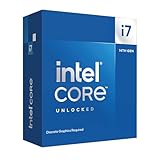
- Game Without Compromise. Play harder and work smarter with Intel Core 14th Gen processors
- 20 cores (8 P-cores plus 12 E-cores) and 28 threads. Discrete graphics required
- Up to 5.6 GHz with Turbo Boost Max Technology 3.0 gives you smooth game play, high frame rates, and rapid responsiveness
- Compatible with Intel 600-series (with potential BIOS update) or 700-series chipset-based motherboards
- DDR4 and DDR5 platform support cuts your load times and gives you the space to run the most demanding games
Product prices and availability are accurate as of the date/time indicated and are subject to change. Any price and availability information displayed on Amazon at the time of purchase will apply.




