The FCC announced nearly $200 million in penalties on April 29, 2024, after finding that AT&T, Verizon, T-Mobile and Sprint improperly allowed third parties to access customers’ wireless location information without adequate consent or safeguards. The carriers challenged the penalties. On June 4, 2026, the Supreme Court upheld the FCC’s general forfeiture procedure in litigation involving AT&T and Verizon, but it did not hold a new factual trial on whether every carrier violated the law.
How much was each carrier fined?
The FCC’s rounded figures were:
| Carrier | FCC penalty |
|---|---|
| AT&T | More than $57 million |
| Verizon | Almost $47 million |
| T-Mobile | $80 million |
| Sprint | More than $12 million |
The total was nearly $200 million, according to the FCC’s April 29, 2024 announcement. Sprint was listed separately even though it had merged with T-Mobile before the penalties were finalized.
What location data was involved?
The case concerned customer location information associated with wireless service and derived from carrier networks—not every GPS coordinate collected by a phone app. A carrier can estimate where a connected phone is from its interactions with cell sites and other network infrastructure. That is distinct from GPS data generated by a handset, location gathered by apps or advertising software, and information handled for emergency response.
The FCC said carriers made location information available through third-party location-service providers. The issue was not simply that carriers processed location to connect phones or run their networks; the agency found that the arrangements enabled access without sufficient customer consent and reasonable protections against misuse. The FCC’s account describes access by entities including bail-bond companies and bounty hunters, but that does not mean every carrier directly sold data to every such entity or that every customer’s information was accessed.
What’s actually slowing this PC down?
Pick the symptom - the matching free tool is one click away.
#1 Best Overall

- Carrier: This phone is locked to Verizon Prepaid and can only be used on the Verizon Prepaid network. A Verizon Prepaid plan is required for activation. Activation is simple and can be done online upon receipt of your device following 3 EASY steps.
- Immersive 6.7" Super AMOLED Display: Enjoy a vivid viewing experience on the large 6.7-inch FHD+ screen. The 90Hz refresh rate ensures smooth scrolling and fluid gameplay, while Super AMOLED technology delivers deep blacks and brilliant colors even in bright sunlight.
- 50MP Triple Camera with OIS: Capture professional-grade photos with the 50MP main lens featuring Optical Image Stabilization (OIS) for blur-free shots. Expand your perspective with the 5MP Ultra Wide lens or get close with the 2MP Macro camera.
- Long-Lasting 5,000mAh Battery: Power through your day with a massive 5,000mAh battery that keeps up with your streaming, gaming, and social sharing. When it’s time to refuel, the 25W Super Fast Charging capability gets you back to 50% in roughly 30 minutes.
- Next-Gen 5G & AI Features: Experience ultra-fast 5G speeds for seamless downloads and high-quality video calls. This device comes integrated with Google Gemini AI and "Circle to Search," making it easier than ever to find information instantly.
The Supreme Court’s account discusses Securus, a provider offering location-finding services to law-enforcement officers. It recounts reporting that a Missouri sheriff accessed the service despite submitting materials that were not a valid warrant or equivalent authorization. That example illustrates the risk of weak controls; it is not a finding that every transaction or carrier involved the same conduct. (Supreme Court opinion)
Why did the FCC say the conduct violated federal law?
The FCC relied on Section 222 of the Communications Act and related rules, including 47 C.F.R. § 64.2010. Section 222 imposes duties on telecommunications carriers to protect customer information. The agency treated the location information at issue as protected customer information and concluded that the carriers had not met their obligations to keep it confidential and control access. The underlying orders are available in the FCC forfeiture order.
Rank #2
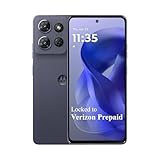
- Carrier: This phone is locked to Verizon, which means this device can only be used on the Verizon wireless network. A Verizon plan is required to activate this device. Activating is easy, upon receipt go to the Verizon Website and select “Activate” and follow the prompts. **NOT COMPATIBLE WITH VERIZON POST PAID**
- POWER THROUGH YOUR WEEKEND – Free yourself from the outlet with a massive 5000mAh battery designed to last up to 3 days on a single charge. Stream, game, and chat for hours on end without worrying about your battery life.
- CAPTURE STUNNING PHOTOS – The advanced 50MP camera system with Quad Pixel technology lets you shoot incredibly sharp and vibrant photos, even in low light. Get creative with the Macro Vision lens for amazing close-up details and capture professional-looking portraits.
- SMOOTH & IMMERSIVE DISPLAY – Your favorite content looks brilliant on the expansive 6.6” HD+ display. Experience ultra-smooth scrolling and seamless gaming with a fast 90Hz refresh rate that makes every swipe and tap feel incredibly fluid.
- RELIABLE 5G PERFORMANCE – Experience the speed you need for buffer-free streaming and lag-free gaming on Verizon's award-winning 5G network. With an octa-core processor and 128GB of internal storage (expandable to 1TB), you have the performance and space for everything.
These were FCC agency findings, not admissions by the carriers. They contested the action, disputing the agency’s legal and factual basis and challenging whether the FCC could impose penalties through its process without a jury trial. Contemporary coverage quoted AT&T calling the order without legal and factual merit. (Associated Press)
Why did the penalties arrive years after the programs?
- 2018: Public reporting raised concerns about third-party access to wireless location information.
- 2020: The FCC issued notices of apparent liability, giving carriers an opportunity to respond.
- April 29, 2024: The FCC finalized the penalties after reviewing the carriers’ responses. The programs at issue were historical; the FCC action did not mean the same arrangements were still operating in 2024.
- June 4, 2026: The Supreme Court decided the consolidated AT&T and Verizon cases, resolving a dispute about the FCC’s penalty procedure.
What did the Supreme Court decide in 2026?
The Court addressed whether the FCC’s forfeiture process violated the Seventh Amendment right to a jury trial. It held that an FCC forfeiture order under this procedure does not itself conclusively establish a carrier’s obligation to pay. If the government seeks to force collection from a carrier that has not paid, it must prove its case in federal court; the statutory framework provides for a trial de novo.
Do these 3 things before closing this tab:
1Fix the driver behind crashes, sound loss and screen glitches2Clear out junk files and repair common Windows errors3Scan for outdated or missing drivers - takes under a minuteRank #3

- YOUR CONTENT, SUPER SMOOTH: The ultra-clear 6.7" FHD+ Super AMOLED display of Galaxy A17 5G helps bring your content to life, whether you're scrolling through recipes or video chatting with loved ones.¹
- LIVE FAST. CHARGE FASTER: Focus more on the moment and less on your battery percentage with Galaxy A17 5G. Super Fast Charging powers up your battery so you can get back to life sooner.²
- MEMORIES MADE PICTURE PERFECT: Capture every angle in stunning clarity, from wide family photos to close-ups of friends, with the triple-lens camera on Galaxy A17 5G.
- NEED MORE STORAGE? WE HAVE YOU COVERED: With an improved 2TB of expandable storage, Galaxy A17 5G makes it easy to keep cherished photos, videos and important files readily accessible whenever you need them.³
- BUILT TO LAST: With an improved IP54 rating, Galaxy A17 5G is even more durable than before.⁴ It’s built to resist splashes and dust and comes with a stronger yet slimmer Gorilla Glass Victus front and Glass Fiber Reinforced Polymer back.
The Court affirmed the Second Circuit judgment in Verizon’s case and reversed and remanded the Fifth Circuit judgment in AT&T’s case. AT&T and Verizon had paid their penalties while seeking review. The opinion did not decide what refunds or other relief might be available to them.
This was a ruling about enforcement procedure, not a new factual trial of the FCC’s allegations. It should not be read as a blanket authorization for carriers to sell precise location data, nor as a ruling that every factual allegation against every carrier was proven by the Supreme Court. (Supreme Court opinion)
Rank #4

- Blazing-fast Qualcomm performance. Get the speed you need for great entertainment with a Snapdragon 680 processor and 4GB**** of RAM.
- Fluid display + immersive stereo sound. Bring your entertainment to life with an ultrawide 6.5" 90Hz* HD+ display plus stereo speakers, Dolby Atmos, and Hi-Res Audio**.
- 50MP*** Quad Pixel camera. Capture sharper, more vibrant photos day or night with 4x the light sensitivity.
- 64GB**** built-in storage. Get plenty of room for photos, movies, songs, and apps—and add up to 1TB more with a microSD card*****.
- Unbelievable battery life. Work and play nonstop with a long-lasting 5000mAh battery.*****
Does the fine mean customers get money?
No automatic customer refund or payment program was announced with the FCC penalties. A government forfeiture is a penalty paid to the government, not compensation automatically distributed to subscribers. Any separate private lawsuit, settlement or individual claim would need its own legal basis; the FCC action alone does not establish that a customer is entitled to a share.
Can carriers still use location information?
The case concerned particular historical location-service arrangements, not every use of location by a wireless carrier. Carriers still process location information for network operation and maintenance, billing and fraud prevention, emergency services, compliance with lawful government requests, customer-requested services, and other uses permitted by law and applicable privacy terms. Those operational uses are different from giving outside commercial intermediaries access without adequate consent or safeguards.
What can you do to reduce location-data exposure?
- Check your carrier account. Review its privacy dashboard and account settings. Opt out of optional marketing, analytics or location-based programs when the carrier offers that choice.
- Review app permissions on your phone. Limit location access for apps that do not need it, turn off precise location where appropriate, and remove unused apps or background access.
- Check platform location histories separately. Google, Apple and other account-level location controls are separate from carrier settings.
- Use the device’s location control with realistic expectations. Disabling phone location services can restrict GPS-based access by apps, but it may not stop the cellular network from processing information needed to connect the device.
- Raise suspected misuse with regulators. You can file a complaint with the FCC or your state attorney general. A complaint does not itself guarantee compensation.
A VPN is not a solution to carrier network-location tracking. It can obscure your IP-based location from websites and some network observers, but it does not prevent a cellular carrier from handling the phone’s connection to its network. Likewise, opting out of targeted advertising may not disable network, billing, emergency or fraud-prevention uses, and deleting an app does not necessarily erase information already held by a carrier, app provider or data broker.
Quick Recap
Product prices and availability are accurate as of the date/time indicated and are subject to change. Any price and availability information displayed on Amazon at the time of purchase will apply.




