Recommended Free Tools
CropTrak began with crop-scouting software and, by the 2021 company profile, had developed into a broader agricultural data platform connecting growers with food companies. Its documented ambition was to link crop plans and contracts to field activity, harvest, delivery, sustainability reporting and grower payments—not simply to digitize a farm notebook. The available coverage describes the product in 2021 and 2022; it does not verify CropTrak’s current ownership, product lineup, customers, pricing or availability in 2026.
What CropTrak was built to do
CropTrak is described in Successful Farming’s October 19, 2021 profile as agricultural data-management software intended to coordinate work across a farm-to-food-company supply chain. Food companies could use it to source ingredients, specify growing regions and manage production, while growers and operational teams recorded crop and field information. The platform’s stated scope also included delivery, sustainability data and payment workflows.
That makes “farm-management app” an incomplete description. The documented use case is multi-party: growers, agronomists, buyers, field-monitoring staff, delivery operations, sustainability teams and accounting departments may all depend on records from the same crop cycle. Its value proposition rests on connecting those records, rather than serving only one person’s farm log.
The problem: disconnected records and inconsistent definitions
A crop’s operational history can be split among paper notebooks, spreadsheets and separate systems used by growers, agronomists, buyers, processors, logistics providers and accounting teams. Even when each group records information, they may define fields, units or calculations differently. That makes it harder to see crop conditions against contract commitments, reconcile deliveries, calculate settlements or assemble sustainability reports.
Free tools Windows power users keep installed
One-click scans. No signup required.
#1 Best Overall

- Accurate Soil Moisture Detection: The XLUX Soil Moisture Meter can tell you if the soil deep inside your pot or garden is dry, moist or wet; whereas your eyes and fingers can only determine the moisture level of the soil surface. The probe is 5.5 inches (14 cm) longer than regular styles, allowing it to measure the soil moisture at the bottom of larger and deeper flower pots.
- Easy-to-Read Large Dial: The large dial is easy to read and includes three zones with ten scales, making it very straightforward to understand.
- Immediate Moisture Reading: Insert the probe into the soil, and without waiting, the dial will immediately display the moisture level. You can then decide whether your plant needs watering based on the measurement. Do not leave this moisture meter in the soil for more than 5 minutes, as the metal tip will gradually corrode.
- Less Damage: A single probe causes less damage to plant roots compared to double or multiple probes, and when you remove the probe after testing, it won't bring out much soil.
- Usage Precautions: Do not use it to test very hard soil. Do not test water or other liquids. After testing, please wipe the probe clean.
Fragmentation can also delay the discovery of problems: a buyer may learn late that production is falling short, or an accounting team may have to reconcile harvest and delivery records manually before paying growers. CropTrak’s proposed response was a shared, structured data environment that could carry information from planning and field activity through harvest and settlement.
Founders and early product history
The 2021 profile identifies Aaron Hutchinson and Richard Clark as CropTrak’s founders. It describes them as former farm kids who had built solutions for military and agricultural applications; it does not provide enough detail to establish a fuller biography or their current roles.
CropTrak developed an iPhone crop-scouting application in 2010, according to that profile. The article presents this as an early product milestone, not an independently established claim that it was the first such application. The company later expanded its focus from scouting toward broader agricultural data management. By 2021, the reported platform scope included crop planning, contracting, field monitoring, product delivery and payments. The available account does not date the commercial introduction of each component.
How the documented workflow connected field to payment
The 2021 profile describes the broader operational vision; a separate April 26, 2022 product update describes a financial framework added to the platform. Taken together, the coverage outlines a connected workflow:
Rank #2

- 【4 in 1 function】This is a 4-in-1 multifunctional soil tester.Our soil tester fastly to measure soil moisture, pH, temperature and sunlight to help you take better care of flowers and plants.You can know when you need to water your soil by measuring moisture and pH & Temperature value of the soil and sunlight level of plants with it.
- 【Large Screen & Backlight LCD Display】The Soil Tester uses a large LCD screen and white backlight to conveniently display and read digital parameter in day or dark.Use AAA1.5V * 4 batteries (not included),it will alert when the battery is low.
- 【Quick Accurate measurement】The latest probe detection technology in 2026 can quickly and accurately measure the pH, moisture and temperature in the soil,with the light intensity of the light sensor analysis on the instrument, it can allow you to know when to water, to control the pH and temperature acidity, and determine whether the plants have enough light to better cultivate the plants more scientifically.
- 【Easy to use】Just simply plug the probe into the soil about 4 inches(10cm) , wait 10 seconds to read intuitive data,and you will get an accurate and precise reading immediately.(This soil tester cannot be used directly to test any liquid. When measuring the soil, if the soil is too dry, do not insert it into dry and hard soil. Before testing, please water the soil test area and wait for 10 minutes, otherwise the testing machine will be damaged.)When testing soil pH and moisture, you need to read data from at least 5 locations in the soil. The average value of all the data will be the final soil pH and moisture.
- 【More convenient to read】The screen content adopts visual content design, which helps you read the data through specific values and easy to understand graphics, so that even novice growers can easily understand your soil conditions. The 45° rotating head design allows you to bend your head 0°-45°, allowing you to easily view the screen content without bending over.
- Plan and source: A food company identifies ingredient needs and growing regions, then plans production with growers.
- Contract: Grower and production arrangements are recorded. The 2022 update describes digital contracts as part of the financial workflow.
- Monitor the crop: Field monitoring and activity records provide information about production as it progresses.
- Record harvest and delivery: The 2022 account describes linking field activity to harvest, grading, weights and delivery information.
- Report and settle: The financial framework was described as connecting those records to payment calculations, settlement for growers and other service providers, and ERP transmission.
The operational logic is significant: if contract terms, field records, accepted quantities and grades are connected, a company may have less manual reconciliation between agronomy, logistics and accounting. The articles describe intended workflows, not independently measured savings or a guarantee that every customer used every step. ERP transmission in particular should not be read as proof of a specific integration for every implementation.
Why CropTrak’s data dictionary matters
The most distinctive implementation idea in the 2021 profile is a customer-specific data dictionary. CropTrak reportedly worked with stakeholders to define each data element and agree on its calculation basis. In practice, that means teams must settle questions such as what a field means, which unit applies and how a reported value is calculated before relying on it in downstream reports.
This is more consequential than simply putting records in one database. A central system can make inconsistent information easier to find without making it comparable. Shared definitions can reduce one source of error and make records more useful across departments, but they cannot ensure that an observation is accurate, that workers submit it on time or that every user follows the agreed process.
For an organization considering this kind of platform, the data dictionary is therefore not just a setup detail. It is a governance task: someone must resolve conflicting definitions, maintain business rules as contracts and operations change, and train the people entering and using the data. The coverage does not establish how long CropTrak implementation took or who was responsible for those tasks in particular deployments.
Do these 3 things before closing this tab:
1Scan for outdated or missing drivers - takes under a minute2Repair Windows errors before they cause bigger problems3Fix the driver behind crashes, sound loss and screen glitchesRank #3
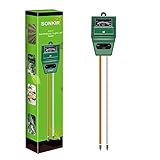
- Kindly NOTE: This soil tester can not be applied to test pH value of any other liquid. If the soil is too dry the indicator will not move, and water it before testing.
- 3 METERS IN ONE: Soil moisture level, Soil pH value and Sunlight level could be tested easily according to your need by switching the function button of this soil meter.
- NO BATTERY NEEDED: Simply insert the meter into soil, wait few minutes, accurate test results will be displayed on the readout panel. No battery is needed.
- STURDY AND SCIENTIFIC DESIGN: Reliable materials and upgraded technology used for this soil meter make it advanced and high-quality for long-term use.
- MULTIPURPOSE SOIL TEST KIT: Portable and compact design enables you to use this soil meter for house garden, farm, lawn and any other soil & plant analysis. Ideal for indoor and outdoor use.
Grower data ownership, access and trust
The 2021 profile reports a CropTrak founding principle that the data remains the farmer’s, and says farmers could opt in to share data in aggregate form for sustainability purposes. That is a reported company principle, not a full description of enforceable legal rights.
Ownership is only one part of data governance. A grower or buyer evaluating a current agreement would also need to establish who can access records, how they may be processed or shared, whether data can be exported, how long it is retained and what “aggregate” use means. The historical profile does not answer those contractual questions or establish current privacy, security or portability terms.
Independent reader supportYour contribution helps us test, update, and keep practical guides available for everyone.Sustainability reporting is not proof of environmental results
CropTrak’s stated sustainability proposition was to use operational records as a foundation for metrics, carbon-related calculations, benchmarking and supply-chain transparency. The idea is to derive sustainability information from data already associated with production, rather than treating reporting as wholly separate from farm operations.
A related November 16, 2021 Successful Farming report describes CropTrak’s collaboration with the Stewardship Index for Specialty Crops on adoption of the Stewardship Calculator 2.0. These accounts establish a sustainability-data use case, not verified emissions reductions, improved soil or water outcomes, or independent acceptance of every resulting report. Measurement and reporting are not the same as demonstrated environmental improvement.
Rank #4

- Accurate Soil Moisture Detection: The XLUX Soil Moisture Meter can tell you if the soil deep inside your pot or garden is dry, moist or wet; whereas your eyes and fingers can only determine the moisture level of the soil surface. The probe is 5.5 inches (14 cm) longer than regular styles, allowing it to measure the soil moisture at the bottom of larger and deeper flower pots.
- Easy-to-Read Large Dial: The large dial is easy to read and includes three zones with ten scales, making it very straightforward to understand.
- Immediate Moisture Reading: Insert the probe into the soil, and without waiting, the dial will immediately display the moisture level. You can then decide whether your plant needs watering based on the measurement. Do not leave this moisture meter in the soil for more than 5 minutes, as the metal tip will gradually corrode.
- Less Damage: A single probe causes less damage to plant roots compared to double or multiple probes, and when you remove the probe after testing, it won't bring out much soil.
- Usage Precautions: Do not use it to test very hard soil. Do not test water or other liquids. After testing, please wipe the probe clean.
The Benson Hill partnership was a historical use case
In September 2021, Benson Hill announced a partnership using CropTrak technology to collect agronomic data from farmer partners and deliver it to Benson Hill’s CropOS platform. Benson Hill described CropOS as combining data analytics and artificial intelligence with plant biology and food science; the stated goals included product-performance work, benchmarking and verifiable sustainability metrics.
This announcement illustrates how a processor or food company might use a shared data layer beyond basic recordkeeping. It does not establish that the partnership remained active in 2026 or document specific commercial results.
Who the documented approach may suit
The reported workflows point most clearly to organizations managing many growers, contracts or operational handoffs. A fit is more plausible where the cost of reconciling records is substantial and participants can agree to use common definitions and workflows.
- Potential fit: Specialty-crop processors, ingredient buyers, grower networks and food companies that need to connect field activity with contracts, traceability, delivery and settlement.
- Potential fit: Organizations seeking structured sustainability information from operational records, provided they can define and govern the metrics they need.
- Likely weaker fit: An individual farmer looking only for a simple personal recordkeeping tool. The documented emphasis is on coordination among multiple organizations, not a self-service product for small farms.
- Likely weaker fit: A buyer unable to support grower participation, or a company unwilling to standardize data definitions and internal workflows.
These are conclusions from the use cases described in 2021–2022, not a verified statement of CropTrak’s current market positioning.
The Tool Desk
Outbyte PC Repair FREERepair Windows errors before they cause bigger problemsFix Now →Outbyte Driver Updater FREEFix the driver behind crashes, sound loss and screen glitchesFind Drivers →Questions to resolve before evaluating a current deployment
The historical coverage explains the platform’s concept but does not establish today’s buying terms or technical fit. A prospective customer would need current answers to questions such as:
- Which product modules and workflows are currently offered, and which are included in a proposed deployment?
- How are contracts, fields, crop changes, rejected or partial deliveries, grading differences, deductions, bonuses and multiple-party payments represented?
- Can the system handle field work where connectivity is intermittent? The cited coverage does not establish offline capabilities.
- Which ERP, accounting, agronomy, logistics or other systems can exchange data, and what does each integration support?
- Who defines and maintains the data dictionary, migrates historical records and trains users?
- What access, export, retention, deletion and aggregate-sharing rights are set out in the current agreement?
- Are sustainability calculations aligned with the methodology required by the customer, auditor or regulator, and is any resulting report independently accepted?
- What are the current implementation costs, pricing structure, contract terms, security credentials and customer references?
The available sources do not verify CropTrak’s current ownership or operating status, product names, active customers or partnerships, pricing, availability, integrations, security credentials or measured customer outcomes in 2026. A company-specific purchasing decision therefore requires current confirmation rather than extrapolation from the historical profiles.
Quick Recap
Product prices and availability are accurate as of the date/time indicated and are subject to change. Any price and availability information displayed on Amazon at the time of purchase will apply.




