The Tool Desk
Outbyte PC Repair FREEClear out junk files and repair common Windows errorsFree Scan →Outbyte Driver Updater FREEScan for outdated or missing drivers - takes under a minuteDriver Scan →Appboy’s October 13, 2015 announcement was a suite expansion, not the launch of a conventional sales CRM. The company was trying to turn app and web behavior into individualized marketing decisions: whom to contact, through which channel, when, and with which message. Its “mobile CRM” label described that engagement strategy, not a replacement for every sales or service CRM.
What Appboy announced in October 2015
In a VentureBeat report published October 13, 2015, Appboy described an expansion of its mobile marketing and analytics platform. The announcement grouped predictive capabilities under an Intelligence Suite and included Intelligent Delivery, Intelligent Selection, expanded comparative segment analytics, automation and personalization updates, and a web SDK that had moved out of beta.


The unifying idea was to use observed behavior to guide engagement at the individual-user level. Rather than stopping at reports about app performance, Appboy wanted marketers to use behavioral signals to decide what action to take next.
From app analytics to action
App analytics commonly answers retrospective, population-level questions: how many people installed an app, which features they used, or how retention changed. Marketing automation uses behavioral data to act: it can create segments, respond to events, and deliver messages. Appboy’s 2015 positioning connected those functions, presenting analytics as an input to ongoing customer engagement rather than an end in itself.
#1 Best Overall
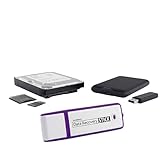
- The Data Recovery Stick requires no technical skills — simply plug it into your Windows computer, click Start, and the software automatically begins scanning and recovering lost files within minutes. Compatible with Windows Vista, 7, 8, 10, & 11, it's designed to be a reliable first step when accidental deletion occurs.
- Recover photos (JPG, BMP, PNG, TIFF), Microsoft Office documents (Word, Excel, PowerPoint, Publisher, Access), Open Office files, MP3 music files, PDFs, RTF documents, AutoCAD files, and HTML web pages. Whether it's personal memories or critical business files, the Data Recovery Stick covers the file types that matter most.
- Works with hard drives, USB drives, SD cards, memory sticks, and other common storage formats that use FAT or NTFS file systems — making it a single solution for hard drive recovery, USB drive recovery, SD card recovery, and more. Note: a media reader is required for micro SD cards and some mass storage devices.
- No Installation Required - The Data Recovery Stick runs entirely from the USB drive with no software installation on your computer — helping prevent new data from overwriting the files you're trying to recover. This also makes it ideal for use across multiple computers or in emergency situations where installation isn't practical.
- Use the Data Recovery Stick on as many computers as often as needed — simply clear the recovered data between uses to free up storage space. Software updates keep the tool compatible with newer systems and devices, backed by 25+ years of data software expertise from Paraben Consumer Software.
For example, a report might show that a group of people has stopped opening an app. An engagement system could identify those profiles, select an eligible channel, and send a tailored reactivation message. That is an illustration of the distinction, not a documented Appboy customer case.
In Appboy’s framing, the practical questions included which users might respond, what behaviors signaled value or possible disengagement, which channel and timing suited them, and which message performed better. This was a simplified market distinction in 2015, not a permanent boundary: analytics, customer-data, experimentation, and engagement platforms now overlap in many ways.
How Intelligent Delivery was supposed to work
Appboy described Intelligent Delivery as using historical engagement data to estimate the best time and channel for contacting a user. The product account said the system could learn which message types, channels, and times worked for different users, including whether push, email, or in-app messaging was more appropriate. These were capabilities as described in the 2015 announcement, not a statement about the current Braze product.
The contemporary report said Appboy customers using Intelligent Delivery had seen “as much as a 38 percent lift” versus control groups. That is a vendor-reported maximum, not an independently verified average or a general performance guarantee. The article does not provide campaign counts, industries, sample sizes, test durations, or statistical-significance results, so the figure cannot establish what a typical customer should expect.
Recommended Free Tools
Personalized timing and channel choice also depend on the quality and quantity of the underlying data. A new user, a rare behavior, or a new campaign may not have enough history for reliable predictions. Historical patterns can also carry forward earlier campaign biases. Teams still need suitable channel permissions, relevant messages, and a meaningful success measure; optimizing for opens alone may not improve retention, revenue, or user trust.
How Intelligent Selection changed variant allocation
Intelligent Selection was described as automatically shifting exposure among message variants as performance data arrived. In the 2015 account, the workflow was:
- Marketers prepare multiple versions of a message.
- The system observes their early performance.
- Variants doing better receive a larger share of later exposure, while weaker performers receive less.
- The algorithm continues adjusting allocation as more information becomes available.
The potential advantage is that a promising version can reach more people sooner than it might under a manually managed split. The trade-off is interpretability: an adaptive allocation is not necessarily equivalent to a conventional fixed-horizon randomized A/B test. Early noise can push traffic toward a variant prematurely, and a campaign optimized for a short-term click may harm a longer-term outcome. Marketers need to define the objective and guardrails before launch, and use appropriate holdouts or longer-term measurement when they need to understand causal effects.
What comparative segment analytics added
The expanded segment analytics was intended to show what distinguished one audience from a broader comparison group. The VentureBeat example involved comparing people who read a long-form article with the wider user base and looking for behavioral differences, such as app-use frequency.
That kind of comparison can surface attributes associated with a valuable action, help explain why people fall into a segment, and inform targeting or product decisions. It does not, by itself, show that one behavior caused another. If long-form readers are more active, the pattern may reflect other differences between those users rather than an effect of reading. The tool should therefore be understood as exposing associations or potentially useful predictive distinctions, not proving causation.
Why the web SDK mattered
The web SDK moving out of beta signaled that Appboy’s engagement model was not meant to stop at the mobile app. The announcement said it could connect web and mobile behavior and identities, supporting a view of a person’s interactions across browser and app without requiring customers to build manual API integrations for every connection.
The strategic case was straightforward: someone might discover a service on the web, register in its app, receive a push notification, and later return through a browser. If those actions remain in disconnected profiles, marketers have a fragmented picture of the relationship. A web SDK could reduce some integration work, but it should not be read as a promise of zero engineering effort or automatic identity resolution.
- Identity quality: Connecting anonymous and known profiles requires a reliable identifier strategy. Incorrect joins can create duplicate records or attribute behavior to the wrong person.
- Data quality: Missing, duplicated, delayed, or inconsistently named events can undermine segmentation and predictions.
- Privacy: Collection and identity linking are subject to applicable consent requirements, privacy laws, browser controls, app-store policies, and operating-system changes. The 2015 announcement predates much of the present privacy environment.
What Appboy meant by “mobile CRM”
“Mobile CRM” was Appboy’s strategic framing, not a universally accepted technical definition. Traditional CRM often centers on known prospects or customers in sales and service workflows. Appboy argued that mobile marketing automation could manage a continuing relationship by acting on behavior from both identified and anonymous users.
Do these 3 things before closing this tab:
1Clear out junk files and repair common Windows errors2Scan for outdated or missing drivers - takes under a minute3Repair Windows errors before they cause bigger problemsBest Value
![MixPad Free Multitrack Recording Studio and Music Mixing Software [Download]](https://m.media-amazon.com/images/I/71ltIxIuz1L._SL160_.jpg)
- Create a mix using audio, music and voice tracks and recordings.
- Customize your tracks with amazing effects and helpful editing tools.
- Use tools like the Beat Maker and Midi Creator.
- Work efficiently by using Bookmarks and tools like Effect Chain, which allow you to apply multiple effects at a time
- Use one of the many other NCH multimedia applications that are integrated with MixPad.
The underlying logic was that apps generate a stream of behavioral events. Those events can inform segments, predictions, and personalized engagement. CEO Mark Ghermezian described the approach in the contemporary article as beginning “at the user level” and moving upward into CRM. The claim was about lifecycle and engagement management; it did not establish that Appboy replaced sales-force automation, account management, or customer-service CRM.
Where this approach made sense—and where it could fall short
A behavior-led engagement platform was most relevant to consumer apps and digital services with repeat interactions, multiple channels, consistently instrumented events, and enough activity to support useful segmentation or optimization. It was less compelling for a very small app with little behavioral history, a business with infrequent customer interactions, or a team seeking primarily a sales pipeline system.
- Instrumentation and identity: Event schemas, SDK installation, profile merging, and consent processes require deliberate implementation and quality checks.
- Cold starts: New users, campaigns, and infrequent events may not supply enough observations for dependable predictive decisions.
- Metric choice: Clicks and opens can be poor proxies for durable value. Retention, conversion, revenue quality, unsubscribes, and user sentiment may matter more.
- Message fatigue: Easier cross-channel activation can also increase over-messaging risk. Frequency caps, suppression rules, channel preferences, and fatigue monitoring are important safeguards.
- Portability: A unified platform can centralize workflows, but migration can become difficult when event schemas, campaign logic, or reporting definitions are tightly coupled to one vendor.
What happened to Appboy
Appboy officially became Braze on November 16, 2017, according to the company’s rename announcement; its company history identifies Braze as formerly Appboy. Braze now presents itself as a cross-channel customer-engagement platform, rather than simply a mobile analytics or marketing tool. The continuity is in the broad engagement problem the 2015 announcement addressed, not a guarantee that each named Appboy feature exists unchanged today. For current company positioning, see Braze’s platform site.
Read as history, the announcement anticipated a direction in which engagement platforms combined behavioral data, identity, orchestration, and personalization across app and web. It also left enduring operational questions: whether the data is trustworthy, whether identity links are correct, what outcomes are being optimized, and whether the resulting contact strategy respects user preferences.
Free tools Windows power users keep installed
One-click scans. No signup required.
Quick Recap
Product prices and availability are accurate as of the date/time indicated and are subject to change. Any price and availability information displayed on Amazon at the time of purchase will apply.




