What’s actually slowing this PC down?
Pick the symptom - the matching free tool is one click away.
Most sellers should not build a VR storefront just because AR and VR featured in a CES 2023 discussion. Start with the buying problem: if shoppers struggle to judge a product’s scale, fit, finish, or configuration, test web-based 3D or phone-based AR on a small number of products. Keep the ordinary store experience intact, measure whether the feature improves profitable sales, and expand only if the numbers justify its full cost.
What the CES 2023 panel actually said
A January 6, 2023, Tech Times report described a CES panel on using augmented reality (AR), virtual reality (VR), and mixed reality in e-commerce and marketing. It named Sonya Haskins, Head of Programming for Augmented World Expo; Josh Shabtai, Senior Director of Ecosystem at Lowe’s Innovation Labs; Pier Fawkes, founder and CEO of PSFK; and Phil Sage, Senior Director of Pesco’s Design and Innovation Hub. The report’s speaker list spells the name “Pier Fawkes,” while its body later uses “Piers.” The coverage does not include a session recording or transcript, so its summaries should be treated as reported paraphrases, not a full account of the panel. Read the Tech Times report.
The report says speakers cautioned that relatively few people were using AR/VR devices to shop and that sellers with limited budgets should be wary of spending heavily on metaverse, AR, or VR projects. It also attributes to Shabtai a suggestion that smaller sellers consider generative AI instead. That was a reported panel recommendation in 2023, not a universal rule for deciding where a business should invest today.
3D, AR, and VR solve different problems
“Immersive commerce” can describe experiences with very different levels of customer effort and business commitment. A product model on a normal product page is not the same proposition as a virtual mall that requires a headset.
The Tool Desk
Outbyte Driver Updater FREEScan for outdated or missing drivers - takes under a minuteDriver Scan →Outbyte PC Repair FREEClear out junk files and repair common Windows errorsFree Scan →#1 Best Overall

- CARDBOARD MONKENAUT — Get our best Gorilla Tag bundle yet with this Amazon exclusive deal. Purchase Meta Quest 3S to get exclusive items, including the Gorilla Space Program Suit and Helmet, plus 2,000 SHINY ROCKS.
- NO WIRES, MORE FUN — Break free from cords. Game, play and explore immersive worlds — untethered and without limits.
- 2X GRAPHICAL PROCESSING POWER — Enjoy lightning-fast load times and next-gen graphics for smooth gaming powered by the Snapdragon XR2 Gen 2 processor.
- EXPERIENCE VIRTUAL REALITY — Take gaming to a new level and blend virtual objects with your physical space to experience two worlds at once in your VR headset.
- 2+ HOURS OF BATTERY LIFE — Charge less, play longer and stay in the action with an improved battery that keeps up. *Based on the graphic performance of the Qualcomm Snapdragon XR2 Gen 2 platform vs the Meta Quest 2 platform.
| Format | What the shopper does | Typical use | Practical consideration |
|---|---|---|---|
| 3D product viewing | Rotates and zooms a product model on a website or app. | Inspecting details, finishes, or configurations. | Can be added to an existing product page; the model must match the product variant. |
| Phone-based AR placement | Uses a phone or tablet camera to preview a virtual product in the real environment. | Checking the apparent scale or placement of furniture and décor. | Requires suitable device/browser support and accurate assets; lighting and tracking can affect the result. |
| Virtual try-on | Views an overlay or simulation on a face or body. | Exploring eyewear, cosmetics, apparel, or accessories. | Should not imply a precise fit or appearance guarantee unless the technology supports that claim. |
| Web-based 3D store | Moves through a three-dimensional catalog or virtual shop in a browser. | Brand experience, discovery, or a distinctive launch. | Navigation must remain easier than browsing a conventional catalog if the goal is a sale. |
| Headset-based VR retail | Enters a virtual environment using a VR headset. | Experiential marketing, demonstrations, or a specialized audience. | Asks shoppers to own or access hardware and leave the familiar shopping journey. |
Mixed reality (MR) and extended reality (XR) are broader umbrella terms for spatial experiences spanning AR, VR, and related technologies; they are not a single shopping format. Shopify’s 3D-commerce guidance describes models shoppers can rotate, zoom, and, in suitable implementations, place in their space through AR. It identifies furniture and home goods, fashion and accessories, and configurable products as categories where 3D can help convey scale, detail, or options. Shopify says its platform accepts GLB and USDZ model formats, but check current platform requirements and compatibility before commissioning assets or selecting an implementation.
When 3D or AR may earn its place
Use it where a product has a meaningful visualization problem—not simply because an interactive feature looks impressive. A model may help shoppers understand dimensions, compare finishes, inspect detail, or see an item in context. Those are plausible ways to reduce uncertainty, but they do not guarantee higher conversion or fewer returns. Outcomes depend on asset accuracy, loading speed, device support, product category, traffic, and how naturally the feature fits into the buying process.
Rank #2
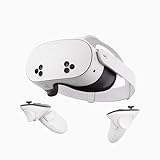
- NO WIRES, MORE FUN — Break free from cords. Game, play, exercise and explore immersive worlds — untethered and without limits.
- 2X GRAPHICAL PROCESSING POWER — Enjoy lightning-fast load times and next-gen graphics for smooth gaming powered by the SnapdragonTM XR2 Gen 2 processor.
- EXPERIENCE VIRTUAL REALITY — Take gaming to a new level and blend virtual objects with your physical space to experience two worlds at once.
- 2+ HOURS OF BATTERY LIFE — Charge less, play longer and stay in the action with an improved battery that keeps up.
- 33% MORE MEMORY — Elevate your play with 8GB of RAM. Upgraded memory delivers a next-level experience fueled by sharper graphics and more responsive performance.
- Furniture and home goods: AR placement can help people assess whether an item appears to fit a room; rugs, lighting, and décor are examples. Incorrect dimensions undermine that benefit.
- Eyewear, jewelry, cosmetics, and accessories: Try-on can help shoppers explore appearance, provided the overlay does not overstate how an item will fit or look in real conditions.
- Configurable products: A 3D view can make colors, finishes, or options easier to compare when each selection is represented accurately.
- Large appliances or equipment: Scale and layout may matter, especially when shoppers cannot visit a showroom.
- Products with costly visual-mismatch returns: A useful preview could address one cause of returns, though returns also arise for reasons a model cannot fix.
It is a weaker fit for simple, low-consideration goods, products whose appearance changes substantially with lighting, items requiring precise physical fit without reliable measurement, or products whose important moving parts a static model cannot show. If a misleading preview could create safety, legal, refund, or customer-trust problems, resolve that risk before launch.
Why a VR storefront is a bigger bet
A headset-first shop adds more than a 3D production task. It asks customers to access compatible hardware, learn a new interface, and leave the browser or app where they already search, compare, and buy. The seller then has to make the environment discoverable, maintain it, and connect an immersive visit to a completed transaction—while continuing to support a conventional storefront.
Rank #3

- CARDBOARD MONKENAUT — Get our best Gorilla Tag bundle yet with this Amazon exclusive deal. Purchase Meta Quest 3 to get exclusive items, including the Gorilla Space Program Suit and Helmet, plus 2,000 SHINY ROCKS.
- NEARLY 30% LEAP IN RESOLUTION — Experience every thrill in breathtaking detail with sharp graphics and stunning 4K+ Infinite Display.
- NO WIRES, MORE FUN — Break free from cords. Game, play and explore in immersive worlds — untethered and without limits.
- 2X GRAPHICAL PROCESSING POWER — Enjoy lightning-fast load times and next-gen graphics for smooth gaming powered by the Snapdragon XR2 Gen 2 processor.
- EXPERIENCE VIRTUAL REALITY — Blend virtual objects with your physical space and experience two worlds at once in your VR headset.
- Headset access is a narrower starting audience than a feature embedded in a web product page.
- Building and maintaining an environment can cost more than making a small set of product models.
- Navigation can be slower than search, filters, and product comparisons in a conventional catalog.
- Some shoppers may find headset use uncomfortable or inaccessible; an immersive route should not become the only practical route to purchase.
- A launch can attract attention without generating repeat use or profitable sales.
A virtual showroom can still serve a legitimate purpose—such as a campaign, product demonstration, or brand experience—even if it is not an efficient transaction channel. Decide which outcome matters before commissioning it: merchandising utility, marketing reach, customer or sales-team support, or direct commerce. Do not use engagement alone as evidence that a storefront is selling effectively.
Run a bounded pilot before scaling
A test should target a defined buying objection and preserve the normal route to purchase. A lightweight 3D viewer is often a more contained first step than a full virtual store; add phone-based AR when seeing an item in a real space is important.
Rank #4

- Your purchase of this item includes a new Meta Quest Pro 256 GB VR headset and a 12-month subscription to Optima Academy Online (OAO) field trips.
- Optima Academy Online (OAO) harnesses the power of virtual reality to make previously impossible learning opportunities just a few clicks away. Our VR Field Trips provide powerful ways of engaging users on a whole new level while providing learning experiences. With our VR Field Trips, we deliver users directly into an immersive educational experience that engages them like never before. We offer a one-month subscription to our VR Field Trips. During your subscription, you can spend as much time in our uniquely created Metaverse environments as you like. Each environment has its own theme, learning experiences, and adventures.
- High resolution mixed reality passthrough uses full-color sensors to let you see and engage with the physical world around you, even as you connect, work and play in virtual spaces.
- Share your true emotions and reactions with real time natural avatar expressions. Meta Avatars translate your natural facial expressions into VR so you can bring your true personality to meetings and gatherings with friends.
- Meta Quest Touch Pro Controllers translate instinctive hand gestures and detailed finger actions directly into VR with self-tracking cameras and precision controls. Multi-point, advanced haptics make virtual interactions feel entirely real
- Choose one to five products. Pick items for which customers need help judging scale, fit, finish, or configuration. Prefer products with sufficient traffic and margin to make a useful comparison.
- Define the question and success measure. For example: does showing a correctly scaled lamp in a room improve purchase outcomes without slowing the page or increasing support issues?
- Prepare accurate assets. Use models that match dimensions, finishes, sizes, and selected variants. Confirm who will update them when the product changes.
- Add the simplest useful format. Put a web 3D viewer on the existing product page first; add AR placement or try-on only when it addresses the identified objection. Keep photos, specifications, and checkout available.
- Test across real shopping conditions. Check common iOS and Android devices, desktop, major browsers, and lower-end devices. Watch for slow loading, tracking problems, confusing controls, and inaccessible paths.
- Compare outcomes credibly. Use a control group or a comparable traffic period and account for differences in traffic and product mix. Feature users may already be more likely to buy, so a simple before-and-after comparison can overstate impact.
- Expand, redesign, or stop. Continue only when incremental commercial benefit exceeds asset, software, integration, and maintenance costs. Fix or remove the feature if it slows pages, confuses shoppers, or creates inaccurate expectations.
Measure business outcomes, not novelty
Set a measurement plan before launch. Feature usage can explain whether shoppers find the tool, but it is not the outcome the business is trying to buy.
- Use and usability: exposure rate, launch rate, completion rate, time with the model, and abandonment.
- Commerce: add-to-cart rate, checkout conversion, average order value, and incremental revenue or contribution margin for users and an appropriate comparison group.
- After purchase: return and exchange rates, reasons for return, and customer-support contacts.
- Cost and performance: page speed, abandonment, asset cost per SKU, software and implementation costs, and ongoing model-maintenance effort.
- Longer-term value: repeat use or assisted conversions, where analytics can connect those interactions to purchases credibly.
Time spent, shares, or social attention can matter for a campaign, but they do not prove that an experience improves profitable shopping. A feature that attracts attention yet harms page performance or contributes no measurable commercial value may be a marketing expense, not a merchandising investment.
Windows Errors? Fix Them Before They Spread
Repair common Windows errors and clear accumulated junk for a smoother, more stable PC - no reinstall needed.Free scan · no reinstallOutdated Drivers Are Slowing You Down
One free scan finds every outdated or missing driver and matches the right update for your exact hardware.Free scan · exact hardware matchBest Value

- NEARLY 30% LEAP IN RESOLUTION — Experience every thrill in breathtaking detail with sharp graphics and stunning 4K Infinite Display.
- NO WIRES, MORE FUN — Break free from cords. Play, explore and exercise in immersive worlds — untethered and without limits.
- 2X GRAPHICAL PROCESSING POWER — Enjoy lightning-fast load times and next-gen graphics for smooth gaming powered by the Snapdragon XR2 Gen 2 processor.
- EXPERIENCE VIRTUAL REALITY — Blend virtual objects with your physical space and experience two worlds at once.
- 2+ HOURS OF BATTERY LIFE — Charge less, play longer and stay in the action with an improved battery that keeps up.
Account for accuracy, access, and privacy
Interactive product previews can create new failure modes as well as new information. Before rollout, check for the following:
- Scale and variant errors: Incorrect dimensions, color, finish, or configuration can make the preview actively misleading.
- Tracking and lighting limits: Reflective, dark, or textureless surfaces can make phone-based AR appear unstable.
- Heavy files: Large assets may slow mobile pages for shoppers who never use the feature.
- False precision: A face or body overlay may not reliably predict physical fit, sizing, or real-world appearance.
- Device and browser fragmentation: Support varies; test the combinations your customers use rather than promising universal compatibility.
- Accessibility: Retain a usable conventional product page and checkout for people who cannot or do not want to use immersive features.
- Privacy: Camera, room, face, or body data may raise consent, disclosure, access, and retention obligations. Understand the data flow and governing requirements before enabling capture.
- Maintenance: Plan to update models when dimensions, materials, packaging, or variants change.
Compare AR with other uses of limited budget
The CES report’s generative-AI suggestion is worth treating as a prioritization question, not as a blanket replacement for immersive commerce. AI tools may support merchandising workflows such as drafting copy, creating image variations, customer support, or campaign production; whether that is worthwhile depends on the seller’s actual bottleneck, quality controls, and expected incremental value.
For a seller whose product pages lack basic information, investment in accurate photography, dimensions, variant data, reviews, search, checkout, or fulfillment may address more immediate problems than a 3D model. The comparison should be between specific investments and expected business value—not between fashionable technology labels. Shopify’s partner guidance and 3D commerce guide explain platform and ecosystem approaches; marketplace listings can help identify candidate tools, but their presence does not establish performance, compatibility with every theme, or sustained vendor support. If evaluating an app, check its current price, trial terms, SKU and traffic limits, data permissions, device support, and billing conditions directly before committing.
Quick Recap
Product prices and availability are accurate as of the date/time indicated and are subject to change. Any price and availability information displayed on Amazon at the time of purchase will apply.
Quick wins for a faster PC:
Fix the driver behind crashes, sound loss and screen glitchesFind Drivers →Clear out junk files and repair common Windows errorsFree Scan →Scan for outdated or missing drivers - takes under a minuteDriver Scan →



