E-signatures modernize contract management when they are part of a controlled workflow—not just a digital substitute for printing and scanning. Templates, approvals, signer routing, reminders, evidence records, organized storage, and follow-up actions can reduce the manual coordination surrounding an agreement from draft through renewal.
What e-signatures change—and what they do not
A paper-based process often means printing, scanning, mailing, re-keying information, chasing people by email, and saving the final file wherever someone remembers. That creates avoidable work and practical risks: conflicting versions, missing initials, uncertainty about signing order, delays between departments, and agreements stranded in personal inboxes.
An electronic signature is a broad category for an electronic action or symbol associated with an intent to sign. A typed name, click-to-sign action, drawn signature, or uploaded image can serve as an electronic signature, depending on the circumstances and applicable law. A digital signature, by contrast, is a cryptographic method that uses certificates and keys to authenticate a signer or detect changes to a document. In the EU, a qualified electronic signature is a distinct, higher-assurance category under eIDAS.
These terms are not interchangeable. A signature image alone does not necessarily provide the identity assurance or tamper detection of a certificate-based digital signature. Nor does adopting an e-signature service automatically establish that every contract is legally effective or that a company has a complete contract-management system.
#1 Best Overall
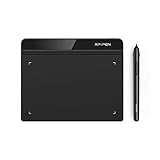
- Battery-Free Pen: StarG640 drawing tablet is the perfect replacement for a traditional mouse! The XPPen advanced Battery-free PN01 stylus does not require charging, allowing for constant uninterrupted Draw and Play, making lines flow quicker and smoother, enhancing overall performance
- Ideal for Online Education: XPPen G640 graphics tablet is designed for digital drawing, painting, sketching, E-signatures, online teaching, remote work, photo editing, it's compatible with Microsoft Office apps like Word, PowerPoint, OneNote, Zoom, Xsplit etc. Works perfect than a mouse, visually present your handwritten notes, signatures precisely
- Compact and Portable: The G640 art tablet is only 2 mm thick, it's as slim as all primary level graphic tablets, allowing you to carry it with you on the go
- Chromebook Supported: XPPen G640 digital drawing tablet is ready to work seamlessly with Chromebook devices now, so you can create information-rich content and collaborate with teachers and classmates on Google Jamboard’s whiteboard; Take notes quickly and conveniently with Google Keep, and effortlessly sketch diagrams with the Google Canvas
- Multipurpose Use: Designed for playing OSU! Game, digital drawing, painting, sketch, sign documents digitally, this writing tablet also compatible with Microsoft Office programs like Word, PowerPoint, OneNote and more. Create mind-maps, draw diagrams or take notes as replacement for mouse
How a controlled contract workflow works
The useful unit is not merely the signature image; it is the agreement transaction and the process around it. A typical workflow starts with approved language and ends with a retained record and any required business action.
| Traditional process | Controlled electronic workflow |
|---|---|
| Draft a document manually. | Start from an approved template and clause library. |
| Email Word or PDF attachments for review and merge edits by hand. | Collect information through an intake form or business system, then route internal approvals. |
| Lose track of the latest version or who should sign next. | Lock the approved version and set the required signer sequence, whether sequential, parallel, or hybrid. |
| Print or scan, then follow up individually. | Use required fields, suitable signer checks, status tracking, and automated reminders. |
| Save a PDF somewhere and notify other teams manually. | Retain the signed document with its evidence history and metadata, then trigger applicable downstream actions. |
The workflow can be described as a sequence: prepare, approve, send, authenticate, track, complete, retain, and act. DocuSign describes an envelope as a transaction record containing documents, fields, signers, statuses, senders, and timestamps; recipients generally do not need a DocuSign account to sign. See DocuSign’s eSignature plan information for its product-specific explanation. This illustrates why the agreement transaction—not just the signature graphic—is operationally important.
Where e-signatures add value across the agreement lifecycle
Before signing: prepare and approve consistently
- Reusable templates and approved clauses reduce repeated drafting and help keep routine terms consistent.
- Fields can be populated from a CRM, HRIS, ERP, or intake form, reducing re-keying and missing information.
- Approval rules can send exceptions to legal, finance, or management before the document reaches an external signer.
- Version controls can separate drafting and review from execution, so the signed version is the one that was approved.
During signing: route, verify, and monitor
- Sequential, parallel, or mixed routing can match the actual signing order.
- Required fields can include signatures, dates, initials, checkboxes, or attachments.
- Mobile-responsive signing and status visibility can make it easier for parties to complete routine agreements.
- Reminders and expiry settings reduce manual chasing; identity checks can be increased for higher-risk transactions.
- Declines, voids, delegation, and reassignment should be visible to the people responsible for the transaction.
After signing: preserve evidence and trigger the next work
- Keep the completed agreement together with its certificate or equivalent completion record and audit history.
- Store agreements in a controlled repository with searchable metadata, access permissions, and retention rules.
- Use integrations or automation to notify finance, HR, procurement, customer success, or operations when an agreement is complete.
- Track renewal dates, termination windows, and other obligations instead of treating signature as the end of the process.
Adobe’s API documentation describes a programmatic flow for creating or sending an agreement, checking its status, sending reminders, and downloading the completed agreement. Its documented capabilities also include embedded signing, batch sending, audit-trail downloads, and archiving. See the Adobe Acrobat Sign API overview and API usage documentation.
What an audit trail can—and cannot—prove
An audit trail should provide more than a picture of a signature. Depending on the provider and configuration, it may record:
Recommended Free Tools
- Sender and recipient details, such as email addresses or authentication information.
- Delivery, access, viewing, signing, and completion events with timestamps.
- IP address or device information, if collected by the service.
- Consent to use electronic records and actions taken on specific fields.
- Declines, voids, delegation, reassignment, and transaction identifiers.
- Hashing or other tamper-evidence information, plus a certificate of completion or equivalent evidence package.
DocuSign says its transaction data records participants, actions, timestamps, delivery, and signing activity to support transaction validation. That is a vendor description, not a universal legal guarantee. An audit trail can support evidence of the signing process, but it does not by itself prove that the signer had authority to bind a company, that the contract was properly formed, or that every legal formality was satisfied. See DocuSign’s transaction-data explanation.
Rank #2

- Customize Your Workflow: The 6 customizable press keys on Huion H640P drawing tablet for pc let you assign your most-used commands—like undo, zoom, brush switch, or save—so you can keep your hands on the tablet and your mind on the art. Whether you're a digital painter switching brushes, or a comic artist zooming in and out, these keys keep your workflow smooth and uninterrupted. Plus, the Huion driver lets you save different shortcut profiles for different apps, so you never have to reconfigure when switching software.
- Professional Pen Performance: Huion H640P drawing pad for computer comes with the battery-free PW100 stylus that's always ready when inspiration strikes. With 8192 levels of pressure sensitivity, every light sketch, or bold stroke responds naturally to your hand—just like a real pen. The 5080 LPI resolution and 233 PPS report rate deliver lag-free, precise strokes, so you can draw confidently without second-guessing your cursor. The pen side buttons help you switch between pen and eraser instantly.
- Compact and Portable: Huion H640P computer graphics tablet features a compact, ultra-portable design at just 0.3 inches thin and 0.61 lbs light, so it slides easily into your backpack—perfect for sketching in coffee shops, taking notes in class, or editing on the go between home and studio. The 6x4 inch active area offers enough room for natural pen movements while fitting comfortably on crowded desks, or lecture hall seats.
- Stable Compatibility: Huion H640P graphic drawing tablet works seamlessly with Mac, Windows, Linux PCs, and Android smartphones/tablets (OS version 6.0 or later). Left-handed friendly, and you just need to flip the tablet and adjust the settings in the driver. Please note: H640P does NOT support iPhone/iPad.
- Move Beyond the Mouse: Huion Inspiroy H640P is a pen tablet that replaces your mouse for more natural, precise control. Freehand draw, take notes, or even play OSU—everything you do with a mouse, you can do better with a pen. The precise tip makes it ideal for detailed photo editing, graphic design, or signing PDF. Meanwhile, the ergonomic pen grip helps you avoid the strain that comes from hours of using a mouse.
Are electronic signatures legally effective?
Electronic signatures can be legally effective, but there is no blanket rule that every electronic signing method works for every document in every jurisdiction. The relevant questions include the parties’ intent and consent, signer identity and authority, the reliability and accessibility of the record, contract formation, and any special formalities for the document or transaction.
United States
The federal ESIGN framework and state electronic-transactions laws such as UETA generally prevent a signature or record from being denied legal effect solely because it is electronic. That principle is not blanket approval for every transaction. Consent, record integrity and accessibility, consumer-disclosure requirements, applicable state law, industry rules, document type, and contract formalities can affect the analysis. A platform record that an individual signed does not establish that the person was authorized to commit the company. The Congressional material discussing ESIGN and its interaction with UETA is available at Congress.gov; it is background, not a substitute for the enacted law or legal advice.
European Union
eIDAS recognizes different levels of electronic signature. A qualified electronic signature has a distinct legal status: European Commission material states that only qualified electronic signatures are explicitly recognized as equivalent to handwritten signatures across all EU Member States. That does not mean every agreement requires a qualified signature, or that an ordinary click-to-sign transaction is qualified. See the European Commission material published through EUR-Lex.
Free tools Windows power users keep installed
One-click scans. No signup required.
Documents that need extra legal review
Before choosing a signing method, seek jurisdiction-specific advice when an agreement involves a document type or transaction that may be excluded from electronic-signature rules or subject to added requirements. Examples include wills and estate documents, family-law matters, court filings, deeds and other real-estate instruments, powers of attorney, notarized or witnessed documents, some government filings, regulated lending or consumer disclosures, healthcare, employment, financial-services or insurance records, minors or incapacity, and cross-border transactions. Some cases may require a wet signature, witness, notarization, physical original, certificate, stamp, or qualified signature; they are not all automatically invalid electronically.
Security and privacy: match controls to risk
Convenience should not be confused with identity assurance. Email-based access may be proportionate for a routine, low-risk agreement but inadequate for a high-value or regulated transaction. Evaluate the platform and your own configuration together.
Rank #3

- Please Note: This Signature Pad can shows the signature on its display as well as the computer screen
- Battery-Free Pen: YZ04 signature tablet is the perfect replacement for a traditional mouse! The Havapen advanced Battery-free YP10 stylus does not require charging, allowing for constant uninterrupted Draw and Play, making lines flow quicker and smoother, enhancing overall performance
- Ideal for E-signatures: The HavaPen YZ04 signature tablet is designed for digital E-signatures, online teaching, remote work, it's compatible with Microsoft Office apps like Word, PowerPoint, OneNote, Zoom, Xsplit etc. Works perfect than a mouse, visually present your handwritten notes, signatures precisely
- Ultra thin tablet: Active Area 6 x 4 inches. Fully utilizing our 8192 levels of pen pressure sensitivity―Providing you with groundbreaking control and fluidity to expand your creative output
- What's in box: Signature Pad x 1, Battery-Free Stylus x 1, Pen Nibs x 10, Nib Clip x 1
- Identity and access: MFA, SSO, identity-provider integration, signer-authentication options, role-based permissions, and controls for shared or delegated access.
- Document integrity: encryption in transit and at rest, tamper evidence, version locking, and a way to export the completed document with its evidence history.
- Administration: administrator audit logs, permission reviews, API authentication and key rotation, and separation of duties.
- Data governance: data residency, retention and deletion controls, legal holds, backup and disaster recovery, subprocessors, and independent security assurance.
- Operational resilience: bulk export, migration support, and clear access to agreements and certificates if the subscription ends.
Common failure modes include sending a contract to the wrong address, treating email possession as enough proof for a high-risk deal, allowing edits after approval, relying on a signature image without transaction evidence, giving all staff access to every agreement, or keeping the only copy inside a vendor account. AI-assisted extraction also needs human verification. A vendor’s security badge does not prove that a customer’s settings, retention practices, or legal process are compliant.
Central storage reduces scattered files but can create vendor dependence. DocuSign describes its own transaction-data retention and customer download arrangements in its transaction-data policy. Treat that as vendor-specific: review the applicable contract terms for retention, export, and post-termination access with any provider you consider.
Choose the tool that matches the workflow
The right product category depends on where the work begins and ends. A signature-only problem does not necessarily justify a full contract-lifecycle-management platform, while a signing tool alone may be insufficient when a business needs portfolio-wide approvals, obligations, or analytics.
| Need | Likely fit | What to confirm |
|---|---|---|
| Collect signatures on documents drafted elsewhere, with modest volume and a repository already in place. | Standalone e-signature tool. | Templates, routing, reminders, signer authentication, audit exports, integrations, and transaction limits. |
| Generate quotes, proposals, or order forms with pricing content, payments, and signing. | Document-generation or proposal platform. | Whether sales teams can control approved content and hand off final agreements to legal or operations. |
| Manage many departments, approval paths, shared storage, renewals, obligations, and portfolio reporting. | Broader CLM or agreement-management platform. | Repository search, clause and version controls, analytics, permissions, integrations, migration, and export. |
| Embed signing inside a proprietary application. | API-first signing service or platform API. | Sandbox access, webhooks and status events, authentication, rate limits, branding, and transaction-based charges. |
Evaluate providers against the same practical criteria rather than choosing on brand or the signature screen alone:
- Legal and evidentiary fit: consent capture, audit history, authentication choices, completion records, and relevant jurisdiction support.
- Workflow fit: sequential and parallel routing, approval gates, delegation, conditional logic, bulk sending, forms, and reusable templates.
- Integration: CRM, HRIS, ERP, storage, identity-provider, and automation connections; API completeness; status events; and import/export options.
- Administration: roles, groups, shared templates, branding, reporting, and audit logs.
- Security and governance: SSO, MFA, encryption, retention, residency, data-processing terms, and independent assurance.
- Usability: mobile signing, accessibility, signer friction, support for signers without accounts, and language coverage.
- Total economics: per-user versus transaction pricing, envelope allowances, API use, bulk sending, SMS, identity checks, storage, annual commitments, implementation, and migration.
DocuSign’s U.S. eSignature page displayed Personal at $11 per month, Standard at $30 per user per month, and Business Pro at $45 per user per month in pricing signals observed on August 16, 2026; the page showed five envelopes per month for Personal and 100 envelopes per user per year for Standard and Business Pro. The same U.S. page showed SMS delivery from $0.36 per delivery and identity verification from $2.40 per attempt. These are point-in-time U.S. figures, not universal or permanent prices; other DocuSign presentations returned different figures, so confirm current checkout terms and what counts as an envelope or add-on before buying. See DocuSign’s U.S. pricing page and its alternate pricing presentation.
Rank #4

- 3rd-generation touch-screen signing surface for cost efficiency
- LCD display for customizability
- Small size and weight for portability
- High-quality biometric and forensic capture
- Printer output: Monochrome
For a broader agreement-management example, DocuSign’s U.S. IAM Core page displayed IAM Starter at $40, IAM Standard at $45, and IAM Professional at $75 per user per month, billed annually, in pricing signals observed August 16, 2026. The tiers differed in workflow, envelope, and eSignature capabilities; verify current terms directly at DocuSign IAM Core. Do not compare subscription prices without accounting for allowance limits, add-ons, storage, implementation, and export needs.
Crashes, No Sound, or Screen Glitches?
Random freezes, missing sound and display glitches usually trace back to one bad driver. Find and replace yours safely.Free scan · under a minuteWindows Errors? Fix Them Before They Spread
Repair common Windows errors and clear accumulated junk for a smoother, more stable PC - no reinstall needed.Free scan · no reinstallImplement the change in manageable stages
1. Map the current process
Record who drafts, approves, signs, stores, and acts on each agreement type. Identify delay points, systems holding contract data, high-risk documents, special legal formalities, and what happens after execution.
2. Standardize the rules
Prepare approved templates, required fields, naming conventions, signer-authority checks, approval thresholds, authentication policies, retention schedules, an exception process, and an owner for renewals and obligations.
3. Pilot one repeatable workflow
Choose a routine agreement such as a standard sales order form, NDA, independent-contractor agreement, vendor agreement, or offer letter where appropriate. Apply local employment and other applicable legal requirements. Avoid starting with the most sensitive or complicated portfolio.
4. Connect the system that owns the business event
Link sales agreements to the CRM, employment documents to the HRIS, supplier contracts to procurement, payment-triggering agreements to ERP or billing, and retained records to the organization’s storage or CLM repository. Decide which system is authoritative for each field and event.
What’s actually slowing this PC down?
Pick the symptom - the matching free tool is one click away.
Best Value

- Instant E-Signatures, One Click Away – Seamlessly send your handwritten signature to your computer with just one tap. Fully compatible with PDF, Word, Excel, JPG, PNG, and TIFF formats.
- Your Paperless Office Hero – Sign quotes, contracts, insurance forms, and internal approvals without ever printing a page. Complete documents quickly and securely—100% digitally.
- Built-in Timestamp & Printed Name – Every signature includes a timestamp and your printed name for enhanced credibility and traceability—ideal for business and legal use.
- Smart Sticky Notes, Digitally Delivered – Jot down memos and upload them instantly to your Outlook Calendar or desktop. Your personal assistant for smart, organized scheduling.
- Effortless Visual Collaboration – Sketch workflows, wireframes, or brainstorm ideas in real time. Perfect for teams that move fast and think visually.
5. Measure and govern
Track completion time, completion rate, reminder count, rework, time from signature to system update, cost per agreement, unauthorized-template use, export and access failures, renewal-alert accuracy, and user and signer experience. Use the results to improve routing and controls rather than simply sending more documents faster.
Measure return on investment without overpromising
Establish a baseline before selecting a product. Count monthly agreements and measure staff preparation and follow-up time, cycle time from ready-to-sign to completion, rework, late and abandoned transactions, printing and postage, storage costs, version or field errors, time to update business systems, missed renewals, and pricing units consumed.
A simple annual model is:
Annual benefit = preparation time saved + follow-up time saved + printing, postage, and storage avoided + rework and error costs avoided + value of faster execution + avoided missed-renewal or compliance costs.
Annual ROI = (annual benefit − annual software and implementation cost) ÷ annual software and implementation cost.
Do these 3 things before closing this tab:
1Clear out junk files and repair common Windows errors2Fix the driver behind crashes, sound loss and screen glitches3Repair Windows errors before they cause bigger problemsFaster execution may improve deal velocity, but revenue gains are potential benefits, not guaranteed results. Include implementation and migration work, and use the vendor’s actual pricing units—such as users, envelopes, API calls, SMS, verification attempts, or storage—rather than a headline monthly fee alone.
Quick Recap
Common mistakes that make automation risky
- Automating a draft or template before legal and business owners have approved it.
- Removing approval steps without preserving review for exceptions, unusual clauses, or high-value commitments.
- Failing to verify signer authority, even when the transaction record clearly identifies the individual.
- Keeping only the signed PDF and discarding the certificate, audit history, or consent information.
- Leaving renewal dates and post-signature obligations in personal calendars instead of assigning clear ownership.
- Assuming AI extraction, summarization, or clause detection replaces legal judgment or human verification.
- Skipping export, retention, and migration planning until the organization wants to change providers.
Product prices and availability are accurate as of the date/time indicated and are subject to change. Any price and availability information displayed on Amazon at the time of purchase will apply.




