Do these 3 things before closing this tab:
1Fix the driver behind crashes, sound loss and screen glitches2Clear out junk files and repair common Windows errors3Scan for outdated or missing drivers - takes under a minuteGoogle’s 25-year impact is larger than search. It combines information power (ranking what people see), distribution power (gateways such as Android, Chrome, YouTube, Maps and Google Play) and economic power (turning attention, intent, data, software infrastructure and creator activity into advertising, subscriptions, platform fees and cloud revenue). That combination made useful services cheap or free and helped businesses reach customers, but it also created dependence over visibility, data, distribution and increasingly AI-generated answers.
Alphabet reported $402.836 billion in fiscal 2025 revenue. Advertising supplied $294.691 billion, Google Cloud $58.705 billion, and subscriptions, platforms and devices $48.030 billion; Google Search & other alone produced $224.532 billion. These are company revenues, not measures of total social value. Alphabet’s 2025 Form 10-K shows why Google is no longer best understood as a search engine that sells ads.
| # | Preview | Product | Price | |
|---|---|---|---|---|
| 1 |
|
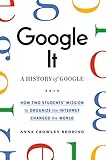
Google It: A History of Google | $11.49 | Buy on Amazon |
| 2 |

|
How Google Works | $9.99 | Buy on Amazon |
| 3 |

|
Life After Google: The Fall of Big Data and the Rise of the Blockchain Economy | $9.99 | Buy on Amazon |
| 4 |
|
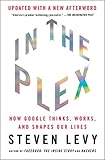
In the Plex: How Google Thinks, Works, and Shapes Our Lives | $12.99 | Buy on Amazon |
| 5 |

|
The Google Story | $14.27 | Buy on Amazon |
The original breakthrough: ranking the web
When Google was founded in 1998, the web was expanding faster than people could reliably navigate it. Search engines could index pages, but retrieval was often noisy and easy to manipulate. Google’s important insight was to treat the web’s link structure as a signal: links and other signals could help estimate relevance and authority, not merely locate words.
That produced a fast, uncluttered service that stood out in the late 1990s. More importantly, Google created a hierarchy of visibility. It did not simply make information findable; it ranked which information, businesses and institutions would be seen first. Once publishers, merchants, politicians and ordinary people depended on those positions, ranking became a social and economic institution.
#1 Best Overall
Google’s own history describes the move from a search product into hundreds of products and services. Google’s company history is useful context, but the larger change was the creation of a general-purpose gateway to knowledge and commercial discovery.
How search became an advertising machine
A search query often reveals immediate intent: someone is looking for a plumber, comparing software, researching a medicine or ready to buy a flight. That made search advertising unusually measurable. Advertisers could bid for access to a moment of need and connect spending to clicks, calls, leads, purchases or app installs.
From keywords to an advertising ecosystem
Google expanded beyond results pages through AdSense, AdMob, Ad Manager, YouTube and related products. Alphabet reports advertising in three broad categories—Google Search & other, YouTube ads and Google Network. Customers buy inventory through products including Google Ads, Google Ad Manager, Display & Video 360 and Google Marketing Platform. The 2025 Form 10-K describes these categories and tools.
| Alphabet revenue category | Fiscal 2025 revenue | What the figure represents |
|---|---|---|
| Google Search & other | $224.532 billion | Reported revenue, not the total value of transactions influenced by search |
| YouTube ads | $40.367 billion | Advertising revenue; excludes all YouTube subscription and platform revenue |
| Google Cloud | $58.705 billion | Reported segment revenue from infrastructure, data, AI and enterprise services |
| Total Alphabet revenue | $402.836 billion | Fiscal year ended December 31, 2025 |
This model gave users major services without a direct per-use charge while businesses paid for access to attention and intent. Small firms gained a comparatively accessible way to find customers. Marketing departments adopted cost-per-click campaigns, conversion tracking, automated bidding, audience segmentation and real-time optimization.
Free tools Windows power users keep installed
One-click scans. No signup required.
The trade-off was dependence. Search-engine optimization became an industry; publishers changed headlines, site structure and content to win visibility; and a ranking or advertising-policy change could redirect traffic and revenue overnight. “Organic” placement and paid placement also became harder for users to interpret as commercial formats multiplied.
Google says its products supported $739 billion of U.S. economic activity for businesses, nonprofits, publishers, creators and developers in 2023. That is a Google-produced estimate, not an independent national-accounts measure; its methodology and attribution limits matter. The company’s competition discussion makes the same claim in advocacy terms.
From a search product to a connected ecosystem
Each major expansion solved a strategic problem: retain the user’s identity, extend discovery into a new context, control a distribution layer or sell infrastructure to organizations.
Gmail, Workspace and browser-based work
Gmail made a Google account valuable beyond search and helped normalize large-scale webmail. Docs, Drive, Calendar, Meet and Workspace moved collaboration from locally installed software toward browser-based work. Google could then earn not only advertising revenue but organizational subscriptions and enterprise contracts.
Rank #2
Maps and local discovery
Maps turned search into navigation and local commerce. Directions, opening hours, photographs, reviews and listings became part of a restaurant’s, hotel’s, doctor’s or tradesperson’s public identity. A business can benefit from free discovery while remaining exposed to review disputes, inaccurate listings, moderation decisions and ranking changes.
Google’s 2004 founders’ letter already described Maps as a way to plot routes, get directions and find businesses—evidence that geographic discovery was an early extension of search.
YouTube and the creator economy
YouTube lowered the cost of publishing video and gave creators, educators, commentators, livestreamers and niche media global distribution. Recommendation systems became as important as search for deciding what audiences watch. The YouTube Partner Program made Google an intermediary among viewers, creators, advertisers and rights holders.
The opportunity comes with precarity. Creators can reach a worldwide audience but remain exposed to demonetization, copyright claims, policy changes and algorithmic volatility. Alphabet reported $40.367 billion in YouTube advertising revenue in 2025, separate from all subscription and platform revenue. The filing is the source for that qualification.
Android, Play and mobile defaults
Android placed Google services, search, Maps, app distribution, advertising and identity at the center of mobile computing. The operating-system core is open source, but proprietary Google applications and contractual distribution arrangements determine many practical defaults. Mobile therefore changed search from a desktop destination into a persistent layer embedded in devices, notifications, location services and app stores.
The European Commission’s Android case illustrates the difference between open code and controlled distribution. Alphabet’s 2025 filing records an original €4.3 billion fine, a reduction to €4.1 billion by the EU General Court and continuing appeal. Those are stages of litigation, not a universal conclusion about every Android device or market.
Chrome and the web’s software layer
Chrome gives Google influence over search defaults, advertising technology, privacy controls, web standards and the delivery of new AI features. Browser influence matters because it affects how websites, publishers, advertisers and developers reach users before any individual search occurs.
The new rules of business visibility
Discovery became algorithmic
Businesses now compete not only on products and prices but also on search ranking, review scores, structured data, page performance, mobile compatibility, local listings, content freshness, video visibility and platform compliance. A good product can remain invisible if it is poorly represented in a ranking system.
Measurement improved—and dependence deepened
Google’s auctions and analytics made marketing more accountable than broad demographic placement. They also made businesses reliant on opaque auctions, automated systems, attribution models and changing policies. Google can operate a marketplace, participate in it through its own services, collect signals about it and supply the measurement tools used to judge it. That combination is central to the debate over fair competition.
The social bargain: convenience with hidden costs
Knowledge and everyday access
Search, translation, Maps, Gmail, Photos, YouTube, mobile apps and cloud collaboration made learning, communication, navigation and publishing faster and cheaper. Alphabet’s 2024 filing said Android, Chrome, Gmail, Maps, Play Store, Search and YouTube each had more than two billion users. This is a company-reported figure using Alphabet’s product and measurement definitions, not an independent count of unique people. The 2024 Form 10-K provides the claim.
Ranking is not truth, however. Search prominence can reflect relevance, popularity, authority, freshness, commercial incentives or error. Recommendation, moderation, advertising eligibility and AI answers have different incentives and failure modes. Google’s systems influence what is visible at enormous scale, but that does not mean every result is accurate or neutral.
Privacy and the price of “free”
Google monetizes advertising and services using data, signals, targeting systems and measurement infrastructure; saying simply that it “sells personal data” is inaccurate without specifying a product, transaction or allegation. Relevant categories can include search history, location, account activity, browser and device signals, YouTube behavior and inferred interests. Collection, personalization, retention and sharing are different practices, and controls vary by product, setting, jurisdiction and policy.
Alphabet reports investigations and litigation involving location information, user choices, advertising and data use. Its privacy-policy material and 2025 filing show why users face a difficult bargain: services may be free at the point of use, while the user pays through attention, data, advertising exposure, subscriptions, device purchases or an employer’s contract.
Publishers, creators and the click economy
For years Google’s central promise to the web was traffic: users searched, clicked a result and visited another site. Publishers gained reach but lost bargaining power because a ranking change could remove a major audience source. Snippets and direct answers increasingly satisfy users without a visit, while YouTube keeps more viewing, recommendations and monetization inside Google’s properties.
This shift changes the question from “Does Google send traffic?” to “Who controls the distribution relationship?” News, copyright, indexing, scraping and AI training are recurring conflicts. A publisher may depend on Google while competing with Google-owned interfaces; a creator may gain a global audience while having little control over recommendation or revenue rules.
Cloud: Google as business infrastructure
Google Cloud extends the company from consumer services into infrastructure, storage, networking, analytics, machine learning, specialized chips and enterprise software. Cloud elasticity lowers the cost of launching and scaling digital products, but customers trade some control for convenience and may face migration costs or vendor lock-in.
The Tool Desk
Outbyte Driver Updater FREEScan for outdated or missing drivers - takes under a minuteDriver Scan →Outbyte PC Repair FREERepair Windows errors before they cause bigger problemsFix Now →Google Cloud revenue rose from $43.229 billion in 2024 to $58.705 billion in 2025, according to Alphabet’s filing. Revenue growth demonstrates the segment’s increasing financial importance; it does not, by itself, establish broad social benefit or profitability for every customer. Large data centers and AI workloads also bring substantial energy, water and hardware demands.
AI is both continuity and disruption
Why Google starts with advantages
Google has used machine learning for ranking, spam detection, translation, speech, Photos, Maps, recommendations and advertising for years. Its data centers, chips, research teams, Cloud platform and consumer distribution provide a foundation for deploying generative AI.
Why generative AI stresses the old model
AI Overviews and Gemini-style assistants can answer questions without sending users to publishers. Search can become conversational, multimodal and task-oriented, but each generated answer carries costs for inference, questions about factual reliability and new opportunities for spam and manipulation. Publishers may lose clicks even when their work supplies the underlying information.
Alphabet’s 2025 filing describes Search moving beyond “ten blue links” toward dynamic, multimodal experiences and says AI features are being integrated across products. Those are company descriptions, not independent proof that the new experience is more accurate, useful or beneficial to publishers. AI is therefore a stress test of Google’s search-centered model: it must preserve user trust and advertising economics while changing the interface that made both possible.
Quick wins for a faster PC:
Scan for outdated or missing drivers - takes under a minuteDriver Scan →Clear out junk files and repair common Windows errorsFree Scan →Why regulators are challenging Google’s scale
Antitrust cases concern specific markets and conduct, not a blanket legal judgment about every Google product.
Best Value
Search and search advertising
Regulators and plaintiffs argue that defaults, distribution payments and control of access points can preserve search dominance and limit rivals. The U.S. Department of Justice case page contains the principal federal search filings. Alphabet’s 2025 filing says the District Court for the District of Columbia ruled against Google in August 2024 and entered a December 2025 judgment involving distribution, search-data sharing and syndication remedies; Alphabet appealed in January 2026, while the DOJ and states appealed in February 2026. Remedies and appeals can change, so these procedural facts should be read as time-specific.
Advertising technology
The ad-tech question is whether control of advertiser tools, publisher tools, exchanges and measurement infrastructure gives Google the ability or incentive to disadvantage competitors. Alphabet reports a mixed April 2025 U.S. district-court decision: some claims involving advertiser tools and acquisitions were rejected, while publisher tools were found to have unlawfully excluded rivals; remedy proceedings and further litigation were ongoing in the filing.
Android and app distribution
Issues include default search arrangements, bundled applications, app-store commissions, alternative stores and billing systems, and the relationship between open-source Android code and proprietary Google services. The policy question is whether scale reflects superior products, control of defaults and distribution, or both.
Outdated Drivers Are Slowing You Down
One free scan finds every outdated or missing driver and matches the right update for your exact hardware.Free scan · exact hardware matchWindows Errors? Fix Them Before They Spread
Repair common Windows errors and clear accumulated junk for a smoother, more stable PC - no reinstall needed.Free scan · no reinstallWhat a fair assessment should count
Google’s benefits are real and should not be erased by criticism:
- Fast information retrieval and self-directed learning.
- Low-cost customer discovery for small businesses.
- Global distribution for creators, educators and niche communities.
- Navigation, translation, accessibility and local information.
- Browser-based collaboration and scalable cloud computing.
- Investment in AI research, infrastructure and scientific tools.
- Nonprofit support; Google.org says its Ad Grants program drove 14 billion visits to nonprofit websites, a company-reported impact figure. Google.org’s impact report provides the claim.
The correct comparison is not “Google is beneficial” versus “Google is harmful.” A product can be excellent and socially useful while the company’s position makes rivals, publishers, creators or customers dependent on decisions they cannot effectively challenge.
Five tests for Google’s next era
- Reach: How many people and organizations can use the service?
- Dependence: What happens when a business, creator or publisher loses visibility or access?
- Economic transfer: Who captures the value—users, advertisers, creators, publishers, developers, cloud customers or Google?
- Contestability: Can a rival enter, scale and reach users without Google-controlled defaults or infrastructure?
- Accountability: Who can challenge ranking, moderation, pricing, data use or an AI answer?
These tests expose the central tension. Google helped make information, communication, navigation, video publishing and software cheaper and more accessible. The same integration concentrated control over visibility, distribution, data, advertising markets and AI-mediated answers.
What comes after the search box?
Google’s next era will not be decided by whether it adds a chatbot to a results page. It will be decided by whether the company remains a gateway to other information or becomes the layer that interprets, generates, recommends and completes tasks on a user’s behalf.
Recommended Free Tools
If AI answers keep users inside Google, the company may capture more of the interaction while publishers and creators receive fewer visits. If Google opens distribution, cites sources clearly, gives users meaningful controls and allows rivals to compete for defaults and infrastructure, its scale could remain broadly useful without becoming unchallengeable. The outcome depends less on novelty than on who controls the gateways—and who can hold that control accountable.
Quick Recap
Product prices and availability are accurate as of the date/time indicated and are subject to change. Any price and availability information displayed on Amazon at the time of purchase will apply.




