Apple tried to join the U.S. Justice Department’s Google search remedies case after government proposals put its lucrative Safari arrangement at risk. Judge Amit Mehta rejected the request as untimely, and the D.C. Circuit affirmed on March 21, 2025. The rulings removed Apple from the remedies proceedings as an intervening party—but they did not themselves cancel Google’s payments to Apple.
What Apple’s Google agreement does
Google is the default general search engine in Apple’s Safari browser on iPhone, iPad and Mac unless a user changes the setting. Google provides the search service; Apple controls the distribution and default choice.

In return for that prominent access to Apple users, Google shares search-related advertising revenue with Apple. The arrangement lets Google monetize queries from a valuable audience while giving Apple recurring income without building and operating a full-scale general search engine.
Appellate-court materials identified approximately $20 billion paid to Apple in 2022 alone. News reports have described the arrangement as generating more than $20 billion a year, but amounts vary by year and by whether a source means the payment, revenue share or a particular accounting period. Apple does not separately identify the Google payment in its public financial statements.
What’s actually slowing this PC down?
Pick the symptom - the matching free tool is one click away.
#1 Best Overall

- Attention-grabbing design meets the latest evolution of the Google Pixel Camera on the new Google Pixel 11 Pro XL; Gemini Intelligence helps manage details so you can live in the moment[1]; and the phone is available in two sizes
- Unlocked Android phone gives you the flexibility to change carriers and choose your own data plan: Works with Google Fi, Verizon, T-Mobile, AT&T, and other major carriers[2]
- Stay informed without looking at your screen: When your phone is face down, Pixel HiLight gently alerts you with subtle glowing lights when your favorite contacts are calling or you’re talking with Gemini; exclusive to Google Pixel 11 Pro phones
- Magic Capture catches the moment as you live it: With just one tap, Pixel 11 Pro captures video and photos, and automatically edits, crops, and unblurs a curated collection, ready to share – and you get the memory of how it felt to be in the moment
- Two new cameras for more brilliant photos: A larger telephoto sensor captures 30% more light for clear, beautiful photos and videos, even in the dark[3]; Pixel’s longest zoom ever helps you capture details from impressive distances[4]
The default is not permanent exclusivity: Safari users can select another search engine. The government’s theory is that defaults still influence behavior because many users do not change them, giving Google privileged access even when alternatives are available.
Why the DOJ challenged the payments
The DOJ argued that Google used distribution agreements and revenue-sharing payments to maintain unlawful monopolies in general search services and general search-text advertising. The district court found Google liable on those markets on August 5, 2024. The liability ruling concerned Google’s conduct, not a finding that Apple had violated antitrust law in this case.
- Apple devices and Safari provide an unusually important path to search users.
- Default placement can steer queries toward Google even when switching is technically possible.
- Payments may discourage Apple from developing, promoting or distributing a competing search engine.
- Paying distributors can make it harder for rivals to obtain comparable access.
Google and Apple both have rational commercial reasons for the arrangement. The antitrust question is whether the same mutually profitable deal also raises rivals’ costs and helps preserve Google’s monopoly.
What Apple asked the court to do
On December 23, 2024, Apple sought limited intervention in the remedies phase. Apple argued that Google’s interests had diverged from its own because proposed remedies could restrict or eliminate the revenue-sharing agreement. It wanted to present evidence and arguments about the deal’s economic and competitive effects rather than relitigate Google’s liability.
Rank #2

- Google Pixel 10a is a durable, everyday phone with more[1]; snap brilliant photography on a simple, powerful camera, get 30+ hours out of a full charge[2], and do more with helpful AI like Gemini[3]
- Unlocked Android phone gives you the flexibility to change carriers and choose your own data plan; it works with Google Fi, Verizon, T-Mobile, AT&T, and other major carriers
- Pixel 10a is sleek and durable, with a super smooth finish, scratch-resistant Corning Gorilla Glass 7i display, and IP68 water and dust protection[4]
- The Actua display with 3,000-nit peak brightness shows up clear as day, even in direct sunlight[5]
- Plan, create, and get more done with help from Gemini, your built-in AI assistant[3]; have it screen spam calls while you focus[6]; chat with Gemini to brainstorm your meal plan[7], or bring your ideas to life with Nano Banana[8]
Apple’s position included several substantive points:
- Users can change Safari’s search setting, so default status does not prevent choice.
- Google might remain users’ preferred engine because of product quality, brand recognition or habit even without a payment.
- Apple uses the revenue to support broader investment, including research and development.
- Ending the payment could leave Google with more money without materially increasing rival usage or consumer choice.
Those arguments were not rejected after a full merits trial. The immediate question was whether Apple could become a party to the remedies process at that late stage.
Why Judge Mehta found the request too late
The court focused on when Apple reasonably should have understood that its interests were no longer protected by Google and that the payment arrangement could be targeted. The key procedural dates were:
| Date | Event |
|---|---|
| August 5, 2024 | The court found Google had unlawfully monopolized important search markets. |
| September 2024 | The court set the remedies schedule, including an April 2025 remedies hearing. |
| October 8, 2024 | Plaintiffs filed a remedies framework expressly identifying search distribution and revenue sharing. |
| November 20, 2024 | Plaintiffs filed a more specific proposed final judgment. |
| December 23, 2024 | Apple moved to intervene. |
Judge Mehta concluded that the risk to Apple’s agreement was apparent no later than the October 8 remedies framework. By December, discovery and briefing were substantially advanced. Adding Apple could have required new discovery and arguments, delayed the scheduled remedies trial and disrupted the government’s case.
Windows Errors? Fix Them Before They Spread
Repair common Windows errors and clear accumulated junk for a smoother, more stable PC - no reinstall needed.Free scan · no reinstallCrashes, No Sound, or Screen Glitches?
Random freezes, missing sound and display glitches usually trace back to one bad driver. Find and replace yours safely.Free scan · under a minuteRank #3

- Google Pixel 10 Pro is the ultimate Pixel experience, featuring advanced AI with Gemini, unbelievable camera quality, impeccable design in two sizes, and the next-gen Google Tensor G5 chip[1]
- Unlocked Android phone gives you the flexibility to change carriers and choose your own data plan[2]; it works - Google Fi, Verizon, T-Mobile, AT&T, and other major carriers
- Get a head start on syncing your data before it even arrives: After you purchase your new Pixel, look for an email that explains how to transfer your photos, videos, passwords, and more in just a few quick steps[11]
- Pixel’s pro camera system makes everything look amazing, even in low light; capture more of the scene with advanced Google AI models, and bring out incredible details with 100x Pro Res Zoom, stunning 50 MP images, and super steady videos in 8K[10]
- Pixel 10 Pro is built with durable aluminum and Corning Gorilla Glass Victus 2 for scratch and drop resistance; the 6.3-inch Super Actua display with 3,300-nit peak brightness is easy on the eyes, even in direct sunlight[3,13,18]
The DOJ made the same procedural argument: Apple had notice, waited through critical stages and could not enter late without imposing months of delay. The court could consider the effects of a remedy without allowing every affected business partner to become a party.
What the D.C. Circuit decided
On March 21, 2025, the U.S. Court of Appeals for the D.C. Circuit affirmed the denial of intervention. Its judgment was unpublished, and its scope was narrow. The court reviewed only whether Judge Mehta abused his discretion by finding Apple’s motion untimely.
The appeals court did not decide whether Apple’s defense of the Google agreement was substantively correct. It did not declare the Apple–Google contract illegal, order Apple to stop accepting payments or decide that all revenue sharing must end.
That distinction matters financially: Apple lost a procedural opportunity to participate in that remedies phase, not a final trial over its right to receive the payment.
The Tool Desk
Outbyte PC Repair FREEClear out junk files and repair common Windows errorsFree Scan →Outbyte Driver Updater FREEScan for outdated or missing drivers - takes under a minuteDriver Scan →Did Apple lose the $20 billion-plus deal?
Not as a direct result of the intervention ruling. The later remedies were less sweeping than the DOJ’s most aggressive proposals.
The remedies announced by the DOJ on September 2, 2025, and reflected in the final judgment listed on December 5, 2025, barred Google from entering or maintaining certain exclusive distribution contracts. They also limited how some revenue-sharing arrangements could be tied to keeping Google Search, Chrome, Google Assistant or Gemini in a preferred position for more than one year. Partners could not be barred from simultaneously distributing rival search engines, browsers or generative-AI products.
Those restrictions targeted exclusivity and the structure of distribution incentives. They did not impose a blanket prohibition on every payment Google might make to Apple. The operative judgment and later compliance proceedings determine how particular Apple products and arrangements are affected; the litigation does not support saying that Apple was ordered to surrender all Google revenue.
The DOJ’s case page records continuing appeals and compliance activity. As of August 18, 2026, Google’s broader search litigation and remedies appeals remained active, so the long-term effect on Apple’s search economics was not finally settled.
Best Value
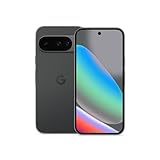
- Google Pixel 10 is the everyday phone unlike anything else; it has Google Tensor G5, Pixel’s most powerful chip, an incredible camera, and advanced AI - Gemini built in[1]
- Unlocked Android phone gives you the flexibility to change carriers and choose your own data plan[2]; it works with Google Fi, Verizon, T-Mobile, AT&T, and other major carriers
- Unlocked Android phone gives you the flexibility to change carriers and choose your own data plan[2]; it works - Google Fi, Verizon, T-Mobile, AT&T, and other major carriers
- The upgraded triple rear camera system has a new 5x telephoto lens - up to 20x Super Res Zoom for stunning detail from far away; Night Sight takes crisp, clear photos in low-light settings; and Camera Coach helps you snap your best pics[3]
- Pixel 10 is designed - scratch-resistant Corning Gorilla Glass Victus 2 and has an IP68 rating for water and dust protection[21]; plus, the Actua display - 3,000-nit peak brightness is easy on the eyes, even in direct sunlight[4]
Why the ruling matters to Apple and investors
Revenue concentration
A payment measured in tens of billions of dollars annually is strategically important even for a company as large as Apple. A reduction or restructuring would affect services-related income and the economics of keeping Google as Safari’s default, although the exact effect would depend on the final contract and user behavior.
Defaults versus actual choice
The case tests whether a setting that users can change still provides enough distribution power to support monopoly maintenance. The legal analysis is about aggregate behavior and access to queries, not whether switching is technically possible for an individual user.
Apple’s incentive to build alternatives
If payments become less reliable or subject to stricter conditions, Apple could face greater pressure to support another search provider or develop more of its own search and artificial-intelligence capabilities. That would require substantial investment and would not automatically replace the lost revenue.
Remedy design
The dispute also shows why antitrust remedies need not be limited to copying the precise wording of past contracts. A court can restrict related practices that might recreate the same exclusionary effect, while stopping short of banning every commercial payment.
Recommended Free Tools
What remains unresolved
- Google’s appeals could change the scope or timing of the distribution restrictions.
- Compliance proceedings may clarify how the rules apply across iPhone and iPad Safari, Mac Safari and other search-access points.
- It remains uncertain whether changing payment terms would materially increase rival search usage or mainly redistribute profits among Google, Apple and competitors.
- Apple’s future search or AI strategy could alter its dependence on Google, but no court ruling requires Apple to build a replacement.
The central financial takeaway is narrower than many headlines suggest: Apple’s late intervention failed, increasing the risk around a very large revenue stream, but neither that ruling nor the later remedies automatically ended the Google–Apple payment relationship.
Quick Recap
Key court and government documents
- D.C. Circuit judgment affirming denial of Apple’s intervention motion
- DOJ response describing Apple’s delay and the October 8 remedies framework
- DOJ opposition to Apple’s emergency stay request
- DOJ announcement of the September 2, 2025 remedies
- DOJ case page with the final judgment and later filings
Product prices and availability are accurate as of the date/time indicated and are subject to change. Any price and availability information displayed on Amazon at the time of purchase will apply.




