Starlink is usually worth the cost when it replaces unusably slow, unreliable, or unavailable rural internet. It is generally a poor value if you can get similarly priced fiber, cable, dependable fixed wireless, or strong 5G home internet.
The official U.S. plan page reviewed August 16, 2026, displayed Residential Lite at $30 per month, Residential at $50, and Roam 100GB at $45. Those are service prices—not your complete first-year cost. Your address-specific quote may add a kit, taxes, shipping, mounting, installation, and electricity.
Starlink plan prices at a glance
These prices were displayed on Starlink’s U.S. service-plan page on August 16, 2026. Availability, promotions, taxes, and account-specific offers can differ. Confirm the quote by entering your exact address at Starlink’s service-plan page before ordering.
| Plan | Displayed monthly price | Best for | Data and priority | Mobility |
|---|---|---|---|---|
| Residential Lite | $30 | Lower-cost fixed home service | Unlimited data, but deprioritized; peak-hour speeds can be lower and the plan is unavailable in some areas | Fixed land-based address |
| Residential | $50 | Most households at one address | Unlimited data with normal residential priority | Fixed land-based address |
| Roam 100GB | $45 | Occasional travel, camping, or portable use | 100GB of high-speed data, then unlimited low-speed data on the listed metered offer | Travel in supported markets, subject to restrictions |
Starlink’s help documentation also lists Roam configurations such as 100GB at $55, 300GB at $80, and Unlimited at $175. These conflicting public figures show why a generic Roam price is not universal: market, address, account, and update date matter. Check the offer shown in your account at Starlink’s Roam-plan help page.
Outdated Drivers Are Slowing You Down
One free scan finds every outdated or missing driver and matches the right update for your exact hardware.Free scan · exact hardware matchWindows Errors? Fix Them Before They Spread
Repair common Windows errors and clear accumulated junk for a smoother, more stable PC - no reinstall needed.Free scan · no reinstall#1 Best Overall
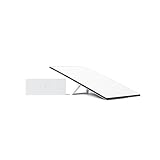
- Starlink provides reliable high-speed, low-latency, internet wherever you live
- Service plan required, activate STARLINK by selecting a service plan that is customized to meet your personal needs
- Select from plans suited for households or travel
- Get online in minutes, set up STARLINK with just 2-steps, plug it in and point at the sky
- STARLINK comes with everything needed to get online including a kickstand, gen 3-router, cables and power supply
Starlink lists business categories separately, including Local Priority starting from $55 per month and Global Priority starting from $250 per month. Those are starting prices, not a complete household price list; priority data, data blocks, mobility, support, and acceptable-use terms differ. See Starlink’s business plans.
What Starlink costs beyond the monthly bill
Use this calculation rather than assuming the advertised monthly price is your total:
First-year cost = kit + required accessories or installation + 12 monthly payments + taxes and fees + electricity.
Rank #2

- Gen 3 Satellite Dish: Third-generation antenna delivers a stronger, more stable signal and faster performance.
- Wi-Fi 6 Router: Modern router technology supports faster speeds, increased device capacity, and better efficiency.
- Extra 150FT Cable Included: Extended reach for more flexible installation in large spaces or hard-to-access locations.
- High-Speed, Low-Latency Internet: Stream HD content, video conference, or work remotely with confidence.
- Ideal for Rural and Remote Areas: Perfect for homes, cabins, RVs, boats, and off-grid setups where wired internet isn’t available.
Ongoing annual cost = 12 × monthly service price + taxes and fees + electricity + occasional equipment costs.
What’s actually slowing this PC down?
Pick the symptom - the matching free tool is one click away.
Service cost for 12 months
| Plan | Annual service at displayed price | What is excluded |
|---|---|---|
| Residential Lite | $360 | Kit, taxes, shipping, installation, accessories, electricity |
| Residential | $600 | Kit, taxes, shipping, installation, accessories, electricity |
| Roam 100GB | $540 | Kit, taxes, shipping, installation, accessories, electricity |
Kit, shipping, and activation
Starlink does not publish one universal kit price. Its order flow shows the applicable one-time charge after you enter an address and select a configuration; use Starlink’s cost guidance to verify it. Check whether the offer is for a Standard Kit or Mini Kit, whether hardware is purchased or offered under a local promotion, shipping charges, return or trial terms, and when billing begins. Starlink’s Critical Information Summary says service charges can start at activation, after a specified period following delivery, or under another term in the customer agreement.
A kit generally includes the dish, router, power supply, cables, and a basic stand or kickstand, depending on model. A roof, pole, or wall mount and additional cable-routing hardware may cost extra. See Starlink’s mounting guidance.
Rank #3

- 🚀 Next-Generation Connectivity: Enjoy lightning-fast, low-latency internet powered by SpaceX’s Standard Dish — ideal for homes, farms, and rural or remote areas.
- 📶 Enhanced Wi-Fi 6 Router: Includes the latest dual-band Wi-Fi 6 router delivering stronger coverage, faster speeds, and improved reliability for multiple connected devices.
- ⚡️ Easy Plug-and-Play Setup: Simple installation with all required cables and mounts included — connect, power on, and get online in minutes.
- 🌦️ Rugged & Weather-Resistant Design: Built to perform in extreme environments — rain, snow, or high winds — for year-round connectivity.
- 🏕️ Residential & Remote-Area Ready: Perfect for off-grid living, cabins, RVs, and rural households seeking a dependable high-speed internet solution.
Installation and electricity
Before buying, run the Starlink app’s obstruction check where you plan to place the dish. Trees, buildings, hills, and rooflines can cause recurring interruptions even when the site looks open from the ground. A permanent mount, longer cable, grounding or electrical work, professional roof installation, mesh node, or networking adapter can add to the bill.
Starlink’s Standard 4 X specification lists average consumption of approximately 75–100 watts. At continuous operation, that is about 657–876 kWh per year, calculated as watts ÷ 1,000 × 24 × 365. Multiply by your local electricity rate; this is an estimate, not a Starlink fee. Starlink says the Mini typically uses 20–40 watts on average and about 15 watts idle; details are in its Mini power guidance.
Quick wins for a faster PC:
Scan for outdated or missing drivers - takes under a minuteDriver Scan →Clear out junk files and repair common Windows errorsFree Scan →Fix the driver behind crashes, sound loss and screen glitchesFind Drivers →Residential Lite versus Residential
Residential Lite: saving $20 a month
Lite saves $240 per year before taxes and equipment compared with Residential. The trade-off is priority: Starlink describes Lite traffic as deprioritized relative to other fixed-service plans, so busy evening periods or a congested service area can produce more noticeable slowdowns. It is a reasonable value for a small household with flexible usage and a lightly loaded cell, but it is not unlimited data at identical performance.
Rank #4

- Not official Starlink Bundle. No warranty.
- This is not an official starlink bundle. Purchasing this item does not come with a Starlink warranty.
- This is not Starlink. You will not receive a warranty with this bundle created by an outside seller.
Residential: the default household choice
Residential costs $50 on the reviewed public page and is designed for one fixed address with unlimited data and normal residential priority. It is easier to justify when several people stream or video-call simultaneously, work from home during evening hours, or cannot tolerate congestion-related variability. Availability and performance remain address-dependent.
When Roam is the right plan
Roam is for RVs, campers, nomadic workers, and travel—not simply Residential service that works everywhere. Starlink describes countrywide use in supported markets, some in-motion use subject to restrictions, plan changes through the account portal, and Standby Mode subject to plan rules. Metered tiers provide a high-speed allowance; after it is used, the listed plans provide unlimited low-speed data.
Choose Roam only after estimating your data. A few remote-work days, navigation, and light streaming may fit a 100GB allowance; multiple 4K streams, cloud backups, and full-time work can consume it quickly. Check country, international, in-motion, pause, and reactivation rules in Starlink’s Roam details and plan-change guidance.
The Tool Desk
Outbyte Driver Updater FREEScan for outdated or missing drivers - takes under a minuteDriver Scan →Outbyte PC Repair FREERepair Windows errors before they cause bigger problemsFix Now →What performance can you realistically expect?
Starlink says users typically experience roughly 25–220 Mbps download, 5–20 Mbps upload, and land latency commonly around 25–60 milliseconds. Its plan table gives approximate Residential expectations of 20–100 Mbps down and 5–15 Mbps up. These are typical or expected ranges, not guaranteed minimums; location, congestion, obstructions, weather, equipment, and network conditions matter. Read Starlink’s specifications for the qualification and service limitations.
- Generally suitable: HD and 4K streaming, video calls, web and cloud applications, ordinary household use, and many forms of online gaming.
- Needs qualification: competitive gaming, upload-heavy work, large cloud backups, several simultaneous 4K streams, and always-on business systems.
- Reliability factors: weather, obstructions, power loss, and installation quality can still interrupt service. A dish and router also need electricity, so a battery, generator, or UPS is required for outage resilience.
Starlink compared with alternatives
| Your situation | Likely better starting point | Why Starlink may still matter |
|---|---|---|
| Fiber available | Fiber | Starlink is a fallback if installation or service reliability is unusual; fiber normally offers lower latency and stronger uploads. |
| Reliable cable available | Usually cable | Compare upload limits, promotional expiration, equipment fees, and local reliability. |
| Strong local fixed wireless | Compare carefully | A clear line of sight to a nearby tower can deliver lower latency and simpler equipment. |
| Strong 4G/5G home signal | Compare the address-specific offer | Cellular can be cheaper and easier, but tower congestion, eligibility, caps, and policy changes matter. |
| Very slow DSL or no broadband | Starlink often deserves serious consideration | It can provide substantially more usable bandwidth where terrestrial choices fail. |
| RV or frequent travel | Roam or cellular | Residential is intended for a fixed location; choose based on travel coverage and data needs. |
| Business-critical connectivity | Wired primary plus a tested backup | Starlink can be useful as backup, but published performance is not a service-level guarantee. |
For one current comparison point, Verizon lists 5G Home at $60 per month, Plus at $70, and Ultimate at $85 before applicable discounts; availability and terms depend on address. See Verizon’s 5G Home page. Do not treat that offer as a universal price for every carrier or household.
Quick Recap
When Starlink is worth it
Strong yes
- No wired broadband is available, or existing DSL, satellite, or fixed wireless is too slow for work, school, or streaming.
- The dish location passes the obstruction test.
- Local 4G/5G is weak, capped, unstable, or unavailable.
- Unlimited data is valuable and the full installed cost is acceptable.
Usually no
- Fiber is available at a similar price.
- Cable, reliable fixed wireless, or strong 5G provides better latency and consistency.
- Heavy tree cover leaves no practical mounting location.
- You need very stable uploads, ultra-low latency, or guaranteed business performance.
Maybe or backup
- A rural business needs a second connection.
- A seasonal home can use acceptable pause rules.
- A cellular hotspot is useful but unreliable for remote work.
- Fiber is scheduled soon and Starlink’s equipment payback as a temporary bridge is acceptable.
Address-specific buying checklist
- Enter the exact service address on Starlink’s order site.
- Record the offered plan, monthly price, availability, and whether the price is promotional.
- Record kit, shipping, taxes, activation, return, and trial terms.
- Run the obstruction test at the proposed dish location before purchasing.
- Price any mount, longer cable, mesh node, networking accessory, grounding, or professional installation.
- Compare local fiber, cable, fixed wireless, DSL, and 4G/5G quotes, including post-promotion prices and data policies.
- Estimate annual electricity from the kit’s published wattage and your utility rate.
- Decide whether a UPS, generator, or separate backup connection is necessary.
- Recheck the quote immediately before ordering because Starlink may change plans, kits, and specifications.
Bottom line by reader type
- Rural homeowner: Often worth it when no good terrestrial option exists and the site is unobstructed.
- Small household: Lite can be the value choice if peak-hour slowdowns are acceptable; Residential buys more consistent priority.
- Large household or remote worker: Residential is generally easier to justify, but compare cable or fiber first.
- Gamer: Playable for many users, but fiber’s latency and consistency are preferable for competitive play.
- RVer: Evaluate Roam data allowances, travel rules, and power requirements rather than Residential.
- Seasonal-home owner: Check Standby Mode and pause billing rules before assuming you can avoid off-season charges.
- Small business: Consider Starlink as a tested backup unless business-specific priority and support features justify the higher plan cost.
- Urban or suburban household: Fiber, cable, or strong 5G will usually offer better value.
Product prices and availability are accurate as of the date/time indicated and are subject to change. Any price and availability information displayed on Amazon at the time of purchase will apply.




