Amazon’s first full-scale satellite launch happened on April 28, 2025, when a United Launch Alliance Atlas V 551 carried 27 production spacecraft into orbit from Cape Canaveral, Florida. The program is now called Amazon Leo, not Project Kuiper. Amazon said nearly 400 satellites were in orbit by July 30, 2026 and that initial service could begin during 2026—but that does not mean broad public availability, confirmed consumer pricing, or parity with Starlink.
What Amazon actually launched
The Atlas V mission deployed 27 production satellites, each designed to use electric propulsion to climb to an operating altitude of about 630 kilometers (392 miles). Amazon says the spacecraft travel at roughly 27,359 km/h (17,000 mph) and orbit Earth about every 90 minutes. The launch’s immediate objectives were orbit raising, systems testing and the start of full-scale constellation deployment. Amazon’s launch account describes the mission and spacecraft.
“First satellites” needs a qualification. Amazon had already launched two prototype satellites in October 2023; April 2025 was the first launch of the production design intended for commercial service.
Project Kuiper is now Amazon Leo
Amazon renamed Project Kuiper Amazon Leo on November 13, 2025. The first-generation system is planned to contain more than 3,000 low-Earth-orbit satellites connected by optical inter-satellite links, ground gateways and terrestrial internet infrastructure. Amazon’s rebrand announcement and its Leo overview describe the architecture.
The Tool Desk
Outbyte PC Repair FREEClear out junk files and repair common Windows errorsFree Scan →Outbyte Driver Updater FREEScan for outdated or missing drivers - takes under a minuteDriver Scan →#1 Best Overall
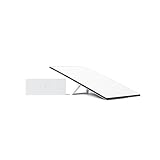
- Starlink provides reliable high-speed, low-latency, internet wherever you live
- Service plan required, activate STARLINK by selecting a service plan that is customized to meet your personal needs
- Select from plans suited for households or travel
- Get online in minutes, set up STARLINK with just 2-steps, plug it in and point at the sky
- STARLINK comes with everything needed to get online including a kickstand, gen 3-router, cables and power supply
How a Leo connection works
- A phone, computer or local network sends traffic to a Leo phased-array terminal.
- The terminal connects to a satellite overhead.
- Traffic travels through satellite links and/or a gateway station.
- A terrestrial connection carries it to the wider internet.
- The return path follows the same elements in reverse.
Amazon has announced three terminal families: Leo Nano, Leo Pro and Leo Ultra. A previously disclosed target put the standard terminal’s manufacturing cost below $400; that is an internal production target, not a retail price or a promise that equipment will be supplied free. Amazon’s terminal description explains the target.
For enterprise users, Amazon says Leo Ultra can support up to 1 Gbps downlink and 400 Mbps uplink. Those are advertised maximum capabilities, not guaranteed household speeds or a published consumer plan. The Leo Ultra announcement also describes an enterprise preview that began in late 2025.
Why Starlink is the benchmark
Amazon entered a market in which Starlink already had years of operating experience, a large constellation, retail hardware and customers. Reuters reported after the April 2025 launch that Starlink had launched roughly 8,000 satellites and served more than five million users in 125 countries; those figures were reported at that time and change continually. The report shows why “rival” describes Amazon’s strategic intent, not equal strength at launch.
Rank #2

- Bundle Includes: STARLINK - Mini Kit AC Dual Band Wi-Fi System - White
- FAST SATELLITE INTERNET ANYWHERE: Access high-speed, low-latency internet even in and rural areas using the global Starlink satellite network. Designed by SpaceX, the Starlink Mini Kit provides dependable connectivity without wired infrastructure, making it ideal for travel, camping, work, off-grid cabins, RV setups, and locations with no traditional broadband options.
- COMPACT AND PORTABLE DESIGN: The Starlink Mini is small enough to carry in a backpack yet powerful enough for daily use. Its portable, all-in-one design includes an integrated Wi-Fi router, DC power input, and rugged housing suitable for on-the-go applications. Whether at a campsite, construction site, or temporary location, Starlink Mini offers quick deployment and reliable performance.
- EASY TWO-STEP SETUP: Get online in minutes—simply plug in the Mini, point it at the sky, and connect. The kit includes everything needed for installation, including a kickstand, pipe adapter, power cable, and power supply. Use the Starlink app to find a clear sky view, check obstructions, explore mounting options, and manage your Starlink account and hardware settings.
- BUILT-IN ROUTER WITH WI-FI 5: The Starlink Mini includes an integrated dual-band Wi-Fi 5 router for strong wireless coverage and stable speeds. A built-in ethernet port provides wired connectivity for routers, mesh systems, gaming devices, or network hardware. Average power consumption of 25–40 watts supports efficient operation in off-grid or mobile power setups.
| Category | Amazon Leo | Starlink |
|---|---|---|
| Production launch | April 28, 2025 | Operating before Amazon’s first production launch |
| Constellation status in cited 2026 sources | Nearly 400 satellites in orbit, according to Amazon on July 30, 2026 | Thousands of satellites and more than five million users were reported in 2025 |
| Consumer pricing | Not established in the cited sources | Existing retail plans; price varies by country, plan and address |
| Launch model | Multiple providers, including SpaceX | SpaceX launches its own satellites |
| Potential differentiation | AWS and enterprise relationships, aviation and government offerings, new terminals | Scale, operating history, established service and distribution |
Who Amazon says Leo will serve
Amazon has positioned Leo for households outside fiber and fixed wireless coverage, rural communities, businesses, governments, aviation and mobile or field operations. Actual performance depends on satellite density, latitude, spectrum, terminal placement, gateways, weather, congestion and local licensing. Amazon has announced relationships involving JetBlue, L3Harris, DIRECTV Latin America, Sky Brasil, Australia’s NBN Co. and Delta Air Lines.
Delta is not a current home-internet launch: Amazon said the airline plans to begin rolling out Leo in 2028, initially on 500 aircraft. The Delta announcement describes that timetable.
When can customers actually use it?
Amazon’s April 2025 announcement expected service later that year, but later statements moved the practical timetable into 2026. Amazon said initial coverage would begin in northern and southern latitudes and expand toward the Equator as more satellites and capacity became available. Its 2026 deployment update and rebrand announcement describe the staged approach.
Rank #3

- Gen 3 Satellite Dish: Third-generation antenna delivers a stronger, more stable signal and faster performance.
- Wi-Fi 6 Router: Modern router technology supports faster speeds, increased device capacity, and better efficiency.
- Extra 150FT Cable Included: Extended reach for more flexible installation in large spaces or hard-to-access locations.
- High-Speed, Low-Latency Internet: Stream HD content, video conference, or work remotely with confidence.
- Ideal for Rural and Remote Areas: Perfect for homes, cabins, RVs, boats, and off-grid setups where wired internet isn’t available.
In its July 30, 2026 earnings release, Amazon said nearly 400 satellites were in orbit and that this was enough to begin initial satellite-internet service during 2026. That wording indicates an initial or limited rollout—not universal consumer availability. It is useful to distinguish:
- prototype and network testing;
- selected enterprise preview access;
- initial or regional service;
- general consumer ordering;
- global coverage.
The cited sources do not establish a final consumer hardware price, monthly residential plan, installation fee, data policy or address-level service map. Readers who need service immediately should check Starlink’s official availability page. Readers tracking Leo can use Amazon’s official Leo page for updates and signup information.
The FCC deployment deadline
The FCC authorization requires Amazon’s first-generation constellation to have 1,616 satellites deployed and operating by July 30, 2026, and 3,232 by July 30, 2029. The requirements appear in the FCC’s 2026 authorization material and the original 2020 authorization.
Rank #4

- 🚀 Next-Generation Connectivity: Enjoy lightning-fast, low-latency internet powered by SpaceX’s Standard Dish — ideal for homes, farms, and rural or remote areas.
- 📶 Enhanced Wi-Fi 6 Router: Includes the latest dual-band Wi-Fi 6 router delivering stronger coverage, faster speeds, and improved reliability for multiple connected devices.
- ⚡️ Easy Plug-and-Play Setup: Simple installation with all required cables and mounts included — connect, power on, and get online in minutes.
- 🌦️ Rugged & Weather-Resistant Design: Built to perform in extreme environments — rain, snow, or high winds — for year-round connectivity.
- 🏕️ Residential & Remote-Area Ready: Perfect for off-grid living, cabins, RVs, and rural households seeking a dependable high-speed internet solution.
Amazon’s reported nearly 400 satellites on July 30, 2026 appear materially below 1,616. However, the cited FCC documents establish the milestone, not a final finding of noncompliance. The responsible conclusion is that Amazon faced a significant regulatory question and that any waiver, modification, enforcement or compliance determination would need to come from the FCC. Do not treat the satellite count alone as proof of a violation.
Independent reader supportYour contribution helps us test, update, and keep practical guides available for everyone.How Amazon plans to reach thousands of satellites
Amazon has booked more than 80 launches with United Launch Alliance, Arianespace, Blue Origin and SpaceX, calling the package one of the largest commercial launch procurements in space-industry history. Amazon’s procurement announcement lists the providers.
Using SpaceX is strategically awkward but commercially rational: satellite operators buy suitable, reliable launch capacity wherever it is available. Amazon’s association with Blue Origin does not guarantee enough near-term rocket capacity to wait for one provider. Launch schedules remain plans and can be affected by vehicle delays, weather and range availability.
Free tools Windows power users keep installed
One-click scans. No signup required.
Best Value
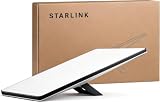
- 🚀 Ultra-Fast Satellite Internet Anywhere Enjoy high-speed, low-latency connectivity even in remote locations where cellular service fails. Stream, work, game, and video-call with stable performance powered by the advanced satellite network.
- 📡 4th Gen Phased-Array Antenna for Maximum Performance The compact Mini device uses cutting-edge phased-array technology to deliver stronger signals, faster speeds, and improved reliability—ideal for RV travel, camping, boating, and off-grid living.
- ⚡ Quick & Easy Setup in Minutes Just power it on, connect through the app, and you’re online. No tools, no technicians, no complicated installation—perfect for travelers, remote workers, and emergency situations.
- 🌦️ Built for Outdoor Adventure – Weather & Heat Resistant Designed for real-world conditions with durable construction that withstands rain, sun, dust, and harsh environments. Stay connected during your outdoor trips, marine activities, field operations, and more.
- 🎒 Ultra-Portable, Lightweight & Travel-Ready Compact form factor makes it easy to carry in a backpack or RV drawer. Ideal for digital nomads, campers, boaters, remote teams, and anyone who needs dependable internet on the go.
Advantages and risks for Amazon
Where Amazon could be strong
- Amazon can finance a capital-intensive network and combine it with AWS, enterprise sales and global logistics.
- Business, government, aviation and remote-site contracts may produce early revenue without winning every household.
- Compact phased-array terminals and a premium terminal with stated gigabit-class capability could broaden use cases.
- A credible second large LEO network could give customers more choice and put pressure on prices and service commitments.
What makes the challenge difficult
- Starlink has a substantial scale, customer and operational lead.
- More than 3,000 satellites require sustained manufacturing, launches, orbital operations, replacements, gateways and terminal production.
- Regulatory milestones add schedule and compliance risk.
- Service can be limited by heavy precipitation, blocked sky view from trees or buildings, power failures, gateway backhaul and congestion.
- Country-specific authorizations may prevent service even where satellites are overhead.
Timeline from authorization to initial service
| Date | Event |
|---|---|
| July 30, 2020 | FCC authorized a first-generation Kuiper constellation of 3,236 satellites. |
| October 6, 2023 | Two prototype satellites launched. |
| April 2, 2025 | Amazon announced a first production mission carrying 27 satellites. |
| April 28, 2025 | Atlas V 551 launched those 27 satellites from Florida. |
| November 13, 2025 | Project Kuiper became Amazon Leo. |
| November 24, 2025 | Amazon announced Leo Ultra and an enterprise preview. |
| February 12, 2026 | An Ariane 64 mission deployed 32 satellites; Amazon said the constellation exceeded 200. |
| March 23, 2026 | Amazon said more than 200 satellites had launched and more than 200 additional satellites were flight-ready. |
| July 30, 2026 | Amazon reported nearly 400 satellites in orbit and said initial service could begin in 2026. |
What this means for a prospective customer
Leo is not yet a simple substitute that every household can order. Before choosing any satellite provider, check availability at the exact address, monthly price, hardware and installation costs, upload needs, latency, congestion policy, weather exposure, cancellation terms, support and local licensing. A property with reliable fiber is usually evaluating a different trade-off from a remote site with no terrestrial broadband. A terminal also needs a clear view of the sky; trees, buildings and terrain can make a technically available service impractical.
Amazon’s April 2025 launch was therefore a major engineering and business milestone, not an instant consumer launch. By 2026, Leo had moved from prototypes to a growing production constellation and selected enterprise work, while Starlink retained the practical advantage in scale and availability. Whether Amazon becomes a meaningful challenger will be decided by sustained deployment, regulatory resolution, real-world capacity, terminal and service pricing, reliability and customer adoption—not by the first 27 satellites alone.
Quick Recap
Product prices and availability are accurate as of the date/time indicated and are subject to change. Any price and availability information displayed on Amazon at the time of purchase will apply.




