Before SpaceX, Tesla and billionaire headlines, Elon Musk was a technically curious but socially isolated teenager in apartheid-era South Africa. Between roughly ages 12 and 17, he wrote and sold a small computer game, endured severe bullying, read obsessively, developed interests in space and energy, changed schools and began planning a route to North America. These experiences help explain recurring themes in his later career, but they do not prove that his adult companies or personality were predetermined.
His background in Pretoria
Musk was born in Pretoria in 1971, the eldest of three children: Elon, Kimbal and Tosca. His father, Errol Musk, was an engineer. His mother, Maye Musk, was Canadian-born and worked as a model and dietitian/nutritionist, according to Queen’s Alumni Review.



His adolescence unfolded under South Africa’s apartheid system. That political setting mattered to his plans, particularly because Musk later said he did not want compulsory military service that would place him inside the apartheid state. His Canadian family connection also gave him a practical immigration route out of South Africa and toward North America.
The family’s later recollections portray a boy drawn to computers, books and speculative questions more than to sport or school social life. Those recollections are retrospective, so they are best treated as reported memories rather than a complete contemporaneous record.
#1 Best Overall
At 12, he published Blastar
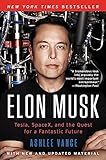
Musk’s first clearly documented commercial step came in 1984, when he was about 12. He wrote Blastar, a short BASIC game about destroying an alien spacecraft carrying weapons. Ashlee Vance reports that South African trade magazine PC and Office Technology published the source code and paid Musk approximately $500: Vance’s biography describes the publication and payment in detail.
The program reportedly used 167 lines of code. Calling this “selling a video game” is fair in a broad sense, but it was not a teenage software company or a modern startup. Its importance is more modest and more useful: Musk had access to a computer, learned to code well enough to submit a working program for publication, and showed an early willingness to turn a technical interest into money.
Bullying, isolation and a serious school attack
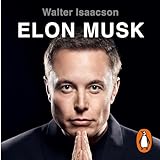
Bullying is central to accounts of Musk’s adolescence, but the details come mainly from Musk, relatives, classmates and later biographers. Vance and Walter Isaacson describe years of harassment and social isolation. Musk told 60 Minutes in 2018 that he was “almost beaten to death”: CBS’s interview records his own characterization.
Isaacson’s account, excerpted by CBS, describes a particularly severe incident in which other students kicked Musk, pushed him down concrete stairs and left him hospitalized for about a week. The biographies also report lasting damage to his nose and facial tissue. Those descriptions are retrospective and differ in wording and interpretation; they should not be presented as if every detail has independent documentary confirmation.
Recommended Free Tools
Rank #2
The experience clearly mattered to Musk and his family. It does not, however, establish that bullying caused later aggression, risk-taking or management style. A difficult adolescence can be part of a biography without serving as a complete psychological theory.
Veldskool: the survival-camp accounts
Isaacson reports that Musk attended a South African wilderness camp known as veldskool at approximately ages 12 and 16. The accounts describe scarce food and water, physical fighting and a coercive, paramilitary atmosphere. Musk recalled being beaten during the earlier visit; Kimbal Musk said the later visit was less traumatic after Elon had grown larger and learned some judo. These descriptions appear in the CBS excerpt from Isaacson’s biography.
The dramatic language sometimes used for the camp is a characterization attributed to Musk, not a neutral institutional history. The safest conclusion is that the camps were remembered by Musk and his family as harsh experiences that reinforced an already strong culture of physical toughness around him.
School changes and an ordinary-looking teenager
Vance’s biography places Musk in Bryanston High School for the equivalent of eighth and ninth grades, followed by Pretoria Boys High School for the latter part of high school. At Pretoria Boys, his school life reportedly became more bearable after a growth spurt and because students behaved better. The school chronology comes from Vance’s account.
Do these 3 things before closing this tab:
1Repair Windows errors before they cause bigger problems2Scan for outdated or missing drivers - takes under a minute3Clear out junk files and repair common Windows errorsFormer classmates remembered a quiet, technically interested student who was socially isolated and uninterested in sports. Crucially, they did not describe an obvious future billionaire, charismatic school leader or universally recognized genius. That absence matters: later success can make ordinary teenage traits look prophetic when they were not experienced that way at the time.
Books, science fiction and big questions
Reading gave Musk both an escape from school life and a vocabulary for imagining different futures. Accounts of his adolescence mention comic books, science fiction, philosophy and existential questions. Vance writes that Musk experienced an existential crisis around age 14 and turned to religious, philosophical and science-fiction texts. That is Vance’s reported interpretation, not a clinical diagnosis.
The Hitchhiker’s Guide to the Galaxy became an especially important reference point in later accounts. Musk has also described learning to focus on which questions to ask, rather than merely accumulating answers. These ideas help explain his attraction to large technological problems, but they do not show that a particular book caused his later business decisions.
Early signs of interest in rockets, energy and other planets
Vance reports that classmates remembered Musk bringing model rockets to school and launching them during breaks. They also recalled him arguing in a science debate for solar energy over fossil fuels and discussing the possibility of colonizing other planets. These memories are valuable evidence of recurring interests, but they were collected retrospectively.
Quick wins for a faster PC:
Scan for outdated or missing drivers - takes under a minuteDriver Scan →Repair Windows errors before they cause bigger problemsFix Now →Fix the driver behind crashes, sound loss and screen glitchesFind Drivers →The evidence has different strengths:
- Directly documented: Blastar was a space-themed computer game that Musk wrote and submitted for publication.
- Reported later by classmates: model rockets, solar-energy arguments and planetary-colonization discussions.
- Interpretive: the claim that these teenage interests directly predicted SpaceX, Tesla or any other later company.
The fair reading is that space, computing and energy appeared early in Musk’s interests. It is not that his later companies were inevitable.
Why he wanted to leave South Africa
Musk later gave several connected reasons for leaving. He said he wanted to avoid compulsory military service under apartheid, reach North America and eventually get closer to the United States’ technology industry. His Canadian ancestry made Canada a feasible first destination. Vance discusses these motives in the South Africa chapters of his biography.
“Fled apartheid” is too absolute: the published accounts present military-service concerns, family circumstances and ambitions for North America together, not one uncontested motive. The timing is also not perfectly consistent.
Independent reader supportYour contribution helps us test, update, and keep practical guides available for everyone.When did he leave?
Published accounts differ on the precise chronology:
What’s actually slowing this PC down?
Pick the symptom - the matching free tool is one click away.
Best Value
| Account | Timing described | Qualification |
|---|---|---|
| Musk’s 2018 60 Minutes interview | He said he left South Africa at 17 with a backpack of clothes and a suitcase of books. | His own later recollection; see CBS. |
| Ashlee Vance biography | Departure for Canada in June 1988, when Musk was 16 and turning 17; time in Canada preceded Queen’s. | Secondary biography; see Vance. |
| Queen’s Alumni Review | Arrival at Queen’s described as 1990. | University alumni profile; see Queen’s. |
“In the late 1980s” and “around age 17” are therefore more responsible than asserting one exact departure date without immigration or university records.
Canada: the bridge to adulthood
The move was less polished than the familiar backpack story suggests. Vance reports that Musk arrived expecting accommodation with a relative who had moved, stayed in a youth hostel, traveled to Saskatchewan and took difficult jobs, including vegetable work, grain-bin cleaning, logging and boiler-room cleaning.
He later enrolled at Queen’s University in Kingston, Ontario. Queen’s Alumni Review describes two years there and a formative period involving collaboration and the Socratic method before his transfer to the University of Pennsylvania: the university’s profile. Queen’s belongs mainly to the transition after his teenage years, not to the core Pretoria school story.
What the teenage years explain—and what they do not
Musk’s adolescence shows a combination of technical curiosity, social isolation, exposure to violence, intense reading and an early desire to leave South Africa. Those experiences help explain why space, computers, energy and human survival recur in his later public ambitions.
They do not provide a complete explanation of his adult conduct or success. Education, collaborators, access to capital, timing and opportunity also mattered. Nor should later achievements be used as proof that every teenage interest was a master plan. The most defensible biography is neither a “bullied genius” origin myth nor a single-cause story about family trauma: it is a record of a difficult, intellectually active adolescence followed by an uncertain migration into adulthood.
Quick Recap
Product prices and availability are accurate as of the date/time indicated and are subject to change. Any price and availability information displayed on Amazon at the time of purchase will apply.




