Free tools Windows power users keep installed
One-click scans. No signup required.
Supabase announced a $100 million Series E on October 3, 2025, at a $5 billion pre-money valuation. Accel and Peak XV led the round, with Figma and existing backers including Y Combinator, Coatue, Felicis, Craft and Square Peg participating. The financing followed a reported $2 billion post-money Series D announced on April 22, 2025. Supabase later announced a $500 million Series F at a $10 billion pre-money valuation on June 4, 2026, so the $5 billion figure is now a historical milestone rather than its latest disclosed valuation.
What the October 2025 deal actually was
The Series E added $100 million of new capital. Supabase said the $5 billion figure was pre-money, meaning the company’s value immediately before that investment. It is a private financing valuation, not a public-market capitalization or a guaranteed sale price for existing shareholders.



Accel and Peak XV led the round. Figma joined them, alongside existing investors such as Y Combinator, Coatue, Felicis, Craft and Square Peg. Supabase said the proceeds would support employee secondary liquidity, hiring for open-source projects and a planned $1 million community investment opportunity for early customers and contributors. Details are in Supabase’s Series E announcement.
The funding timeline—and why the headline needs context
| Date | Round | Amount | Valuation | How to read it |
|---|---|---|---|---|
| September 2024 | Series C | $80 million | About $765 million post-money, according to a PitchBook estimate | Estimate, not company-confirmed |
| April 22, 2025 | Series D | $200 million | $2 billion post-money | Reported by TechCrunch and Fortune |
| October 3, 2025 | Series E | $100 million | $5 billion pre-money | Company-announced |
| June 4, 2026 | Series F | $500 million | $10 billion pre-money | Company-announced |
The April 22 and October 3 announcements are about five months and 11 days apart, despite “four months” appearing in coverage. The underlying transactions may have been timed differently, or the phrase may be editorial shorthand. More importantly, the Series D number is post-money while Series E is pre-money, so a precise percentage increase or investment multiple would be misleading. The Series D account is reported by TechCrunch.
#1 Best Overall
The Series E took cumulative disclosed funding to more than $500 million, according to the company and contemporaneous coverage. TechCrunch’s Series E report provides additional financing context.
What Supabase sells
Supabase is a hosted developer platform built around PostgreSQL. It combines a managed database with services that application teams commonly have to assemble separately:
- PostgreSQL databases and SQL tooling
- Authentication and authorization controls, including row-level security
- Automatically generated APIs
- File storage
- Realtime data streams
- Vector capabilities for AI applications
- A web dashboard for managing projects
Some Supabase components are open source and can be inspected or self-hosted, while Supabase Cloud is the paid hosted service. Calling it an “open-source Firebase alternative” is directionally useful but incomplete. Firebase uses Google’s proprietary backend model; Supabase makes PostgreSQL and its relational ecosystem the center of the product. Supabase explains that positioning in its Series A background, and its company history is summarized by Y Combinator.
Why AI-assisted coding accelerated attention
AI and no-code tools can create an interface quickly, but they still need a database, user accounts, APIs, storage and application state. Supabase became a commonly selected backend for products and platforms including Lovable, Bolt, Replit, Cursor, Claude Code and Figma. That gives the company a distribution channel: each generated application can provision backend infrastructure with little manual setup.
What’s actually slowing this PC down?
Pick the symptom - the matching free tool is one click away.
Rank #2
Supabase said more than 4 million developers used the platform around the Series E announcement. TechCrunch reported growth from roughly 1 million to more than 4 million over the prior year. Fortune reported that Supabase did not disclose current revenue, so developer reach should not be treated as revenue, paying customers or profitability. See Fortune’s coverage.
By June 2026, Supabase said nearly 10 million developers were building on the platform and database launches had increased 600% year over year. Those are company-reported figures, not independently audited measures of active or paying users. The company’s Series F announcement is at supabase.com/blog/series-f.
What investors may be underwriting
The investment thesis is broader than a single database product. If AI makes software creation cheaper and more frequent, every new application may need persistent data, authentication and file handling. A Postgres-centered platform could capture that demand while benefiting from an existing developer ecosystem.
Figma’s participation is strategically notable because design and software-creation workflows are converging. Accel and Peak XV brought follow-on venture support, while the later Series F was led by GIC, with Stripe, Georgian and Salesforce Ventures joining or participating. These investors are signaling confidence in the market opportunity, not guaranteeing a particular return.
The Tool Desk
Outbyte Driver Updater FREEFix the driver behind crashes, sound loss and screen glitchesFind Drivers →Outbyte PC Repair FREEClear out junk files and repair common Windows errorsFree Scan →The unanswered business questions
- Adoption versus monetization: project counts and developer totals do not reveal annual recurring revenue, revenue per customer, retention or gross margin.
- Production durability: AI-generated prototypes may be abandoned, remain small or become substantial workloads. Supabase must convert experimentation into long-lived paid usage.
- Infrastructure economics: databases, storage, bandwidth and realtime traffic carry real costs. Heavy usage can pressure margins unless pricing keeps pace.
- Competition: Firebase, cloud-provider databases, specialized PostgreSQL vendors and self-managed deployments can each win particular workloads.
- Concentration and interchangeability: AI builders can drive rapid distribution, but they may also make backend providers easier to swap.
Where the Series E and Series F money is going
For Series E, Supabase highlighted employee liquidity, hiring for Multigres and OrioleDB, and the planned $1 million community round. In the Series F announcement, it also cited open-source and PostgreSQL development, platform performance and reliability, customer support, company growth and additional employee liquidity.
Multigres is intended to provide a more scalable PostgreSQL system. Supabase described Multigres v0.1 alpha as not production-ready when Series F was announced, so it should not be treated as a finished enterprise product.
Risks for developers and customers
Hosted-service dependence
Open-source components can improve portability, but using Supabase Cloud still creates dependencies on its operations, pricing, availability and migration tooling. Self-hosting shifts responsibility for upgrades, observability, backups, security and incident response to the customer.
Scaling and security complexity
PostgreSQL is flexible, but large systems require connection pooling, indexing, query tuning, workload isolation and tested recovery procedures. AI-generated code can introduce weak authorization rules, exposed keys, inefficient queries, unsafe schemas and undisciplined migrations.
Rank #4
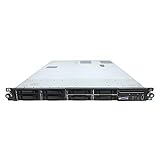
- HP ProLiant DL360 G7 8B Server
- 2x X5650 2.66GHz 12-Cores Total
- 32GB RAM / 8x 146GB 10K 2.5in SAS Hard Drives
- P410 w/ 512MB
Variable bills
Storage, bandwidth, database size, compute and high-volume realtime traffic can make usage-based costs difficult to forecast. Check the live Supabase pricing page and billing documentation for current limits before committing to a workload.
Independent reader supportYour contribution helps us test, update, and keep practical guides available for everyone.How Supabase compares with alternatives
| Option | Best fit | Potential mismatch |
|---|---|---|
| Supabase | Postgres plus integrated auth, storage, APIs and realtime | Teams needing only a specialized database, strict cloud standardization or highly predictable high-volume costs |
| Firebase | Mobile and web teams invested in Google’s ecosystem | Projects requiring conventional SQL and PostgreSQL portability |
| Neon | Serverless or scalable PostgreSQL as the primary need | Teams wanting an all-in-one backend without adding auth, storage and realtime services |
| PlanetScale | Managed MySQL-compatible infrastructure | PostgreSQL-first applications |
| Convex | Opinionated reactive application state and backend workflows | Teams needing direct SQL/PostgreSQL compatibility |
| Cloud-provider databases | Enterprise procurement, compliance, networking and existing support relationships | Startups prioritizing the fastest integrated developer experience |
| Self-managed PostgreSQL | Organizations with strong infrastructure and database operations teams | Teams that value deployment speed over maximum control |
These are architectural choices, not interchangeable feature lists. Compare database model, authentication, storage, realtime needs, migration options, compliance, support and billing before selecting a platform.
What the valuation means for readers
A $5 billion financing valuation does not by itself make Supabase cheaper, safer or technically superior for a customer. It does show that investors valued a large opportunity at the intersection of PostgreSQL, hosted developer tools and AI-assisted software creation. The June 2026 Series F and $10 billion pre-money valuation indicate that the financing story continued, but they still do not establish revenue, margins or retention.
For a team choosing a backend, the practical test remains workload fit: model the schema, enforce authorization, estimate traffic and storage, test backups and recovery, and keep a credible migration path. The central investment question is whether today’s AI-driven project creation becomes durable, profitable production usage.
Outdated Drivers Are Slowing You Down
One free scan finds every outdated or missing driver and matches the right update for your exact hardware.Free scan · exact hardware matchPC Slower Than It Used to Be?
A free scan shows the junk files, broken settings and background clutter dragging Windows down - then fixes them in one click.Free scan · Windows 10 & 11Quick Recap
Product prices and availability are accurate as of the date/time indicated and are subject to change. Any price and availability information displayed on Amazon at the time of purchase will apply.




