Deutsche Telekom and Nvidia are not simply building a brand-new greenfield data center. They have converted and expanded an existing Munich facility into an Industrial AI Cloud operated commercially by Deutsche Telekom subsidiary T-Systems. The companies describe the partnership and infrastructure program as worth approximately €1 billion. It officially entered operation on February 4, 2026, with a design target of more than 1,000 Nvidia DGX B200 systems and RTX PRO servers containing up to 10,000 Blackwell GPUs.
The amount is the stated scale of the joint project, not a disclosed Nvidia-only cash investment. The public announcements do not specify each party’s funding, ownership, revenue share, customer prices, or total operating cost.
What the Munich project actually is
The facility is Deutsche Telekom’s Industrial AI Cloud, sometimes described by the companies as Germany’s industrial AI factory. It is located at the Tucherpark data-center site in Munich and was developed with data-center partner Polarise. The work involved a complete renovation and expansion of an existing site rather than construction of an entirely new facility on undeveloped land.
Deutsche Telekom says the project should increase Germany’s AI computing capacity by roughly 50%. That is a company claim, not an independently audited national statistic. The stated commercial operator is T-Systems, which combines the computing platform with connectivity, security, infrastructure management and cloud services.
Recommended Free Tools
#1 Best Overall

- NVIDIA Volta GV100 Architecture — 4,608 CUDA Cores, 640 1st-Gen Tensor Cores delivering 14 TFLOPS FP32 and 112 TFLOPS deep learning performance for AI training, inference, HPC, and scientific computing workloads
- 32GB HBM2 ECC Memory — 900 GB/s Bandwidth — High-bandwidth memory on a 4096-bit bus with ECC error correction provides the memory capacity and throughput required for the largest AI models, simulations, and datasets
- PCIe 3.0 x16 Interface — 250W TDP — Standard PCIe Gen3 connectivity with passive cooling designed for enterprise rack server deployment in HPE ProLiant, Dell PowerEdge, and Supermicro platforms with adequate chassis airflow
- NVLink — Scale to 96GB Unified Memory — Connect two V100 GPUs via NVLink at 300 GB/s bi-directional bandwidth to scale GPU memory from 32GB to 96GB for larger AI training and HPC workloads
- Multi-Precision Computing — Supports FP64 (7 TFLOPS), FP32 (14 TFLOPS), FP16 (112 TFLOPS) and INT8 precision modes for flexible deployment across training, inference, and scientific simulation workloads
Primary announcements: Deutsche Telekom’s partnership description, its sovereignty announcement and T-Systems’ operational-launch report.
Timeline: announcement versus go-live
- 2025: Deutsche Telekom and Nvidia presented the approximately €1 billion Industrial AI Cloud partnership.
- Build-out: The existing Munich data center was modernized and expanded in a process the companies described as taking about six months.
- February 4, 2026: Deutsche Telekom and T-Systems announced that the facility had officially entered operation.
- First quarter of 2026: The companies said customers would be able to book computing capacity as needed.
Keeping these dates separate matters: a 2025 partnership announcement was not the same event as the February 2026 operational launch.
What hardware and capacity are planned
| Item | Publicly stated figure | Qualification |
|---|---|---|
| AI systems | More than 1,000 Nvidia DGX B200 systems | Complete Nvidia systems, not individual GPUs |
| Additional servers | Nvidia RTX PRO servers | Included in the facility description; detailed configuration is not stated |
| Accelerators | Up to 10,000 Nvidia Blackwell GPUs | “Up to” indicates a target or maximum configuration, not an independently verified launch-day count |
| GPU memory | About 1,000 terabytes | Reported in Deutsche Telekom investor materials |
| General memory | About 20 petabytes | Company-reported capacity |
| Compute | Up to 0.5 exaflops | The precise precision, benchmark and workload basis are not specified |
| AI services | More than 20 foundation services | Investor-material description |
| Models | More than 25 large language and large action models | Investor-material description |
| Power usage effectiveness | Below 1.2 | Company-reported PUE, not independently verified in the cited material |
The figures come from Deutsche Telekom’s Q4 2025 presentation. A DGX system is a complete server platform; it should not be counted as if it were one GPU. Likewise, a 10,000-GPU headline does not reveal how many accelerators were online at launch, reserved by customers, available for short jobs or able to participate in one distributed training run.
What “industrial AI” means
The intended workloads are more specific than ordinary consumer cloud hosting. The companies cite:
Rank #2
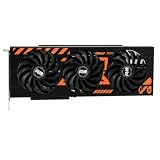
- GPU-Modell: Gefoce RTX 3080
- Memory Type: GDDR6X Memory Capacity: 20GB Memory Bus Width: 320bit Output Interfaces: 3*DP + HDMI Core Clock: 1710MHz Memory Clock: 19Gbps Power Interface: 8+8pin Recommended Power Supply: 850W or higher
- Digital twins and engineering simulation.
- Predictive maintenance and anomaly detection.
- Robotics and physical AI.
- Manufacturing optimization.
- Healthcare and digital-hospital services.
- Cybersecurity and digital-government applications.
- AI model training and inference.
Nvidia supplies the accelerated hardware and software stack, including CUDA-X libraries, Omniverse and Nvidia AI Enterprise. T-Systems adds managed infrastructure, German connectivity, security and application integration.
Who does what in the partnership
| Participant | Role described publicly |
|---|---|
| Deutsche Telekom and T-Systems | Facility operations, connectivity, cybersecurity, cloud services, sales and managed infrastructure |
| Nvidia | DGX systems, Blackwell GPUs, RTX PRO servers and accelerated software |
| Polarise | Data-center construction or modernization partner |
| SAP | Business Technology Platform and enterprise-software layer in the “Deutschland-Stack” |
| Industry ecosystem | Companies such as Siemens, Agile Robots, Wandelbots, Quantum Systems and PhysicsX are associated with applications or collaboration |
SAP is presented as a platform and ecosystem partner, not as a disclosed owner of the Munich data center. The cited material also does not consistently label every named company as a paying customer; some may be technology, application or demonstration partners.
Who can use the cloud?
The target market includes industrial companies, research institutions, public-sector organizations, defense-related users and startups that need local AI infrastructure or integration help. T-Systems said the site was already operating at more than one-third of capacity with existing customers when it announced the February launch. That is a company-reported utilization statement, not a standardized occupancy metric.
Named examples include Agile Robots for robotics and PhysicsX for technical simulation, while Siemens is cited for industrial expertise and simulation-related use cases. Organizations considering the service should confirm whether a proposed workload receives reserved capacity, on-demand access or a managed-project contract.
Rank #3
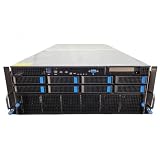
- No Processor Installed; Supports 2x AMD EPYC 9004 Series Processors
- No Memory Installed; Supports 24x DDR5 4400/4800 Regsitered Memory Modules
- 8x 3.5" Trays; (Bring Your Own SATA/NVMe Drives)
- 4x H200 NVL Tensor Core 141GB HBM3e PCI Express 5.0 x16 GPU Accelerator Card
- In Original Packaging; Includes Rails and ASUS GPU Cables
Why Munich and why now?
Munich combines an existing Telekom data-center footprint with a dense concentration of automotive, engineering, software, research and robotics organizations. Locating compute near those users can reduce data-movement friction and simplify integration with factories, laboratories and enterprise systems.
The broader strategic goal is to give German and European organizations an alternative to relying exclusively on US hyperscaler regions. Deutsche Telekom links the project to its “Made 4 Germany” approach and to a wider ecosystem of government, science and industry. The Munich expansion is described as independent of the European Union’s separate AI-gigafactory initiative.
What “sovereign AI” means here
In this context, sovereignty is best understood as a set of separate controls:
- Data sovereignty: Options to host data, models, logs and backups in Germany or Europe.
- Operational sovereignty: A German telecom subsidiary manages the facility and service layer.
- Jurisdictional sovereignty: Contractual and legal controls over access and support personnel.
- Supply-chain sovereignty: The ability to source hardware and components independently.
- Technology sovereignty: Control of the software and accelerator stack.
The Munich service strengthens the first two categories, but it does not make the entire stack European. Nvidia is a US company, and its accelerators and software are central to the platform. Data residency therefore should not be described as immunity from every foreign legal, export-control or supply-chain issue.
Rank #4

- 【Brilliant AI Performance for production】 on-device processing with up to 100 TOPS AI performance with low power and low latency, Due to the high thermal demands of Super mode, only the J30 Series supports upgrading to Super mode via the JetPack 6.2 update
- 【Hand-size edge AI device】 compact size at 130mm x120mm x 58.5mm, includes NVIDIA Jetson Orin NX 16GB production module, a cooling fan with a heatsink, enclosure, and a power adapter. Support desktop, wall mount, fit in anywhere
- 【Expandable with rich I/Os】4x USB 3.2, HDMI 2.1, 2xCSI, 1xRJ45 for GbE, M.2 Key E, M.2 Key M, CAN, and GPIO
- 【Accelerate solution to market】pre-installed Jetpack with NVIDIA JetPack 5.1 on the included 128GB NVMe SSD, Linux OS BSP, 128GB SSD, support Jetson software and leading AI frameworks and software platforms
- 【Comprehensive certificates】FCC, CE, RoHS, UKCA
What the €1 billion figure does—and does not—tell you
The figure signals the scale of the partnership and infrastructure expansion. It does not disclose:
- Nvidia’s individual cash contribution.
- Ownership percentages or financing structure.
- Revenue-sharing arrangements.
- Customer GPU-hour or reservation prices.
- Payback period or lifetime operating cost.
- The exact number of GPUs physically online on February 4, 2026.
For a customer, the relevant price is the total cost of a workload: compute, storage, data transfer, managed operations, security, support, software licensing and integration. A German-managed service may cost more than the cheapest global spot instance while reducing compliance, latency or operational burden.
Independent reader supportYour contribution helps us test, update, and keep practical guides available for everyone.Questions an enterprise buyer should ask
- Where is everything stored? Request locations for training data, model weights, logs, backups and support records.
- What capacity is actually available? Clarify online GPUs, reservation priority, short-term availability and multi-node scheduling.
- Which workloads are optimized? Ask for tested configurations for training, inference, simulation, robotics or mixed use.
- What networking and storage are included? Interconnect topology and storage throughput often determine real scaling performance.
- Which software is supported? Confirm CUDA, Nvidia AI Enterprise, Omniverse, Kubernetes, PyTorch and required model frameworks.
- What are the service commitments? Review uptime, replacement, incident response, maintenance and support terms.
- Can you leave? Require export paths for data, model weights, containers and workflow metadata.
- How are environmental claims measured? Ask whether PUE, electricity sourcing, carbon accounting and water use are contractually reported.
Important limitations
Peak capacity is not application performance
The reported 0.5 exaflops is not a promise that every application will run at that speed. Delivered performance depends on numerical precision, model architecture, storage, interconnect, batch size, software optimization and scaling efficiency.
A retrofit is faster, but not automatically simpler
Reusing a data center can shorten deployment, yet high-density AI equipment still requires suitable power, cooling, floor loading, networking, backup systems and physical security. The six-month schedule may reflect favorable existing infrastructure rather than a repeatable template for every European site.
Best Value

- Supercomputer performance directly to your desk in a compact, energy-efficient design, enabling enterprise-scale AI and high-performance computing right where you need it.
- The power of Grace Blackwell architecture, delivering up to 1 petaFLOP of AI performance for local model fine-tuning, inference, and analytics, accelerating your time-to-solution.
- Designed from the ground up to build and run AI, delivering seamless integration of the full NVIDIA AI software stack —so you can develop locally and deploy anywhere.
- NVIDIA DGX Spark gives you the freedom to experiment, prototype, and innovate faster by augmenting laptop, desktop, cloud, or data center resources. With more power to learn, prototype, test, and innovate, NVIDIA DGX Spark delivers exceptional ROI for increased productivity.
- Use NVIDIA DGX Spark to unlock new ideas and experiment with large models (up to 200 billion parameters at FP4) directly on your desktop with 128GB of unified memory. Empower rapid testing, validation, and iteration—driving innovation in a secure, high-performance setting.
Efficiency is not the same as zero impact
A PUE below 1.2 would indicate efficient facility overhead if measured accurately. PUE does not measure the carbon intensity of electricity, embodied emissions in GPUs, water consumption or the energy used by customer workloads.
Bottom line for businesses and investors
The Munich project is a substantial German-managed AI infrastructure deployment, not a conventional consumer cloud region and not proof that Europe has achieved technological independence. Its commercial test is whether industrial, government, research and startup customers will pay for local Nvidia capacity plus T-Systems’ connectivity, security and integration services. Its strategic value is strongest for controlled industrial workloads that benefit from German operations and data-residency options; it is less clearly a substitute for hyperscale capacity or the lowest-cost global GPU market.
Deutsche Telekom’s later investor materials continue to report the Munich platform, including the stated infrastructure figures: Q1 2026 presentation and Q1 2026 interim report.
Quick Recap
Product prices and availability are accurate as of the date/time indicated and are subject to change. Any price and availability information displayed on Amazon at the time of purchase will apply.
Do these 3 things before closing this tab:
1Clear out junk files and repair common Windows errors2Scan for outdated or missing drivers - takes under a minute3Repair Windows errors before they cause bigger problems



