Quick wins for a faster PC:
Scan for outdated or missing drivers - takes under a minuteDriver Scan →Clear out junk files and repair common Windows errorsFree Scan →Arm did not cancel Qualcomm’s chip-design license after 60 days. The headline refers to a conditional breach notice issued on October 22, 2024. Arm withdrew that notice on January 8, 2025. Qualcomm then won the main Nuvia-related case in a jury verdict and final judgment, although Arm appealed and a separate Qualcomm lawsuit against Arm remained scheduled for trial on October 5, 2026.
What Arm’s 60-day notice actually said
Arm’s October 22, 2024 notice alleged that Qualcomm had breached its Architecture License Agreement (ALA). Arm said Qualcomm was marketing products containing CPU designs, technology and code created by Nuvia employees before Qualcomm acquired Nuvia. Arm also alleged that Qualcomm sought Arm’s support and verification for additional products using those designs, and that Qualcomm’s own lawsuit against Arm breached the agreement.

The 60 days was a contractual cure period: Qualcomm had an opportunity to address the alleged breaches before Arm could exercise a termination right. It was not an immediate shutdown, and it did not mean existing Snapdragon products would automatically stop working on a particular date. The practical consequences of any termination would have depended on contract provisions and later court orders, including rights for designs already completed, manufactured inventory, continuing royalties and manufacturing of existing products.
Arm’s original notice and the later court filings are summarized in Qualcomm’s March 2026 filing: SEC filing.
#1 Best Overall
Why the Nuvia acquisition was central
Qualcomm acquired Nuvia in 2021. Nuvia had been developing custom Arm-compatible CPU technology, which Qualcomm incorporated into its Oryon CPU program. Oryon is intended to give Qualcomm more control over CPU performance and power characteristics than simply licensing Arm’s finished Cortex cores.
Several agreements and companies are easy to conflate:
- Nuvia’s ALA: Nuvia’s pre-acquisition agreement with Arm for developing custom Arm-compatible CPU designs.
- Qualcomm’s ALA: Qualcomm’s separate architecture license, which Qualcomm said covered its post-acquisition work and products incorporating Nuvia-derived technology.
- Technology License Agreement: A separate agreement referenced in Qualcomm’s filings.
- Oryon: Qualcomm’s custom CPU technology, used in certain Snapdragon platforms and central to the dispute.
An architecture license is different from a license to use Arm-designed Cortex cores. It permits a company to create its own optimized CPU implementation compatible with Arm’s instruction-set architecture. Arm describes architecture licensees as customers that can create optimized CPUs and may combine their own designs with Arm CPU designs in its corporate filing: Arm filing.
Arm argued that Nuvia’s agreement had assignment and termination provisions that were not properly handled after the acquisition. Arm said it terminated Nuvia’s ALA in March 2022 after Nuvia failed to obtain consent to assign it to Qualcomm: Arm filing. Qualcomm argued that its own pre-existing ALA covered its architecture work and products containing technology obtained from Nuvia. This was a contractual licensing dispute, not a finding that Arm owns every Qualcomm CPU or that Qualcomm had no Arm license.
Rank #2
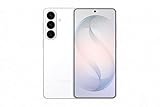
- TYPE IT IN. TRANSFORM IT FAST: Enhance any shot in seconds on your smartphone by using Photo Assist² with Galaxy AI.³ Add objects, restore details, or apply new styles by simply typing or tapping
- MAKE IT. EDIT IT. SHARE IT: Turn everyday moments into something personal with creative tools built right into your mobile phone, whether it’s a special contact photo, custom wallpaper, an invitation or more³
- FAST. POWERFUL. AI-READY: Power through your day with AI-accelerated performance from our fastest, smoothest and most powerful Galaxy processor yet, built to keep up with everything you do
- RICHER COLOR. SHARPER DETAIL: The ultra-vivid display on Galaxy S26+ automatically makes every image sharper for a more immersive experience
- FIT EVERYONE IN THE SHOT: Group selfies are easier on your Samsung phone with a wider front camera⁴ that captures more of the scene, so no one gets left out of the moment
Did Arm actually cancel Qualcomm’s license?
No. Arm’s notice said it could terminate if Qualcomm did not cure the alleged breaches. On January 8, 2025, Arm withdrew the notice and said it had no current plan to terminate the Qualcomm ALA, while reserving its rights in the litigation. The threatened cancellation therefore did not occur under that notice.
That distinction matters: a breach notice is not a termination, a contractual right to terminate is not an exercise of that right, and the end of a cure period does not by itself prove that a license was canceled.
What the first trial decided
The trial began on December 16, 2024. On December 20, the jury found that:
- Qualcomm did not breach the Nuvia ALA.
- Qualcomm CPUs containing designs acquired through the Nuvia transaction were licensed under Qualcomm’s ALA.
- The jury did not reach a verdict on whether Nuvia breached its own ALA.
On September 30, 2025, the court entered final judgment for Qualcomm and Nuvia, dismissed Arm’s remaining claims and rejected Arm’s request for a new trial. Qualcomm described the result as a “complete victory”; the independent legal result was the judgment entered by the court. Qualcomm’s statement is available here.
Rank #3

- TYPE IT IN. TRANSFORM IT FAST: Enhance any shot in seconds on your smartphone by using Photo Assist² with Galaxy AI.³ Add objects, restore details, or apply new styles by simply typing or tapping
- MAKE IT. EDIT IT. SHARE IT: Turn everyday moments into something personal with creative tools built right into your mobile phone, whether it’s a special contact photo, custom wallpaper, an invitation or more³
- FAST. POWERFUL. AI-READY: Power through your day with AI-accelerated performance from our fastest, smoothest and most powerful Galaxy processor yet, built to keep up with everything you do
- RICHER COLOR. SHARPER DETAIL: The ultra-vivid display on Galaxy S26+ automatically makes every image sharper for a more immersive experience
- FIT EVERYONE IN THE SHOT: Group selfies are easier on your Samsung phone with a wider front camera⁴ that captures more of the scene, so no one gets left out of the moment
What happened after the judgment?
Arm filed a notice of appeal on October 1, 2025. The available filings establish the appeal, not its final disposition. An appeal means the district-court judgment remains subject to appellate review; it does not erase the judgment while the appeal is pending.
There is also a separate lawsuit brought by Qualcomm against Arm. Qualcomm alleges that Arm breached contractual obligations, including obligations involving license deliverables, pricing and commercially reasonable technology licensing. Qualcomm also alleges that Arm improperly sought to terminate the Qualcomm ALA and interfered with Qualcomm’s business relationships.
Qualcomm’s motion to add Arm Limited to the earlier case was denied on January 7, 2026. Qualcomm filed a substantially identical complaint against Arm Limited on January 8, and the matters were consolidated in March 2026. Qualcomm filed an amended complaint on March 30 adding another breach-of-contract claim. Qualcomm’s March 2026 filing said the separate case was scheduled for trial on October 5, 2026; Arm’s 2026 Form 20-F also discusses the continuing litigation and expected trial timing: Arm Form 20-F.
Timeline: warning, withdrawal and continuing litigation
| Date | Event |
|---|---|
| 2021 | Qualcomm acquired Nuvia, whose custom CPU technology became central to the dispute. |
| March 2022 | Arm said it terminated Nuvia’s ALA after Nuvia failed to obtain consent for assignment to Qualcomm. |
| August 31, 2022 | Arm sued Qualcomm, Qualcomm Technologies and Nuvia in Delaware. |
| October 22, 2024 | Arm issued the 60-day notice alleging breaches of Qualcomm’s ALA. |
| December 16–20, 2024 | The jury trial produced key findings for Qualcomm. |
| January 8, 2025 | Arm withdrew the notice and said it had no current plan to terminate Qualcomm’s ALA. |
| September 30, 2025 | Final judgment was entered for Qualcomm and Nuvia; Arm’s remaining claims were dismissed. |
| October 1, 2025 | Arm appealed. |
| January–March 2026 | Qualcomm filed against Arm Limited, and the related lawsuits were consolidated. |
| October 5, 2026 | Trial was scheduled for Qualcomm’s separate lawsuit against Arm, according to Qualcomm’s March 2026 filing. |
What this means for Snapdragon and Oryon
The judgment supports Qualcomm’s position that CPUs incorporating the Nuvia-derived designs are covered by Qualcomm’s ALA. That includes the legal foundation Qualcomm has relied on for Oryon-related products, subject to Arm’s appeal and the separate contractual litigation.
Rank #4
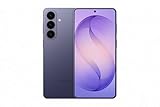
- TYPE IT IN. TRANSFORM IT FAST: Enhance any shot in seconds on your smartphone by using Photo Assist² with Galaxy AI.³ Add objects, restore details, or apply new styles by simply typing or tapping
- MAKE IT. EDIT IT. SHARE IT: Turn everyday moments into something personal with creative tools built right into your mobile phone, whether it’s a special contact photo, custom wallpaper, an invitation or more³
- FAST. POWERFUL. AI-READY: Power through your day with AI-accelerated performance from our fastest, smoothest and most powerful Galaxy processor yet, built to keep up with everything you do
- RICHER COLOR. SHARPER DETAIL: The ultra-vivid display on Galaxy S26+ automatically makes every image sharper for a more immersive experience
- FIT EVERYONE IN THE SHOT: Group selfies are easier on your Samsung phone with a wider front camera⁴ that captures more of the scene, so no one gets left out of the moment
The public filings do not show that Snapdragon production was halted, that Qualcomm lost the ability to make Arm-compatible CPUs, or that Oryon was found unlicensed. They also do not establish that phones or PCs already sold were immediately at risk. The companies continued to dispute aspects of their relationship while Qualcomm treated its architecture and Oryon products as licensed.
Why the dispute matters beyond Qualcomm
Custom CPU competition
Qualcomm’s custom CPU strategy is important across smartphones, PCs, automotive systems and other computing products. Losing or restricting an architecture license would be far more consequential than losing access to one finished CPU-core design because it would limit a company’s ability to develop differentiated cores.
Acquisitions and assignment rights
The case highlights a recurring merger-and-acquisition risk: intellectual-property licenses may contain consent, assignment or change-of-control provisions. Buying a company does not necessarily transfer every license on the same terms, and the answer depends on the agreement and applicable law.
Customer certainty
Chip customers need confidence that designs already taped out, products in production and inventory already shipped will not be disrupted by a licensing dispute. The public record does not resolve every hypothetical consequence of a termination, so claims about an automatic product shutdown go beyond the evidence.
Recommended Free Tools
Commercial leverage
The relationship matters to both sides. Arm reported that Qualcomm represented 9% of Arm’s total revenue for the fiscal year ended March 31, 2026: Arm fiscal 2026 filing. Qualcomm is a major Arm customer, while Arm benefits from Qualcomm’s scale and royalty contribution. That mutual dependence helps explain why a licensing dispute can have industry-wide significance even without an immediate product stoppage.
Quick Recap
How to read the headline today
- Accurate: Arm threatened to terminate Qualcomm’s custom-chip design license in October 2024.
- Accurate: Arm issued a 60-day breach notice and later withdrew it.
- Accurate: Qualcomm won the Nuvia-related case at the district-court level, and Arm appealed.
- Not accurate as a current statement: Arm will cancel Qualcomm’s license in 60 days.
- Not established: that Qualcomm must stop shipping Snapdragon products or that Oryon was found unlicensed.
Product prices and availability are accurate as of the date/time indicated and are subject to change. Any price and availability information displayed on Amazon at the time of purchase will apply.




