The Tool Desk
Outbyte Driver Updater FREEScan for outdated or missing drivers - takes under a minuteDriver Scan →Outbyte PC Repair FREERepair Windows errors before they cause bigger problemsFix Now →AI is changing what interns do, but the evidence here does not establish that it can replace an entire internship. The stronger model is a supervised apprenticeship: an intern uses approved AI tools to move faster on suitable tasks, then verifies the work, explains their decisions, and remains accountable for what they submit. For interns, the key is to use AI in ways that build skills rather than conceal gaps. For managers, it is to make the rules, review process, and learning goals explicit.
What an AI-enabled internship actually looks like
An AI-enabled intern is a person learning a profession, not an autonomous digital worker. AI can change an intern’s task mix and the literacy the role demands; it does not remove the need for domain knowledge, feedback, supervision, or human accountability.
Legitimate uses can include drafting an outline, turning notes into a checklist, summarizing public documents, brainstorming hypotheses, generating test cases or code scaffolding, classifying data under approved controls, preparing meeting questions, and rewriting text for clarity. The intern should then verify the result: check claims against source documents, test code, recalculate figures, inspect citations, and flag uncertainty. Work that could affect customers, safety, compliance, or an organization’s reputation needs a supervisor’s review before release.
The U.S. Department of Labor’s AI Literacy Framework, issued February 13, 2026, treats practical workplace AI literacy as a workforce and education objective. It recommends hands-on practice with common tasks, clear internal guidance, and deeper proficiency where a role requires it. The department says: “Employers can encourage simple hands-on practice built around common workplace tasks, provide staff with clear internal guidance on appropriate AI use and identify roles that may require deeper proficiency.”
#1 Best Overall
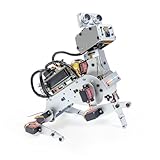
- AI-Powered Raspberry Pi Robot Dog — PiDog: Powered by Raspberry Pi (5/4B/3B+/3B/Zero 2W), OpenClaw, and multi-LLMs like ChatGPT, Gemini, Grok, DeepSeek, Qwen & Ollama. With 12 servos, camera, gyroscope, hearing & touch sensors, PiDog can see, listen, talk, move, and interact intelligently. Supports OpenCV, MediaPipe, TTS & STT, app control, FPV & Python. A great STEM robotics gift for students, makers & tech enthusiasts—perfect for birthdays and holidays. (Raspberry Pi not included)
- Realistic Dog-like Movements: PiDog's 12 powerful servos enable 32 dog-like actions, including walking, sitting, standing, shaking its head, wagging its tail, and performing playful tricks, closely mimicking a real dog and providing an engaging experience. This is an AI development robot product designed for engineers, suitable for ages 15 and above
- Rich Sensor Suite for Interactive Experiences: PiDog features ultrasonic, touch, gyroscope, sound, camera, speaker and microphone. These provide it with advanced hearing, vision, and touch, enabling it to see, detect obstacles, respond to touch, and recognize sounds, making interactions highly engaging
- AI-Powered Interactions with OpenClaw & Multi-LLMs. PiDog combines voice, vision, and gesture recognition for immersive AI experiences. Powered by OpenClaw and multi-LLMs like ChatGPT, Gemini, Grok, DeepSeek, Qwen, Doubao, and Ollama (local LLMs), it can understand questions, respond naturally through TTS & STT, recognize math problems, interpret hand gestures, and hold smart conversations. OpenClaw also enables customizable AI behaviors and personalized robotics development, helping users create their own intelligent robotic companion
- Comprehensive Learning Resources and Support: PiDog offers detailed online documentation, video tutorials, prompt technical support, and an active forum community, ensuring beginners can easily complete all projects and enjoy a great experience
Will AI replace interns?
The available figures point to work changing, not a demonstrated end to internships. The Canada-hosted G7 compendium reports ILO estimates that 6.5% of jobs in G7 countries—25 million—have high exposure to generative AI, while another 28% of employment, or 109 million jobs, is likely to be transformed. Exposure is not the same as a job being eliminated: it indicates potential for tasks to change.
The same compendium reports OECD survey findings from 2023: about 80% of workers using AI said it improved their performance, while 8% reported negative effects. Those results concern workers generally, not interns specifically, and do not establish a productivity multiplier for internship programs.
Adoption also varies by employer size. The compendium reports that in 2024, 40% of OECD firms with 250 or more employees used AI, compared with 20% of medium-sized firms and 12% of small firms; the figures are attributed to OECD 2025. An intern’s actual experience will therefore depend on the workplace, its approved tools, and the tasks it assigns—not just on the technology’s capabilities.
Rank #2

- Optimized AI Arm Kit for LeRobot & Hugging Face Projects – The SO-ARM101 is an upgraded low-cost robotic arm servo motor kit designed for AI robotics enthusiasts and developers. Fully compatible with LeRobot and Hugging Face frameworks, it supports imitation learning and reinforcement learning, making it ideal for real-world robotics applications. (3D-printed parts not included.)
- Enhanced Wiring & Performance – Compared to the SO-ARM100, the SO-ARM101 features improved wiring to prevent disconnection at joint 3 and eliminates range-of-motion limitations. The leader arm uses optimized gear ratio motors for smoother performance—no external gearboxes required.
- Real-Time Leader-Follower Functionality – New real-time tracking allows the leader arm to follow the follower arm, enabling human intervention and correction during reinforcement learning (RL) training. Perfect for hands-on AI robotics development and research.
- Open-Source, DIY-Friendly & Nvidia-Compatible – Developed by TheRobotStudio, this open-source AI Arm kit integrates seamlessly with the LeRobot platform, offering PyTorch-based datasets, simulation, training, and deployment tools. Fully compatible with Nvidia Jetson edge devices, including reComputer Mini J4012 Orin NX 16 GB.
- Comprehensive Learning Resources – Includes detailed open-source assembly and calibration guides, testing tutorials, and deployment instructions. From wiring to AI training, get everything you need to start building, teaching, and optimizing your robotic arm for grasping and placing tasks.
How interns can use AI without cheating
Start with the assignment’s rules. Use only tools and data approved by the employer or school, and ask before entering confidential, personal, regulated, client, or proprietary information. If the guidance is unclear, pause and ask a supervisor rather than assuming that a public-facing AI service is acceptable.
Recommended Free Tools
- Define your own task. Write down the question, intended audience, constraints, and what a correct result must do before asking AI for help.
- Use AI for a bounded step. Ask for an outline, possible approaches, a checklist, or a first draft—not an unexplained final answer that you cannot defend.
- Verify against reliable evidence. Check factual claims against primary documents, recalculate numbers, run code and tests, and confirm that citations actually support the statements attached to them.
- Revise and disclose appropriately. Follow workplace rules for disclosure or attribution. Keep enough of a work record to explain what AI contributed, what you changed, and what you rejected.
- Ask for review when the stakes warrant it. If an error could affect a customer, safety, compliance, or reputation, get a human review before the work is used or shared.
These steps keep the intern responsible for the quality of the work. They also make it possible for a supervisor to give feedback on the intern’s reasoning, not just the polished appearance of the output.
What skills an AI-ready intern needs
AI literacy is more than knowing how to write prompts. An intern needs enough understanding of the task to decide whether AI is suitable, spot plausible errors, protect information, and communicate how the result was produced. In high-AI-exposure occupations, the G7 compendium reports that 72% of vacancies demand at least one management skill, 67% a business-process skill, and more than 50% a social, emotional, or digital skill, citing Green (2024). These are vacancy findings, not a guarantee about every internship, but they underline why human capabilities remain relevant alongside tool use.
Rank #3
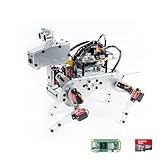
- Raspberry Pi AI Robot: powered by Raspberry Pi (5/4B/3B+/3B/Zero 2W), features 12 servos and sensors for vision, hearing, and touch. Integrated with ChatGPT-4o, it responds to complex queries. With app control and FPV, users can manage and see its view in real-time. It supports Python programming
- Realistic Movements: 12 powerful servos enable 32 actions, including walking, sitting, standing, shaking its head, wagging its tail, and performing playful tricks, closely mimicking a real and providing an engaging experience
- Rich Sensor Suite for Interactive Experiences: features ultrasonic, touch, gyroscope, sound, camera, speaker and microphone. These provide it with advanced hearing, vision, and touch, enabling it to see, detect obstacles, respond to touch, and recognize sounds, making interactions highly engaging
- Engaging Interactions with ChatGPT-4o: with ChatGPT-4o enables voice interactions and visual recognition, making it smarter and more responsive. Users can have natural conversations, solve math problems via the camera, and interpret gestures, creating diverse and fun interactions
- Comprehensive Learning Resources and Support: offers detailed online documentation, video tutorials, prompt technical support, and an active forum community, ensuring beginners can easily complete all projects and enjoy a great experience
- Task judgment: know when AI can help and when a human, approved source, or specialist is required.
- Verification: check facts, calculations, citations, code, and edge cases rather than relying on fluent output.
- Domain fundamentals: learn the field well enough to recognize errors that sound convincing.
- Communication: explain the problem, workflow, uncertainty, and revisions to a manager or teammate.
- Data stewardship: follow rules for confidential, personal, regulated, and proprietary information.
- Problem-solving and interpersonal skills: develop the judgment and collaboration needed to apply results responsibly.
The UK Department for Science, Innovation and Technology’s AI Labour Market Survey 2025, published January 28, 2026, uses surveys and interviews to assess labor-market trends and changing skills needs. It informs the UK’s AI Opportunities Action Plan. The ILO’s 2026 work on AI and decent work likewise treats productivity and employment alongside working conditions, rights, social protection, and social dialogue. Neither framing makes tool fluency a substitute for learning the profession.
How managers should supervise AI-assisted work
Give each intern a named human supervisor and define which work can proceed independently, which needs a spot check, and which must be approved before release. Customer-facing, regulated, safety-sensitive, or irreversible work warrants review before use. Review should be substantive: a manager should check the underlying evidence and reasoning, not merely rubber-stamp an AI-polished result.
Make the learning objective visible. For consequential tasks, ask the intern to record the problem, relevant source material, AI-assisted steps, checks performed, and decisions to accept, revise, or reject output. Have the intern explain the work and, where appropriate, reproduce the important result without relying on an opaque step. This creates evidence of learning while giving the supervisor something concrete to review.
Rank #4
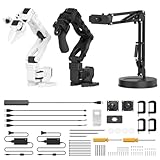
- 【End-to-End Imitation Learning】Hiwonder SO-ARM101 robot arm is an embodied intelligent hardware platform compatible with the Lerobot open-source framework. It provides developers with streamlined access to shared code, templates, and pre-trained models to explore the latest advancements in AI research.
- 【Dual-Camera Vision System】Equipped with both a gripper-mounted camera and an external camera, the system supports both precise manipulation and environmental awareness for accurate imitation learning.
- 【Hiwonder High-Performance Bus Servos】Featuring 12 high-torque bus servo motors with magnetic feedback, the Hiwonder SO-Arm101 robotic arm delivers smooth, stable motion, eliminating issues like power deficiency and jitter.
- 【Professional Control & Debugging】Integrated with the Hiwonder BusLinker V3.0 debugging board, the system supports servo scanning, real-time status monitoring, and trajectory control. The professional PC software simplifies device calibration and debugging, making it accessible for both researchers and hobbyists.
- 【Open-Source Compatibility】The SO-ARM101 robotic arm is designed to be fully compatible with the LeRobot open-source project. We acknowledge the contributions of the open-source community; all trademarks and copyrights belong to their respective owners.
OECD workplace guidance highlights bias, opacity, accountability, surveillance, and privacy risks. It calls for human oversight of decisions affecting workers’ safety, rights, and opportunities, as well as ways to contest decisions informed by AI. The U.S. Department of Labor’s 2024 roadmap places adoption in a job-quality and worker-well-being frame, including ethical development, review processes, and governance structures.
Independent reader supportYour contribution helps us test, update, and keep practical guides available for everyone.How to evaluate an intern fairly
Grade the quality of the intern’s process and learning, not simply the amount of text or code produced. A polished deliverable alone cannot show whether the intern understood the task, checked the result, or could repeat the work.
- Assess whether the intern chose an appropriate method and knew when to ask for help.
- Review the accuracy and completeness of checks, including tests, calculations, citations, and edge cases relevant to the task.
- Look for sound reasoning, useful revision, and the ability to explain and reproduce key results.
- Apply the same disclosed criteria to comparable work, and make clear whether and how AI use is permitted.
- Give the intern a way to question or correct an AI-informed assessment, task assignment, or feedback decision.
Opaque AI scoring or undisclosed use can make assessment harder to challenge and may reproduce bias. A fair program tells interns what is being evaluated, what evidence matters, and who is responsible for a decision.
What distinguishes a learning program from a risky one
Before introducing AI into internship work, managers can compare the program against six practical dimensions:
Quick Recap
| Dimension | Learning-oriented design | Warning sign |
|---|---|---|
| Learning depth | The intern learns fundamentals, gets feedback, and can explain the work. | AI output replaces instruction or the intern’s chance to practice. |
| Task risk | Approval requirements match the potential customer, legal, safety, or reputational impact. | High-impact work is released without human review. |
| Verification quality | Outputs are checked against primary sources, data, or executable tests. | Fluent output is accepted without checking. |
| Data governance | Tool permissions, retention, confidentiality, and attribution rules are clear. | Interns must guess what information or tools are allowed. |
| Fairness and transparency | Interns can see how AI affects evaluation and challenge an error. | AI-informed decisions are opaque or effectively unappealable. |
| Supervisor capacity | A manager has the time and expertise to review work meaningfully. | Review is a rubber stamp or no accountable reviewer is assigned. |
Risks an internship should address openly
- Incorrect output: AI-generated text or code can be fluent and wrong, making independent checks essential.
- Lost learning: skipping the underlying reasoning can produce short-term output at the expense of long-term capability.
- Privacy and confidentiality: prompts can expose sensitive information if tools and data rules are not clear.
- Bias and unfair treatment: opaque systems or biased data can affect task assignment, feedback, or hiring decisions.
- Surveillance and autonomy: the ILO reports links between intrusive AI surveillance, work intensification, reduced autonomy, and psychosocial risks.
- Unclear accountability: a manager cannot transfer responsibility to a model; a person must own consequential decisions and be able to explain them.
Product prices and availability are accurate as of the date/time indicated and are subject to change. Any price and availability information displayed on Amazon at the time of purchase will apply.




