What’s actually slowing this PC down?
Pick the symptom - the matching free tool is one click away.
AI is changing grocery retail first in the back office: forecasting demand, deciding when to reorder, timing markdowns and coordinating fulfillment. It is also reshaping search, recommendations, checkout, store monitoring and labor scheduling. The practical result can be fewer stockouts, less food waste and faster shopping, but outcomes depend on data quality, human oversight and whether retailers give customers meaningful control over their information.
For shoppers, these systems may alter prices, product suggestions, substitutions and the amount of staff assistance available. For retailers, the largest gains are operational rather than theatrical: better decisions made repeatedly across thousands of products and locations.
Where AI has the greatest impact
| Retail layer | What AI does | Potential benefit | Main risk or trade-off |
|---|---|---|---|
| Demand and replenishment | Forecasts sales by product, store and day, then supports ordering and markdown decisions. | Higher availability and less spoilage. | Bad inventory or promotion data can produce bad orders. |
| Freshness and waste | Combines expiry dates, inventory, demand and price response to select discounts or donations. | More products sold before expiry and fewer discarded. | Discounts can erode margin or train shoppers to wait. |
| Digital shopping | Improves search, recommendations, substitutions, reminders and conversational assistance. | Less effort to find and complete a basket. | Personalization can narrow choice or use data customers did not expect. |
| Stores and checkout | Uses cameras and analytics to monitor shelves, queues, prices, shrink and checkout. | Faster issue detection and potentially shorter waits. | False alerts, surveillance concerns and exception work for employees. |
| Warehouses and delivery | Coordinates robots, picking, temperature control, vehicle loading and routes. | Higher throughput and more efficient deliveries. | Large integration costs and difficult-to-scale automation. |
| Workforce planning | Matches shifts and tasks to expected traffic, weather and workload. | Better coverage and lower avoidable labor cost. | Fewer routine tasks and more monitoring or exception handling. |
Food retailers invested more than $10 billion in technology in 2024, averaging about 1% of sales, according to FMI. That spending does not mean every store has the same capability; pilots, regional rollouts and supplier-operated systems are at different stages.
Demand forecasting and replenishment
Forecasting is the operational center of gravity because nearly every other retail decision depends on knowing what will sell, where and when. Modern systems combine sales history with promotions, weather, seasonality, store hours, local events and real-time availability. They can produce a recommended order, flag an unusual result for review and update the forecast as conditions change.
Recommended Free Tools
#1 Best Overall
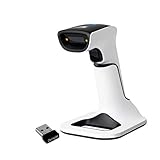
- Compatible with most POS systems except those requiring proprietary hardware integrations or direct app-level integration
- No Software Needed: No need to download or install any software or apps with this sleek handheld 3-in-1 wireless, Bluetooth, and USB scanner with vibration capabilities to help in noisy environments.
- Next Gen Smart Charging Stand: One base that can do it all. Wireless Transmission from stand to scanner. Holds scanner. Charges scanner's built-in rechargeable Li-Ion battery via lighting connectors
- Scan Modes: Connect to Mac or Windows computers, Android or Apple mobile devices, and POS systems to start scanning barcodes with one of the 3 available modes - manual, continuous, and auto sense
- Code Compatibility: Scan 1D barcodes including UPC, EAN, Code128, Code39, Code11, Codabar, and many others; Scan 2D barcodes including PDF417, Aztec code, Data Matrix, QR Code, Micro PDF, Interleaved, and others. Doesn't work with Maxicode
How the forecasts work in practice
The useful unit is often a product at a particular store on a particular day, rather than a broad category forecast. That granularity helps a retailer distinguish a heat wave that lifts demand for drinks in one region from a national trend. It also allows the system to account for a promotion, a temporary closure or a delivery delay.
Albert Heijn’s scale
Ahold Delhaize says Albert Heijn’s machine-learning system forecasts every product in every store for a 50-day horizon, generating more than one billion predictions daily. Those figures describe the retailer’s reported production system, not a universal industry benchmark. NVIDIA’s 2024 survey listed demand forecasting and prediction as a 27% supply-chain use case among respondents.
What shoppers notice
- Fewer empty facings when the order recommendation is accurate and the delivery arrives on time.
- More store-specific assortments instead of identical inventory decisions everywhere.
- Substitutions or unavailable-item notices appearing earlier in an online order.
Forecasting cannot eliminate shortages caused by supplier failures, extreme weather or incorrect stock records. It is a decision aid, so store teams still need a way to override an implausible recommendation.
Food-waste reduction and dynamic markdowns
Perishable goods create a timing problem: a product has value today but may have little value tomorrow. AI can combine remaining shelf life, temperature history, current inventory, expected demand and price elasticity to identify which items should be discounted, moved, donated or removed.
Electronic markdowns
Albert Heijn said its 2024 program expanded dynamic markdowns through electronic shelf labels, applying discounts of 25% to 70% to products approaching expiration. The same retailer reported that two AI-enabled forecasting and markdown programs saved more than 1.5 million kilograms of food waste in 2024. The result is a reported outcome for those programs, not a guaranteed saving for every chain.
Rank #2

- Plug and play, This laser handheld barcode scanner has simple installation with any USB port and Ideal for businesses, shops and warehouse operations. Its function is unbeatable and easy to use, design is stylish
- Compatible with Windows, Mac, and Linux; works with Word, Excel, Novell, and all common software
- Scanning Speed: 200 scans per second. Scanning angle: Inclination angle 55°, Elevation angle 65°. Operational Light Source:Visible Laser 650-670nm.
- Decode Capability: Code11, Code39, Code93, Code32, Code128, Coda Bar, UPC-A, UPC-E, EAN-8, EAN-13, ISBN/ISSN, JAN.EAN/UPC Add-on2/5 MSI/Plessey, Telepen and China Postal Code,Interleaved 2 of 5, Industrial 2 of 5, Matrix 2 of 5, etc ; 300 configurable options for prefix, suffix and termination strings, support turn on/off the beep.
- Color: Black. Dimensions: 3.6 x 2.6 x 6.1 inches. Type of Cable: 2M or 6ft straight cable. Shock: 1.5m drop on concrete surface. Regulatory Approvals: FCC CE.
Why timing matters
A discount that appears too early sacrifices margin; one that appears too late leaves no realistic chance to sell the item. Machine-learning models attempt to find that interval, while employees remain responsible for checking product condition and complying with food-safety rules. The UK Food Standards Agency’s review of Ocado also describes machine-learning discount timing and temperature controls in its operation.
Personalized search and digital grocery shopping
Online grocery sites use AI to reduce the effort of building a basket. Recommendation engines can suggest complementary products or likely reorders; semantic search can interpret intent rather than matching only exact words; conversational tools can answer questions; and availability-aware substitution systems can offer alternatives that are actually in stock.
Adoption levels reported by NVIDIA
NVIDIA’s 2024 survey reported personalized recommendations in 47% of responses. It reported conversational AI at 39% overall, while its digital-commerce breakout listed conversational AI and natural-language processing at 36%. The same breakout listed product tagging at 25% and visual search at 24%. These are survey use-case rates, not the share of all grocery orders handled by those tools.
Semantic search and substitutions
Ahold Delhaize says its U.S. e-commerce business launched semantic search that understands context and returns improved results. In a practical example, a shopper’s request for ingredients for a quick vegetarian dinner could be interpreted by intent, then narrowed by dietary preferences, store availability and delivery timing. The system can still be wrong about taste, allergies or household preferences, so a clear edit and replacement path matters.
What personalization changes
- Discovery becomes faster, but sponsored or high-margin items may receive more prominent placement.
- Reminders can reduce forgotten staples while also encouraging larger baskets.
- Substitutions may preserve order completion, but the shopper should be able to reject them and set price or brand limits.
Pricing, promotions and retail media
AI systems can compare demand, competitor prices, promotion history, customer segments and available inventory to recommend a price or offer. NVIDIA reported adaptive advertising, promotions and pricing in 40% of intelligent-store responses and 28% of digital-commerce responses. McKinsey’s 2026 North America survey reported significant AI or advanced-analytics investment in pricing and promotions among 33% of large grocers and 24% of smaller grocers.
Rank #3

- 【Omnidirectional Automatic Barcode scanner】NetumScan Barcode Scanner can easily capture bar codes 1D, 2D/QR on labels, paper, and mobile phone or computer displays,Sensitive and accurately and you can easily scan damaged barcode, distortion barcode, colorful barcode and reflective barcode, etc special barcode. Perfect for retail and other high-volume scanning applications.
- 【Automatic Smart Sensing Scanning】Specially equipped induction trigger, the desktop barcode scanner support auto-sensing scanning, barcode recognition more intelligent. When you not use the barcode scanner for a while, it will be into a sleeping mode. When handsfree barcode scanner in sleeping mode, it will automatically be activated once the item moving, and read the barcode under the window to upload to your device.
- 【Non-slip Base and Anti-shock Design】Our Handsfree Omnidirectional Barcode Scanner can be directly placed on the desk, the anti-slip base makes it more stable, Built-in anti-vibration system can avoid damage while falling from the height of 4.92 feet. IP54 technology protects the wireless barcode scanner from dust.
- 【Improve Your Efficiency】Compared with handheld barcode scanner, our handsfree barcode scanner is more free of your hands, no need to pick up the scanner when scanning, whether it is cashier scanning goods, or customer scanning digital barcode from smart phone. It can improve work efficiency and save time. Also it is so easy to use, no need extra training necessary for new staff.
- 【Plug and Play, Easy to Use】No need to install any software or app, Our desktop barcode scanner is Plug and play. Easily connected with your laptop, PC, POS by USB Cable. Ideal work for Windows XP/7/8/10, Mac OS, Linux.(Note:NOT compatible with Square/Clover/Shopify.)
Better targeting can reduce blanket discounting and put an offer in front of a shopper who is likely to use it. It can also make prices and promotions harder to understand if eligibility, timing or personalization is not disclosed. A retailer may improve its margin without lowering the shelf price, so shoppers should judge the actual price and terms rather than assuming that more sophisticated pricing means cheaper groceries.
Computer vision, shelf execution, shrink and checkout
Cameras and other sensors turn store conditions into measurable events. Systems can identify a likely out-of-stock shelf, a queue that needs another checkout, a missing or misplaced price tag, a planogram deviation or activity that merits a loss-prevention review.
Reported use-case rates
NVIDIA’s 2024 survey reported store analytics and insights at 53%, stockout and inventory management at 39%, loss prevention at 35% and autonomous checkout at 21%. These categories overlap in some deployments, and a reported use case does not establish that the system operates without employees.
Evidence on shelf availability
McKinsey reported that one robot pilot detected 14 times as many addressable out-of-stock situations as manual scans and reduced out-of-stock facings by 20% to 30%. Those figures come from a specific pilot and should not be treated as a typical result for every robot or store format.
Checkout productivity
McKinsey reported that self-checkout can improve in-store productivity by 6% to 12%. The gain may reflect how employees are redeployed, not simply a reduction in headcount. Staff still handle age checks, payment failures, mis-scans, accessibility needs and suspected theft, and poorly supervised self-checkout can shift frustration to the customer.
Rank #4

- 【Battery Level Indicator and 2200mAh Capacity】Larger battery enables longer continuous usage and twice the stand-by time of others. With the unique battery indicator light showing the remaining battery level, no more Low Battery Anxiety.
- 【Ergonomic Design】 The curved handle is extended and thickened, tailor-made for North America customers. Specially designed smooth and flat trigger for better grip. 【Package Includes】Barcode Scanner x1, USB Cable x1, Dongle x1, User Manual x1.
- 【Anti-Shock Silicone】 The orange anti-shock silicone protective cover can avoid scratches and friction while falling from the height of 6.56 feet. IP54 technology protects the wireless barcode scanner from dust.
- 【2.4 GHz Wireless plus USB 2.0 Wired Connection】 Plug and play with the USB receiver or the USB cable, no driver installation needed. Easy and quick to set up. Wireless transmission distance reaches up to 328 ft. in barrier free environment.
- 【Digital and Printed 1D 2D QR Bar Code Symbologies】1D: Codabar, Code 11, Code93, MSI, Code 128, UCC/EAN-128, Code 39, EAN-8, EAN-13, UPC-A, ISBN, Industrial 25, Interleaved 25, Standard25, Matrix 2D: QR, DataMatrix, Aztec, Hanxin, Micro PDF417. (Note: Not compatible with Square.)
Warehouses, fulfillment and last-mile delivery
Grocery fulfillment is an optimization problem involving thousands of products with different temperatures, handling requirements and delivery promises. AI can sequence robotic picking, select a tote or route, balance vehicle weight and decide how to combine orders without breaking cold-chain rules.
Do these 3 things before closing this tab:
1Clear out junk files and repair common Windows errors2Scan for outdated or missing drivers - takes under a minute3Repair Windows errors before they cause bigger problemsOcado’s integrated model
The UK Food Standards Agency’s Ocado case describes robotic warehouses, automated picking, demand forecasting, personalized shopping and vehicle-load optimization using traffic, vehicle weight, emissions and fuel data. The case says the Ocado Smart Platform can assess up to 20 million forecasts per day. That is a capability described in a commercial case study, not independent proof that every deployment reaches the same scale or economics.
Effects on delivery economics
More accurate batching and routing can reduce empty vehicle capacity, late deliveries and unnecessary mileage. The savings can be offset by warehouse construction, robotics maintenance, refrigeration, software integration and the cost of handling substitutions or failed deliveries. Consumers may see tighter delivery windows or more reliable availability before they see a lower delivery fee.
Independent reader supportYour contribution helps us test, update, and keep practical guides available for everyone.Workforce planning and changing jobs
AI-powered scheduling uses expected traffic, weather, promotions and store-specific workload to place more labor where demand is likely to peak. McKinsey reports that workforce planning can save stores more than 10% in labor costs. Its broader store analysis says advanced technology could reduce grocery costs by as much as 15% to 30% across checkout, talent, merchandising and replenishment, and maintenance; that is an estimated opportunity range, not a realized saving for each retailer.
Which tasks change
- Routine counting, shelf scanning and schedule creation can become more automated.
- Employees spend more time correcting exceptions, replenishing products, assisting shoppers and supervising systems.
- New work appears in data quality, model monitoring, equipment maintenance and responsible use of customer information.
AI therefore changes the mix of grocery jobs rather than providing a simple answer to whether it will “replace workers.” The effect depends on store format, labor agreements, training and whether management uses productivity gains to expand service or reduce staffing.
Windows Errors? Fix Them Before They Spread
Repair common Windows errors and clear accumulated junk for a smoother, more stable PC - no reinstall needed.Free scan · no reinstallOutdated Drivers Are Slowing You Down
One free scan finds every outdated or missing driver and matches the right update for your exact hardware.Free scan · exact hardware matchBest Value

- 【Unique Designed Screen Setting】It allows you to customize the screen display according to your preferences. With this innovative feature, you can easily set the language, adjust volume settings, select connection options, and view stored and total barcodes. Experience unparalleled convenience and flexibility as you personalize the settings of your Tera HW0009 to suit your specific needs. 【Package Includes: Barcode Scanner x1, Charging Cradle x1, Charging Cable x1, User Manual x1】
- 【Superior Global CMOS Imaging Scanning】This advanced scanner excels in fast and accurate reading of both ordinary and high-density barcodes, including challenging formats like PDF417 found on driver's licenses. Its exceptional performance effortlessly handles various scanning scenarios, including underwater scanning, reading barcodes on silver paper, reflective materials, and more.
- 【Charging Cradle & 2500mAh Large Battery】Designed with a convenient charging cradle, the HW0009 barcode scanner allows you to easily charge it whenever it's not in use. In addition, the scanner itself is equipped with a powerful 2500mAh battery, ensuring seamless all-day operation without the need for frequent charging.
- 【3-in-1 Connections & Widely Compatible】 Tera HW0009 wireless barcode scanner can work with bluetooth & 2.4G wireless & usb wired. The transmission distance can be 328ft in barrier free environment and 114ft in obstacles environment using 2.4G USB dongle. It can be connected with a variety of devices, such as smartphones, computers, POS, tablets. In addition, it is also compatible with various operating systems, such as windows 11/10/8/7/xp, Mac OS, iOS, android, linux.
- 【1D 2D QR code Programmable】2D: QR code, Data Matrix, PDF417(including PDF417 on driver’s license), Aztec, Maxicode, Micro QR, Micro PDF417; 1D: UPC/EAN, Code 128/EAN128, GS1-128, ISBT-128, Standard 2 of 5, Matrix 2 of 5, Code 39, Code 32, Code 93, Code 11, Codabar, PLESSEY, MSI, GSI Databar, ITF-14, GS1.
What AI can mean for a household budget
Potential savings can reach shoppers through fewer waste-related write-offs, better in-stock rates, more relevant coupons and lower fulfillment costs. They can also be absorbed by retailers as higher margin, spent on technology or offset by labor, energy and maintenance costs. There is no general rule that AI makes a grocery basket cheaper.
Consumers should compare the final unit price, delivery and service fees, substitution policy and coupon conditions. A personalized recommendation is not automatically a bargain, and a dynamic markdown may be worthwhile only if the household can use the product before its quality declines.
Trust, privacy and data quality
AI systems learn from the data a retailer can connect. Incorrect inventory counts, missing promotion details or biased purchase histories can produce systematically poor recommendations. Retailers also need to explain what information is collected, why it is used, whether a third party receives it and how a customer can correct or delete it where applicable.
What shoppers say they want
Walmart’s 2025 Retail Rewired research found that 69% of respondents considered shopping speed important, but 46% were unlikely to let an AI agent handle an entire grocery trip. The same research reported that 27% wanted clear transparency about data use and third-party involvement, 26% wanted control over shared data and 25% wanted only the minimum data collected.
Free tools Windows power users keep installed
One-click scans. No signup required.
Those results point to a practical standard: let people opt out or edit recommendations, show why a product or substitution was suggested, keep a human escalation route and avoid making essential service conditional on unnecessary profiling. Walmart senior vice president Desiree Gosby summarized that principle as: “AI can recommend — but not replace — human decision-making.”
Conditions for responsible scale
The World Economic Forum’s 2025 framework identifies leadership and training, digital infrastructure and responsible AI governance as prerequisites for scaling. It argues that a proactive approach is needed for long-term trust, transparency and environmental sustainability. The Food Standards Agency likewise cautions that commercial case studies tend to emphasize opportunities and successes; readers should not infer ease of scaling from a single example.
How to judge an AI grocery claim
Whether you are comparing retailers, evaluating a technology supplier or deciding if a new shopping feature is useful, ask these questions:
- What outcome is measured? Look for a defined change in availability, waste, labor, revenue, delivery performance or customer experience.
- Where does it operate? Separate store, e-commerce, warehouse and last-mile claims; success in one layer does not prove success in another.
- What data and integrations are required? Check whether the system depends on clean item files, real-time inventory, electronic shelf labels, cameras, loyalty data or supplier feeds.
- How much is automated? Identify the human override, approval step and escalation process, especially for pricing, food safety, fraud and employment decisions.
- How broad is the evidence? Note the country, store format, pilot size, rollout date and whether the result was measured by the retailer, a vendor or an independent party.
- What controls protect customers? Look for consent, data minimization, retention limits, explanations, correction rights and a non-AI alternative.
- Does the payback survive real costs? Include hardware, integration, training, maintenance, energy, exception handling and the effect on customer service.
What shoppers are likely to see next
- More accurate in-stock indicators and substitutions based on a specific store’s inventory.
- Markdowns that appear closer to an item’s expiry time, often on electronic labels.
- Search tools that understand natural-language requests and household constraints.
- More computer-vision alerts for shelves and queues, with employees handling the exceptions.
- Faster, more tightly scheduled fulfillment rather than fully autonomous stores everywhere.
The durable change is not a single robot or chatbot. It is the gradual embedding of prediction and decision support into ordering, pricing, merchandising, fulfillment and staffing. Retailers that pair those tools with reliable data, trained employees and visible customer controls are more likely to produce benefits that shoppers can actually feel.
Quick Recap
Product prices and availability are accurate as of the date/time indicated and are subject to change. Any price and availability information displayed on Amazon at the time of purchase will apply.




