The Tool Desk
Outbyte PC Repair FREERepair Windows errors before they cause bigger problemsFix Now →Outbyte Driver Updater FREEScan for outdated or missing drivers - takes under a minuteDriver Scan →AI-enabled data analytics can help organizations spot patterns, forecast events, classify information and support decisions—but its uses and maturity vary sharply by industry. Adoption figures show reported use, not proof that AI has improved profits, productivity, safety or service outcomes. The latest OECD figures show reported firm AI use rising, while sector evidence still points to pilots, uneven readiness and limited measurement of results.
What AI-enabled data analytics does—and what “impact” means
AI-enabled analytics applies techniques such as machine learning, image recognition and language models to organizational data. Depending on the task, a system may forecast equipment failure, identify patterns in images, sort records, generate analysis or recommend an action. Some applications support a person’s decision; others automate part of a workflow.


Those capabilities are not the same as demonstrated impact. A proposed use is not a deployment, a pilot is not routine use, and reported adoption does not establish a causal improvement in an organization’s results. OECD’s 2026 review of high-impact sectors describes many deployments as narrow or pilot-stage, with only a minority of organizations integrating AI at scale into core processes. No comparable, source-supported return-on-investment or productivity figure establishes a benefit that applies across industries.
How common is reported AI use?
The figures below describe different populations, years and measures. They should not be combined into a single industry ranking: some are broad firm-level AI-use estimates, while others refer to EU enterprises or a sample of government use cases.
Recommended Free Tools
#1 Best Overall
| Measure | Reported figure | Population and period |
|---|---|---|
| Firms reporting AI use | 20.2% in 2025; 14.2% in 2024; 8.7% in 2023 | OECD countries with available data; broad AI use, not specifically analytics services. OECD, January 2026. |
| AI use by firm size | 52.0% of large firms; 17.4% of small firms | OECD countries with available data, 2025. OECD, January 2026. |
| AI use by selected industry | 57.3% of ICT firms; 36.8% of professional and scientific services firms | OECD countries with available data, 2025. These were the highest industry shares in the cited OECD summary. |
| AI use in transport and manufacturing | 8% in transport; 11% in manufacturing, compared with 13% across the economy | EU, 2024. OECD’s 2026 sector review; comparable figures for healthcare and agriculture were not available in that report. |
| AI use in manufacturing enterprises | 7% in 2021; 11% in 2024 | EU manufacturing enterprises with 10 or more employees. OECD, 2026. This is the report’s stated measure; other presentations give a different 2024 figure. |
| Machine learning for data analysis and image recognition or processing | 2.7% for each application | EU manufacturing enterprises, 2024. OECD, 2026. |
| Historical U.S. firm AI-use estimate | 3.7% to 5.4%, with about 6.6% expected by early fall 2024 | Biweekly estimates from the U.S. Census Bureau’s Business Trends and Outlook Survey during its study period; a historical snapshot, not a current estimate. |
The OECD’s 2025 government analysis uses a different denominator: 31% of 200 reviewed government AI use cases aimed to improve productivity in analytical tasks, and 15% aimed to tailor services to individual citizen needs. Those percentages describe the reviewed cases, not all government AI deployments.
These measures come from different surveys, dates and populations. For example, the OECD firm estimates cover reporting countries with available data, the EU manufacturing estimates use a defined enterprise population, and the Census figures are time-bound U.S. survey estimates. They indicate reported adoption, not how intensively a system is used or whether it delivered a benefit.
How AI analytics is used across industries
Agriculture
Potential applications include precision farming, robotics, predictive analytics and advanced monitoring. These tools can help farmers monitor conditions, target inputs and respond to risks, including those associated with climate. OECD’s 2026 review says comparable AI adoption figures for agriculture were unavailable and describes uptake as apparently limited based on anecdotal evidence. The applications therefore should not be read as proof of widespread deployment or measured yield gains.
Healthcare
Examples include diagnostic support, predictive hospital management, automation of administrative tasks and emerging work in drug discovery. OECD’s sector review did not provide a comparable healthcare adoption rate and describes available anecdotal evidence as suggesting limited uptake. In clinical settings, analytical capability alone does not establish clinical benefit: data quality, domain expertise, evaluation in the relevant context and human oversight all matter.
Do these 3 things before closing this tab:
1Fix the driver behind crashes, sound loss and screen glitches2Repair Windows errors before they cause bigger problems3Scan for outdated or missing drivers - takes under a minuteManufacturing
Manufacturers may use AI analytics for predictive maintenance, quality assurance, process monitoring, supply-chain optimization and analysis of data from connected equipment. Uptake varies by subsector: OECD cites pharmaceuticals and electronics among higher adopters, and textiles, food processing, basic metals, and wood and paper among lower adopters. The EU figures show that some operationally relevant methods remained uncommon in 2024: machine learning for data analysis and image recognition or processing each appeared in 2.7% of manufacturing enterprises.
Adoption does not necessarily mean AI has been integrated into core production. OECD notes that manufacturing AI can be concentrated in language-related or administrative tasks while some operational applications remain uncommon. NIST’s Industrial AI Management and Metrology project focuses on evaluation, measurement and data interchange across equipment and operators, reflecting practical challenges in connecting analytics to industrial processes.
Transport, mobility and logistics
Potential uses include automated driving, public-transport management, integration of multiple transport modes and intelligent freight logistics. The OECD-reported EU AI-use figure for transport was 8% in 2024, below the economy-wide EU figure of 13% in the same report. OECD also cautions that deployments can remain narrow or at pilot stage. A logistics analytics tool or a pilot for automated transport should not be mistaken for scaled autonomous operations.
Government and public services
OECD examined 200 government AI use cases spanning 11 functions. Public-facing services and internal operations featured prominently in its synthesis, while policymaking had fewer examples. Within that reviewed set, 31% of cases targeted productivity in analytical tasks and 15% aimed to tailor services to individual needs. The analysis explicitly warns that these cases are not generalisable to all government AI efforts and that adoption differs across countries.
Windows Errors? Fix Them Before They Spread
Repair common Windows errors and clear accumulated junk for a smoother, more stable PC - no reinstall needed.Free scan · no reinstallOutdated Drivers Are Slowing You Down
One free scan finds every outdated or missing driver and matches the right update for your exact hardware.Free scan · exact hardware matchRank #3
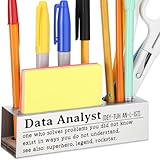
- Perfect Gift for Data Analysts – A fun and unique desk sign for business intelligence experts, data scientists, and analytics professionals.
- Bold & Readable Design – High-contrast lettering ensures visibility on any desk, making it an instant conversation starter.
- Compact & Lightweight – Small enough to fit any workspace without taking up too much room but big enough to make an impact.
- Durable & Long-Lasting Material – Made with premium materials to withstand daily office use while maintaining its sleek look.
- Great for Any Occasion – Ideal for birthdays, work anniversaries, promotions, or just a fun appreciation gift for number crunchers
Finance, ICT and professional services
OECD’s 2025 summary reports relatively high AI use in ICT and professional and scientific services; its reported figures were 57.3% and 36.8%, respectively, among firms in OECD countries with available data. A Federal Reserve accessible-data note, updated 3 April 2026, also shows adoption highest in professional services and finance in its plotted series, which synthesizes separate survey sources.
Possible finance applications include customer support, coding assistance, workflow automation and data analysis. OpenAI’s 2025 enterprise report describes uses in its own ecosystem; that vendor-specific account is not a representative survey of the finance industry. High reported use in a sector does not tell readers which tasks are deployed broadly or what outcomes they produce.
Independent reader supportYour contribution helps us test, update, and keep practical guides available for everyone.Why adoption and results differ
Organizations face practical constraints between identifying an application and relying on it in routine work. OECD identifies weaknesses in data availability, quality and interoperability, alongside shortages in skills, infrastructure and investment capacity. Larger, better-resourced organizations tend to lead, while smaller firms may find deployment and maintenance harder to support.
Industrial systems add the challenge of connecting disparate data from equipment and people to real workflows. NIST’s project description emphasizes measurement and evaluation, and notes that a lack of standard evaluation tools and management methods can contribute to hesitation, mistrust and misapplication. The agency describes industrial AI as combining physics, data insights and human observations and intuition to produce actionable intelligence for decision support.
Free tools Windows power users keep installed
One-click scans. No signup required.
Rank #4
How to judge an AI analytics application
A useful comparison looks beyond sector labels or adoption percentages. For a particular service or project, ask:
- What task is it performing? Distinguish prediction, classification, anomaly detection, generated analysis and automated decisions.
- Are the data fit for purpose? Check availability, quality, representativeness and whether systems can exchange data reliably.
- Does it fit the operation? Determine how outputs reach equipment, staff, existing software and the decisions they are meant to inform.
- Can the organization support it? Consider technical and sector-specific skills, infrastructure, funding and ongoing maintenance.
- Can performance and risk be evaluated? Define measures appropriate to the use case and assess results in its real operating context.
- How mature is the deployment? Separate a proposed application from a pilot, a narrow live use and integration into core processes.
This framework helps explain why cross-industry “impact” rankings can mislead. A sector may report relatively high AI use while still having limited evidence about outcomes, and a promising application in a lower-adoption sector may remain a pilot rather than an established practice.
What the evidence can—and cannot—show
Current evidence supports a picture of expanding but uneven AI adoption and a broad range of sector-specific applications. It does not establish one verified financial return, productivity gain or other causal outcome that applies across major industries. Adoption rates answer how many firms or enterprises report use under a particular survey definition; case reviews describe examples; neither alone proves that AI caused better results.
For readers comparing industries, the most useful distinctions are the task being performed, the maturity of deployment, the readiness of data and operations, the organization’s capacity to implement it, and the quality of evaluation. Those distinctions provide a more reliable view of likely impact than a single adoption percentage.
Quick wins for a faster PC:
Scan for outdated or missing drivers - takes under a minuteDriver Scan →Clear out junk files and repair common Windows errorsFree Scan →Fix the driver behind crashes, sound loss and screen glitchesFind Drivers →Quick Recap
Product prices and availability are accurate as of the date/time indicated and are subject to change. Any price and availability information displayed on Amazon at the time of purchase will apply.




