Free tools Windows power users keep installed
One-click scans. No signup required.
HighLevel is the better fit when your business depends on lead-generation campaigns, appointments, messaging, or agency client accounts. Odoo CRM is the better fit when sales needs to connect directly to quotations, orders, accounting, inventory, projects, or other business operations. They are not equivalent CRM products: HighLevel is marketing- and sales-focused, while Odoo CRM is one application in a wider business-management suite.
Prices below were listed by the vendors on August 18, 2026. Treat them as a dated snapshot, not a quote: confirm current plans, regional terms, and usage charges before committing.


HighLevel vs Odoo CRM at a glance
| Decision factor | HighLevel | Odoo CRM |
|---|---|---|
| Product orientation | Marketing and sales platform with CRM, funnels, communications, booking, and agency account features. | CRM application within a suite that also covers sales, accounting, inventory, ecommerce, projects, and other operations. |
| Best fit | Lead-generation businesses, appointment-driven services, and agencies managing client accounts. | Businesses that want customer and sales records connected to fulfillment and administration. |
| Lead capture | Funnels, websites, forms, surveys, calendars, and automated follow-up. | Website forms and email can create leads; website and ecommerce functions connect to the wider Odoo suite. |
| Communications | Email, SMS, calling, and conversations are central product capabilities; usage charges may apply. | Record-linked email and configurable communication tools, with setup and mail-server considerations. |
| Post-sale operations | Payments and invoicing are listed features, but the cited feature set does not establish parity with a full ERP suite. | Sales can connect to quotations, orders, accounting, inventory, projects, and other applications. |
| Agency/client structure | Sub-accounts; the listed plans differentiate account limits and SaaS packaging. | Multi-company is listed with Custom; it is not the same model as reselling client sub-accounts. |
| Pricing model | Monthly or annual platform tiers, plus possible usage-based charges. | One-app free offer or per-user monthly subscriptions for the broader suite. |
| Deployment | Hosted SaaS account and sub-account model. | Odoo Online, Odoo.sh, or on-premise options are listed for Custom, subject to deployment-specific limits. |
The practical question is what happens after a lead responds. If the next steps are a booked appointment, a conversation, or a nurture sequence, HighLevel is oriented around that workflow. If the next steps are a product quote, sales order, invoice, inventory movement, or project handoff, Odoo offers a more direct route through its application suite.
What each platform includes
HighLevel: CRM surrounded by marketing tools
HighLevel combines CRM pipelines with lead capture and follow-up capabilities such as websites and funnels, forms and surveys, email and SMS marketing, calendars, calling, a unified conversations experience, workflow automation, and reputation management. Its plan page also lists payments and invoicing. That breadth makes it a plausible fit when a small team wants marketing and sales communication in one operating environment rather than a CRM isolated from campaign tools. See HighLevel’s plan and feature list.
#1 Best Overall
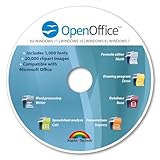
- THE ALTERNATIVE: The Office Suite Package is the perfect alternative to MS Office. It offers you word processing as well as spreadsheet analysis and the creation of presentations.
- LOTS OF EXTRAS:✓ 1,000 different fonts available to individually style your text documents and ✓ 20,000 clipart images
- EASY TO USE: The highly user-friendly interface will guarantee that you get off to a great start | Simply insert the included CD into your CD/DVD drive and install the Office program.
- ONE PROGRAM FOR EVERYTHING: Office Suite is the perfect computer accessory, offering a wide range of uses for university, work and school. ✓ Drawing program ✓ Database ✓ Formula editor ✓ Spreadsheet analysis ✓ Presentations
- FULL COMPATIBILITY: ✓ Compatible with Microsoft Office Word, Excel and PowerPoint ✓ Suitable for Windows 11, 10, 8, 7, Vista and XP (32 and 64-bit versions) ✓ Fast and easy installation ✓ Easy to navigate
Odoo CRM: sales records inside a business suite
Odoo CRM manages leads and opportunities, sales teams, activities, assignment, and pipeline work. Leads can be acquired through website contact forms and email; CRM can also connect with Odoo’s Sales, Marketing Automation, Email Marketing, accounting, inventory, ecommerce, projects, subscriptions, and manufacturing applications. The important distinction is that CRM is one part of the system, not the entire product. Odoo’s documentation describes lead acquisition and its broader application suite.
CRM pipelines and sales management
Both platforms cover core pipeline work: organizing prospects, tracking opportunities, assigning ownership, recording activity, and moving deals through stages. The meaningful difference is the surrounding record model. HighLevel keeps the pipeline close to conversations, campaigns, appointments, and lead follow-up. Odoo connects pipeline activity with sales teams and, when the relevant applications are in use, commercial records such as quotations and orders.
Odoo documents multiple sales teams, team-specific processes, email aliases that can create leads or opportunities, and pipeline organization. See its documentation on multiple sales teams and the CRM pipeline. Buyers should verify their exact needs in a trial or implementation review: the available material does not establish a like-for-like comparison of every detail, such as duplicate handling, forecasting, mobile workflows, or bulk operations.
Lead capture, funnels, and appointment booking
Where HighLevel has the natural advantage
HighLevel’s listed tools span landing pages and funnels, websites, forms, surveys, quizzes, booking calendars, and follow-up automation. That combination is useful when the intended journey is: attract a prospect, collect details, route the lead, book a call, and send reminders or follow-up. It can also keep client-specific assets and activity within separate sub-accounts, depending on the plan.
Quick wins for a faster PC:
Repair Windows errors before they cause bigger problemsFix Now →Scan for outdated or missing drivers - takes under a minuteDriver Scan →Where Odoo fits
Odoo can create CRM leads from website contact forms and email, and it can connect a website or ecommerce operation with sales records and downstream business applications. That is valuable when a form submission should become part of a shared customer, product, order, or service record. A company seeking highly campaign-oriented landing pages should assess how much configuration or development its desired page experience requires; the cited material does not establish that Odoo offers an identical funnel-building workflow to HighLevel.
Odoo’s lead-acquisition documentation covers website forms and email-based lead creation: Odoo lead acquisition.
Rank #2
Marketing automation and communications
HighLevel is oriented toward using channels and triggers to move leads toward conversations and appointments. Its listed capabilities include email and SMS marketing, workflow automation, calendars, calling, conversations, and reputation features. This is a stronger structural fit when the campaign itself—its triggers, channel sequence, and appointment outcome—is the central system.
Odoo offers Marketing Automation and Email Marketing applications, CRM segmentation and filters, automated actions, website lead capture, and record-linked communication. Its advantage is the possibility of carrying activity into a broader business record and process. Do not treat a logged email or an activity reminder as equivalent to a multistep campaign: compare the actual triggers, segmentation, channels, branching, reporting, and consent controls required by your team.
Email and sending setup
Odoo supports record-linked email communication, but mail configuration depends on the deployment and setup. Its documentation discusses email communication and the configuration of outbound servers, including custom-domain considerations. A business sending campaigns should validate sender-domain authentication, mail limits, deliverability controls, and unsubscribe handling before launch. See Odoo email communication and its outbound email server guidance.
SMS, phone, and volume costs
HighLevel’s base subscription is not a complete communications budget. Its support pricing guide lists usage-related services for email, phone, WhatsApp, premium workflow executions, and other add-ons; the listed LC Email rate is $0.675 per 1,000 emails and premium workflow features are listed at $0.01 per execution. These are pricing signals from the guide, not permanent guarantees. Estimate volumes and verify current rates in the HighLevel pricing guide. Odoo also requires attention to outbound mail configuration and limits, particularly for mass mailings or custom infrastructure.
Quotes, orders, accounting, and fulfillment
Odoo’s broader suite is the deciding advantage for an operations-heavy company. Depending on the applications and configuration selected, CRM can sit alongside Sales quotations and orders, accounting, inventory, ecommerce, projects, subscriptions, manufacturing, and other business functions. That gives a company the option of linking a sale to records used for delivery and administration instead of stitching together separate systems.
HighLevel lists payments and invoicing, but its published feature set does not establish equivalence with Odoo’s accounting, inventory, manufacturing, or full ERP-style workflows. A service business that only needs to collect payments may find the distinction immaterial. A distributor, manufacturer, or company whose sales promises depend on stock, fulfillment, or operational costing should assess Odoo’s specific apps and implementation needs rather than infer capability from the CRM comparison alone. Odoo’s application and plan overview identifies the suite’s business areas.
PC Slower Than It Used to Be?
A free scan shows the junk files, broken settings and background clutter dragging Windows down - then fixes them in one click.Free scan · Windows 10 & 11Outdated Drivers Are Slowing You Down
One free scan finds every outdated or missing driver and matches the right update for your exact hardware.Free scan · exact hardware matchRank #3
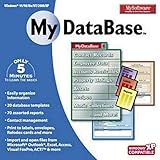
- Pre-designed templates for both business and personal use
- 10,000 clipart images and 100 fonts
- Notes table for history and to-do items
- Sort, filter and index
- Calculation & totaling
Agency accounts, customization, and integrations
HighLevel’s agency model
HighLevel differentiates its plans by sub-account capacity and agency-oriented functionality. The listed Starter plan includes three sub-accounts; Unlimited lists unlimited sub-accounts; Agency Pro adds SaaS Mode, automated sub-account creation, and markup-enabled rebilling. The SaaS Configurator is designed to package and provision access as a recurring subscription service. This architecture is a reason to consider HighLevel for agencies, not proof that every agency workflow will be simpler or more profitable. Review the SaaS Configurator documentation before planning a resale offer.
Odoo’s customization and API path
Odoo’s plans and hosting options matter to integrations. The cited API documentation says external API access is available on Custom plans, not One App Free or Standard. Odoo Online is not compatible with custom modules or the Odoo App Store in the cited documentation; Odoo.sh and on-premise provide different routes for custom development. The Custom plan lists Odoo Studio, multi-company, and deployment choices including Odoo Online, Odoo.sh, or on-premise. Confirm the current plan terms and technical constraints for the exact Odoo version you intend to use.
Sources: Odoo external API access, Odoo Online limitations, and Odoo hosting options.
Hosting and data control
HighLevel is presented in the cited materials as a hosted SaaS platform with accounts and sub-accounts; those materials do not establish a self-hosted option. Odoo lists Odoo Online, Odoo.sh, and on-premise deployment for Custom. These choices are not interchangeable: custom modules and infrastructure control affect which environment is suitable, and moving between hosting environments can involve version upgrades or module compatibility work.
Recommended Free Tools
Exporting data and running the application on infrastructure you control are separate requirements. If either matters, document which records, attachments, communications, and audit history must be exportable, and separately confirm the deployment model that supports your operational or compliance needs. See Odoo’s hosting guidance.
Pricing: compare the cost model, not just the entry price
The figures below were displayed on vendor pages on August 18, 2026. Annual prices are shown as listed, not as a full cost-of-ownership estimate. Confirm current pricing, billing terms, taxes, and regional availability directly with each vendor.
| Product or plan | Listed subscription price | Important qualification |
|---|---|---|
| HighLevel Starter | $97/month or $970/year | Three sub-accounts on the listed plan; usage services can add cost. |
| HighLevel Unlimited | $297/month or $2,970/year | Unlimited sub-accounts listed; usage services can add cost. |
| HighLevel Agency Pro | $497/month or $4,970/year | SaaS Mode, automated sub-account creation, and markup-enabled rebilling listed; usage services can add cost. |
| HighLevel Enterprise | Custom pricing | Contact vendor for terms. |
| Odoo One App Free | $0 | One application and unlimited users; not a free version of the entire suite. |
| Odoo Standard | $24.90 per user/month with annual billing; $31.10 per user/month with monthly billing | All Odoo applications listed; per-user pricing means total rises with licensed users. |
| Odoo Custom | $49.00 per user/month with annual billing; $61.00 per user/month with monthly billing | All applications plus listed deployment choices, Studio, multi-company, and external API access. |
Source plan pages: HighLevel pricing and Odoo pricing. Odoo’s API qualification is documented here.
How sample buyers should compare
- One-person consultancy: Compare HighLevel Starter’s $97 monthly subscription with one Odoo Standard user at the listed per-user rate. Then check whether the consultancy needs funnels, SMS, and booking or instead needs Odoo sales and accounting records. These are subscription comparisons only.
- Five-person internal sales team: Five Odoo Standard users would total $124.50 per month on annual billing or $155.50 per month on monthly billing at the listed rates, before any implementation or other costs. Compare that with the HighLevel plan needed for the desired communication, reporting, and workflow features; do not assume a lower subscription automatically means lower total cost.
- Agency serving multiple clients: Starter’s three sub-accounts may not cover the account structure; compare Unlimited or Agency Pro, then model messaging volume and any SaaS/rebilling requirements. Odoo would require a separate design for client records, databases, access, and marketing tooling rather than being treated as an equivalent sub-account product.
- Operations-heavy or API-dependent company: Include Odoo users, the Custom-plan premium if its deployment or API features are required, migration, configuration, and any development. Compare this with the cost of adding operational software and integrations around HighLevel.
- High-volume messaging business: Add communication and automation usage to HighLevel’s base fee, and validate Odoo email-server capacity and configuration if using its campaign tools.
Odoo implementation, migration, customization, and partner services can be material costs, but the cited pricing information does not establish a standard amount for them. Request a scoped estimate rather than treating the subscription table as a project quote.
Reporting: start with the question you need answered
HighLevel lists custom dashboards and reporting, alongside campaign, conversation, appointment, and client-account features. That structure is relevant when the key question concerns a campaign, lead source, or booked appointment. Odoo’s CRM and suite-oriented model is relevant when teams need to connect opportunities with sales and operational records. Neither a reporting feature list nor the presence of a dashboard proves that a platform will produce the exact attribution or profitability calculation your business needs.
- “Which campaign led to this booked appointment?” points toward a marketing-centered evaluation of HighLevel.
- “Which opportunities became orders and invoices, and what happened after the sale?” points toward an Odoo-centered evaluation.
- “Which salesperson owns the largest qualified pipeline?” can be evaluated in either; test the definitions, filters, and forecast outputs you actually use.
Which platform fits each business?
Marketing agency or lead-generation business
Favor HighLevel if client account separation, campaign funnels, SMS/email follow-up, booking, and a potential branded SaaS offer are central. Confirm the required tier, account permissions, message costs, and any client-specific data boundaries before rolling it out.
Appointment-driven local service company
HighLevel is a natural candidate if missed inquiries, reminders, conversations, booking, and review requests are the main bottlenecks. Consider Odoo if scheduling must connect to inventory, field work, projects, accounting, or a larger operational process.
Solo consultant or small internal sales team
Odoo may be economical at low user counts when the team needs its broader applications. HighLevel may be the better fit if the work revolves around lead capture, nurture, appointments, and communications. Compare the actual workflow and total cost, not only one user’s subscription price.
Do these 3 things before closing this tab:
1Fix the driver behind crashes, sound loss and screen glitches2Repair Windows errors before they cause bigger problems3Scan for outdated or missing drivers - takes under a minuteEcommerce, distributor, or product business
Lean toward evaluating Odoo when CRM needs to share records with ecommerce, products, sales orders, stock, accounting, or delivery. HighLevel can still support acquisition and follow-up, but the cited feature list does not establish the same operational suite.
Manufacturer or multi-company organization
Odoo is the stronger structural candidate when manufacturing, cross-company operations, or customized business processes are requirements. Validate modules, hosting, API access, accounting localization, and implementation scope for the specific deployment.
Business with complex enterprise selling
If the central requirement is advanced forecasting, territory management, complex account hierarchies, or a mature contact center, neither platform should be selected on this comparison alone. Compare specialized alternatives such as Salesforce for complex enterprise sales, Pipedrive for pipeline-led sales, HubSpot for a broader marketing and sales ecosystem, Zoho for a business suite, or ActiveCampaign with a simpler CRM when lifecycle email is the main need. Assess current capabilities and pricing directly; comparable prices are not established here.
Implementation and migration checklist
Before moving an existing CRM or committing to a new one, write down the workflow to be tested, then verify each item with representative records and users:
- Map the process: Document lead source, qualification, assignment, pipeline stages, conversion criteria, lost reasons, booking, handoff, and post-sale steps.
- Inventory data: List contacts, companies, opportunities, custom fields, tags, attachments, consent records, and historical communications. Decide what must migrate and what can remain archived.
- Rebuild the pipeline deliberately: Define stages, ownership, permissions, required fields, and reporting rules before importing records; avoid importing legacy clutter as if it were a working process.
- Test capture and routing: Submit real test leads through each form or email route, verify assignment and deduplication behavior, and confirm follow-up reaches the intended person.
- Validate communications: Configure sending domains and authentication, test unsubscribe and consent handling, confirm phone-number provisioning and messaging costs, and review sender limits.
- Test a complete post-sale path: For Odoo, test quote-to-order and any needed invoice, inventory, or project handoffs. For HighLevel, test the full lead-to-conversation, appointment, and follow-up sequence.
- Check integrations and access: Verify API plan eligibility, external tools, webhooks, user roles, client-account boundaries, and reporting access before go-live.
- Plan deployment and recovery: Confirm hosting constraints, custom-module compatibility, version requirements, export needs, migration timing, staff training, and a rollback or archive plan.
Final decision rule
Choose HighLevel when the main job is to turn marketing leads into conversations, appointments, and customers—especially across multiple client accounts. Choose Odoo when the main job is to make CRM part of a shared system for selling, delivering, billing, and running the business. If both descriptions fit, test one representative end-to-end workflow in each platform and compare the required subscriptions, usage, setup effort, integrations, and ownership model before migrating.
Quick Recap
Product prices and availability are accurate as of the date/time indicated and are subject to change. Any price and availability information displayed on Amazon at the time of purchase will apply.




