Quick wins for a faster PC:
Repair Windows errors before they cause bigger problemsFix Now →Fix the driver behind crashes, sound loss and screen glitchesFind Drivers →User experience drives food delivery app success by making each order understandable, dependable, and easy to complete—from finding a meal to resolving a delivery problem. It is not just the visual design: it includes accurate menus, clear prices, realistic delivery estimates, usable restaurant and courier tools, and support that can put things right. For a business, the goal is to reduce uncertainty without making promises its operations cannot keep.
Why UX matters to a food delivery business
Food delivery is an advance purchase of a perishable, time-sensitive product. Customers pay before they see the food and rely on the platform to show whether an item is available, when it should arrive, and what the order will cost. The interface is therefore part of the service’s trust system.
When customers can find relevant food, understand the total, customize an order correctly, and track it with useful updates, they have fewer reasons to abandon checkout or contact support. Reliable reordering and saved preferences can also make a first successful purchase easier to repeat. These are plausible business mechanisms, not guaranteed revenue gains: restaurant supply, delivery density, pricing, marketing, and fulfillment all matter too.
An analysis of 7,500 Google Play reviews of Uber Eats, DoorDash, and Grubhub found that positive sentiment focused on convenience, efficiency, and usability, while negative discussion often concerned order problems, delays, customer support, and service fees. The findings describe those reviews, not every customer or market. Read the study summary.
#1 Best Overall

- 【SUPER PRACTICAL】:Designed with a large and strong build, the Insulate Delivery bag uses an insulating layer to store hot and cold items and preserve freshness. These pizza delivery bags are big enough for a variety of needs and function well as a catering bag.
- 【LARGE CAPACITY】:23"W * 15"H * 14"D, weight only 0.65 LB/10.4 OZ, soft ,durable material, can help you save valuable space, Internal Dimension: 22x14x13 Inch. This Insulated Delivery bag is also suitable for your car to store food or to help you clean the trunk, folded size only 15.5" * 12" * 1.7" , when you are not in use, you can even store it anywhere
- 【WATER RESISTANT】:These insulated bags come equipped with a waterproof aluminum lining to ensure both heat retention and water resistance. However, due to the stitching process used in making the bags, there may be a risk of water leakage at the stitched seams. This means that water inside the bag may potentially seep through at these stitched areas
- 【STRONG ENOUGH】: Insulate thermal Delivery bag has high-quality two-way zipper pocket and two pairs of hand straps, which is very easy to clean and has good insulation effect
- 【PRODUCT INFORMATION】: Food delivery bags for vip commercial delivery/rideshare drivers, designed for sandwich relay and premium catering needs. Size 23x14x15, warmer type, xxxl capacity, extra tall structure, suitable for etz 79 bike use. Accommodates bon, bread, and beverage items efficiently
Food delivery UX research spans far more than the home screen. Baymard’s research covers more than 330 guidelines across discovery, menus, checkout, account tools, and loyalty, with benchmarking of restaurant and delivery services. It is an independent UX research provider, not a regulator or universal standard. See Baymard’s food-delivery research scope.
Where UX decisions shape the order
1. Location and availability
Let customers enter an address manually as well as use device location. Explain why location permission is requested, and distinguish the device’s current position from the delivery destination. Address fields should accommodate apartment or unit numbers, floors, gates, hotels, workplaces, campuses, and delivery instructions. Check the service area before a customer spends time choosing food, and allow address correction before payment.
2. Restaurant discovery and search
Restaurant listings should make useful comparisons possible: cuisine, operating status, delivery estimate, fees, minimum order, ratings and review volume, dietary options, promotions, distance or service area, and pickup availability. Clearly label sponsored placement rather than presenting it as ordinary relevance.
Search should work for restaurant names, cuisines, dishes, ingredients, and dietary needs. Filters such as “open now” or a delivery-time range can help, but preserve selected filters as people browse. A no-results state should suggest spelling corrections, nearby alternatives, or related dishes instead of ending the journey. Search guidance for food-delivery products treats autocomplete, misspellings, alternate queries, and no-results handling as distinct design problems. See Baymard’s food-delivery audit scope.
Outdated Drivers Are Slowing You Down
One free scan finds every outdated or missing driver and matches the right update for your exact hardware.Free scan · exact hardware matchWindows Errors? Fix Them Before They Spread
Repair common Windows errors and clear accumulated junk for a smoother, more stable PC - no reinstall needed.Free scan · no reinstall3. Restaurant pages and menus
Make hours, fulfillment status, estimated delivery, availability, and menu categories easy to understand. Item photos can aid choice, but should not replace descriptions of ingredients, size, portion, or serving details. Provide allergen and dietary information where the restaurant can substantiate it, and distinguish items available now from those available only at certain times, temporarily unavailable, or available with a substitution.
Rank #2
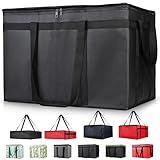
- 【LARGE CAPACITY】: Dimension: 23W x 15H x 14D. One set of 1-pack bag, with capacity of 79L/20.5 Gallon. The big insulated grocery shopping zippered bags work perfect for men. The extra large utility tote bag has good effect to keep lunch food warmer or cooler for more than 1.5 hours. It's a good food storage bag. Internal Dimemsion of catering bag doordash 22x14x13
- 【KEEP FOOD WARM/COLD】: The insulated grocery shopping bags are both cooler and warmer bags for women. The thermal and storage bags have good effect to keep food hot or cold
- 【MULTI-PURPOSE】: The large soft tote bags work for women and men. The large capacity cooler bag has multiple functions. It's the best carry bags for can, wine, water, beverage, drink. It could also used for meal and pizza delivery, food packaging, travel, shopping, travel to beach, food trasport by car, cart shopping for groceries, catering bag for hot/cold food deliveries
- 【DURABLE】: The external cloth of insulated grocery bags are made of fabric, material of internal is leakproof and easy cleaned alumnium foil. It is washable.The reusable shopping bags for groceries are heavy duty. The insulated bag with cooler function is perfect for men, boys
- 【COLLAPSIBLE】: The reusable grocery shopping bags are foldable. The folding cooler bag is portable with dimension of 23W x 15H x 2D Inch, which could save space and easy to store
4. Customization
Modifiers are a common source of mistakes. Separate required choices from optional add-ons, state minimum and maximum selections, and show price changes immediately. Keep choices if a customer returns to edit an item, then display the completed customization in the cart. Avoid contradictory combinations, unclear default selections, and instructions that restaurant staff cannot reliably interpret. If an option becomes unavailable, explain the change and let the customer choose what to do.
5. Cart, fees, and payment
Before payment, show the restaurant, items and customizations, delivery address, estimated arrival, item subtotal, applicable fees, tax, discounts, tip treatment, and final total. Explain conditional promotions, including eligibility, minimum spend, expiration, participating restaurants, and whether fees count toward a threshold. Make tip controls clear and editable, and say what happens if an item cannot be fulfilled.
Fee disclosure is a practical trust issue, not just a checkout detail. Consumer Reports investigated fee transparency in major U.S. food delivery apps; its findings should be understood in that U.S. context. Read the Consumer Reports investigation. Avoid making users open several panels to discover mandatory charges. If payment fails, preserve the cart and explain how to retry or change payment method without accidentally creating a duplicate order.
6. Confirmation, tracking, and handoff
After checkout, show an order number, restaurant, items, amount paid, destination, arrival estimate, current status, and a route to support. Useful milestones include restaurant acceptance, preparation, courier assignment, pickup, approach, and delivery. A realistic time range is more trustworthy than a precise countdown that repeatedly changes. A map helps only when its location and status data are current; otherwise, explain the delay or provide a meaningful status message.
Rank #3

- 【LARGE CAPACITY】Dimensions: 23W x 15H x 14D. With a generous 79L/20.5-gallon capacity, this food delivery bag provides ample space for multiple orders, pizza boxes, grocery items, and large food containers without overcrowding or affecting insulation performance
- 【KEEP WARM & COLD】This thermal food delivery bag is designed to keep hot food warm and cold food chilled during transportation. The insulated structure helps maintain stable temperatures, making it suitable for delivery, catering, and everyday food transport
- 【DUAL-SIDE OPENING】Designed with dual-side access for fast loading and unloading, this insulated delivery bag supports efficient operation during busy delivery runs. Reinforced seams and edges enhance durability for repeated daily use
- 【MULTI-PURPOSE】This large insulated cooler bag works for food delivery, pizza transport, grocery shopping, and carrying beverages like cans, wine, and drinks. Suitable for travel, car transport, beach trips, and catering needs for both men and women
- 【DURABLE】The outer fabric of this insulated grocery bag is strong and hard-wearing, while the leakproof aluminum foil lining is easy to clean. This reusable cooler bag is built for long-term use in delivery, shopping, and food transport
Support the actual handoff: door, lobby, curbside, or contactless preferences; building access instructions; and a way to report that the customer or courier cannot be located. Limit unnecessary exposure of personal information, and use delivery evidence only where operationally and legally appropriate.
7. Support and reordering
Make it possible to report missing or incorrect items, spills, late or undelivered orders, duplicate charges, refund questions, and safety concerns. Support should already have the order, items, payment state, and timeline so customers do not have to explain the situation from scratch. Self-service can resolve routine issues, but irrelevant scripted steps should not block escalation for complex or urgent cases.
Order history, favorites, saved addresses and payment methods, and one-tap reordering can reduce effort for returning customers. Personalization and notifications should be useful rather than cluttered: more prompts do not necessarily produce more trust or repeat orders.
What’s actually slowing this PC down?
Pick the symptom - the matching free tool is one click away.
Design for the whole marketplace, not only the customer app
A food delivery service connects customers, restaurants, and couriers. Its customer-facing promises depend on the tools and information available to the other participants. A polished customer screen cannot compensate for a restaurant that cannot update stock or a courier app with incomplete access instructions.
Rank #4
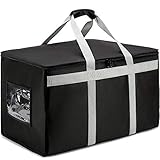
- WATERPROOF EXTERIOR FABRIC: Get a catering food bag build for the job. We use thick insulation and quality materials making this the perfect delivery tote bag. It measures 23.5” Length x 14.5" Width x 15" Height meaning all your food containers and buffet chaffing trays will fit in perfectly
- COMMERCIAL GRADE: Premium quality commercial grade delivery bag to keep all your food HOT and COLD for hours. Quality you can trust.
- PREMIUM FEATURES: Reinforced stitching through out the bag, no snag round edge corners with premium dual zippers for easy open and closure, padded carrying handle, side invoice pocket and easy to clean aluminum interior material.
- DURABILITY THAT DELIVERS: This commercial-grade insulated bag is built to withstand the demands of busy catering and delivery services, featuring a reinforced structure, durable foam padding, and heavy-duty materials. The high-quality craftsmanship ensures reliable performance for restaurant and catering needs.
- AMAZINGLY MULTIURPOSE: Our reusable insulated delivery bag is perfect for all your catering or delivery services. You can use it to carry pizza, grocery, food containers, chafing trays, grocery, casserole and more.
Restaurant tools
- Provide a clear order queue with accept or reject controls and preparation-time updates.
- Make menu, modifier, price, and out-of-stock changes straightforward.
- Support substitutions, order notes, busy-mode controls, and customer or courier communication.
- Show refund or dispute processes and settlement information clearly.
Courier tools
- Present delivery offers, pickup and drop-off details, navigation, and building access instructions clearly.
- Make communication and exception reporting usable without encouraging unsafe interaction while driving or cycling.
- Support reassignment, weak connectivity, delivery confirmation, and proof-of-delivery workflows where appropriate.
- Show earnings information and relevant delivery details without exposing unnecessary personal data.
Admin and support tools
Support staff need an order timeline, payment state, restaurant and courier information, refund or credit controls, incident categories, escalation rules, and audit history. Accurate back-office information makes customer-facing explanations and resolutions more consistent.
Accessibility is part of completing the order
Accessibility has to work through search, customization, payment, tracking, and support—not only on the landing screen. Include screen-reader labels, logical focus order, sufficient contrast, dynamic text sizing, plain-language errors and status updates, and controls that do not depend on precise gestures or color alone. Provide text alternatives for meaningful images and alternatives to map-only instructions. Test with voice control, switch access, and assistive technologies relevant to the intended platforms.
DoorDash says its websites and online services aim to follow WCAG 2.2 AA and describes audits, training, and ongoing improvement in its accessibility program. That is the company’s stated direction, not a guarantee that every product or task is accessible. Read DoorDash’s accessibility statement. Apple’s platform guidance covers Dynamic Type, Assistive Access, Switch Control, and other accessibility considerations for Apple interfaces. See Apple’s accessibility guidance. WCAG is primarily a web standard; native apps also require platform-specific implementation and testing, and legal obligations depend on jurisdiction and product.
Free tools Windows power users keep installed
One-click scans. No signup required.
Turn UX goals into measurable product requirements
Choose a small set of metrics tied to actual tasks and business outcomes. Set baselines before redesigning, segment results where appropriate, and investigate causes rather than treating a change in one metric as proof of success.
Best Value

- 【Large Capacity】23"W x 15"H x 14"D, Made of 600D Water Repellent Oxford and Leak-proof Liner
- 【Leak-proof & Cold / Hot 】The leak-proof and insulated liner inside of this food delivery bag make sure anti-leaking and keep food hot/cold for more than several hours
- 【Easy to use】Portable and durable. Collapsible when storage. Durable when you using
- 【Transparent Pocket】Allows for easy to see labels of orders, dates, and temperatures
- 【Strong Enough】 Insulate thermal Delivery bag has high-quality two-way zipper pocket and one pair of hand straps, which is very easy to clean and has good insulation effect
| Journey area | Useful measures |
|---|---|
| Acquisition and onboarding | Install-to-sign-up conversion, sign-up completion, permission acceptance, first-session search success, and activated users. |
| Discovery | Search success and no-results rates, refinement rate, menu-to-cart conversion, and abandonment after filtering. |
| Checkout | Add-to-cart and cart-to-checkout conversion, checkout abandonment, payment failures, address-validation failures, promotion errors, and time to complete checkout. |
| Fulfillment | Order acceptance, courier assignment time, preparation-time variance, ETA accuracy, late deliveries, cancellations, missing or incorrect items, and completion rate. |
| Retention | Repeat order rate, orders per active customer, reorder usage, 30- and 90-day retention, and churn after a failed order. |
| Support | Contacts per order, self-service resolution, first-contact resolution, refund-processing time, escalation, customer effort, and satisfaction after resolution. |
| Accessibility | Task completion with assistive technologies, screen-reader task success, severe accessibility defects, dynamic-text layout failures, and keyboard or switch-navigation completion where applicable. |
Do not optimize a single funnel number at the expense of trust. For example, a checkout change that raises immediate conversion but obscures fees could damage repeat use, increase complaints, or create refund work. Treat changes to ranking, defaults, tips, promotions, and price presentation as experiments with both short- and longer-term outcomes.
A practical UX-led development process
- Define user groups. Include first-time and frequent customers, budget-conscious users, people with dietary or accessibility needs, group orders, and customers ordering to apartments, hotels, workplaces, or campuses. Interview restaurant operators, couriers, and support agents as well.
- Map the service. Blueprint customer, restaurant, courier, system, payment, notification, and support actions. Mark where the customer-facing status might diverge from what operations actually know.
- Prototype critical tasks. Test realistic flows: find a meal within a budget, customize it, change an address, apply a promotion, recover from a declined payment, track a delay, report a missing item, and reorder. Include larger text and screen-reader tasks.
- Validate operational truth. Check that menus synchronize, restaurants can mark items unavailable, ETA logic reflects meaningful events, support can see order history, partial refunds are possible where promised, and reassignment or closure scenarios have clear handling.
- Instrument and improve. Track abandonment, errors, support contacts, and fulfillment outcomes. Use controlled tests to assess whether features improve completed, successful orders—not just clicks—and continue to review failures after launch.
Baymard reports 25 rounds of qualitative usability testing involving more than 4,400 participant/site sessions across its broader research program, alongside benchmarking, eye tracking, and quantitative studies. That is a description of Baymard’s program, not a claim that any one app has been validated by those sessions. Read about Baymard’s research methods and scope.
Trade-offs to decide before building
Native apps or responsive web
Responsive web reduces installation friction and makes restaurant links shareable, which can help discovery and acquisition. Native apps can make sense for frequent customers, couriers, or restaurant operators when repeated use, push notifications, location features, payments, or platform accessibility justify the added work. The right choice depends on the user, task, device, and market; it is not a universal ranking.
More features or less cognitive load
Filters, loyalty programs, recommendations, and customization add flexibility but can obscure the basics. Prioritize finding food, understanding price and timing, customizing accurately, paying confidently, and getting help. Add secondary features when testing shows they help rather than distract.
Personalization or privacy
Explain what data informs a recommendation, whether location is needed, how preferences can be changed, and how personalization can be limited. Test whether recommendations improve completed orders, not merely clicks.
Automation or human escalation
Automate predictable, low-risk requests when the flow is clear. Preserve a route to human help for safety issues, repeated delivery failures, complex refunds, accessibility barriers, disputes, or conduct complaints.
Quick Recap
Common UX failures to catch early
- Surprise charges: Mandatory fees or promotion conditions appear only at the end.
- Weak search: Results handle only exact restaurant names, or a no-results screen provides no alternative.
- Confusing modifiers: Required choices, add-on prices, and the final item configuration are unclear.
- False precision: An ETA or moving courier map implies certainty that the underlying data cannot support.
- Fragile address handling: GPS pins cannot be corrected or the form cannot capture building access details.
- Unrecoverable errors: Payment failure loses the cart, an item becomes unavailable without a choice, or refund status is unclear.
- One-sided design: Customer promises exceed what restaurant, courier, dispatch, or support tools can deliver.
- Blocked support: Automation makes users repeat irrelevant steps or hides escalation.
- Overloaded screens: Promotions and recommendations compete with the core task before the basic ordering journey works.
Product prices and availability are accurate as of the date/time indicated and are subject to change. Any price and availability information displayed on Amazon at the time of purchase will apply.
Do these 3 things before closing this tab:
1Scan for outdated or missing drivers - takes under a minute2Clear out junk files and repair common Windows errors3Fix the driver behind crashes, sound loss and screen glitches



