Free tools Windows power users keep installed
One-click scans. No signup required.
Product-based IT is an operating-model change, not a rebranding exercise. It moves technology work from temporary projects with fixed scope toward persistent, cross-functional teams that build, operate, measure, and improve products, platforms, services, and value streams over time.
The switch is worthwhile when a capability has continuing users, evolving needs, operational responsibilities, and measurable value. It is not a universal replacement for projects: one-time migrations, facilities work, fixed regulatory submissions, and other temporary initiatives may still need project or program management.
What product-based IT means
In a project-based model, a temporary team is assembled to deliver defined scope by a target date and budget. After launch, the team may disband and responsibility may pass to another group.
In a product-based model, a stable team owns a capability throughout its lifecycle. It prioritizes work, delivers improvements, operates the product, studies user and business results, and changes direction when evidence warrants it. A product may be sold externally, but it can also be an internal CRM, identity platform, data service, employee workflow, or developer platform.
#1 Best Overall

- Multi-Use Calendar Dry Erase Board: Our magnetic monthly whiteboard can put your life in order and plan ahead. You can write down your weekly schedule, and this whiteboard planner is perfect to plan ahead any activities, reminders, appointments, tasks. The magnetic double-sided whiteboard allows you to have two projects going. The other sided is blank. It is the best tool for home teaching or memo. It can hang on wall to remind you not forget the important thing.
- Weekly Planner & Whiteboard: This whiteboard provides double side, white board and dry erase calendar board. Dry erase weekly calendar for busy people to keep in track of event, dates, or use as to-do list, aid to daily tasks. The movable hanging hooks allow you to adjust the hanging distance easily. Small Portable white board can be hung horizontally and vertically as you like. This whiteboard is great for distance learning, daily reminder, grocery list, to do list, meal plans.
- Never Miss the Important Thing: The board is printed with an undated Week Calendar grid. Our portable dry erase board is cool for the kitchen, dorm, bedroom and office. The whiteboard is a great classroom learning board that help students lesson plans go smoothly. Perfect vision board organizer for planning weekly schedule, to do list tasks and family chores organization. The weekly board is the perfect visual tool for clear communication.
- Super Value Pack of Small Whiteboard: The 16 X 12 inches double-sided weekly planner dry erase board set comes with 10 pack magnetic dry erase markers (include 8 color), 4 pack magnetic piece, 1 pack dry eraser. This big dry erase whiteboard is great size for wall, office desktop, study table, bedside table, class podium and kitchen counter. Double sided wall portable small magnet dry erase whiteboard easel with solidly built but light weight which makes it suitable for handheld as well.
- Smoothly Writing & Easy to Clean: Magnetic white board comes with a smooth and sturdy writing surface. It's easy to write on and easy to wipe clean without stain. The value of getting organized and always be on time. Our magnetic dry erase calendar makes it easy to always be a step ahead of your schedule. The dry erase board is specially made for home, kitchen, teacher, office or anywhere you want. Perfect for reading, learning, memo, to do list.
| Area | Project-based IT | Product-based IT |
|---|---|---|
| Funding | Approved initiative by initiative | Allocated to a product, value stream, or strategic objective |
| Teams | Temporary and frequently reassigned | Persistent and cross-functional |
| Planning | Detailed scope and milestones set far ahead | Strategy and outcomes guide continuously updated plans |
| Ownership | Often ends at launch or handoff | Continues through operation, improvement, and retirement |
| Success | Scope, schedule, budget, and delivery milestones | Customer, business, product-health, and operational outcomes |
| Feedback | Often concentrated around requirements and acceptance | Continuous research, usage analysis, support data, and operational learning |
Product-based IT is related to agile, DevOps, OKRs, and IT service management, but it is not interchangeable with any of them. An organization can use Scrum while retaining project funding, unstable teams, fixed-scope commitments, and weak business ownership. The operating model changes funding, governance, decision rights, team stability, accountability, and measurement as well as delivery practices. Planview describes the model as organizing teams, processes, and systems around customer value and continuous improvement.
Why organizations make the switch
The usual case is not a guaranteed productivity increase. It is better alignment, faster learning, clearer ownership, and more continuous value delivery. Project-centric organizations commonly encounter:
- Technology teams delivering outputs without proving business value.
- Repeated loss of product knowledge when projects close and people move on.
- Delays caused by handoffs between business teams, product, engineering, security, and operations.
- Stakeholders competing for project funding instead of prioritizing a portfolio.
- Plans that become obsolete before delivery.
- Operations, security, reliability, and technical debt receiving less attention than new project scope.
- Teams optimizing local delivery measures while users see little improvement.
Decide what should become a product
A candidate product generally has a defined user group, a persistent purpose, an identifiable lifecycle, ongoing operational needs, an accountable product leader, a stable team, and measurable outcomes. It should require prioritization trade-offs over time.
Examples include a customer self-service portal, claims-processing platform, employee onboarding service, identity and access-management platform, data product, internal developer platform, supply-chain planning capability, or IT service-management product.
A one-time office move, fixed legal submission, or narrowly bounded migration may remain a project. However, the platform created by a migration may become a product afterward. A hybrid model is often the most practical: an ERP implementation can be managed as a program while the resulting finance platform is operated as a product.
The six steps to making the switch
1. Reorient the PMO and clarify decision rights
The PMO should not simply disappear. Its role typically shifts from controlling every project plan to providing portfolio-level capabilities: investment governance, capacity and financial planning, dependency and risk management, vendor oversight, executive communication, standards, and benefits tracking.
Rank #2

- Thickened No Slip Magnet: Durable and Tear Resistant Design Say goodbye to flimsy calendars that easily fall off! Our thickened magnetic refrigerator calendar stays securely in place without bubbles or bending. Keep your daily, weekly, and monthly plans organised year after year with this durable design
- Effortless Writing and Erasing: The Hivillexun fridge calendar is made from high quality PP and PET materials, ensuring easy wiping with no residue left behind. Reusable and cost effective, its magnetic design sticks to any smooth metal surface, from refrigerators to office filing cabinets
- Track Your Month with Ease: Looking for an efficient way to plan your life? Our magnetic monthly planner provides a clear visual tool for communication and organisation. Easily manage your monthly schedule, plan events, set reminders, appointments, tasks, and even birthday parties
- Stay on Top of Your Kids’ Nutrition: Plan your children’s weekly meals to ensure they get the right nutrients. Use our kitchen calendar to track their diet and plan your grocery shopping for a well-balanced, healthy meal plan
- Fits Most Refrigerators: Measuring 16.5 inches by 11.8 inches, the horizontal design of this whiteboard calendar fits both mini and full sized refrigerators. Keep your family organised by recording activities, grocery lists, appointments, and busy schedules all in one place
Begin by inventorying projects, products, platforms, services, and value streams. For each one, identify who requests, funds, prioritizes, approves, builds, operates, and retires the work. Then define responsibilities for product managers, product owners, project and program managers, architects, business sponsors, and operations leaders.
Program managers remain valuable for major dependencies, vendors, regulatory commitments, cross-product risks, and executive coordination. Some may move into product roles, particularly when they have strong domain and user knowledge. The source six-step framework, published by CIO, recommends reassessing these responsibilities rather than assuming project-management expertise has become irrelevant.
The Tool Desk
Outbyte PC Repair FREERepair Windows errors before they cause bigger problemsFix Now →Outbyte Driver Updater FREEScan for outdated or missing drivers - takes under a minuteDriver Scan →Failure warning: If the PMO still approves detailed scope and dates while product managers are nominally accountable for outcomes, the organization has created role confusion rather than a product model.
2. Integrate product, delivery, and service tools
Product strategy, roadmaps, backlogs, deployments, incidents, usage, and support data should be connected where practical. Teams need visibility into operational work, not only feature requests. Establish a shared vocabulary and minimum data standards for products, owners, outcomes, dependencies, and measures.
This does not mean buying a large platform immediately. Tool integration cannot repair unclear ownership, unstable teams, weak prioritization, or absent customer data. It can expose those problems, but not solve them. The aim is to reduce duplicate reporting and connect delivery decisions with service health. The original framework specifically calls for better integration between product delivery, agile, and IT service-management tools.
3. Shift to continuous planning
Continuous planning does not mean planning disappears. Each product still needs a vision, strategy, outcome goals, discovery process, roadmap, near-term delivery plan, release communication, risk management, and dependency awareness.
Rank #3

- 【Versatile Weekly Planner Whiteboard】Featuring a weekly calendar on one side and a blank whiteboard on the other, this double-sided planning whiteboard offers ample space for daily, weekly, and task planning. With a dedicated notes zone and goal-tracking section, it visually highlights priorities and monitors progress. Ideal for home, office, or school use, it keeps tasks visible, coordinates schedules, and boosts productivity.
- 【All-inclusive Accessory Kit】Everything you need is included in the 24x18 inches week calendar set—4 colours dry erase markers, 8 magnets, 1 eraser, a movable tray, hanging hooks and wall mounted screw kit. Start organizing your schedule immediately with no extra purchases required.
- 【Smooth Writing & Reusable Surface】Write and wipe with ease on this clear, color-printed surface. The colorful printed design adds vibrancy and makes your planning experience more enjoyable. The stain-resistant and waterproof layers make writing smooth and cleaning hassle-free, keeping your weekly planning whiteboard fresh and reusable for long-term use.
- 【Flexible Installation Options】Install with ease! Use the movable hooks for hanging anywhere or secure the calendar whiteboard with pre-drilled hidden holes and screws. Supports both horizontal and vertical mounting, adapting seamlessly to any space.
- 【Durable & Long-Lasting Design】 This weekly planner board built with a reinforced aluminum frame and ABS rounded protective corners, this weekly planner whiteboard is designed to resist warping and ensure long-term use. A reliable choice for home, office, and school.
A useful planning hierarchy is:
- Product strategy: why the product exists and whom it serves.
- Outcome goals: what measurable change it should create.
- Roadmap: direction and sequencing, often expressed as now, next, and later.
- Discovery: research, prototypes, experiments, and technical spikes.
- Team planning: the next valuable slice of work.
- Operational feedback: usage, incidents, support requests, performance, and adoption.
Separate committed near-term work from exploratory or aspirational items. Review priorities regularly, but preserve enough strategic stability for teams to deliver. Continuous planning should replace false precision, not create arbitrary reprioritization.
4. Manage for outcomes, not completion
Features shipped, tickets closed, story points completed, and milestones met describe outputs. They do not prove that users or the business benefited.
Connect each significant initiative through a chain such as:
Strategic objective → product outcome → leading indicator → delivery hypothesis → shipped change → observed result
What’s actually slowing this PC down?
Pick the symptom - the matching free tool is one click away.
For example, instead of promising “deliver a new employee portal by September,” define an outcome such as increasing the percentage of employees who complete common HR requests without assisted support, while maintaining accessibility and reliability. The team can then test a smaller change, observe completion and escalation rates, and decide whether to adapt or expand the work.
Outputs remain useful for understanding flow and capacity. The mistake is treating output completion as evidence of value. Product teams can deliver continuously and still build the wrong thing.
Rank #4
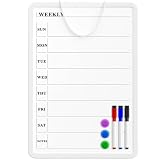
- Weekly Planner on One Side, Blank Whiteboard on the Other: This MaxGear dry erase calendar board features a double-sided design. One side is a weekly planner for scheduling and task tracking, while the other side is a blank whiteboard for notes, reminders, or drawings
- Double-Sided Magnetic Surface: Both sides of the board are magnetic, allowing you to attach notes, paper, or reminders on either the weekly planner side or the blank whiteboard side
- Works with Standard Dry Erase Markers: The smooth writing surface works with standard dry erase markers. The set includes 3 colorful dry erase markers, and you can also use other dry erase markers for clear writing and easy erasing
- Easy to Hang or Stick, Ready to Use: Includes a hanging rope and double-sided adhesive tapes, allowing you to hang the board on walls or doors or stick it to smooth surfaces like refrigerators—no other tools required
- AFTER-SALES SERVICE: 12-Month After-Sales Service. If you have any questions with our product, please feel free to contact us
5. Build a balanced KPI system
There is no universal product dashboard. Measures should reflect the product’s purpose and should combine several perspectives:
- Business and customer outcomes: adoption, task completion, conversion, retention, satisfaction, time to value, revenue, cost, or risk reduction.
- Product health: availability, performance, defects, support volume, vulnerabilities, technical debt, accessibility, and compliance.
- Delivery flow: lead time, work-item age, throughput, work in progress, blocked time, and dependency delay.
- Software delivery and reliability: deployment frequency, change failure rate, and mean time to restore.
DORA’s research materials provide context for software-delivery measures, but those measures do not represent the complete value of a product. Pair them with customer and business outcomes. Likewise, do not replace “projects completed” with “features shipped” and call it outcome management. Use team metrics for system improvement, not individual ranking.
Recommended Free Tools
6. Build customer feedback into the operating rhythm
A customer may be an external buyer, employee, business department, developer, partner, patient, citizen, operations team, regulator, or auditor. Internal products still require discovery.
Useful feedback loops include user interviews, workflow observation, support-ticket analysis, usage data, prototypes, usability tests, product reviews, and post-release adoption tracking. Look for workarounds and shadow systems; they often reveal unmet needs better than formal requests.
Customer-centricity does not mean accepting every request. Feedback is one input alongside strategy, risk, cost, feasibility, architecture, and regulatory obligations. It matters only when teams have enough authority to act on evidence and leaders are willing to stop lower-value work.
Independent reader supportYour contribution helps us test, update, and keep practical guides available for everyone.Funding, teams, and governance: the changes that make the model real
The most difficult part is often not adopting a backlog tool. It is changing how money, people, and decisions move through the organization.
Quick wins for a faster PC:
Fix the driver behind crashes, sound loss and screen glitchesFind Drivers →Repair Windows errors before they cause bigger problemsFix Now →Best Value
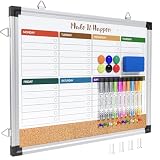
- WEEKLY DRY ERASE & CORK BOARD COMBO: This 17"x13" reversible wall board features an undated weekly grid with an integrated bottom cork strip on one side for structured task scheduling and quick note pinning, and a full blank writing surface on the reverse, perfect for organizing your home command center
- STURDY ALUMINUM FRAME DRY ERASE BOARD: Built with a 9-layer reinforced core and rust-resistant aluminum frame, this board resists warping and denting with daily use. The premium smooth surface writes effortlessly and wipes completely clean without ghosting or residual stains, while shatter-proof ABS corner guards absorb accidental impacts
- ALL-IN-ONE DRY ERASE ACCESSORY KIT: This complete bundle arrives with 10 magnetic markers (7 vibrant colors for color-coded planning + 3 classic black), 6 strong magnetic dots, 1 magnetic eraser, and 10 push pins, covering all your daily writing and document pinning needs
- EASY DUAL ORIENTATION WALL MOUNTING: Hidden screw fasteners enable a flush, seamless wall installation for a tidy professional look, and adjustable sliding hooks support both horizontal and vertical hanging to fit narrow hallways, office cubicles, and classroom walls. Even beginners can complete setup in just a few minutes
- MULTI-SCENE USE FOR HOME OFFICE SCHOOL: This versatile combo board adapts seamlessly to every space, serving as a lesson planner for teachers, a project tracker for remote workers, a weekly meal prep chart in the kitchen, and a homework organizer for kids at home
Fund products or value streams, not only temporary scope
Leadership must decide who receives funding, how long it is authorized, what evidence supports continued investment, and how maintenance, security, technical debt, and reliability are paid for. A practical transition is incremental: fund a small number of product areas for a defined period, require outcome hypotheses, review evidence at regular intervals, and adjust investment.
Planview’s operating-model guidance similarly emphasizes alignment among strategy, funding, team structures, and outcome measures. This is vendor guidance, not proof that every organization will achieve a particular performance gain.
Stabilize teams and make them cross-functional
A product team commonly combines product management, engineering, design, quality, data, security, architecture, operations or SRE, and domain expertise. Not every specialist must be full time. Shared specialists, enabling teams, and platform teams can work, provided their dependency costs remain visible.
If people continue to move from project to project, context is repeatedly lost and the organization has not fully adopted product ownership, regardless of its terminology.
Windows Errors? Fix Them Before They Spread
Repair common Windows errors and clear accumulated junk for a smoother, more stable PC - no reinstall needed.Free scan · no reinstallOutdated Drivers Are Slowing You Down
One free scan finds every outdated or missing driver and matches the right update for your exact hardware.Free scan · exact hardware matchGive product leaders real authority
A product manager who only writes requirements and reports status is acting more like a coordinator or business analyst. Product leadership requires meaningful authority over prioritization and roadmap recommendations within strategic, financial, security, and architectural guardrails. Executives should set direction and investment boundaries while delegating day-to-day decisions to teams close to users and delivery realities.
A practical pilot plan
- Select one product or value stream with continuing users, visible pain, and an outcome that can be measured.
- Establish a baseline for customer behavior, operational health, delivery flow, cost, risk, and current decision delays.
- Name an accountable product leader and document decision rights.
- Form or stabilize a cross-functional team, including the operational capabilities needed to own the lifecycle.
- Define one or two outcome goals with leading indicators and a clear review date.
- Map funding and capacity, including space for maintenance, security, defects, reliability, and discovery.
- Use the minimum necessary tooling to connect roadmap, delivery, service, and outcome information.
- Run one planning and outcome-review cycle, then record what changed, what was learned, and what remains blocked.
- Scale selectively to products with similar conditions; do not mandate a label across every IT initiative.
Common mistakes
- Renaming projects as products: Temporary teams, project funding, milestone metrics, and launch-end ownership remain unchanged.
- Buying tools first: Software institutionalizes confusion when products, outcomes, owners, and data definitions are unclear.
- Giving product managers no authority: Accountability without decision rights produces frustration and slow escalation.
- Ignoring run work: Measuring only new features underfunds operations, security, reliability, supportability, and technical debt.
- Creating roadmap theater: Exact long-range feature dates can preserve the old project model. Label assumptions, dependencies, confidence, and alternatives.
- Centralizing every decision: Executive approval for every priority defeats the purpose of empowered teams.
- Treating requests as the roadmap: Customer evidence must be balanced with strategy, reach, cost, risk, and feasibility.
- Measuring individuals with flow metrics: Throughput and cycle time can be distorted when used for performance ranking.
- Ignoring politics: The change redistributes control over money, priorities, schedules, and access to teams. Change management is a core workstream, not a communications afterthought.
What does not change
Product-based IT does not eliminate project management, annual commitments, governance, compliance, architecture, or dates. Fixed regulatory and contractual deadlines still need explicit planning. Major migrations, mergers, infrastructure moves, and cross-product initiatives may require program structures.
The mature answer is usually hybrid: persistent capabilities are funded and owned as products, while genuinely temporary work is managed as projects or programs. The question is not whether an initiative uses agile ceremonies. It is whether the organization has durable ownership, sensible funding, delegated decisions, customer learning, and measures tied to value.
Bottom line
The switch succeeds when an organization funds and empowers durable teams to solve customer and business problems continuously—not when it changes project names to product names. Start with one suitable product or value stream, stabilize its team, clarify authority and funding, measure outcomes alongside delivery and health, and scale only after the evidence supports it.
Quick Recap
Product prices and availability are accurate as of the date/time indicated and are subject to change. Any price and availability information displayed on Amazon at the time of purchase will apply.




