Short answer: the 2017 dual-socket Intel Xeon E5 benchmark remains useful for understanding cache, thread count, NUMA, and server power draw—but its CryptoNight hash rates and profitability conclusions are not current Monero benchmarks. Monero moved to RandomX in November 2019. If you already own a dual Xeon server, testing it can be a worthwhile homelab experiment; buying one solely to mine Monero is usually difficult to justify once electricity, cooling, memory, noise, and opportunity cost are included.
The original ServeTheHome article found that L3 cache was a stronger performance indicator than core count or clock speed alone across its tested systems. That is a historical observation, not a rule for configuring a modern RandomX miner.
What the original benchmark actually tested
ServeTheHome published the benchmark on February 1, 2017. The test was conducted in a data-center lab, where mining was partly treated as a burn-in workload for server hardware. It focused on selected Intel Xeon E5-2600-series systems, particularly dual-socket configurations, and presented 18 test cases. The article also included reference systems based on Xeon D, Xeon E6, and Xeon E7 processors.
The reported results were primarily raw CryptoNight-era hash rates. The article did not present a complete modern performance-per-watt or total-cost-of-ownership study. Its historical claim that the lab represented approximately 0.06% of worldwide Monero hash rate should be understood only as a contemporaneous self-report—not as a current network statistic.
#1 Best Overall

- Certified Refurbished Quality: This product is tested and certified to look and work like new, with the refurbishing process including functionality testing, basic cleaning, inspection, and repackaging with all relevant accessories and a minimum 90-day warranty
- Product Code: CM8066002031501
- Processor Specifications: Intel Xeon E5-2680V4 featuring 14 cores running at 2.4GHz base frequency with 35MB cache memory
- Performance Features: Delivers 9.6 GT/s data transfer rate with 120W thermal design power for demanding server and workstation applications
- Socket Compatibility: Designed for LGA 2011-3 socket with model number SR2N7, ensuring compatibility with compatible motherboards and server platforms
Some configurations used different mining images. That matters: the article reported 1,585 H/s for a quad Xeon E7-8870 v3 system using a newer image, while a Dell PowerEdge R930 with four Xeon E7-8890 v4 processors had previously reached 2,200 H/s with an older image. Those figures are not a perfectly controlled comparison.
Read the original ServeTheHome benchmark.
The historical results in context
The article’s representative findings were:
- Dual 10- to 14-core Xeon E5 systems often performed relatively similarly rather than scaling cleanly with core count.
- A single Xeon E5-2630L v3 was an outlier, delivering surprisingly competitive results despite having fewer resources. It was also the lowest-power system among the 18 configurations.
- A quad Xeon E7-8870 v3 system reached 1,585 H/s with the newer mining image.
- A quad Xeon E7-8890 v4 system had previously reached 2,200 H/s with an older image; that result should not be ranked directly against the newer-image result.
- A 16-core, 32-thread Xeon D-1587 reportedly performed approximately like a single eight-core, 16-thread Xeon E5-2630L v3, which the article associated with the Xeon D platform’s lower L3 cache.
- Low-power Xeon variants could perform well despite lower base clocks.
These are CryptoNight-era observations. They should not be converted into expected 2026 RandomX hash rates by applying a multiplier or by assuming that more cores will produce proportionally more performance.
Why L3 cache mattered in the original test
The benchmark compared total cores, threads, base and turbo clocks, L3 cache, cache per core, socket count, and system power. Its central conclusion was that L3 cache was the most useful predictor among the variables examined.
For all 18 tested configurations, the article reported that using approximately half the total L3 cache, expressed in megabytes, as the thread count produced the best result. In other words, a system with 20 MB of relevant L3 cache would be tested near 10 mining threads under that historical heuristic.
Recommended Free Tools
That finding helps explain why a lower-clocked or lower-core-count Xeon could outperform expectations. Mining threads compete for cache and memory resources; adding threads is not automatically beneficial when each thread receives too little cache or when power and memory contention increase.
However, the “L3 cache divided by two” rule belongs to the tested software and CryptoNight implementation. Current Monero mining uses RandomX, whose memory behavior and configuration requirements differ. Treat the old ratio as a clue for historical analysis, not as a modern XMRig command or guaranteed optimum.
Rank #2

- Intel Xeon E5-2699 V4 Docosa-core (22 Core) 2.20 Ghz Processor - Socket Lga 2011-v3 - 5.50 Mb - 55 Mb Cache - 64-bit Processing - 14 Nm - 145 W
Historical power measurements
The article reported these approximate system-level measurements:
| Configuration | Reported power |
|---|---|
| Four Xeon E7-8870 v3 processors | Approximately 988 W at the 208 V circuit |
| Dual Xeon E5-2628L v4 systems in a four-node/2U chassis | Approximately 180 W per system |
| Xeon E5-2630L v4 in a 1U chassis | Approximately 205 W |
| Xeon D-1587 node | Approximately 118 W |
| Single Xeon E6-2630L v3 in a 1U chassis | Approximately 98 W |
These figures are useful reference points, but they are not directly comparable without knowing the exact measurement conditions. A wall reading includes the chassis, fans, memory, storage, motherboard, and power-supply losses. A four-node chassis reading also has a different meaning from a single-node measurement. Ambient temperature, fan behavior, PSU efficiency, and workload state can materially change the result.
The article itself emphasized raw performance rather than a comprehensive performance-per-watt analysis. For an owner deciding whether to keep an old server running, wall power is the more relevant starting point than CPU package power.
Why the old hash rates are not current Monero results
The original benchmark belongs to the CryptoNight era. Monero transitioned to RandomX on November 30, 2019. Modern testing therefore requires current RandomX-compatible software and should not reuse the old MinerGate-oriented Docker images, pool instructions, or CryptoNight settings.
XMRig’s RandomX migration record documents the transition context. XMRig’s current project documentation identifies it as an open-source miner and benchmark tool for RandomX and other supported algorithms.
Do not compare a 2017 CryptoNight result such as 1,585 H/s with a current RandomX result simply because both numbers use H/s. The algorithms, software, memory requirements, tuning, network conditions, and economic assumptions are different.
PC Slower Than It Used to Be?
A free scan shows the junk files, broken settings and background clutter dragging Windows down - then fixes them in one click.Free scan · Windows 10 & 11Crashes, No Sound, or Screen Glitches?
Random freezes, missing sound and display glitches usually trace back to one bad driver. Find and replace yours safely.Free scan · under a minuteRank #3
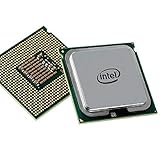
- Massive Processing Power: 22 cores and 2.2GHz speed for handling heavy workloads and multitasking
- Enormous Cache: 55MB L3 cache for rapid data access and improved performance
- High-Efficiency Design: 145W TDP for optimal power management
- Robust Platform Compatibility: LGA 2011-3 socket for wide system support
- Industry-Leading Technology: Quad-Core Xeon architecture for enhanced performance and reliability
How to benchmark a dual Xeon server today
Use an official XMRig release from the XMRig releases page. Release numbers are volatile, so record the exact version used rather than relying on a version mentioned in an older article.
1. Record the test platform
- Server and motherboard model
- CPU model, stepping, socket count, and installed memory
- DIMM count, memory-channel population, and memory speed
- BIOS version and relevant power-management settings
- Operating system and kernel
- Power-supply model and configuration
- Ambient temperature and chassis airflow
2. Run a local benchmark
XMRig’s benchmark does not require an internet connection. A basic current test is:
xmrig --bench=10MYou can also use the shorter benchmark or explicitly select supported algorithms when appropriate:
xmrig --bench=1M
xmrig --bench=10M
xmrig --bench=1M -a rx/wow
xmrig --bench=10M -a rx/wow
Use the algorithm appropriate to the question being tested. For Monero, the relevant modern family is RandomX; do not interpret an unrelated algorithm benchmark as a Monero result.
Free tools Windows power users keep installed
One-click scans. No signup required.
3. Test thread counts instead of assuming the old rule
Run several thread counts, including tests using one socket and both sockets. Record the result after the system reaches a stable temperature. A dual-socket server may achieve a higher total hash rate with both CPUs but lower efficiency than one socket.
On NUMA hardware, test:
- Each socket independently.
- Both sockets together.
- NUMA enabled and disabled where the platform supports that choice.
- Different memory placements, if the server permits them.
- CPU affinity and thread layouts that keep work near local memory.
XMRig’s CPU documentation covers NUMA, affinity, intensity, cache-related options, and RandomX configuration.
Rank #4

- Certified Refurbished Quality: This product is tested and certified to look and work like new, with the refurbishing process including functionality testing, basic cleaning, inspection, and repackaging, ships with all relevant accessories and a minimum 90-day warranty
- Processor Specifications: Intel Xeon E5-2697 v3 Fourteen-Core Haswell Processor featuring 2.6GHz base clock speed, 9.6GT/s QPI speed, and 35MB cache memory with LGA 2011-v3 socket compatibility
- High-Performance Computing: Fourteen physical cores deliver exceptional multi-threaded performance for demanding server and workstation applications requiring substantial processing power
- Advanced Architecture: Built on Intel's Haswell microarchitecture providing improved performance per watt and enhanced instruction set capabilities for enterprise-level computing tasks
- Technical Details: 145W TDP design with model number SR1XF, engineered for professional workstations and server environments requiring reliable high-core-count processing capabilities
4. Verify huge pages and MSR status
A poor benchmark can reflect configuration failure rather than weak hardware. Check that huge pages are actually allocated and that MSR optimization succeeded. XMRig recommends verifying these statuses in its output.
XMRig documents RandomX fast mode as using a 2 GB dataset and light mode as using 256 MB. It also documents Linux-only 1 GB huge pages as capable of improving speed by approximately 1–3%, depending on the system. MSR modification can provide up to approximately 15% improvement on some systems, but the result varies by hardware and operating system.
Failures may occur when the process lacks the required privileges, the operating system blocks MSR access, memory is unavailable, a security policy interferes, or the miner is running inside a restricted virtual machine.
5. Measure wall power and sustained performance
Use a power meter or a properly configured power-distribution-unit reading. Record watts at the wall, not just CPU package power. Run long enough to identify thermal throttling and fan-speed changes, and report both initial and steady-state hash rates.
For a reproducible report, publish the XMRig version, operating system, BIOS settings, huge-page and MSR status, thread count, NUMA configuration, memory population, temperature, wall power, and sustained hash rate.
Independent reader supportYour contribution helps us test, update, and keep practical guides available for everyone.How to calculate the electricity burden
For any server, use:
Daily electricity cost = (system watts / 1000) × 24 × electricity price per kWhA server drawing 150–250 W continuously consumes approximately 1,314–2,190 kWh per year before cooling overhead. That is an energy-use illustration, not a profitability forecast.
What’s actually slowing this PC down?
Pick the symptom - the matching free tool is one click away.
Best Value
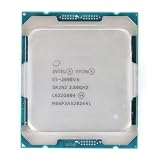
- Total Cores 14
- Total Threads 28
- Processor Base Frequency 2.60 GHz
- Max Turbo Frequency 3.50 GHz
- Sockets Supported LGA2011-3
A more complete estimate is:
Net daily result = gross mining revenue
− pool fee
− miner donation
− electricity cost
− cooling overhead
Gross revenue also changes with XMR price, network difficulty, block reward, pool luck, uptime, and the measured RandomX hash rate. The historical article’s claim of roughly 100 XMR worth more than $1,300 reflected early-2017 conditions and must not be reused as a current return estimate.
Should you buy a used dual Xeon E5 server?
If you already own the server
This is the strongest case. If the machine is already powered for a lab, backup service, virtualization, or data-center workload, spare CPU capacity may have an incremental use. Even then, measure the extra wall power and cooling load rather than treating electricity as free.
If you can obtain it nearly free
Calculate the power cost before installing mining software. A low purchase price does not remove the recurring cost of electricity, memory, replacement fans, storage, rack space, and cooling. Check whether the server’s noise and heat are acceptable in its intended location.
If you would buy it solely for mining
This is usually the weakest case. Compare the complete system cost with a newer desktop or server platform, including idle power and memory. A dual Xeon may have more total cores yet deliver worse economics because of platform power, older memory, lower per-core efficiency, and NUMA overhead.
Quick wins for a faster PC:
Repair Windows errors before they cause bigger problemsFix Now →Fix the driver behind crashes, sound loss and screen glitchesFind Drivers →Before purchasing, evaluate:
- Acquisition price and return policy
- Whether both CPUs and adequate memory are included
- Idle and loaded wall power
- PSU efficiency and replacement cost
- Fan noise and cooling requirements
- Rack-space and storage requirements
- Remote-management capability
- Reliability and warranty
- Whether the machine has a useful non-mining role
The original ServeTheHome article itself cautioned against buying dual Xeon E5 systems solely for Monero mining and positioned the approach mainly for systems that were already deployed or had spare capacity.
Operational and security precautions
- Download XMRig from its official repository or release page.
- Avoid unofficial repackaged binaries, browser miners, and unmaintained CryptoNight containers.
- Use a dedicated wallet or worker identity for testing.
- Do not expose XMRig’s management API to the public internet.
- Use authentication and network restrictions if the API is enabled; see the XMRig API documentation.
- Do not run the miner as root unless a specific, understood configuration task requires it.
- Inspect temperatures, fan behavior, and system logs during sustained workloads.
Final verdict
The 2017 benchmark remains valuable as a hardware study. It showed why core count and clock speed alone can mislead, why L3 cache mattered in the tested CryptoNight configurations, and why low-power Xeons could be attractive in the right server chassis.
It is not a current Monero buying guide. Monero now uses RandomX, so a useful 2026 comparison requires a current XMRig release, properly populated memory, verified huge pages and MSR settings, NUMA-aware testing, sustained wall-power measurements, and current economic inputs.
For an already-owned dual Xeon system, benchmark it and compare its incremental energy cost with its value as a lab or server. For a new purchase made solely to mine Monero, assume the cheap hardware is not a bargain until the complete power, cooling, memory, and opportunity-cost calculation proves otherwise.
The Tool Desk
Outbyte PC Repair FREEClear out junk files and repair common Windows errorsFree Scan →Outbyte Driver Updater FREEFix the driver behind crashes, sound loss and screen glitchesFind Drivers →Quick Recap
Product prices and availability are accurate as of the date/time indicated and are subject to change. Any price and availability information displayed on Amazon at the time of purchase will apply.




