Recommended Free Tools
No. Crypto lending is drawing renewed research and regulatory attention, but that is not proof that its risks have been solved—or that lending has risen across the market. Centralized lenders and decentralized finance (DeFi) protocols expose borrowers and depositors to different risks, and neither model makes a crypto loan risk-free.
What “crypto lending is rising again” does—and does not—mean
Recent policy work and research show that crypto lending remains an active subject of study. A 2026 Bank of Canada paper examines activity on Aave V3, while European regulators’ 2025 report reviews lending, borrowing, and staking across centralized and decentralized arrangements. These sources do not establish a comparable, current time series showing that crypto lending has risen market-wide. So “back in focus” is supported; a new lending boom is not.
One figure that can be misleading is the European Banking Authority and European Securities and Markets Authority’s estimate that DeFi protocol value locked equaled 4% of global crypto-asset market value. That is a dated estimate of DeFi-wide value locked, not crypto lending balances or lending growth. The agencies’ 16 January 2025 report also identifies leverage, information gaps, illicit-finance exposure, and risks from collateral chains and interconnectedness.
Centralized and DeFi lending put risk in different places
“Crypto lending” can mean anything from depositing assets with a company that promises a yield to borrowing through a smart contract. The label alone does not tell you who controls the assets, who owes you money, or what happens if markets seize up.
The Tool Desk
Outbyte PC Repair FREERepair Windows errors before they cause bigger problemsFix Now →Outbyte Driver Updater FREEScan for outdated or missing drivers - takes under a minuteDriver Scan →#1 Best Overall

- Effortlessly build your crypto portfolio via the all in one Ledger Wallet app: buy, sell, send, receive, swap, stake and more across popular blockchains. 15,000+ coins & tokens in a single dashboard. Keep a close eye on the market. Compare service providers. Track performance. Get timely alerts. Build your portfolio with confidence.
- Effortlessly build your crypto portfolio via the all in one Ledger Wallet app: buy, sell, send, receive, swap, stake and more across popular blockchains. 15,000+ coins & tokens in a single dashboard. Keep a close eye on the market. Compare service providers. Track performance. Get timely alerts. Build your portfolio with confidence.
- Enjoy Bluetooth connectivity, iOS access, and hours of battery use with this mobile-first, secure backup signer. Freedom you can depend on.
- Genuine Check: confirm your signer is authentic during setup with the Ledger Wallet app.
- Protect your signer: keep it in mint condition at all times with a bespoke Pod or Case to avoid scratches and everyday wear and tear.
| Question | Centralized lender or earn product | DeFi lending protocol |
|---|---|---|
| Who holds or controls assets? | A company may take custody and may have contractual rights to lend or otherwise deploy deposited assets. Terms determine ownership and reuse rights. BIS, 2026. | Assets are generally supplied to or locked in smart contracts, but control can still involve governance, administrators, or other centralized elements. FATF, 21 July 2026. |
| What supports repayment? | The firm’s ability to repay depends on its borrowers, asset deployment, liquidity, and financial condition; the product’s terms determine your claim. | Borrowers commonly post collateral under protocol rules. Collateral requirements do not prevent losses when prices fall, liquidation is delayed, or liquidity is insufficient. Bank of Canada, April 2026. |
| How might access be interrupted? | Withdrawals can depend on the provider’s liquidity and contract terms; a firm may suspend withdrawals or fail. | Smart-contract rules and market conditions govern transactions, but congestion, price feeds, governance decisions, or thin markets can affect borrowing and liquidation. |
| Where should you look for safeguards? | Read the provider’s legal terms, financial disclosures, and applicable regulator’s rules; these vary by firm and jurisdiction. | Examine contract design, audits and controls, governance powers, collateral parameters, and the relevant legal and regulatory framework. |
These differences do not establish that one model is categorically safer. A company may offer an identifiable party to contact while leaving customers exposed to its credit and liquidity decisions. A protocol may make some rules visible on-chain while leaving users exposed to code, governance, and market mechanics.
Why overcollateralization does not make DeFi borrowing safe
DeFi protocols often require borrowers to post more value in collateral than they borrow and set rules for liquidating collateral if its value falls. Those controls can help protect a protocol from unpaid loans, but they cannot guarantee that liquidation will happen at a favorable price—or that the borrower will avoid a loss.
Rank #2

- Proven security at scale: Over 9 years and millions of cards issued with no known remote hacks, while military‑grade EAL6+ security keeps your private keys locked inside the chip. Your cryptocurrencies stay strongly protected from online attackers.
- Tap once to manage your entire crypto wallet across 90 blockchains - no USB cables or Bluetooth, no batteries, no setup. Access 14,100+ coins & tokens, DeFi, NFTs, and staking instantly from your phone
- Smart backup: Use your second Tangem Wallet as your Backup keys with end‑to‑end encryption; no more papers, pictures. If one card is lost, the remaining can still restore full access, with an optional seed phrase available for advanced users.
- Engineered to last up to 25 years: Waterproof (IP69K), shockproof and tested for extreme temperatures from −25°C to 50°C. A durable cold wallet with long‑term protection and independently audited security.
- Trusted by 6 million users worldwide (4.9 App Store, 4.8 Google Play) - buy, sell, swap, stake, and spend cryptocurrency directly. The secure offline storage wallet designed for how people actually use crypto wallets
- Recursive borrowing can build leverage. A user may borrow against collateral, deposit the borrowed assets, and borrow again. Overcollateralization at each step does not mean the whole chain is unleveraged.
- Price drops can prompt concentrated liquidations. If many borrowers approach liquidation thresholds at once, collateral sales can add pressure to falling prices.
- Collateral can connect protocols. Assets borrowed or supplied in one place may support positions elsewhere. Stress can therefore travel through collateral chains and interconnected markets.
- Liquidation depends on design and market liquidity. A protocol’s rules cannot ensure that buyers or arbitrageurs will be available at the needed time and price.
In transaction-level research on Aave V3, described in the paper as the largest DeFi lending protocol by total value locked, Bank of Canada staff researchers found recursive leverage among many users and liquidation activity in concentrated waves. Their analysis found limited effects on broader markets, but it is a study of one protocol, not proof that all protocols—or future stress events—will behave the same way. The researchers’ conclusion was: “Overall, DeFi lending with proper governance is operationally viable, but it also faces constraints related to capital efficiency, liquidation risk, and systemic fragility within the crypto ecosystem.” (Staff Analytical Paper 2026-13, April 2026.)
What can happen when a centralized crypto lender fails
A customer-facing yield or “earn” account may look like a savings balance, but it may not have the same legal status, protections, or redemption terms as a bank deposit. The Bank for International Settlements’ Financial Stability Institute says some earn products transfer ownership of customer assets to the intermediary, which may use those assets for lending or other activity. The customer’s rights then depend on the agreement and applicable law.
Rank #3

- Proven security at scale: Over 9 years and millions of cards issued with no known remote hacks, while military‑grade EAL6+ security keeps your private keys locked inside the chip. Your cryptocurrencies stay strongly protected from online attackers.
- Tap once to manage your entire crypto wallet across 90 blockchains - no USB cables or Bluetooth, no batteries, no setup. Access 14,100+ coins & tokens, DeFi, NFTs, and staking instantly from your phone
- Smart backup: Use your second Tangem Wallet as your Backup keys with end‑to‑end encryption; no more papers, pictures. If one card is lost, the remaining can still restore full access, with an optional seed phrase available for advanced users.
- Engineered to last up to 25 years: Waterproof (IP69K), shockproof and tested for extreme temperatures from −25°C to 50°C. A durable cold wallet with long‑term protection and independently audited security.
- Trusted by 6 million users worldwide - buy, sell, swap, stake, and spend cryptocurrency directly. The secure offline storage wallet designed for how people actually use crypto wallets
If a provider lends assets for longer terms while promising customers quick withdrawals, it faces a mismatch between the timing of its assets and its obligations. Losses on borrowers, a rush of withdrawal requests, or other stresses can make repayment difficult. In insolvency, customers may need to establish what they own, what the firm owes them, and how claims are treated under local law; an account label or displayed balance alone does not settle those questions.
BIS points to the failures of Celsius and FTX in 2022 and the October 2025 cryptoasset flash crash as examples of risks materializing and spreading. Its 2026 review also found that many intermediaries did not publish financial statements and operated without safeguards comparable to those applied to traditional intermediaries. It recommends measures such as capital and liquidity buffers, sound governance and risk management, stress testing, and regulation that considers both firms and activities. These are policy recommendations, not evidence that every provider has adopted them. Read the BIS Financial Stability Institute paper.
Rank #4

- EAL5+ CERTIFIED SECURE ELEMENT + FINGERPRINT PROTECTION — Your private keys stay encrypted offline on a certified EAL5+ chip, the same security tier used in EMV bank cards. Built by DCENT, securing crypto since 2018. Fingerprint authentication adds a second layer no PIN-only wallet can match.
- 10,000+ ASSETS NATIVE ON 100+ BLOCKCHAINS — Hold Bitcoin, Ethereum, XRP, Solana, Cardano, popular stablecoins (USDT, USDC), and NFTs in one wallet. No third-party apps, no fragmented setup — every supported asset works straight out of the box.
- TAP-TO-SIGN MOBILE EXPERIENCE — Pair your wallet with the DCENT mobile app over Bluetooth. Manage tokens, review transactions, and access in-app swap features directly from your phone — no cables, no desktop required.
- WEB3 & dAPP ACCESS VIA METAMASK — Connect to MetaMask and other browser extension wallets to manage NFTs, claim airdrops, and access dApps. A large screen and intuitive 4-button interface keep every transaction clearly visible before you sign.
- SEAMLESS FIRMWARE UPDATES & 30-DAY MONEY-BACK GUARANTEE — Apply security updates without resetting your wallet or migrating funds. Backed by Amazon's 30-day money-back guarantee — your purchase is risk-free.
Governance and regulation are evolving, not uniform
Whether a lending arrangement is regulated, and which rules apply, depends on its structure and location. A product’s use of smart contracts does not by itself settle who controls it or which laws apply. FATF recommends assessing DeFi arrangements functionally and according to risk, including whether a person or organization exercises control. Its July 2026 report says 132 of 143 responding jurisdictions had not implemented FATF Standards in relation to qualifying DeFi arrangements. That is a survey result about implementation of those standards for that defined scope—not a count of jurisdictions with no crypto regulation. FATF also reports that just two of 142 jurisdictions had licensed or registered a DeFi arrangement in practice. See FATF’s report on regulatory challenges from DeFi.
United States
In a 22 July 2026 statement, SEC Commissioner Hester M. Peirce said that whether a vault or lending strategy falls within federal securities laws depends on its specific facts and circumstances. She points to details such as who selects assets, sets rates, establishes loan-to-value limits and liquidation thresholds, and manages a strategy. This is one commissioner’s statement, not a Commission rule or a blanket legal determination about crypto lending. Read the statement.
Best Value
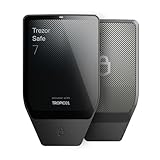
- Dual-chip architecture for maximum protection: The next-gen, fully auditable TROPIC01 chip works alongside a certified EAL6+ Secure Element—completely NDA-free—to deliver radically transparent, industry-leading defense against physical attacks.
- Quantum-ready security: Get protection against future threats with the first-ever hardware wallet designed with quantum-ready architecture.
- See every detail with confidence: Our largest high-resolution color touchscreen makes it easy to navigate your assets, review transactions and manage your coins with clarity.
- Wireless freedom with encrypted Bluetooth control: Manage, buy, swap and stake securely using Trezor Suite on desktop or mobile. Qi2-compatible wireless charging keeps your Trezor powered up. No cables required—security meets convenience.
- Works seamlessly with Android, iOS and desktop: Connect wirelessly or via USB-C to your phone or computer. Manage your crypto anywhere with our companion Trezor Suite app.
United Kingdom
The FCA says the UK cryptoasset regime is underpinned by the Financial Services and Markets Act 2000 (Cryptoassets) Regulations 2026, passed by Parliament on 4 February 2026. The full scope of regulated activities is scheduled to expand from 25 October 2027. For lending and borrowing, the FCA says it is maintaining retail protections that include enhanced disclosures, consent, appropriateness testing, record-keeping, overcollateralization, and negative-balance protection. These are protections within the UK framework and its implementation timeline; they should not be assumed to apply globally or to every provider today. Check the FCA’s cryptoasset-regime overview.
Questions to answer before depositing or borrowing
Do not rely on a yield rate, a “decentralized” label, or a collateral ratio as a substitute for checking the product’s actual terms and controls. Before committing assets, find clear answers to the following:
- Who owns the assets after deposit? Check whether you retain title or transfer ownership to a provider, and whether it can lend, pledge, or otherwise reuse them.
- What exactly can you withdraw, and when? Look for notice periods, withdrawal limits, suspension powers, redemption conditions, and any discretion the provider or protocol has during stress.
- What is your position if the provider becomes insolvent? Identify the legal entity you are dealing with, the governing law, the type of claim you would have, and any protections the relevant regulator confirms apply.
- For a DeFi loan, how does liquidation work? Check the collateral assets, loan-to-value limits, liquidation thresholds and penalties, price sources, and what happens if prices move faster than the protocol can respond.
- Who can change the rules? Find out who can alter rates, eligible collateral, limits, liquidation settings, or contract code—and whether any emergency controls or upgrade powers exist.
- Can you inspect meaningful risk information? For a company, look for financial statements and explanations of asset use and redemption obligations. For a protocol, examine governance, contract documentation, and the risks created by dependencies on other protocols.
If a provider’s answers are missing, hard to verify, or inconsistent with its marketing, treat that uncertainty as part of the risk—not as evidence that the risk is absent.
Have crypto lenders solved the risks?
No evidence here supports that conclusion. Better governance, disclosures, capital and liquidity safeguards, stress testing, and consumer protections can reduce particular risks when they are genuinely in place and enforceable. They do not erase the possibility of losses, a failed provider, an unavailable withdrawal, or a DeFi liquidation at a poor price. For a personal-finance decision, the relevant question is not whether crypto lending has returned, but whether you understand who controls the assets, the terms of repayment or withdrawal, and the protections that actually apply to your specific product and jurisdiction.
Do these 3 things before closing this tab:
1Repair Windows errors before they cause bigger problems2Fix the driver behind crashes, sound loss and screen glitches3Clear out junk files and repair common Windows errorsQuick Recap
Product prices and availability are accurate as of the date/time indicated and are subject to change. Any price and availability information displayed on Amazon at the time of purchase will apply.




