Free tools Windows power users keep installed
One-click scans. No signup required.
There is no automatic rule that makes a self-driving car’s manufacturer liable whenever the car crashes. In the United States, liability generally depends on the law where the crash happened, which automated system was operating, whether it was engaged and working within its stated conditions, what caused the crash, and the evidence. A human driver, vehicle owner, fleet or remote operator, manufacturer, software developer, or more than one party may be considered—but the label “self-driving” does not decide the case.
First, determine what was actually driving
“Self-driving” can describe very different systems. NHTSA distinguishes driver-assistance features from an automated driving system (ADS). A feature’s name or marketing does not establish that the vehicle was operating autonomously at the time of a crash.
| System category | What it does | Why it matters to a crash claim |
|---|---|---|
| Level 2 driver assistance | Can provide steering and speed input, but the human driver must remain fully engaged. | The driver’s monitoring and conduct may be central to the liability inquiry. |
| ADS, Levels 3–5 | Designed to perform the driving task within a defined operational design domain without driver involvement. | Investigators must establish whether the ADS was engaged, whether the vehicle was within its operating conditions, and what roles any human or remote operator had. |
NHTSA describes the distinction on its Automated Vehicle Safety page. Its categories do not by themselves assign fault.
Who could be held liable?
Potentially responsible parties depend on the facts and state law. More than one party can be investigated, and possible legal theories are not proof that any party was at fault.
Recommended Free Tools
#1 Best Overall

- UPSCALED 4K FRONT + 1080P REAR DUAL DASH CAM: The ROVE R2-4K DUAL records the road ahead and behind at the same time. The front camera captures at 2.5K (QHD) and intelligently upscales to 4K (2160P) for higher-detail playback, while the rear camera records at Full HD 1080P. This is upscaled 4K, not native 4K, engineered to show sharper everyday detail than standard 1080P dash cams, so you can read license plates, signs, and surroundings in front and rear footage.
- SONY STARVIS 2 IMX675 SENSOR + SUPER NIGHT VISION: The front camera uses a Sony STARVIS 2 IMX675 5MP image sensor with a wide F1.5 aperture (F1.8 rear) and HDR to pull in more light for clearer low-light footage. This advanced sensor enhances nighttime clarity, helping capture license plates, road signs, and surrounding vehicles with greater reliability when driving after dark, through tunnels, or in dusk and dawn conditions.
- ULTRA FAST 5.8GHz WIFI/ UP TO 20MB/s DOWNLOAD SPEED: With its built-in dual-band 5.8GHz and 2.4GHz WiFi, you can use the ROVE dash cam app to view and manage dash cam recordings instantly on your iPhone and Android smartphone. Using the ROVE app, download your recorded videos directly to your smartphone at up to 20 MB/sec, then easily share them on social media with friends and family. Additionally, manage camera settings and update the latest firmware over-the-air via the ROVE App.
- CAR CAMERA WITH GPS: The new front and rear dashcam comes with built-in GPS, which enables you to view real-time live speed and compass on the 3” IPS wide camera screen. It records precise driving routes, locations, and speed stamps directly on the video so you can watch dashcam videos with GPS data using ROVE's free GPS Player on your PC or Mac & get additional evidence when you need it.
- FEATURES WITH STATE-OF-THE-ART TECHNOLOGY INCLUDED: Experience peace of mind with this front and rear car dash cam. It comes with a free 128GB microSD card and offers advanced features such as an f1.5 aperture, motion detection, G-sensor, seamless loop recording, emergency video lock, screen saver, live speed and compass direction, voice guidance, ring of threads for optional CPL filter, a built-in supercapacitor for extended product life, support for up to 1TB microSD cards, and many more.
Driver, owner, or operator
A human driver or operator may face a negligence claim if their conduct caused the crash. For a driver-assistance system, that can include whether the driver remained attentive as required. The vehicle owner, a fleet, or a remote operator may also be relevant depending on their role and the circumstances.
Vehicle or technology companies
If evidence supports an alleged defect, an injured person may explore product-liability claims involving a vehicle manufacturer, ADS developer, or relevant supplier. Possible allegations can concern design, manufacturing, or warnings. A system’s involvement in a crash, on its own, does not establish that it was defective or that a company is liable.
Multiple parties
Operator conduct and a possible product defect are not mutually exclusive explanations. The applicable law and evidence determine whether claims against different parties can proceed and how responsibility is allocated.
Rank #2
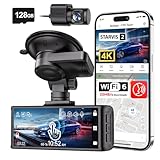
- [4K+1080P Dual Recording] REDTIGER F7N TOUCH captures your drive journey in stunning 4K UHD resolution with STARVIS 2 sensor 170° wide-angle view for the front dash cam and 1080P FHD resolution 140° wide-angle for the rear car camera. Equipped with WDR and HDR technology, the enhanced super night vision ensures better visibility even in low-light situations, providing you with reliable recordings day and night.
- [Voice Control & Touch Screen] F7NTOUCH dashcam features voice commands, allowing for hands-free control of your 4K car camera, which enhances safety by minimizing distractions. The dual camera dash cam also has smart touchscreen that can lock emergency video, turn on wifi, and capture scenery with one click. Redtiger also retains the buttons, multiple control methods are integrated.
- [Built-in GPS & 5.8GHz WiFi] Both Android and IOS users can connect to dashcam WiFi via the REDTIGER Cam app. Although the dash cam is installed wired, you can enjoy wireless control on your smartphone, faster 20MB/s download speed and share your driving experiences in real-time with friends and insurance companies. Car recorder built-in GPS provides traceable location, speed, and accurate route in the recordings.
- [Loop Recording & G-Sensor] REDTIGER F7N TOUCH dual channel dash cam automatically overwrites the oldest footage when the memory is full, ensuring endless recording with the included 128GB card. With a built-in G-sensor that detects sudden movements or impacts, it automatically locks and protects the associated footage when an event is detected on the road, ensuring it won't be overwritten during loop recording.
- [24-hour Parking Monitoring*] REDTIGER Car dashboard camera offers G-Sensor Parking Mode that automatically record when it detects any collisions or sudden motion while vehicles is parked. Time Lapse Parking Mode provides continuous surveillance by offering a condensed overview of any events that may occur during parking periods. *Please note that the parking monitoring function requires a separate hardwire kit.
Why the crash location and state law matter
NHTSA’s Federal Automated Vehicles Policy states: “States are responsible for determining liability rules for HAVs.” It also cautions: “Determination of who or what is the ‘driver’ of an HAV in a given circumstance does not necessarily determine liability for crashes involving that HAV.” The policy is available from NHTSA and the U.S. Department of Transportation.
In other words, deciding whether a person or an automated system counts as the driver is not the same as deciding who pays for injuries or damage. The state where the crash occurred—and the law in force there on the crash date—matters. A federal policy statement does not replace that state-specific analysis.
Liability and insurance are related, but not identical
Insurance may pay covered claims under the applicable policy and law; that does not, by itself, settle who was legally at fault. Coverage arrangements and requirements vary by state and by how the vehicle was being used.
Rank #3

- 💖💖【Important Note】Due to soaring memory chip costs, many brands have eliminated memory cards entirely, requiring a separate purchase. However, to save you the hassle of buying extra accessories, we are resisting cost pressures without raising our dashcam's price. Starting June 26, 2026, this camera will include a 32GB memory card (previously 64GB) so you can still use it out of the box. For extended storage, we highly recommend purchasing a Class 10, U3, and V30 (or higher) memory card.
- 【4K 2160P Resolution Dash Cam】Capture every drive in stunning 4K UHD resolution with the Galphi front dash cam, featuring a 160-degree wide-angle lens for clear, cinematic video footage. Ideal for family cars, new drivers, and Uber/Lyft drivers, it provides reliable video evidence for accident disputes and insurance claims.
- 【Advanced 5GHz WiFi with App】 Featuring cutting-edge 5GHz WiFi and a free app, the video download speed reaches up to 8MB/s, compared to just 2MB/s with the 2.4GHz option. This greatly reduces download times and minimizes lag during video playback.
- 【No Screen & Less Distraction】This dash camerma features a screen-free design, minimizing distractions while you drive so you can stay focused on the road. Enjoy peace of mind knowing your camera is recording without taking your attention away from the journey.
- 【Compact and Super Easy to Install】The dash cam's slim and compact design ensures it won't obstruct your view. With easy installation and clear, detailed instructions included, even first-time users can set it up without any hassle.
For example, Florida Statutes § 627.749 (2026) requires at least $1 million in primary liability coverage for death, bodily injury, and property damage in the specified case of a fully autonomous vehicle with its ADS engaged on an on-demand network or prearranged ride. The statute allows owner insurance, network insurance, or a combination to satisfy that requirement. This is a Florida rule for that defined context, not a nationwide minimum. See the Florida statute and check the rules applicable in the actual crash jurisdiction.
Independent reader supportYour contribution helps us test, update, and keep practical guides available for everyone.What investigators need to establish
Liability analysis starts with the specific event, not a general claim about autonomous vehicles. Relevant questions include:
- Where did the crash happen, and what state law applied on that date?
- Which system was installed, and was it actually engaged?
- What driving tasks did the system perform, and was the vehicle within the system’s stated operational design domain?
- Did a human driver have monitoring or takeover duties? Was a fleet or remote operator involved?
- What evidence bears on causation, such as vehicle and system records, scene evidence, witness accounts, maintenance history, or modifications?
- What insurance arrangements applied to the vehicle and its use?
These are investigative categories; records or telemetry will not necessarily exist or be available in every crash. An individual case cannot be resolved from the phrase “self-driving car” alone.
Rank #4
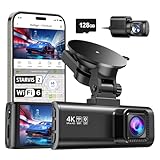
- [4K+1080P Front & Rear Recording] REDTIGER F7NP dash cam captures every detail with stunning 4K front and 1080P rear video. Featuring the advanced STARVIS 2 sensor plus the 170° front and 140° rear wide-angle lens, this dash camera delivers sharper images, balanced lighting, and reliable evidence day or night. Ideal for commuting, road trips, rideshare drivers, and new drivers.
- [STARVIS 2 Sensor & WDR Night Vision] Equipped with the advanced STARVIS 2 sensor, F1.5 large aperture, and 6-layer optical lens, F7NP 4K dual dash cam delivers clear, high-contrast footage in any lighting. WDR and HDR technology balance highlights and shadows, ensuring sharp night vision and crisp details day or night, providing reliable evidence and enhanced safety for every drive.
- [Built-in 5.8GHz WiFi & Smart App] Connect your smartphone to the dashcam’s built-in 5.8GHz WiFi to enjoy ultra-fast downloads up to 20MB/s. Using Redtiger Cam app, you can preview, download, and replay videos in real time, check GPS ata (route, speed, and location), and manage settings effortlessly, making it simple to review footage and share important moments.
- [Loop Recording & Free Memory Card] This car camera supports seamless loop recording to ensure continuous coverage without interruption. Older files are automatically overwritten when storage is full, while important events are safely locked. A free memory card is included, giving you ample space for 4K recordings and allowing you to use the camera right out of the box.
- [24/7 Parking Mode* & G-Sensor] Enjoy round-the-clock protection with two parking modes: time-lapse recording for continuous low-bitrate monitoring and G-sensor mode that records when collision is detected. The car security camera with G-sensor automatically locks important clips, ensuring crucial evidence is safely preserved even while your vehicle is parked.(*Hardwire kit needed.)
What NHTSA crash reports can—and cannot—show
NHTSA’s Standing General Order requires reports from specified manufacturers, developers, and operators when defined criteria are met; it does not require individual consumers to file under the order. NHTSA’s crash-reporting page explains that reportability criteria differ for ADS and Level 2 advanced driver-assistance systems. The order was first issued in 2021 and amended in 2021, 2023, and 2025.
A report in the resulting database is not a liability verdict. NHTSA warns that awareness of incidents, data access, and telemetry vary; initial reports may be incomplete or unverified; and the data should not be assumed statistically representative of all crashes. It is a safety-oversight source, not a complete census or a direct measure of fault.
What to do after a crash involving automation
Because fault depends on event-specific evidence and state law, keep the early steps focused on the claim and the record:
The Tool Desk
Outbyte PC Repair FREEClear out junk files and repair common Windows errorsFree Scan →Outbyte Driver Updater FREEFix the driver behind crashes, sound loss and screen glitchesFind Drivers →- Identify the location and the system. Record where the crash occurred, the vehicle and feature involved, and whether the feature was engaged, as far as you know.
- Document the event. Keep available scene information, witness details, and relevant records. Note any known maintenance or vehicle modifications.
- Contact the relevant insurer. Ask which policy applies to the vehicle’s use and what information is needed to evaluate the claim; the responsible policy may depend on ownership, operation, and whether the trip was commercial or on-demand.
- Do not treat a system label or a NHTSA report as a fault finding. Liability requires applying the controlling law to the evidence about system operation, human roles, and causation.
A May 2026 legal advisory from Greenberg Traurig describes the U.S. framework as relying on state law and conventional tort theories rather than a comprehensive federal liability statute. It is secondary legal analysis; a specific claim turns on the controlling law in the relevant jurisdiction.
Quick Recap
Product prices and availability are accurate as of the date/time indicated and are subject to change. Any price and availability information displayed on Amazon at the time of purchase will apply.




