A “trading node” is not one universally standardized part of cryptocurrency trading. The clearest specific use in the sources here is Blocknet’s Trading Node, or TNODE: a configured Blocknet Core instance that connects through XBridge to selected coin wallets so those coins can trade with one another. Other platforms may use “node” for different roles, and the phrase alone does not tell you what software does or whether it validates transactions.
What “trading node” means depends on the context
In blockchain and exchange discussions, “node” can describe software participating in a network or a component of a particular platform’s architecture. “Trading node” is not established by these examples as a universal blockchain node type. To understand the phrase, identify the protocol or platform using it and check what that node is configured to do.

| Context | What “node” means there | Trading or validation role |
|---|---|---|
| Blocknet | A named Trading Node (TNODE): a Blocknet Core instance configured to connect via XBridge to the coin wallets deployed in its configuration. Blocknet documentation | Enables XBridge trading between the configured coins. The documented definition distinguishes it from a Service Node; it does not define TNODE as a validator. |
| Blockchain generally | Ethereum’s glossary describes a node broadly as software participating in the network. Ethereum glossary | Participation does not, by itself, mean validating blocks or routing trades. |
| Exchange platform | HollaEx describes exchange members running its HollaEx Kit software as nodes in its network. HollaEx whitepaper | In that platform’s architecture, nodes match trades and route orders through shared liquidity. This is a HollaEx-specific description, not a general definition. |
What a Blocknet Trading Node does
Blocknet’s documentation defines a TNODE as an instance of Blocknet Core that is not configured to run as a Service Node, but is configured to connect through XBridge to the coin wallets deployed during node configuration. Those wallet connections allow XBridge trading between the selected coins.
The documentation also says that this configuration allows a Blocknet CLI call to dxGetLocalTokens to list the coins selected for deployment. That is a detail of Blocknet’s software, not a general function of blockchain nodes.
#1 Best Overall

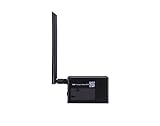
- Experience peak performance with a remarkable 6 TH/s hashrate at just 16.5 J/TH. This next-generation miner delivers a 12% efficiency boost over its predecessor, maximizing your computational output while keeping total power consumption around a low 100W for optimal cost-effectiveness
- 2.4GHz WiFi Only & 24H Support Is it easy to set up? Yes! This plug-and-play miner supports 2.4GHz WiFi only (5GHz not supported). Tip: If your router is dual-band, separate the 2.4G and 5G channels and give them different names. Does it need professional installation? No, no professional installation or complex wiring required. For any setup issues, message us on Amazon. We provide technical guidance and remote support within 24 hours. If unresolved, we will provide a more proactive solution.
- Built for durability and stability, featuring a 2mm FR-4 PCB with 1oz thickened gold immersion for pure signal integrity and superior heat dissipation. Enhanced power layout and signal isolation minimize electromagnetic interference, while a smart, resettable e-fuse replaces disposable fuses for increased system uptime and reliability
- Benefit from a revolutionary spring-loaded heatsink structure that provides uniform compression and exceptional thermal conductivity for lower operating temperatures. The upgraded XT30 high-current connector ensures a stable, easy plug-in connection, reducing energy loss and contact resistance for safer, more efficient power delivery
- Truly plug-and-play with an intuitive web-based configuration interface—get up and running in just 2 minutes. Its compact, eco-friendly design is built for 24/7 operation, making it the perfect, hassle-free choice for everyone from Bitcoin miners to hardware enthusiasts exploring blockchain technology at home
Is a trading node the same as a validator?
No. A node is a broad software or network-participation concept; validation is a particular role in some consensus systems. Ethereum’s glossary definition of a node does not make every node a validator. Likewise, Blocknet’s TNODE definition describes connecting coin wallets for XBridge trading, not validating blocks.
In a May 29, 2025 statement about certain protocol-staking activities, the SEC Division of Corporation Finance describes proof-of-stake node operators staking covered crypto assets so protocol software may select them to validate new blocks and update network state. The statement distinguishes the operator from the validator role selected by the protocol. Its scope is limited to the types of protocol staking addressed in that statement; it should not be read as a universal description of all nodes or as a blanket legal conclusion. SEC statement
Rank #2
Why legal and platform definitions can differ
MiCA, the EU’s Markets in Crypto-Assets Regulation, defines a “DLT network node” in Article 3 as a device or process that holds a complete or partial replica of distributed-ledger transaction records. That legal definition is broader than shorthand for a particular software configuration, and it does not establish “trading node” as a universal technical term. MiCA, Article 3
Independent reader supportYour contribution helps us test, update, and keep practical guides available for everyone.Do you need to run one to trade cryptocurrency?
Not simply because you want to buy, sell, send, or swap cryptocurrency. The sources describe particular infrastructure configurations: Blocknet’s TNODE connects configured wallets for XBridge trading, while HollaEx describes exchange members operating software nodes in its platform. They do not establish that ordinary customers must operate a node to use an exchange or trading service.
Recommended Free Tools
Rank #3

- Dimensions: 8.25" overall length, image is 1.5" by 1.5"
- Made of heavy-duty durable metal with high gloss finish
- Black tassels, fancy leather tassels are soft to the touch.
- Image printed on 1 side of this stylish key chain.
- Hardware included
Running node or exchange software is infrastructure work, not a prerequisite implied by the words “trading node.” Before acting on instructions to set one up, confirm which product or platform the instructions concern and what role the configuration serves.
Quick Recap
Best Value

- Dimensions: 8.25" overall length, image is 1.5" by 1.5"
- Made of heavy-duty durable metal with high gloss finish
- Black tassels, fancy leather tassels are soft to the touch.
- Image printed on 1 side of this stylish key chain.
- Hardware included
Product prices and availability are accurate as of the date/time indicated and are subject to change. Any price and availability information displayed on Amazon at the time of purchase will apply.




