Windows Errors? Fix Them Before They Spread
Repair common Windows errors and clear accumulated junk for a smoother, more stable PC - no reinstall needed.Free scan · no reinstallCrashes, No Sound, or Screen Glitches?
Random freezes, missing sound and display glitches usually trace back to one bad driver. Find and replace yours safely.Free scan · under a minuteA common five-part framework for understanding an insurance policy is declarations, insuring agreement, definitions, exclusions, and conditions. It is a useful way to read the contract, not a universal format: regulators and the National Association of Insurance Commissioners (NAIC) often describe four basic sections, with definitions included under conditions. Your policy may organize the same information under different headings.
1. Declarations: the details of your policy
The declarations page, sometimes called the “dec page,” summarizes the specific policy you bought. Depending on the type of insurance, it commonly identifies the insured, the covered property or risk, the policy period, coverages and limits, premium, and deductible. An auto policy may identify a vehicle; a life policy may state the insured and face amount.
Use it to check that the named insured, dates, and listed coverage match what you expect. The South Carolina Department of Insurance describes declarations as one of the four basic parts of a policy in its consumer guide.
2. Insuring agreement: what the insurer promises to cover
The insuring agreement states the insurer’s core coverage promise: which losses, perils, or services are covered, subject to the rest of the contract. It is not a complete description of every situation in which a claim will be paid. Exclusions, conditions, definitions, limits, and endorsements can change how that promise applies.
Quick wins for a faster PC:
Clear out junk files and repair common Windows errorsFree Scan →Fix the driver behind crashes, sound loss and screen glitchesFind Drivers →#1 Best Overall

- Store (Family) Papers Safe & Sound: Keep all your essential papers safely in one spot with ZICOTOs’ important document organizer. Swiftly locate anything from legal to medical papers for the whole family. Ditch the paper chaos, embrace order & enjoy the simplicity with the Zicoto expanding file folder
- Organize It Like a Pro: Get super organized with 8 large, numbered envelopes (9.5x12”), each holding 40+ letter-sized sheets. Perfect for documents, passports, photos, and more. The document folder organizer transforms your paper clutter into a masterpiece of order!
- Customize to Your Needs: The important document folder organizer binder lets you label each section your way with a customizable table of contents, numbered envelopes and a sticker sheet with blank & pre-named stickers. Your Binder, your way - organizing has never been this easy!
- Ample Space for Everything: The 12.8x10.83” document organizer folio is perfect for your 8.5x11" letter size or A4 papers. Need more room? No worries, the life binder includes a handy back pocket for extra documents, notes and more. Keep everything neatly stored and easily accessible
- Stylish & Practical Premium Design: Featuring a chic linen cover in modern sage with classy golden edges, the expanding file folder looks as good as it functions. An elastic band keeps everything in place - no more loose papers flying around!
Some policies name the specific perils they cover. Others use broader “all-risk” wording, with exclusions identifying what is carved out. Read the agreement alongside the sections that qualify it; the NAIC’s homeowners and renters policy guide explains how these sections fit together.
3. Definitions: what policy terms mean
Definitions establish how particular words and phrases are used in the contract. A defined term can have a narrower or more precise meaning than it does in everyday conversation, so check the policy’s definitions when interpreting a coverage provision or exclusion.
Definitions may have their own heading, but they are not always a separately labeled section. The NAIC says that a typical homeowners or renters policy places definitions used on the declarations and in the insuring agreement within general conditions. The South Carolina Department of Insurance also includes definitions in its explanation of the four basic parts.
Rank #2

- Perfect auto car document holder, keeps your registration and insurance paperwork, business cards, emergency information all well organized and looks better than papers just scattered in the glove box.
- Clear and easy to read both documents when you open it up, which is easy and stress-free to reach for your documents, knowing exactly where they are when asked.
- This practical wallet case is perfect to maintain your car paperwork secured and protected. With 5 clear sleeves for your gas card, car registration and insurance informations in.
- Excellent quality with beautiful sleek and trim design, this holder is made of durable PU leather and heavy duty vinyl PVC.
- Dimensions: 9.5" x 5.1"(24cm x 13cm) - Wisdompro slim, lightweight car insurance registration holder is perfect for placement in any glovebox or console.
4. Exclusions: what the policy leaves out
Exclusions identify losses, causes, property, or circumstances the policy does not cover. They can narrow the coverage promise in the insuring agreement. Consumer guides cite flood and earthquake exclusions as examples that may appear in homeowners or renters policies, but exclusions depend on the policy form and jurisdiction. Do not assume an example applies to your own contract.
Recommended Free Tools
Read exclusions in the context of the coverage they affect. A policy may contain several coverages, and each can have its own exclusions. The South Carolina Department of Insurance guide and the NAIC guide both describe exclusions as a basic part of policy wording.
5. Conditions: duties and rules for applying coverage
Conditions set requirements that apply to the insurer’s coverage promise. They can explain policyholder duties, including what to do after a loss, and other rules governing how coverage works. Follow the conditions that apply to the specific coverage and policy type rather than assuming one policy’s requirements apply to another.
Rank #3
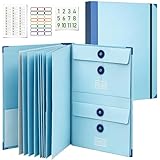
- Keep Important Family Records Together:Keep birth certificates, passports, insurance paperwork, medical records, tax documents, legal papers and other essential family records in one organized place instead of spreading them across drawers, cabinets and separate folders.
- 12 Sections for Different Document Sizes:Three vertical, three horizontal and six half-size sections give different types of paperwork their own space, making this document folder organizer easier to use for full-size papers, passports, certificates, cards and smaller records.
- Fits Standard Letter-Size Papers:Sized for standard 8.5 × 11 in documents, the full-size sections hold important papers while half-size sections provide convenient space for passports, certificates, cards and smaller records.
- Made for Important Life Events:Use this folder for important documents for estate planning, moving, emergency preparedness, insurance matters and other major life events, helping essential family information stay organized and easier to access when needed.
- Practical Home Filing for Everyday Records:Use this family document organizer for household paperwork, personal records, tax-season documents and frequently needed files. A practical home document organizer for keeping important information organized and easier to find throughout the year.
Because definitions may also appear in this section, look beyond the section title when reviewing the contract. The NAIC guide describes a typical homeowners or renters policy as having four parts—declarations, insuring agreement, exclusions, and conditions—with definitions included in general conditions.
Independent reader supportYour contribution helps us test, update, and keep practical guides available for everyone.Why some explanations count four parts and others count five
There is no single layout used by every insurer or insurance product. The South Carolina Department of Insurance calls declarations, insuring agreement, exclusions, and conditions the four basic parts. The NAIC likewise describes four typical parts for homeowners and renters policies and places definitions within conditions. The Nonprofit Risk Management Center’s guide to reading an insurance policy counts definitions separately, producing the common five-part framework.
So, “five parts” is a teaching framework that makes definitions easier to notice—not a requirement that every policy print five matching section headings. Your contract may organize information differently or repeat coverage-specific wording in several places.
Rank #4

- 👁️Quick Accessible: Inside the car insurance and registration card holder, the clear inner material makes you easy to find documents when you open it up, you can see exactly what they are and quickly show them when asked, even no need to take the stuff out.
- 💼Document Well Organized: The car document holder keeps your car documents organized and keep them tidy and secured, which make it easy to quickly identify and reach paper or cards in the folder. The glove box organizer for car has 6 compartments to keep all your car essential auto car essentials organized.
- 🧲Hidden Magnetic Closure: The glove box document holder are built with hidden magnetic closure, which will keep your car paperwork organizer neat and tidy and ensure the certifications stay closely and and completely protective within the registration pouch.
- 💖Premium Material: The car manual holder is made from high-quality ECO-friendly PU leather material. The car insurance holders with the best sewing and crafted is durable, wear-resistant, and has a luxurious look. This material of the registration holders is durable, wear resistant and waterproof. The insurance card holder for car has a clear window so you can easily see all the documents when you open it up.
- 🌷Compact Size: With the perfect size dimensions of 5.0in x 9.4in x 0.4in, this vehicle license and registration holder for car will fit into glove compartments, sun visors, door holders, consoles, etc. The glove box organizer is precisely designed to fit all of your car documents.
Where endorsements and riders fit
An endorsement or rider changes the policy, for example by adding, excluding, or modifying coverage. It may be included with the original policy or issued later. Read each one together with the base policy because it can alter how the original wording applies. The NAIC explains these changes in its guide to insurance riders and endorsements.
Some educational materials describe endorsements as a possible sixth part. They are better understood as changes to the policy rather than a universally counted core section. The California Department of Insurance’s Commercial Insurance Guide also discusses declarations, insuring agreements, and endorsements in commercial policies.
How to use the five-part framework when reading your policy
- Start with the declarations. Check who and what are insured, the policy dates, the listed coverage and limits, and the deductible.
- Find the relevant insuring agreement. Identify the coverage promise that applies to the situation you are considering.
- Check defined terms. Look for words in the agreement that the policy defines, even if definitions are grouped under another heading.
- Read the exclusions and conditions for that coverage. Note what is excluded and what the policy requires of you.
- Review every endorsement or rider with the base wording. These documents can change the coverage described elsewhere in the policy.
Policy forms and section labels vary, so use the table of contents and search within the document if you cannot find a heading. For a claim or a specific coverage question, the complete wording and applicable jurisdiction matter; a summary framework cannot determine whether a particular loss is covered.
Quick Recap
Product prices and availability are accurate as of the date/time indicated and are subject to change. Any price and availability information displayed on Amazon at the time of purchase will apply.




