An effective 360 marketing campaign coordinates the channels that matter to a defined audience around one business goal, one coherent message, and a shared measurement plan. It does not require using every available channel—or giving every channel equal weight. The title’s “2025” framing is now dated; platform details below are identified by their source dates because tools and eligibility can change.
What a 360 marketing campaign means
“360 marketing campaign” is a practical label, not a universally standardized marketing method. In practice, it means connecting the customer touchpoints relevant to a campaign so the message, creative, timing, and measurement reinforce one another. Salesforce’s guides describe integrated marketing as a unified message and brand experience across channels, and omnichannel marketing as consistency across digital and physical interactions (Salesforce’s omnichannel guide; Salesforce’s integrated marketing guide).


The goal is coordination, not channel volume. A campaign might combine email, paid search, social, video, retail, or events—or use only a few of these—depending on the audience, objective, budget, and ability to execute well. Adding channels without a clear role can increase complexity without establishing better results.
How to build the campaign
1. Define the business outcome and audience
Start with the change the campaign should produce and the people it is meant to reach. Be specific: for example, the objective might be to increase qualified inquiries from a defined customer segment, rather than simply to “raise awareness.” Then identify the brand and performance outcomes that will indicate progress.
#1 Best Overall
Assign a measurement owner before work begins. Google’s media effectiveness guide recommends oversight of the customer journey and a KPI structure that accounts for both branding and performance outcomes. Its page says it was updated in July 2025 (Google’s media effectiveness guide).
2. Create a connected message and experience
Set the central message, voice, visual identity, and creative rules before adapting work for individual channels. Each execution can fit its format—a short video, a search ad, an email, or an in-person interaction—without feeling like a different campaign. Decide what must remain consistent and what can change to suit the channel or customer context.
Map the journey as a customer would experience it. Consider what someone sees first, what information they need next, and what action they can take. Consistency does not mean repeating identical copy everywhere; it means that each touchpoint makes sense as part of the same experience.
Rank #2
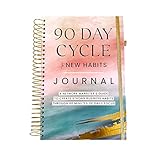
- Get Started - With our 90 day journal, you get a detailed and organized guide to help you focus on setting up your network marketing business. You only need 60 minutes per day for the next 90 days.
- Set Your Goals - Map the way forward so you never lose your way. This guided planner for entrepreneurs has dedicated pages where you can identify your reasons for building your business, vision, and goals.
- Develop Good Business Habits - Nurture the habits that will bring you fortune. This planner walks you through 20 minutes of mindset, 20 minutes of relationship building, and 20 minutes of following up leads.
- Stylish Marketing Journal - Show everyone you're here to work. This business planner features a durable hardcover with a chic blue and pink print and the journal’s name in elegant black font.
- Designed Around Your Convenience - Spiral binding makes it easy to turn and flip the network marketing planner's pages. An elastic band closure and pen holder help you keep things tidy and organized.
3. Choose channels by audience and job
For every candidate channel, state whom it can reach and what role it should play: introduce the offer, explain it, prompt action, support a purchase, or maintain the relationship. Compare the options using practical criteria rather than adopting a fixed checklist.
- Audience fit: Is the intended audience likely to use or encounter this channel?
- Journey role: What should the channel help the customer understand or do?
- Reach and frequency: Where relevant, how many people may be reached, and how often?
- Cost and capacity: Can the team afford, produce, manage, and support the activity?
- Measurability: Can the team observe a meaningful outcome with data it can trust?
- Ability to act: Will the results arrive in time and in a form that can change the campaign?
Google describes cross-media reach and frequency reporting for video campaigns; that is a specific measurement use, not a universal way to compare every channel (Google Ads Help: About Cross-Media Reach measurement).
4. Plan assets, ownership, and reporting before launch
Make a campaign plan that links each activity to its owner, required assets, timeline, and measurement. At minimum, document:
Rank #3
- the campaign objective and intended audience;
- the channels in scope and the role of each;
- the message and creative variations approved for use;
- who owns delivery, data quality, and reporting;
- the definition and source of each KPI; and
- when the team will review results and make decisions.
Define metrics precisely. For example, specify what counts as a qualified inquiry, which date range is used, and how duplicate contacts or conversions are handled. Without shared definitions, channel reports may appear comparable while counting different things.
5. Test, learn, and improve
Before launch, write down a hypothesis that can be tested, such as whether a particular message or audience approach improves a defined outcome. Choose a suitable comparison: a controlled experiment may help estimate causal lift, while other methods may answer questions about attribution or longer-term channel contribution. Set the test period, success measure, and decision rule before reviewing results.
Quick wins for a faster PC:
Fix the driver behind crashes, sound loss and screen glitchesFind Drivers →Clear out junk files and repair common Windows errorsFree Scan →Scan for outdated or missing drivers - takes under a minuteDriver Scan →Google recommends using attribution, marketing mix modeling (MMM), and incrementality as complementary measurement approaches, then applying a “test-learn-improve cycle” (Google’s media effectiveness guide). These methods answer different questions. Attribution can describe how credit is assigned across observed interactions; MMM can estimate channel contribution over time; incrementality testing can examine whether activity caused additional outcomes compared with a suitable counterfactual. Platform attribution by itself does not prove causal impact.
Rank #4

- Undated Daily Planner: Our large daily planner, measuring 12.75" x 13.5", provides ample space for scheduling. It serves as a versatile undated daily planner, allowing you to start anytime, accommodating detailed plans with ease. Its undated format offers flexibility for dynamic scheduling.
- Hourly Planner 2025-2026: Designed for precision, this hourly planner 2026 is perfect for professionals managing tight schedules. These sturdy notebooks function as a comprehensive salon appointment books, ensuring your appointments are organized efficiently, whether for hairstylists or therapists planning sessions.
- Salon Appointment Book 2026: Optimize your salon's scheduling with the salon appt book 2026. Its large format and organized columns make it ideal for booking and tracking client appointments, ensuring seamless operations. This planner is indispensable for hairstylists and salon managers.
- Reservation Book and Appointment Books: This reservation book doubles as an appointment book, perfect for managing daily and monthly planner needs. Its detailed planner layout supports a variety of professional uses, making it an essential tool for those needing a reliable appt book for accurate scheduling.
- Therapist Planner and Hourly Planner Undated: Versatile and flexible, this undated planner daily is also an excellent hairstylist appointment book. Its hourly planner undated format allows for customized scheduling, providing the freedom to manage appointments without restrictions, ensuring every session is accounted for efficiently.
Use what the evidence supports to adjust the next iteration: change creative, channel emphasis, timing, audience, or landing experience, then measure again. Adam Stewart, Google’s VP of Sales, wrote in a July 2023 Google article, “Constant testing is key to determining which campaign adjustments to make in real-time to drive performance and increase ROI.” This is a vendor executive’s recommendation, not an independent guarantee that testing will produce a particular return (Google’s measurement article).
Independent reader supportYour contribution helps us test, update, and keep practical guides available for everyone.How to tell whether it worked
Judge results against the campaign’s stated objective, not the number of channels used or the volume of activity reported. A useful review distinguishes delivery (such as reach or impressions), response (such as visits or inquiries), and business outcomes (such as qualified opportunities or revenue). Include a clear time period and data source for each measure.
Do not treat every observed conversion as incremental. A person may have converted without seeing a particular ad, and multiple platforms may each claim credit for the same outcome. Where the decision matters, pair attribution reporting with an appropriate incrementality design or another method suited to the question. Google announced cross-channel measurement enhancements and incrementality-testing updates on May 21, 2025; availability can vary, so confirm current product details directly with Google before relying on a feature (Google’s May 21, 2025 announcement).
Recommended Free Tools
Campaign analytics software can help bring activity and outcomes into a shared view, but it does not replace clear metric definitions or sound experimental design. HubSpot’s campaign documentation says performance can be reviewed for contacts, deals, and website traffic. Its page, updated August 3, 2026, says the Revenue report requires Marketing Hub Professional and lists Professional and Enterprise availability for the relevant tool; verify current eligibility and feature details before choosing it (HubSpot: Analyze individual campaign performance).
Common planning mistakes to avoid
- Equating “360” with “every channel”: Select channels for audience fit and a defined role, not for the appearance of being comprehensive.
- Optimizing for activity alone: Impressions, clicks, and sends may show delivery or response, but connect them to the intended business outcome.
- Using inconsistent creative without a shared idea: Adapt the format while keeping the campaign’s core message and experience recognizable.
- Waiting until launch to decide what success means: Agree on owners, definitions, data sources, and reporting cadence before results arrive.
- Calling correlation proof of lift: Use a comparison or incrementality method when the question is whether the campaign caused additional outcomes.
What the available evidence can—and cannot—show
Google’s July 2023 measurement article reports that 54% of surveyed marketers felt overwhelmed by the number of measurement and analytics solutions and reported reduced confidence in producing solid business results. The survey was conducted from October 2022 through February 2023, included 800 respondents across Germany, India, the U.K., and the U.S., and is not a current global estimate (Google’s measurement article).
A 2025 Google article says eight in ten online purchases involve multiple touchpoints, but the cited figure’s underlying study details are not identified in the available article excerpt. Treat it as a Google-attributed statement about online purchases, not as a universal rate for all purchases or markets (Google’s measurement article).
Neither figure establishes that a campaign becomes more effective simply by adding channels. There is no universal channel mix or established ROI uplift for a “360 campaign”; effectiveness depends on the audience, execution, objective, and evidence from measurement.
The Tool Desk
Outbyte Driver Updater FREEFix the driver behind crashes, sound loss and screen glitchesFind Drivers →Outbyte PC Repair FREERepair Windows errors before they cause bigger problemsFix Now →Quick Recap
Product prices and availability are accurate as of the date/time indicated and are subject to change. Any price and availability information displayed on Amazon at the time of purchase will apply.




