Outdated Drivers Are Slowing You Down
One free scan finds every outdated or missing driver and matches the right update for your exact hardware.Free scan · exact hardware matchPC Slower Than It Used to Be?
A free scan shows the junk files, broken settings and background clutter dragging Windows down - then fixes them in one click.Free scan · Windows 10 & 11A 360° marketing plan coordinates the touchpoints that matter to your audience around one clear business objective and campaign idea. It does not mean advertising on every channel. Start with the outcome you need, map how customers discover and choose your offer, and select only the channels your team can connect and measure.
What a 360° marketing plan is—and what it is not
360° marketing is the coordinated use of relevant online and offline touchpoints so that customers encounter a consistent campaign idea as they move from discovering a brand to evaluating, buying, and returning. Depending on the audience and offer, touchpoints might include search, content, email, social media, paid digital ads, public relations, influencers, television, radio, billboards, events, in-store displays, sampling, or a website or app.


The plan is more than a channel list. Each activity should have a job: whom it reaches, what it helps them do next, and how it supports the objective. The wording and format can change across channels; the underlying promise and recognizable meaning should not. LatinBrand and OWDT both emphasize coordination rather than using every channel as a checklist: LatinBrand’s overview of 360° marketing and OWDT’s guide to building a marketing 360 strategy.
How to build the plan
-
Set one business objective
Choose the primary result the campaign should support: awareness, qualified leads, sales, customer loyalty, or another defined outcome. Make it specific enough to guide decisions and later measurement. “Increase awareness” is a direction; identifying the audience and the observable signal you will use to assess awareness makes it more actionable. Avoid treating a marketing activity—such as publishing social posts—as the objective itself.
Do these 3 things before closing this tab:
1Clear out junk files and repair common Windows errors2Scan for outdated or missing drivers - takes under a minute3Repair Windows errors before they cause bigger problemsSpecial offer. See more information about Outbyte and uninstall instructions. Please review EULA and Privacy policy. -
Define the audience and its decision context
Describe the people you need to reach, their needs, what influences their decisions, and where they are likely to encounter or seek information about your offer. Use that context to judge channel fit. A channel is not useful merely because it is popular; it needs a plausible role in reaching this audience or helping them progress.
-
Map the customer journey and touchpoints
Sketch how someone might discover the offer, consider it, decide, and engage again afterward. Note the useful contact points and any friction between them—for example, an ad that makes a promise a landing page does not explain. Treat the map as a working model, not a fixed path every customer follows. OWDT describes stages including awareness, consideration, decision, and loyalty; adapt the map to your actual customer and buying process.
Rank #2
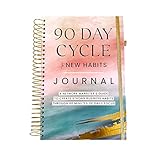 90 Day Habits Journal - 90 Day Habits Planner for Network Marketing - Direct Selling Planner for MLM Marketing Books - Network Marketing Book Journal - 90 Day Cycle to New Habits Marketing Journal
- Get Started - With our 90 day journal, you get a detailed and organized guide to help you focus on setting up your network marketing business. You only need 60 minutes per day for the next 90 days.
- Set Your Goals - Map the way forward so you never lose your way. This guided planner for entrepreneurs has dedicated pages where you can identify your reasons for building your business, vision, and goals.
- Develop Good Business Habits - Nurture the habits that will bring you fortune. This planner walks you through 20 minutes of mindset, 20 minutes of relationship building, and 20 minutes of following up leads.
- Stylish Marketing Journal - Show everyone you're here to work. This business planner features a durable hardcover with a chic blue and pink print and the journal’s name in elegant black font.
- Designed Around Your Convenience - Spiral binding makes it easy to turn and flip the network marketing planner's pages. An elastic band closure and pen holder help you keep things tidy and organized.
-
Develop a central campaign idea
Set the main message, brand promise, and creative direction before producing channel-specific material. Then adapt execution to the medium: a short social post, a detailed email, and an event demonstration need not look alike, but each should carry the same essential idea and tone. This is the link that makes separate activities feel like one campaign.
-
Choose a channel mix you can coordinate
Consider owned channels (such as your website and email), paid media, earned or shared attention (such as PR and social sharing), and relevant offline options. Select channels according to audience fit, objective, cost, staff capacity, connection to other touchpoints, and the data you can reasonably collect. A smaller, well-connected mix is often more practical than spreading limited time and money across channels the team cannot maintain.
Quick wins for a faster PC:
Clear out junk files and repair common Windows errorsFree Scan →Scan for outdated or missing drivers - takes under a minuteDriver Scan →Special offer. See more information about Outbyte and uninstall instructions. Please review EULA and Privacy policy.Rank #3
There is no universal channel-budget split established by the sources cited here. Begin with the objective, audience reach, channel costs, available skills and capacity, and measurement needs; revise allocations as results provide evidence.
-
Assign owners, timing, and resources
For each activity, name the responsible owner, deadline, approval path, and budget. Build a shared calendar so that connected messages, offers, and handoffs happen in a sensible sequence. Teams can manage this in tools they already use; dedicated software is an option, not a prerequisite. SAS describes its 360 Plan product as supporting marketing plans and integrated campaigns, budget allocation, calendar management, and workflows, based on its SAS 360 Plan fact sheet.
Rank #4
 Portage Notebooks Appointment Book - Large 12.75" x 13.5" Undated Planner for Daily Scheduling - 6 Column Professional Daily Planner Undated for Office, Home, or Salon Use
- Undated Daily Planner: Our large daily planner, measuring 12.75" x 13.5", provides ample space for scheduling. It serves as a versatile undated daily planner, allowing you to start anytime, accommodating detailed plans with ease. Its undated format offers flexibility for dynamic scheduling.
- Hourly Planner 2025-2026: Designed for precision, this hourly planner 2026 is perfect for professionals managing tight schedules. These sturdy notebooks function as a comprehensive salon appointment books, ensuring your appointments are organized efficiently, whether for hairstylists or therapists planning sessions.
- Salon Appointment Book 2026: Optimize your salon's scheduling with the salon appt book 2026. Its large format and organized columns make it ideal for booking and tracking client appointments, ensuring seamless operations. This planner is indispensable for hairstylists and salon managers.
- Reservation Book and Appointment Books: This reservation book doubles as an appointment book, perfect for managing daily and monthly planner needs. Its detailed planner layout supports a variety of professional uses, making it an essential tool for those needing a reliable appt book for accurate scheduling.
- Therapist Planner and Hourly Planner Undated: Versatile and flexible, this undated planner daily is also an excellent hairstylist appointment book. Its hourly planner undated format allows for customized scheduling, providing the freedom to manage appointments without restrictions, ensuring every session is accounted for efficiently.
-
Choose measures before launch
Connect each measure to the objective and the role of the activity. Examples include reach or relevant site visits for awareness, meaningful engagement or qualified leads for consideration, sales or conversions for decision activity, and repeat engagement for retention. These are examples rather than a universal KPI framework; the campaign goal should determine what counts as useful evidence.
Decide how data will be collected and reviewed, and what comparison will help you judge progress. Attribution models can help estimate how touchpoints relate to outcomes, but they do not prove that a single channel caused a result. A metric such as traffic, engagement, or conversion is informative only when interpreted in context.
Free tools Windows power users keep installed
One-click scans. No signup required.
Special offer. See more information about Outbyte and uninstall instructions. Please review EULA and Privacy policy. -
Review performance and make focused changes
Compare results with the objective and the measures you set. Look for weak handoffs, inconsistent promises, activities that are not reaching the intended audience, and places where customers appear to stall. Adjust the message, channel role, timing, or allocation based on what the evidence supports, then keep monitoring. A plan should be revisited as results and customer needs change, not treated as an unchangeable launch document.
How to compare channel options
Use the same questions for each candidate channel so selection is deliberate rather than driven by habit. The comparison is a planning aid, not a ranking or performance benchmark.
| Question | What to assess |
|---|---|
| Audience fit | Can the intended people realistically be reached there, in a context relevant to the offer? |
| Journey role | Does the channel help with discovery, evaluation, action, or continued engagement? |
| Connection | Can its message or next step connect clearly to the campaign’s other touchpoints? |
| Resources | Can the team afford the channel and execute it with the people, time, and skills available? |
| Measurement | Can the team collect a useful signal for this activity and interpret it in relation to the objective? |
What a cross-channel campaign can look like
A company report in the Pakistan Stock Exchange’s issuer-document repository describes a recipe-mix launch that used television, digital, radio, print, out-of-home, social channels, e-commerce, in-store visibility, sampling, PR, and retail activations. It is an example of a reported multi-touchpoint campaign, not a general recipe or proof that using more channels causes better results. The report’s publication date is not established in the accessible extract, so its claims should be read as company-reported campaign information rather than an independently validated benchmark: the “Launch Campaign” report.
Quick Recap
Common planning mistakes to avoid
- Confusing “360” with “everywhere.” Choose channels for a reason; uncoordinated presence adds work without necessarily helping the customer.
- Making every channel identical. Preserve the central idea while adapting the format, detail, and next step to each medium.
- Measuring activity instead of progress. A count of posts or emails sent does not by itself show whether the campaign advanced its business objective.
- Assuming attribution is certainty. Treat channel contribution as an estimate where appropriate, and avoid assigning causation from a single metric.
- Setting a budget by formula without evidence. No general percentage allocation fits every objective, audience, channel cost, or team.
Product prices and availability are accurate as of the date/time indicated and are subject to change. Any price and availability information displayed on Amazon at the time of purchase will apply.
What’s actually slowing this PC down?
Pick the symptom - the matching free tool is one click away.




