A bill cycle is the period of account activity covered by a bill or statement. For a credit card, the cycle ends on a closing date; the statement reports the balance for that period, and a separate due date tells you when payment must be received. The dates and any grace period depend on the account. For utilities and other recurring services, follow the provider’s bill and agreement rather than assuming credit-card rules apply.
What is a bill cycle?
A billing period is the fixed span of time covered by a bill. It groups account activity—such as charges, interest, fees, payments, and credits—so the bill can report what is owed for that period. The Consumer Financial Protection Bureau (CFPB) defines a billing period as “the fixed period of time covered by the bill we send you.” CFPB: Credit card contract definitions
For open-end credit such as a credit card, Regulation Z defines a billing cycle as the interval between regular periodic statements. Monthly cycles are common, but a billing cycle is not necessarily a calendar month. The first cycle or a transition between cycles may also differ from the account’s usual interval. Regulation Z § 1026.2: Definitions and rules of construction
How the billing period, closing date, statement date, and due date differ
- Billing period or cycle: The window during which activity is grouped onto a bill or statement.
- Closing date: For a credit card, the date the cycle ends and the statement’s new balance is determined and disclosed.
- Statement or bill date: When the bill or periodic statement is generated or sent. It reports activity and amounts for the covered period; its exact operational date can vary by issuer.
- Payment due date: The deadline by which the creditor must receive payment for it to count as on time under the bill and account terms. A stated cutoff time may also apply.
- Grace period: If the account offers one and its conditions are met, the time between the cycle’s end and the payment due date during which eligible purchases can be paid without interest.
For covered credit-card accounts, the statement discloses the cycle’s closing date and new balance. The due date is separate and is generally the same numerical day of the month in each cycle, subject to the account terms and applicable rules. Regulation Z § 1026.7: Periodic statement
#1 Best Overall

- All-In-One Monthly Organizer: Keep all your important documents in one place with Sooez Accordion File Organizer. 13 pockets design works great for Monthly organizing and protecting all your important paperwork, bills, taxes, receipts, invoices and more. Perfect for letter size.
- Expandable Capacity: The accordion file folder can be stretched up to 12 inches. 13 pockets allow you to store more than 2000 sheets. No matter how many documents you need to store, this folder can accommodate your needs as it can be easily expanded according to your requirements.
- Efficient Organization & Easy Lookup: To enhance your file organization, we provide blank labels along with this folder. You can personalize them to suit your requirements, such as labeling sections by month for effortless file retrieval.
- Stable & Portable: Stand on its own on the desk and not easy to tip over. Designed with portability in mind, allowing you to effortlessly move it between your desk, cabinet, and any other preferred locations.
- Maximum Protection and Durability: Well made, made from durable wipe-clean polypropylene. Waterproof & sturdy. Tear-resistant plastic provides durable structure. Acid-free, PVC-free, and archival quality for safe storage. Adjustable snap closure helps keep contents secure. Use 2 additional front pockets for business cards, project title cards or notes.
What’s the difference between a payment due date and a statement date?
The statement date is when the bill is produced or sent; the due date is the deadline for payment. A statement can arrive well before payment is due. Check the bill itself for both dates, along with any payment cutoff time, rather than treating the statement date as the deadline.
Which purchases or payments appear on a statement?
A statement covers the activity assigned to its billing period. A purchase made after a cycle closes will generally appear on a later statement, but pending transactions and issuer posting rules can affect which statement includes a particular purchase. Check the posted transaction and the actual statement; a purchase date alone does not guarantee which cycle will include it.
Rank #2
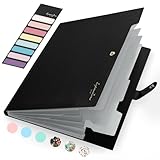
- Eye-Catching Colors: Designed to stand out, this folder combines fresh, vibrant hues with sleek patterns, making organization not just functional but stylish. Perfect for adding a touch of charm and energy to your workspace
- Upgraded Spine for Larger Capacity: Our accordion file organizer with expandable spine design is more stretchy to fit over 250 sheets without bulking up too much. Unlike regular spines that can easily get dented, our spine is made for quality and not easy to deform in transit
- Easy Organization: This expanding file folder makes sorting and organizing your papers a breeze. Featuring 5 pockets with tabs and colorful labels for quick sorting and retrieval
- Made to Last: Reinforced plastic document folders resists tearing and creasing, with a secure snap closure to keep papers in place
- Portable & Lightweight: 13 x 9.5 inches. Fit A4/letter size documents. Compact and lightweight for easy carrying. Easily take your paperwork to a meeting or school
For example, suppose an invented credit-card cycle closes on the 18th. The statement reports the balance for the cycle ending that day, and the bill lists a later payment due date. This is an illustration, not a standard schedule: use the dates and amounts on your own statement.
How to read your bill and act on the dates
- Find the covered period or closing date. Use the dates printed on the bill; do not assume the period runs from the first through the last day of a calendar month.
- Locate the statement balance. This is the amount reported at the close of the period. Review the listed charges, interest, fees, payments, and credits.
- Find the minimum payment and due date. For a credit card, pay at least the required amount by the deadline, allowing for any stated cutoff or payment-processing terms.
- Check the grace-period terms if you want to avoid purchase interest. Whether a grace period applies, and what balance must be paid to preserve it, depends on the card agreement. Pay the required full balance on time if the agreement’s conditions for a purchase grace period are met.
- Use the provider’s terms for non-credit bills. For a utility, phone, rent, insurance, or subscription bill, rely on that provider’s dates and agreement; credit-card cycle and grace-period rules do not establish a universal schedule for those bills.
What is a grace period for a credit card?
The CFPB describes a credit-card grace period as “the period between the end of a billing cycle and the date your payment is due.” A grace period is not guaranteed for every account or every balance. Whether you can avoid interest on purchases depends on the card’s agreement and payment conditions. Check the agreement for the applicable balance and deadline. CFPB: What is a grace period for a credit card?
Rank #3
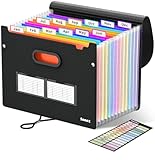
- Superior Durability: Featuring strong 100C thickened cover and reinforced edges, surpassing competitors in durability. Made from PVC-free, acid-free materials, ensuring secure organization of bills and documents while delivering unparalleled durability and reliability
- Deeper Pockets & Unobstructed Tabs: In response to a common issue in accordion folders where papers cover index labels, we've increased pocket height by 0.8 inches (2 cm). This unique enhancement ensures your labels remain visible—a feature unmatched by competitors
- Ample Capacity Monthly Bills Organizer: Our expandable monthly bill organizer can extend up to 14 inches, accommodating over 1500 sheets files while standing stable. With 12 pockets, it's perfect for storing tax records, bills, receipts, invoices and important family files for over a year
- Sticky Labels & 3 Loops Bungee Closure: Colorful monthly tabs and labels help you locate the target object at a glance and manage monthly tasks with ease. The elastic band closure with three loops expands generously to accommodate all your storage needs
- Unlock Versatile Organization: Whether at home, in the office, or on the go, it offers flexible organization for invoices, medical finance records, and identification documents, ensuring efficiency wherever you need it
How to keep track of recurring bills
Make a list of each bill, what it is for, the amount owed, its due date, and when you usually pay it. Keep the list somewhere you can check and update it. The CFPB suggests a digital calendar, reminders, an app, or a paper calendar or planner; its bill-calendar guidance explains how to track what is owed and when. CFPB: Bill Calendar: Know what you owe and when it’s due
Quick Recap
Best Value
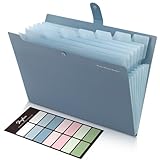
- Size: 13 x 10 x 0.7 inches. Fits A4 and letter-size paper, standard documents and filing needs.
- User-Friendly Features: Included sticker labels allow you to easily distinguish between different categories of files, maintaining neatness and enhancing productivity!
- Sleek and Portable: Designed to slip seamlessly into backpacks, laptop bags, or file cabinets, our lightweight folder keeps your documents tidy and accessible wherever you go.
- Built to Last: Crafted from polypropylene, our folders resist tears and deformation while remaining flexible. The secure snap closure offers easy access while keeping your papers securely in place.
- Versatile Utility: This folder isn't limited to organizing course papers for college students; it's perfect for storing business tax documents, recipes, important receipts, and more!
Rank #4

- Mr. Pen accordion file organizer features 12 expanding pockets and 96 labels, providing a practical system for sorting bills, receipts, tax papers, school documents, office files, and home records.
- The file organizer is made with durable plastic, offering a lightweight yet sturdy structure that helps protect documents from bending, tearing, and everyday handling.
- Designed to fit letter and A4-size documents, this expanding file folder provides ample storage space while remaining portable for use at home, school, the office, or during travel.
- The accordion-style pocket layout allows documents to be separated by month, category, project, subject, or priority, making it easier to find important papers quickly.
- The elastic closure keeps contents secure, while the included blank and monthly labels help users customize the folder for receipts, statements, invoices, assignments, reports, and personal filing needs.
Product prices and availability are accurate as of the date/time indicated and are subject to change. Any price and availability information displayed on Amazon at the time of purchase will apply.




