Free tools Windows power users keep installed
One-click scans. No signup required.
The 25% rate does not apply to every imported semiconductor. Under Proclamation 11002, signed January 14, 2026, it applies to a defined list of advanced computing chips and certain derivative products, effective 12:01 a.m. Eastern Standard Time on January 15, 2026. A total duty on a particular entry can exceed 25% because the proclamation’s duty is generally added to other duties that already apply, but the 25% rate itself is fixed for covered products and does not rise on its own.
What the proclamation does
Proclamation 11002 was issued under Section 232 of the Trade Expansion Act of 1962. It addresses imports of semiconductors, semiconductor manufacturing equipment, and derivative products. The immediate tariff, however, is narrower than that broad policy scope. It sets a 25% ad valorem duty only for covered products listed in the proclamation’s annex, and the operative text states the rule directly:



“Except as otherwise provided in this proclamation, imports of Covered Products will be subject to a 25 percent ad valorem duty rate.”
Two points follow from that wording. The rate attaches to “Covered Products,” a defined term, not to a product category in general. And the proclamation’s own exceptions take precedence over the headline rate.
#1 Best Overall
Which products are covered
The White House fact sheet names the NVIDIA H200 and the AMD MI325X as examples of advanced computing chips within the action. Those names illustrate the kind of product in scope. They do not establish that every chip from either company is covered, and they do not establish coverage for any other chip. Coverage is decided by the annex and by the product’s tariff classification under the Harmonized Tariff Schedule of the United States (HTSUS).
When you are trying to determine whether a specific item is covered, work through these questions in order:
Rank #2
- Is the item a semiconductor or derivative product listed in the annex? A product that is not named there is outside the immediate 25% duty, regardless of how it is marketed.
- What is the HTSUS classification? The classification number, not the trade name, controls treatment at entry.
- Does an exclusion apply to the entry’s end use? See the exclusions section below.
Exclusions for stated end uses
The proclamation excludes covered products imported for several stated purposes. These are specific categories, not a general exemption for chips sold to consumers or businesses:
- use in U.S. data centers;
- repairs or replacements performed in the United States;
- U.S. research and development;
- use by U.S. startups;
- non-data-center consumer applications;
- non-data-center civil industrial applications;
- U.S. public-sector applications;
- other uses the Secretary determines contribute to strengthening the U.S. technology supply chain or domestic manufacturing capacity for semiconductor derivatives.
Because the last category depends on a determination by the Secretary, it cannot be assumed in advance. An importer relying on any exclusion needs to be able to document the end use that the entry is claimed under.
Do these 3 things before closing this tab:
1Scan for outdated or missing drivers - takes under a minute2Clear out junk files and repair common Windows errors3Fix the driver behind crashes, sound loss and screen glitchesRank #3
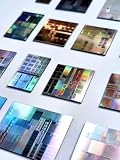
- AUTHENTIC SILICON SAMPLE: Real silicon wafer die sample featuring genuine wafer surface patterns, designed for semiconductor learning, research demonstration, and technology display purposes.
- NON-FUNCTIONAL SPECIMEN: This silicon sample is a display and educational specimen only. It is not an electronic component and does not perform computing or electrical functions.
- SEMICONDUCTOR EDUCATION USE: Suitable for classrooms, laboratories, engineering courses, STEM activities, and demonstrations of wafer structures and semiconductor manufacturing concepts.
- TECHNOLOGY DISPLAY ITEM: Ideal for exhibitions, science displays, collections, and demonstrations related to microelectronics and semiconductor technology.
- INDIVIDUAL PACKAGING: Each sample is separately packaged to help maintain surface cleanliness and reduce scratches during storage and handling.
Why a total duty can exceed 25%
The proclamation states that the 25% duty is in addition to other applicable duties unless the proclamation provides otherwise. That means the Section 232 duty is one layer. If another duty also applies to the same entry, the combined amount is higher than 25%.
Consider a purely hypothetical case. If a covered product were also subject to a separate 5% duty on the same entry, the combined duty would be 30% of the entry value. The sources reviewed do not identify which other duties apply to any particular product, and they do not calculate combined rates. Treat any total you see quoted as a figure to verify against the classification and entry rules for that shipment.
How to check a specific shipment
- Confirm the HTSUS provision. Match the product’s classification to the annex of Proclamation 11002. A mismatch between the trade description and the classification is a common source of error.
- Check current CBP instructions. U.S. Customs and Border Protection issued implementation guidance for the January action, including a CSMS notice. Use the CSMS notice as the practical source for entry procedure.
- Identify all applicable duties. Determine whether any other duty applies to the same entry and whether the proclamation provides otherwise for it.
- Assemble end-use evidence. If you are relying on an exclusion, collect the documents that support the stated use before the entry is filed.
- Recheck the sources on the entry date. Tariff instructions can be amended, and the rate applied should reflect the rules in force when the goods enter.
What this means for household budgets
The sources reviewed establish the rate, the scope, and the exclusions. They do not quantify how much of the duty importers pass on to retail prices, and they do not measure the effect on consumer electronics. Any claim about price changes for a specific device would go beyond the evidence. If a purchase is affected, the most reliable way to know the cost is to ask the seller how it handles the duty and whether it is included in the quoted price.
Independent reader supportYour contribution helps us test, update, and keep practical guides available for everyone.Source status and limits
The proclamation controls the rate, effective time, scope, and exclusions. The White House fact sheet is a useful public summary, but it does not replace the proclamation. The sources reviewed are dated January 2026, and trade measures of this kind are amended from time to time. Confirm the current text and CBP instructions before making any decision that depends on them.
Best Value

- IC Type: Semiconductor
- Each wafer fragment contains visible integrated circuit patterns for demonstration and display purposes only.
- Made from single-crystal silicon wafer material for authentic semiconductor teaching and research.
- Ideal for electronics courses, microfabrication demonstrations, and STEM student projects.
- Also suitable for art installations, photography props, and chip design exhibitions.
The headline figure of 25% is accurate for covered products under the January 2026 action. The idea that duties on all semiconductors could exceed 25% is not supported by that action, although combined duties on individual entries can exceed 25% where other duties apply.
Quick Recap
Product prices and availability are accurate as of the date/time indicated and are subject to change. Any price and availability information displayed on Amazon at the time of purchase will apply.




