What’s actually slowing this PC down?
Pick the symptom - the matching free tool is one click away.
Winter feed costs are easiest to control when you prevent avoidable hay waste, match forage and supplements to livestock needs, and choose a feeding plan that fits your land, labor, weather, and budget. The ideas below can help cattle, sheep, and goat operations identify savings opportunities—but none is a reason to cut feed below animals’ nutritional requirements.
1. Measure how much hay is being wasted
Before changing your winter program, look at where hay is fed and record what remains uneaten, gets trampled, or becomes soiled. Hay left in bedding or scattered around a feeder may point to a forage-quality or feeder-design problem, not simply overfeeding. Penn State Extension and the Ohio State Small Ruminant Team recommend evaluating visible waste as a way to find opportunities to improve feeding management.

Estimate waste consistently across feeding periods so you can tell whether a change actually helps. Keep animal numbers and feeding conditions in mind when comparing observations; a muddy week or a different group of animals can affect the result.
2. Match the feeder to the animals and the hay
Feeder design affects how much forage animals can pull out, trample, or soil. A more restrictive feeder may reduce losses, but the right style depends on the livestock, the form of hay, and the feeding setup. Compare the cost of a feeder with the value of hay it could reasonably help preserve, as well as its upkeep and labor requirements.
Free tools Windows power users keep installed
One-click scans. No signup required.
#1 Best Overall
For sheep and goats, consider whether animals can reach the forage comfortably and whether the feeder helps keep hay clean. Penn State Extension discusses feeder design as part of reducing hay waste: Reduce Feed Costs by Reducing Hay Waste. Maryland Extension also reviews feeding equipment and methods in Winter Hay Feeding Strategies.
3. Feed an amount animals can use before hay spoils
How often you feed can affect waste. In its 2022 guidance, University of Maryland Extension reports that unrolling three or more days of hay at once can result in losses of 40% or more in the described context, compared with 15% or less when hay is fed daily. The same source says a four-day free-access supply requires, on average, 25% more hay than daily feeding. These are source-specific examples, not guaranteed outcomes for every farm or feeding system.
Daily feeding may reduce waste, but it can add labor, travel, and equipment use. Weigh those costs against the value of hay preserved, and make sure the feeding schedule provides adequate access for all animals. Maryland Extension explains that limiting the amount offered to what livestock need each day can encourage them to eat forage they might otherwise refuse, trample, or waste.
4. Test forage before buying supplements
A forage test gives you a better basis for deciding whether purchased supplements are needed and which nutrients may be short. Compare test results with the requirements of the animals you are feeding, rather than assuming all hay—or all livestock—has the same nutritional value and needs.
Do these 3 things before closing this tab:
1Scan for outdated or missing drivers - takes under a minute2Repair Windows errors before they cause bigger problems3Fix the driver behind crashes, sound loss and screen glitchesRank #2
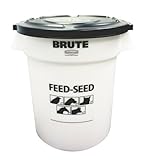
- STORAGE: Plastic pet food container for birds, cats, dogs, livestock, etc.
- SEMI-TRANSPARENT: for easily identifying amount of contents remaining
- CONVENIENT: Storage bin includes checkbox icons for quick identification of contents
- CAPACITY: Holds up to 20 Gallons
- BUILT: Made in the USA
UGA Extension says testing can help producers supplement deficient nutrients while maintaining acceptable performance. Nebraska Extension also addresses hay testing alongside winter grazing in Pasture and Forage Minute: Winter Grazing Pastures and Hay Testing. Ask a qualified local adviser to help interpret results for your animals and feeding conditions.
5. Sort hay by quality and feed it to the right groups
When forage varies in quality, avoid treating every bale as interchangeable. Sort hay by its test results or other reliable quality information, then allocate it according to the needs of different groups. Requirements differ by species and life stage; for example, animals with greater nutritional demands may need better-quality forage than animals with lower demands.
Low-nutritive-value hay can increase the need for purchased concentrates, so matching forage to animal class may help avoid spending high-quality feed where it is not needed—or undersupplying animals that need it. Oklahoma State University Extension identifies low nutritive value as one contributor to high winter feed costs in Reducing Winter Feeding Costs.
6. Extend grazing when land and conditions make it workable
Stockpiled forage, winter annuals, rotational grazing, and strip grazing can reduce reliance on stored feed where suitable forage, land, water, fencing, and management are available. The best option depends on local growing conditions, soil, weather, livestock, and how much labor the system requires. Grazing is not a cost-free substitute for hay: account for infrastructure, monitoring, and the risk of pasture damage.
Rank #3

- FOR ALL DRY FEED: Use this feeder for any dry feed materials such as ground feeds or pelletized feeds
- EASY TO MOUNT: Comes with cup dispenser and product level window
- 40 LB CAPACITY: Securely holds up to 40 lbs of food at a time
- FOR ALL DRY FEED: Use this feeder for any dry feed materials such as ground feeds or pelletized feeds
- PROUDLY MADE IN THE USA
Ohio State University Extension discusses ways to extend grazing in its 2021 Developing a Winter Feeding Program. The University of Kentucky Cooperative Extension also covers approaches in Extending Grazing and Reducing Stored Feed Needs. Older regional cost and labor comparisons should not be treated as current estimates for your operation.
7. Use crop residues selectively
Crop residues can contribute to a winter feeding program in some systems, but their usefulness depends on the residue, its availability and condition, animal needs, and the rest of the ration. Ohio State Extension gives a context-specific example: corn stalks may maintain a spring-calving cow in good body condition for about 60 days after harvest, with feed value declining afterward. This is not a general ration recommendation or a promise that residues will meet every animal’s needs.
Plan to monitor body condition and provide appropriate supplementation when needed. Consult local extension or a qualified nutrition professional before relying on residues as a major feed source.
Independent reader supportYour contribution helps us test, update, and keep practical guides available for everyone.8. Choose feeding areas to limit mud and damage
Where hay is fed can affect both animal performance and the condition of the land. University of Maryland Extension notes that mud can increase cattle energy needs and reduce intake and gains. Feeding on well-drained ground, moving feeding locations when practical, and changing the plan when soils are wet can help limit concentrated damage.
Recommended Free Tools
Rank #4

- RUGGED 35 GALLON STORAGE: Heavy duty polyethylene construction provides a durable, corrosion-free place to organize salt, feed, sand, sporting goods, or loose work equipment in demanding indoor or outdoor environments.
- HELPS SHIELD CONTENTS: A double-paneled sloped lid helps ward off rain and snow, while the stainless steel hinge supports reliable opening and closing for practical material storage through changing weather conditions.
- LOCKABLE LID DESIGN: An integral hasp accepts a user-supplied lock, helping you secure stored materials and equipment. The lock is not included, allowing you to select the locking solution that fits your application.
- EASIER TO MOVE: Built-in handholds support manual positioning, and integrated forklift slots provide another handling option for the bin. Use appropriate lifting practices and equipment based on the load placed inside.
Consider the trade-off between a convenient feeding site and the cost of repairing damaged pasture or dealing with muddy conditions. The right approach depends on soil, drainage, weather, livestock traffic, and available equipment.
9. Choose a feeding method that fits your farm’s trade-offs
Ring feeding, unrolling hay, and bale grazing differ in waste, labor, equipment use, manure distribution, and effects on pasture. No single method is best for every farm. Compare the options against the conditions you actually have, including soil and weather, hay quality, animal performance, and how often someone can manage the feeding area.
| Method | Potential advantage | Trade-off to assess |
|---|---|---|
| Feeder or ring feeding | A well-matched feeder may limit trampling and soiling. | Feeder purchase, maintenance, access, and feeding losses depend on the design and setup. |
| Unrolling hay | Can spread manure and nutrients over a wider area. | May increase waste and requires regular labor; results depend on how much hay is offered and local conditions. |
| Bale grazing | Can reduce winter machinery trips. | Requires management to limit hay waste and pasture damage. |
Maryland Extension recommends weighing the benefits and drawbacks of feeding methods, choosing one that fits the farm’s goals, and managing it accordingly. Its Winter Hay Feeding Strategies provides further discussion.
10. Revisit the plan as conditions change
A winter feeding plan should respond to changes in weather, available forage, and animal condition. Check body condition and forage availability, then adjust the feeding and supplementation plan to meet nutritional needs. A qualified local adviser can help assess whether a change is appropriate for your species, animal class, and region.
Oklahoma State University Extension and Nebraska Extension both address winter feed management and forage planning. Their guidance supports evaluating the program as conditions change, but it does not establish a universal feed reduction or savings amount for all operations.
Quick Recap
Product prices and availability are accurate as of the date/time indicated and are subject to change. Any price and availability information displayed on Amazon at the time of purchase will apply.




