Recommended Free Tools
Trump’s pharmaceutical tariffs are meant to encourage U.S. drug production and reduce reliance on foreign suppliers. But as of October 8, 2026, their effects on prescription costs, access to medicines, and domestic manufacturing remain uncertain. The duties apply to certain patented drugs and ingredients—not every medicine—and their rates depend on the product, company, country, and applicable agreements or exceptions.
What are Trump’s pharmaceutical tariffs?
On April 2, 2026, President Trump issued Proclamation 11020 under Section 232 of the Trade Expansion Act of 1962. The proclamation imposed import duties on certain patented pharmaceuticals and associated ingredients, including active pharmaceutical ingredients and key starting materials. The administration said the imports threatened to impair national security; that is the government’s finding, not an independently established conclusion about the effects of the tariffs. The proclamation set a 100% ad valorem duty as the baseline for covered products, subject to other rates and exceptions.
The duties took effect in stages: for the first listed companies on July 31, 2026, and for other covered companies on September 29, 2026, according to the September 23 Federal Register notice. This is an import-duty policy, not a retail price schedule. A 100% tariff does not mean a patient’s out-of-pocket price automatically doubles: the sources do not establish how the cost is distributed among manufacturers, importers, insurers, pharmacies, and patients.
Which rates, agreements, and exceptions apply?
The 100% figure is not the rate for every covered shipment. The applicable treatment depends on company eligibility, country, product classification, and whether an exception’s conditions are met. Customs and Border Protection’s implementation guidance and the official notices describe several paths:
Windows Errors? Fix Them Before They Spread
Repair common Windows errors and clear accumulated junk for a smoother, more stable PC - no reinstall needed.Free scan · no reinstallCrashes, No Sound, or Screen Glitches?
Random freezes, missing sound and display glitches usually trace back to one bad driver. Find and replace yours safely.Free scan · under a minute#1 Best Overall

- AM/PM COMPARTMENTS: Plan doses for morning and evening with separate AM/PM compartments
- LARGE CAPACITY: Each compartment can hold 12 aspirin sized tablets
- CONTOURED BOTTOMS: Planner compartments have contoured bottoms so retrieving your medication out of the planner is simple
- CLEAR LIDS: Clear planner lids keep your medication visable to help prevent missed doses
- HEALTHY LIVING: Amazon Basic Care products make living healthier simply easier
| Covered imports or status | Rate or treatment | Key qualification |
|---|---|---|
| Baseline for covered patented products and associated ingredients | 100% | Effective July 31, 2026, for the first listed companies; September 29, 2026, for other covered companies. |
| Qualifying company with both most-favored-nation (MFN) pricing and onshoring agreements | Zero tariff through January 20, 2029 | Relief requires both qualifying commitments, as described in the White House fact sheet and proclamation. |
| Company with a Commerce-approved onshoring plan | 20%, rising to 100% four years after the April 2 proclamation | CBP guidance said no companies were then eligible for this specific rate. |
| Covered products from the European Union, Japan, South Korea, Switzerland, and Liechtenstein | 15% combined rate | Applies subject to product classification and applicable trade terms; it is not a general rate for every import from these places. |
| Covered products from the United Kingdom | 10% additional rate | Product classification and applicable trade terms matter. |
| Specified specialty products | Zero rate when stated conditions are met | The Federal Register notice lists products including orphan drugs, nuclear medicines, plasma-derived therapies, fertility treatments, cell and gene therapies, antibody drug conjugates, certain medical countermeasures, and animal-health products. Eligibility depends on specified trade-agreement or urgent-U.S.-health-need conditions. |
The Federal Register notice also describes a public submission process for requests to review urgent U.S. health needs. Exemption eligibility is therefore tied to the notice’s conditions, not simply to a product being medically important.
Are generic drugs and biosimilars included?
No—not under the Section 232 tariffs in the April proclamation and September implementation materials covered here. Those official documents excluded generic pharmaceuticals, biosimilars, and their associated ingredients. The proclamation states: “I have further determined not to adjust imports of generic pharmaceuticals and their associated ingredients, including biosimilar products, at this time.” Proclamation 11020
Rank #2

- AWARD-WINNING DESIGN: Recipient of the Arthritis Foundation Ease-of-Use Commendation for its effortless, push-button opening—perfect for individuals with arthritis or limited dexterity, making medication management easier and pain-free
- PHARMACIST DESIGNED: Features four silicone “feet” that firmly grip the counter, keeping the planner stable and secure. This thoughtful design allows for easy one-handed opening, making medication management simpler and more convenient
- EXTRA LARGE PILL STORAGE COMPARTMENTS: Each oversized AM/PM section holds up to 35 Aspirin—perfect for organizing large supplements, fish oil, vitamins, and daily medications. Ideal pill organizer for arthritis hands, seniors, and travel use
- CONTOURED SCOOP BOTTOM: The specially designed curved base lets you easily remove pills using just your fingertips, eliminating the need for digging or tipping, making medication access quick and hassle-free
- BUILT TO LAST: Crafted with high-quality BPA-Free materials, this durable design is made to endure repeated use over time without wear, ensuring long-term reliability and consistent performance for your daily medication needs
A separate generic-drug tariff beginning in August 2028 was reported on July 28 as a future plan, not an implemented rule in the official materials cited above. The distinction matters: a prospective announcement is not the same as a duty currently in force. Axios reported the proposed timing; the official September notice sets out the then-current Section 232 scope.
Why does the administration say the tariffs are necessary?
The White House argues that dependence on foreign pharmaceutical production could leave the United States vulnerable during geopolitical or economic disruption, and that domestic production is important to national defense and public health. In the proclamation, the administration cited FDA data indicating that, as of 2025, about 53% of patented pharmaceutical products distributed domestically were produced outside the United States and only 15% of patented active pharmaceutical ingredients by volume for the U.S. market were produced domestically. Those figures describe the supply-chain exposure the administration says it wants to address; they do not by themselves show what the tariffs will change.
Rank #3

- Spring Assisted Open Design. We use the latest design on this weekly pill organizer to achieve one-handed operation with the little rubber strips for the smart "lid spring open" feature. The lids are all beautifully colored and marked clearly with the date, everything is clear at a glance so you may find it easy to choose the pills you need. It's quite nice for easy daily dispensing and big enough to hold 8 fish oils or 12 large vitamins for each dose (size of each compartment: 1.3"x1.18"x0.82")
- Say Goodbye to Dumpage Pills. No worries about unwanted dumpage of pills found by pets and kids for your slightest unintentional or incidental touch on the medicine organizer. The push button stays closed once locked and securely snap shut keeping pills safe. It's small and perfectly suitable for travel and is ideal for storing small jewelry or items such as earrings, beads, nail art tips, ect.
- Premium Screen Printing. To avoid screen-printing fonts and icons falling off from the surface of the pill box, we use high-end screen printing ink and strictly do the Ink Adhesion Test with 3M Tapes before shipment. Thus, no need to be frustrated with the missing fonts of "Tuesday" or icons of "PM", and worry about mistakenly taking the wrong tablets.
- BPA-Free Material. This pill case is pretty safe because of being made of food grade materials. You would be worry-free with the BPA-free pill boxes and organizer when storing multiple pill regimes inside. With the transparent plastic lid, it's quite easy to distinguish the pills in each dose without opening the lids.
- What You Receive: 1 x AUVON iMedassist Pill Holder, our 12-month warranty, and friendly customer service.
The administration also links tariff relief to MFN pricing commitments and onshoring production and research and development. The White House says the agreements are intended both to make drugs more accessible and affordable and to strengthen U.S. manufacturing. Its fact sheet claimed the impending tariffs had spurred approximately $400 billion in new U.S. investment commitments by U.S. and foreign pharmaceutical companies for spending during the president’s term. That is a White House commitment figure, not evidence that the money has already been spent or that production is operational. White House fact sheet
A related policy effort concerns foreign drug pricing. On June 18, 2026, the U.S. Trade Representative announced a Section 301 investigation into Germany’s pharmaceutical pricing practices. USTR said it would examine whether those practices were unreasonable or discriminatory and burdened U.S. commerce. That was an investigation and allegation, not a final finding. USTR Jamieson Greer said, “President Trump has made clear that American patients should not be shouldering a disproportionate share of global pharmaceutical research and development.” HHS Secretary Robert F. Kennedy Jr. said, “Fighting the war against disease is a shared burden across wealthy nations.” USTR’s announcement
Rank #4

- Carry More but Portable - Overall 8''x 5''x 1.4'' and 4.8" x 1.2" x 1'' for each compartment, pill box 3 times a day is with enough storage for your medicine and very portable while traveling. You can also take each day separate pill case out instead of the whole pill box 7 day for your daily life
- Pill Organizer 3 Times a Day - From morning to evening, our weekly pill organizer 3 times a day considering any moment you take medicine. You can organize your pills and vitamin only once a week with our medicine organizer 3 times a day
- Excellent Printing Pill Holder - Bold letter marks on the daily pill box organizer will remind you what to take by the day. The printing of the pill organizer weekly has passed the critical 3M adhesives & tapes test, and won't rub off after over 5000 times of use
- Easy Open 7 Day Pill Organiser - With easy open design, the elderly or patients can also open the pill cases organizers 7 day
- Double Protection Design - Premium solid ABS outer container and high-quality weekly pill organizer provide double protection for your pills. Don't need to worry about pills spilling in your bag or suitcase anymore, pill organizer 3 times a day closes tightly all the time
Will the tariffs raise prescription prices?
That cannot be determined from the available evidence. A tariff adds a cost at import, but its effect on a patient’s bill depends on how companies and other parts of the health-care system respond. The sources reviewed do not establish the degree of cost pass-through, whether insurers or manufacturers would absorb some of it, or whether the duties will ultimately raise or lower retail prices.
The administration presents MFN pricing agreements and domestic investment as routes to affordability. Critics and industry participants have raised the opposite concern: duties could increase costs or make access harder, particularly during a shift in manufacturing. Neither a promised price benefit nor a projected price increase is proof of the eventual effect.
Do these 3 things before closing this tab:
1Scan for outdated or missing drivers - takes under a minute2Repair Windows errors before they cause bigger problems3Fix the driver behind crashes, sound loss and screen glitchesBest Value
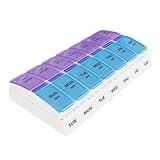
- 7-DAY PILL ORGANIZER: Organize your weekly doses with ease using the AM/PM compartments of this 7-day pill organizer. Perfect for daily medication management, it ensures you never miss a dose, simplifying your medication schedule
- PILL CAPACITY: Each compartment holds up to 25 pills (aspirin-sized), offering ample space for vitamins, supplements, and prescription medications. Ideal for managing multiple medications, ensuring accurate daily dosing for optimal health
- BUILT TO LAST: Constructed with durable materials, this high-quality pill organizer is designed for repeated use. It resists wear and tear, ensuring long-lasting performance for years of dependable medication management
- EASY TO USE: Featuring easy-to-press push buttons, this pill organizer allows effortless opening and quick access to your medication. Perfect for individuals with limited dexterity or arthritis, simplifying medication management with ease
- HEALTHY LIVING: Ezy Dose products help make healthy living simple and convenient. This pill organizer promotes proper medication adherence, encouraging a healthier lifestyle by making it easier to stay on track with your daily regimen
Could tariffs bring drug manufacturing back to the United States?
The intended mechanism is to make imported production less attractive and encourage companies to invest in U.S. facilities and research. But announced investment commitments do not establish that plants will be built, production will begin, or supply chains will become more resilient. Pharmaceutical manufacturing capacity takes time to develop, and the sources reviewed do not quantify the eventual effect of the tariffs on domestic output.
The policy also creates different incentives for different firms. A company that qualifies for relief through both pricing and onshoring agreements faces a different cost from one subject to the baseline duty. The onshoring-only rate offers another path, while country-specific rates and specialty-product exceptions make the system more conditional. Whether those distinctions lead to durable U.S. capacity, rather than rearranged supply chains or delayed investment, remains an open question.
Why are smaller companies and research a concern?
September 30 reporting described concern that small and midsize biotechnology companies relying on foreign contract manufacturers may not have the resources to move production quickly. Stakeholders also warned that tariff costs could divert money from research and development. These are reported risks, not established outcomes across the industry. Axios reported these concerns.
The same reporting identified unresolved questions at that time about how urgent-health exceptions would be defined and timed, and how duties paid during a review would be treated. Uncertainty over relief can matter to firms deciding where to manufacture, especially if they depend on outside production and have limited room to absorb extra costs.
What is the central policy trade-off?
| Policy goal or concern | Potential mechanism | What remains unknown |
|---|---|---|
| Supply-chain resilience and domestic capacity | Duties and conditional relief may encourage U.S. manufacturing and investment. | Whether commitments become operating capacity and reduce vulnerability in practice. |
| Affordability | MFN pricing commitments are part of the administration’s negotiated approach. | Whether patients’ costs fall, rise, or stay the same after costs move through the drug supply chain. |
| Research and development | Onshoring arrangements may include research commitments. | Whether tariff costs support new U.S. research or compete with companies’ research budgets. |
| Smaller manufacturers | Conditional rates and health-need exceptions could provide relief for eligible products or firms. | Whether companies dependent on foreign contract manufacturing can adapt, and how consistently exceptions will be available. |
| Access and continuity | Reducing dependence on foreign sources is intended to improve security of supply. | Whether the transition disrupts supply or prevents shortages; the evidence reviewed does not establish either result. |
The central dilemma is that a tariff can create pressure to relocate production, but that pressure may also impose costs during the transition. The administration’s stated goals do not settle whether the policy will deliver more resilient supply and affordable medicines at the same time.
Quick Recap
Product prices and availability are accurate as of the date/time indicated and are subject to change. Any price and availability information displayed on Amazon at the time of purchase will apply.




