What’s actually slowing this PC down?
Pick the symptom - the matching free tool is one click away.
The FDA has documented missed inspection deadlines and delayed follow-up at domestic food facilities, while foreign food-site inspections remain below 2019 levels. The agency plans to shift more routine domestic inspections to state partners and focus federal work on international, high-risk, complex, and targeted cases. But the available evidence does not establish a newly adopted, across-the-board reduction in food inspections: the shift is prospective, and its effect on coverage has not yet been demonstrated.
What inspections are required—and who gets inspected?
FDA inspection schedules depend on the facility’s risk category. The agency says high-risk domestic food facilities must be inspected at least once every three years; non-high-risk facilities, at least once every five years. Infant formula manufacturers have annual risk-based inspection requirements. These are minimum schedules, not a promise that every facility will be inspected on time. FDA’s overview of food inspections explains the schedule and the agency’s approach.
Different inspections serve different purposes
FDA describes three broad categories: surveillance inspections assess routine regulatory compliance; compliance follow-ups check whether a facility corrected problems; and for-cause inspections investigate a specific concern, such as an outbreak, complaint, or recall. Investigators may prioritize a facility based on risk signals, compliance history, or information about a possible hazard. Inspections can be conducted by FDA investigators, state partners acting for FDA, or certain foreign authorities under agreements.
What happens during a domestic inspection?
Investigators show their credentials and issue a Notice of Inspection, Form FDA 482. They review facility systems and records, observe operations, and may provide a written list of significant observations. FDA asks the operator to submit a written response addressing corrective actions within 15 working days. A Form FDA 483 records observations; it is not, by itself, a final agency determination that the facility violated the law. FDA’s inspection page describes these procedures.
Do these 3 things before closing this tab:
1Clear out junk files and repair common Windows errors2Scan for outdated or missing drivers - takes under a minute3Repair Windows errors before they cause bigger problems#1 Best Overall

- [ULTIMATE 200-STRIP VALUE PACK]Enjoy a long-lasting supply and incredible value with 200 chlorine test strips per bottle. At only $0.05 per use, this cost-effective chlorine test kit is perfect for restaurants, bars, commercial kitchens, cafeterias, and various other high-traffic facilities. The compact, portable vial ensures you always have professional-grade testing within reach to maintain consistent hygiene standards.
- [PRECISION 0-200 PPM RANGE FOR COMPLIANCE]These sanitizer test strips cover the essential 0-200 ppm range, providing the accuracy required for strict health inspections. Our color chart features distinct, high-contrast blocks to eliminate guesswork when interpreting values. Get instant, on-the-spot verification to ensure your sanitizing solutions consistently meet necessary food safety standards.
- [FAST 3-STEP PROCESS & 15S RESULTS]Get accurate readings in seconds with our ultra-simple 3-step workflow: (1) Dip for 2 seconds, (2) Remove and hold horizontally for 15 seconds, (3) Compare to the color chart. These chlorine strips test your sanitizing solution efficiently, allowing your team to focus on daily operations while ensuring your environment maintains the required chlorine levels without delay.
- [ENHANCED HANDLING & MOISTURE PROTECTION]Featuring extra-long 3.5" strips, our chlorine strips keep your hands safely away from chemical solutions. Each bottle includes a moisture-absorbing desiccant and a secure-seal cap to preserve strip integrity. Every vial is printed with batch numbers and expiration dates, guaranteeing reliable and stable color development for every test you perform.
- [ESSENTIAL FOOD SAFETY TOOL]These bleach test strips are ideal for verifying chlorine levels in diluted bleach and other sanitizing solutions across professional environments like restaurants, food trucks, and manufacturing facilities. Note: Designed for commercial sanitizing solution only—not for use in swimming pools, tap water, aquariums, or with quaternary ammonia (QUAT).
Restaurants and grocery stores are generally overseen locally
FDA does not routinely inspect every restaurant or grocery store. More than 3,000 state, local, and tribal agencies primarily oversee restaurants and most retail food service establishments. FDA supports that system with a model Food Code, training, and technical assistance.
What inspection gaps have been documented?
A 2025 review by the HHS Office of Inspector General found that FDA conducted fewer domestic food-facility inspections than before the pandemic, missed required timeframes for many facilities, and did not timely follow up on most significant violations. FDA concurred with all four of the OIG’s recommendations. The report identifies shortcomings in coverage and follow-up; it does not show that a new, general cut to all inspections has taken effect. Read the OIG report on domestic food-facility inspections.
Rank #2
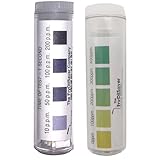
- DUAL SANITIZER TEST KIT, 200 STRIPS FOR CHLORINE & QUAT TESTING – Ensure proper sanitation in commercial kitchens with this essential dual test kit, designed for food service professionals who prioritize health and safety. The kit includes two sealed vials—100 test strips for Quaternary Ammonium (Quat) and 100 for Chlorine—providing accurate, dependable readings to verify sanitizer strength. Perfect for restaurants, cafeterias, food prep areas, and industrial kitchens, these high-quality test strips help maintain compliance with food safety regulations and support consistent, hygienic cleaning practices.
- EASY-READ COLOR MATCHING CHART FOR FAST & ACCURATE SANITIZER TESTING – Simplify your sanitation routine with the included color matching charts in each vial, designed for quick and reliable readings. Just dip a strip into the sanitizer solution, wait a few seconds, and compare the color to the chart for instant results. The Quat test strips measure from 0 to 200ppm, while the Chlorine strips range from 0 to 400ppm—perfect for ensuring proper sanitizer strength. Ideal for commercial kitchens, restaurants, and food prep areas, this user-friendly system supports accurate testing and helps maintain health code compliance with ease.
- RESTAURANT SANITIZER TEST STRIP KIT - The FryOilSaver Co. Quat and Chlorine Sanitizer Test Kit is a must-have for commercial kitchens, restaurants, and food service operations. This dual-kit includes two vials with 100 premium test strips each, one for Quaternary Ammonium (Quat) and one for Chlorine, designed to deliver fast, accurate sanitizer strength readings. Perfect for busy food prep environments, the kit simplifies routine testing to ensure compliance with health regulations and optimal sanitation. Reliable, easy to use, and essential for maintaining food safety standards.
- QUAT & CHLORINE SANITIZER TEST STRIPS FOR FOOD SAFETY – Maintain optimal cleanliness and hygiene with this essential Sanitizer Testing Kit, perfect for both commercial kitchens and home use. The kit includes both Quat and Chlorine test strips, providing accurate and convenient testing for a wide range of sanitizer solutions. Designed for ease of use, these high-quality strips ensure your sanitizers are at the correct strength, helping to meet health and safety standards. A must-have tool for daily sanitation checks, this kit guarantees that your kitchen stays clean, safe, and compliant with food service regulations.
- INSTANT RESULTS WITH QUICK SANITIZER TESTING – Get fast, accurate readings in seconds with our Quat and Chlorine Sanitizer Test Strips. Simply dip a strip into the solution, wait a moment, and compare it to the color chart for immediate results, making it easy to monitor sanitizer levels and maintain food safety. Designed for efficiency, these strips provide reliable readings in busy kitchen environments, helping streamline your sanitation process. Ideal for restaurants, cafeterias, and food service operations, this time-saving tool ensures your sanitizers are performing effectively without the need for lengthy testing procedures.
Violation findings need context
OIG reported that 1% to 2% of inspected facilities had significant violations each year, and that identification of significant violations decreased steadily over time. That trend alone does not establish that facilities became safer: the same report found missed inspection schedules and delayed follow-up. Fewer recorded violations can’t answer whether oversight is adequate without accounting for which facilities were inspected and whether problems were revisited.
Foodborne illness figures are not an estimate of harm from inspection changes
OIG cited national estimates of roughly 48 million foodborne illnesses, 128,000 hospitalizations, and 3,000 deaths each year. The report uses these figures to explain why food safety oversight matters; it does not attribute those annual totals to recent staffing changes or inspection shortfalls. It warns that unresolved gaps can impede detection and prevention of unsafe food.
Rank #3
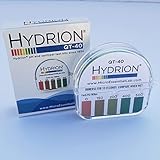
- Provides a simple, reliable, and economical means to measure the concentration of Quaternary Sanitizers, particularly multi-quat broad range quaternary ammonium sanitizer solutions
- Sanitizer solutions are essential in the food service industry to ensure that sanitizers are at the proper concentration
- Quick Results: This test produces quick results; Simply tear off a small strip of the test paper, dip it into your sanitizing solution for 10 seconds, and instantly compare the resulting color with the matching color chart
- Convenient Case: Since the test papers are packaged in a plastic case, they'll have some level of protection from water and other liquids that can cause them damage; However, they should not be stored in humid environments; Also, the case has a serrated edge that makes it easy for users to tear off a strip of the test paper; Additionally, instructions are printed on the case for the user's convenience
Are inspections of imported food also declining?
Associated Press analysis of FDA records reported nearly 35% fewer foreign food-site inspections than in 2019. It also reported that foreign food inspections in fiscal year 2025 fell 17% from the previous year, to 1,140. These figures refer to foreign food inspections—not domestic facility counts or all FDA inspections. AP quoted Michael Rogers, a former FDA inspector with nearly 35 years in inspection roles: “When you look at the numbers of inspections balanced against the responsibility of the FDA — in terms of all the firms domestically and internationally under its oversight — the agency just can’t achieve what is required.” The figures and quotation were reported by the Associated Press on September 8, 2026.
FDA oversight of imports is broader than onsite visits. Its tools include importer verification, field examinations, sampling, foreign inspections, records requests, remote interactive evaluations, and inspection reports from trusted regulatory partners. These approaches can extend oversight, but the cited sources do not establish that records-based or remote methods fully replace physical inspections.
Rank #4
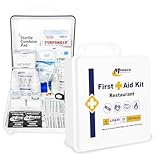
- STAY PREPARED for ANY SITUATION: Whether it's a minor cut, burn, or other workplace injuries, the MFASCO Restaurant First Aid Kit is well-equipped to handle them all. From bandages to essential first aid supplies, you can rely on this kit to provide immediate care when needed. Assembled in USA.
- ENSURE WORKPLACE SAFETY: With this OSHA-compliant first aid kit, you demonstrate your commitment to workplace safety. Create a secure and protected environment for your employees and customers, knowing that you are well-prepared to handle any first aid emergencies that may arise.
- SPECIALIZED for RESTAURANTS: Accidents in restaurant settings can happen, and this kit is specially equipped to handle them. It contains blue bandages and burn care items, which are crucial for addressing common injuries that may occur during food preparation and service.
- COMPACT and PORTABLE: The compact and portable design of this first aid kit makes it perfect for restaurants and workplaces. Measuring 9.5 x 9.5 x 3 inches, it can be easily stored in a convenient location, ensuring quick and easy access in case of emergencies.
- DIRT & MOISTURE PROTECTION: The rubber seal around the plastic box offers added protection against dirt and moisture, keeping the contents safe and secure. This feature is particularly valuable in a bustling restaurant or workplace environment where spills and accidents may occur.
What changes has FDA proposed?
FDA’s Human Foods Program 2026 priority deliverables describe BRIDGE—Better Regulatory Inspections for Dynamic Government Efficiency. Under the proposed model, state partners would conduct more routine food-safety systems inspections, while FDA would concentrate its own resources on international, high-risk, complex, and targeted work. FDA says a proof of process begins in 2026, with full implementation over the next four years. That is a plan, not evidence that the transfer has been completed or that coverage has expanded. The agency presents the approach as a way to broaden coverage and use federal and state resources efficiently. See FDA’s 2026 Human Foods Program priority deliverables.
One-day assessments are a separate pilot
FDA announced a one-day inspectional-assessment pilot that launched in April 2026. These shorter assessments are intended as focused screening to complement standard inspections, not to change enforcement policy. FDA says the pilot excludes higher-risk or more complex facilities that need more comprehensive coverage. Commissioner Marty Makary said the assessments could strengthen the agency’s approach by focusing time and resources where they are most needed; that is FDA’s stated rationale, not a demonstrated outcome. The agency said it would evaluate operational and compliance data, risk signals, and investigator feedback before deciding how the method might affect its wider strategy. Its effectiveness therefore remains unproven pending that evaluation. Details are in the FDA’s May 6, 2026 announcement.
Windows Errors? Fix Them Before They Spread
Repair common Windows errors and clear accumulated junk for a smoother, more stable PC - no reinstall needed.Free scan · no reinstallCrashes, No Sound, or Screen Glitches?
Random freezes, missing sound and display glitches usually trace back to one bad driver. Find and replace yours safely.Free scan · under a minuteBest Value

- 1080P HD Visual Ear Camera with 6 LED Lights Built-in 1080P high-definition lens and 6 bright LED fill lights, providing ultra-clear real-time view of the ear canal. It helps you remove earwax accurately without hurting the ear wall, making ear cleaning safer and easier at home.
- Food-Grade Silicone Tips & All-Round Safety Come with 6 replaceable food-grade silicone ear tips, soft and elastic, suitable for kids, adults and even pets. IPX waterproof design, washable with water or alcohol, no bacterial residue.
- One-Click WiFi Connection & 30FPS Smooth Transmission No complicated operation! Scan QR code to download APP, hold the button for 2 seconds to connect WiFi, 30FPS stable image transmission without delay, real-time view of ear canal on your phone.
- Multi-use for Ear, Nose & Mouth Inspection This visual ear scope is not only for ear wax removal, but also perfect for daily checking ear, nose and mouth condition. Ideal for adults, kids and the elderly to monitor subtle physical details at home.
- Ergonomic Portable Design & Family Must-Have Lightweight non-slip handheld design fits your grip perfectly, easy to store and carry for home and travel. Complete accessories meet all family ear care needs, a thoughtful daily health gift for your loved ones.
FDA’s agency-wide inspection total is not a food-only count
FDA said that in fiscal year 2025 it conducted more than 17,000 inspections across FDA-regulated products, reviewed nearly 75 million import lines, and collected more than 25,000 samples. Those are agency-wide figures, not totals for food inspections alone. FDA describes its strategy as risk-based prioritization, with lower priority potentially given to facilities with stable operations and documented voluntary compliance than to facilities with complex manufacturing, novel technology, or known compliance concerns. The agency’s account explains its rationale; by itself, it does not establish that inspection coverage is sufficient. See FDA’s 2026 statement on its inspectional enterprise.
How to tell whether the shift improves oversight
Moving routine work to state partners or using shorter assessments could change who performs oversight and how resources are allocated. Whether that improves food-safety coverage depends on measurable implementation, not the plan’s stated goals. The most informative indicators are:
- Schedule compliance: whether facilities are inspected within their required risk-based timeframes.
- Timely follow-up: whether significant problems are revisited and corrective actions checked promptly.
- Coverage: whether more facilities receive appropriate oversight, rather than simply changing which agency conducts a visit.
- Consistency and accountability: whether state partners have the training, resources, and common standards needed to apply federal requirements consistently.
- Risk targeting: whether high-risk, complex, outbreak-linked, and repeat-violation cases receive the comprehensive attention they require.
- Evidence of effectiveness: whether evaluations show improved timeliness and compliance, rather than relying only on promised efficiency or fewer recorded violations.
- Separate foreign and domestic reporting: whether results distinguish overseas food-site inspections from domestic facility inspections, which involve different coverage and travel constraints.
Does a funding contingency plan mean inspections have already been cut?
No. HHS’s FY 2026 contingency staffing plan says that during a lapse in appropriations, FDA would be limited in the number and type of inspections it could conduct, except for-cause work, imminent threats, or activities supported by carryover user fees. Human Foods Program work would be reduced to safety surveillance and emergency responses, with longer-term initiatives halted. But the same HHS page says FDA had FY 2026 appropriations through September 30, 2026. The cited sources do not establish funding or operating conditions after that date, so the contingency plan is not evidence that inspections were curtailed during the period it describes. See the HHS FY 2026 FDA contingency staffing plan.
What the evidence supports
There are documented domestic inspection and follow-up shortfalls, and AP reported a decline in foreign food-site inspections. FDA is pursuing a prospective shift toward greater state participation in routine domestic work and has piloted shorter assessments for selected facilities. The key unresolved question is whether these changes will improve timely, risk-appropriate coverage without leaving gaps. The available material supports scrutiny of that question—not a claim that FDA has adopted a blanket cut to food inspections.
Quick Recap
Product prices and availability are accurate as of the date/time indicated and are subject to change. Any price and availability information displayed on Amazon at the time of purchase will apply.




