The best DNA testing kit depends on what you want to learn: use an autosomal ancestry kit to explore origins and find relatives on both sides of your family, a Y-DNA or mtDNA test for a specific direct paternal or maternal line, or a kit with selected health reports if you understand their limits. No evidence here establishes one provider as the most accurate for every person or ancestry background.
Which kind of DNA test fits your question?
Most consumer ancestry kits discussed here analyze autosomal DNA, which comes from both parents and can help identify genetic relatives across many branches of a family tree. Y-DNA and mtDNA answer narrower questions about one direct line each; they are not interchangeable with an autosomal test.
| Test type | What it can help answer | What it does not cover |
|---|---|---|
| Autosomal DNA | Estimated ancestry and genetic matches across both parental sides | It does not isolate just one direct maternal or paternal line |
| Y-DNA | A direct paternal line, typically followed through people who inherit a Y chromosome | It does not represent all paternal-side relatives or the whole family tree |
| mtDNA | A direct maternal line, passed from mother to child | It does not represent all maternal-side relatives or the whole family tree |
Ancestry describes autosomal testing as covering all family lines, in contrast with the narrower direct-line scope of Y-DNA and mtDNA. Its FAQ says its autosomal test surveys more than 700,000 DNA locations; that is Ancestry’s own technical description, not a head-to-head measure against other providers. Ancestry’s guide to DNA test types and its FAQ explain the distinctions.
Best for broad ancestry estimates and relative matching: AncestryDNA
AncestryDNA is a natural fit if your main goal is to explore ancestry estimates and connect with genetic matches. The company says its kit reports origins across 3,600+ places and populations and offers DNA matches. It describes the kit as a saliva test and says the box includes instructions, a collection tube, and a prepaid return mailer. These are Ancestry’s product claims, not independent evidence that its estimates or matches are more accurate than another service’s. See AncestryDNA’s product details.
#1 Best Overall

- TOP-SELLING CONSUMER DNA TEST: From your origins in over 3,600 places around the world to the most connections to living relatives, no other DNA test kit delivers an experience as unique and interactive as AncestryDNA.
- YOUR DATA, YOUR CONTROL: We give you full control over your genetic information. You decide what to share, and with whom.
- A FEW SIMPLE STEPS: Simply activate your DNA kit online and return your saliva sample in the prepaid package to our state-of-the-art lab. Your results will be available online in roughly six weeks.
- ORIGINS AND INHERITANCE: AncestryDNA provides more precise ancestral origins with greater geographic detail. Our innovative SideView technology takes your results even further by showing your origins and matches by parental side. *Some DNA features require an Ancestry subscription.
- BUILD YOUR FAMILY TREE: Combine what you learn from your DNA results with an Ancestry subscription and gain access to millions of family trees and the world's largest collection of online family history records. *Access to record collections varies depending on subscription level.
What to expect from the process
Register the kit as directed, provide a saliva sample, and mail it in the prepaid mailer. Ancestry estimates regular processing at six weeks or priority processing at four weeks, with the clock starting after the lab receives a registered kit. The company says results arrive within six weeks in most cases and notes that high demand can extend timing, so treat these as estimates rather than a guarantee. Check the current product page and FAQ for availability and processing options before ordering; Ancestry says the service is available in over 100 countries, but eligibility and shipping can vary. Ancestry’s test FAQ.
Price and feature access
Ancestry says some features require a subscription. The materials cited here do not establish a single all-in price covering every subscription-dependent feature, so check the checkout terms and feature descriptions for your country before purchase. A kit may provide the DNA results without making every family-history tool part of the same purchase. AncestryDNA product page.
Rank #2

- TOP-SELLING CONSUMER DNA TEST: From your origins in over 3,600+ places around the world to the most connections to living relatives, no other DNA test kit delivers an experience as unique and interactive as AncestryDNA.
- YOUR DATA, YOUR CONTROL: We give you full control over your genetic information. You decide what to share, and with whom.
- DNA + TRAITS: Ever wondered where your freckles came from, or why you hate cilantro? AncestryDNA + Traits lets you discover 75+ genetic traits, allowing you to explore how your genes might have influenced a range of appearance, sensory, performance, nutrient, and other personal characteristics.
- A FEW SIMPLE STEPS: Simply activate your DNA kit online and return your saliva sample in the prepaid package to our state-of-the-art lab. Your results will be available online in roughly six weeks.
- ORIGINS AND INHERITANCE: AncestryDNA is the only DNA test that can show your origins results, DNA matches, and traits by each side of the family, without your parents taking a DNA test.
Best if you want ancestry and selected health reports: 23andMe
23andMe currently presents separate ancestry plans and an ancestry-plus-health option on its U.S. product page. At the time the page was accessed in 2026, it listed Basic Ancestry at $99, Premium Ancestry at $149, and Premium Ancestry + Health at $199; premium tiers disclose annual renewals. Prices, plan names, and availability can change, so confirm the total and renewal terms at checkout. The company advertises 5,000+ geographic regions for ancestry and 50+ health screenings for the health tier. Those are provider-described counts using its categories, not directly comparable measures of accuracy or coverage versus Ancestry. 23andMe’s U.S. plan page.
What the health reports can and cannot tell you
23andMe says its test genotypes selected locations in the genome rather than sequencing every letter in a DNA region. Its disclosures state that some health-predisposition reports meet FDA requirements, while others draw on company research and have not been reviewed by FDA. The company says reports are not a substitute for medical care and advises clinical confirmation before taking medical action. A negative result does not rule out a condition, and a consumer report is not a diagnosis; discuss a relevant result with a qualified clinician. Plan details and 23andMe’s health information.
Free tools Windows power users keep installed
One-click scans. No signup required.
Rank #3

- Discover your ancestry and find relatives you never knew existed on both your maternal and paternal sides.
- Get a detailed ethnicity breakdown with the most comprehensive list of ethnicities in the industry: 42 regions, including 7 East Asian regions.
- Simple DNA test kit with a cheek swab - takes only 2 minutes to complete.
- Huge global database enables you to get worldwide DNA Matches.
- Affordable price - includes access to test results. Uses the highest technological standards.
How to compare ancestry estimates and matches
Region counts are not an accuracy score. Companies use their own reference data, categories, and models to estimate geographic origins, and estimates may be revised as those inputs change. A larger advertised number of regions does not establish that a company can identify your particular background more accurately.
For finding relatives, the useful question is whether a service has relevant matches in the family branches you are researching. The sources cited here do not provide comparable match rates by ancestry group, so they cannot establish which database will produce more useful matches for a particular person. Consider where relatives may already have tested and whether the service’s matching features fit your research plans.
Rank #4

- MAP YOUR ORIGINS ACROSS 5,000+ REGIONS: Ancestry Composition breaks down your ethnicity across 5,000+ geographic regions worldwide, the most detailed ancestry breakdown of any consumer DNA service. Ancestry Timeline estimates how many generations ago your most recent ancestor from each population lived.
- FIND LIVING RELATIVES: Opt in to DNA Relatives to see up to 1,500 people in the 23andMe database who share DNA with you, from close family to distant cousins, and message them directly. Your Family Tree builds itself automatically based on your DNA.
- DISCOVER WHAT MAKES YOU UNIQUE: See how your DNA may influence physical features, sensory preferences, and habits across 30+ traits, including cilantro taste aversion to hair texture to deep sleep.
- TRACE ANCIENT MIGRATIONS: Maternal and Paternal Haplogroup reports follow your ancestors' migration paths across continents over thousands of years (paternal haplogroup requires a Y chromosome). Find out how much of your ancestry can be traced back to the Neanderthals.
- PRIVATE BY DESIGN: Your DNA data is encrypted, protected, and always under your control. Enhanced security measures are implemented to keep your information safe. Subject to 23andMe’s Terms of Service and Privacy Statement at 23andMe online.
Privacy checks to make before sending a sample
Genetic information is difficult to treat like an ordinary account credential: you cannot change your DNA if a file is exposed, and the information can also have implications for biological relatives. Review the current company terms and settings before ordering, because policies and operational arrangements can change.
- Matching settings: Check whether relative matching is optional, what information matches can see, and how to change the setting later.
- Sample handling: Find out how long the company keeps the physical sample and whether you can request its destruction.
- Data deletion: Review how to request deletion of results or an account and what the policy says about retained records or information already shared.
- Research consent: Look for any separate choice about using data or samples for research; do not assume it is the same as agreeing to the test.
- Downloaded files: Consider whether you need a copy of your raw data, where you will store it, and who could access it. Ancestry says downloaded DNA data is no longer protected by its security measures.
Ancestry says customers can download their DNA data, request deletion of results under its privacy statement, and request destruction of the physical saliva sample. Its product page says, “You control your DNA data”; treat that as the company’s description of its controls, not an independent privacy assessment. Read the current product page and privacy statement for the applicable terms.
Do these 3 things before closing this tab:
1Scan for outdated or missing drivers - takes under a minute2Repair Windows errors before they cause bigger problems3Fix the driver behind crashes, sound loss and screen glitchesQuick Recap
Best Value
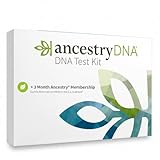
- TOP-SELLING CONSUMER DNA TEST: From your origins in over 3,600 places around the world to the most connections to living relatives, no other DNA test kit delivers an experience as unique and interactive as AncestryDNA
- YOUR DATA, YOUR CONTROL: We give you full control over your genetic information. You decide what to share, and with whom.
- FAMILY HISTORY MEMBERSHIP: The 3-month “World Explorer” membership gives you access to billions of family history records. The membership is redeemable during the AncestryDNA activation process only by the person activating the AncestryDNA test. The person redeeming the membership may choose to convert to an auto-renewing membership by submitting valid billing information.
- BUILD YOUR FAMILY TREE: Combine what you learn from your DNA results with an Ancestry subscription and gain access to millions of family trees and the world's largest collection of online family history records.
- ORIGINS AND INHERITANCE: AncestryDNA is the only DNA test that can show your origins results, DNA matches, and traits by each side of the family, without your parents taking a DNA test.
A practical way to choose
- Write down the question you want answered. Choose autosomal testing for broad ancestry and relative discovery, Y-DNA for a direct paternal-line question, or mtDNA for a direct maternal-line question. Choose a health-report option only if selected screening information is useful to you and you are prepared to follow up clinically.
- Check whether your family matches are likely to be there. Ask relatives which services they used, and compare the matching features that matter to your research. Publicly available figures here do not support a reliable match-rate ranking by ancestry group.
- Compare the complete cost. Include the kit, shipping or geographic restrictions, any priority-processing charge, subscriptions needed for features you want, and recurring renewals. Confirm current checkout terms rather than relying on a past price.
- Read the privacy controls before registering. Review matching, research-consent, sample-destruction, deletion, and download settings so you know what choices are available before submitting DNA.
- Set expectations for estimates and timing. Treat ancestry regions as model-based estimates, not fixed facts, and processing windows as estimates that can change.
Product prices and availability are accurate as of the date/time indicated and are subject to change. Any price and availability information displayed on Amazon at the time of purchase will apply.




