The Tool Desk
Outbyte PC Repair FREEClear out junk files and repair common Windows errorsFree Scan →Outbyte Driver Updater FREEFix the driver behind crashes, sound loss and screen glitchesFind Drivers →Banks and credit unions can both provide checking, savings, and loans, and eligible accounts at federally insured institutions receive comparable federal protection. The main differences are how the institutions are organized, who can join, and the terms and access each specific provider offers. There is no universal winner: compare the accounts and services you would actually use.
How banks and credit unions differ
Banks
A bank is a financial institution that offers deposit and lending products. At a bank insured by the Federal Deposit Insurance Corporation (FDIC), eligible deposits are covered under FDIC rules. The name “bank” alone does not establish that an institution is FDIC-insured, so check its status.


Credit unions
A credit union is a member-owned, not-for-profit cooperative. The National Credit Union Administration (NCUA) describes the model as returning profits to members through reduced fees, higher savings rates, and lower loan rates. That is the cooperative model’s stated purpose, not a guarantee that every credit union has better terms than every bank. NCUA’s explanation of credit union benefits also describes members electing a volunteer board.
Credit unions define a field of membership: the people eligible to join. Eligibility may be based on an employer, family relationship, geographic location, or membership in a group. Check the specific institution’s rules; a general connection to a community or organization does not by itself establish eligibility. NCUA’s membership overview describes these possible bases.
Do these 3 things before closing this tab:
1Clear out junk files and repair common Windows errors2Fix the driver behind crashes, sound loss and screen glitches3Repair Windows errors before they cause bigger problems#1 Best Overall

- Used Book in Good Condition
Pros and cons depend on the institution and account
| Option | Potential advantages | Tradeoffs to check |
|---|---|---|
| Bank | A particular bank may offer the account features, access, and product terms you need. Eligible deposits at FDIC-insured banks receive federal insurance. | Some accounts charge monthly maintenance fees or require a minimum balance or direct deposit to waive them. Verify insurance status, fees, access, and the specific product terms. |
| Credit union | Member ownership and the not-for-profit model are intended to benefit members through fees and rates. Eligible share accounts at federally insured credit unions receive federal share insurance. | You must qualify for membership. Fees and rates vary by institution and account, and not every credit union has federal NCUA insurance; some state-chartered credit unions use private insurers. |
Neither institution type is inherently better for branches, ATMs, digital banking, customer support, product selection, or loan approval. Those vary by provider and product. CFPB identifies services, fees, ATM access, and direct deposit as practical factors when choosing an account; its guide to why someone might need a bank or credit union account can help frame the decision.
Compare the actual accounts and services
Make a like-for-like comparison: use the same purpose, balance or borrowing amount, time horizon, and eligibility assumptions for each option. Check the account disclosure and current offer rather than relying on general claims about banks or credit unions.
- Fees and waiver rules: Compare maintenance, overdraft, ATM, and other disclosed fees, plus the exact conditions for avoiding them. Either type of institution may charge a monthly fee or waive it when you meet requirements such as a minimum balance or direct deposit. See the CFPB explanation of monthly maintenance fees.
- Rates and terms: For savings, certificates, or loans, compare the current APY or interest rate, term, minimum balance, and qualification details. NCUA lists a resource comparing national average rates for 23 common loan and deposit products, but local offers and your eligibility determine the terms available to you. See NCUA’s bank and credit union rate resource.
- Access and features: Consider nearby branches, ATM availability and fees, ATM reimbursements, online and mobile functions, direct deposit, and customer support. Give weight to features you will use, not a provider’s general reputation.
- Membership requirements: If considering a credit union, confirm the field of membership, any opening requirements, and whether a membership share is required. Ask the institution if your circumstances are unclear.
- Insurance: Verify the institution’s insurance status and consider your total balances across accounts and ownership categories. Use the relevant agency’s estimator or locator for complicated arrangements or balances near or above the standard limit.
What federal deposit insurance covers
For eligible accounts, the CFPB describes protection of up to $250,000 per individual account holder at an FDIC-insured bank or an NCUA-insured credit union. Coverage is subject to applicable ownership categories and account rules; it is not simply a separate $250,000 limit for every account label. The agencies are distinct: FDIC insurance applies to eligible bank deposits, while the NCUA Share Insurance Fund covers eligible share deposits at federally insured credit unions.
NCUA says share insurance covers principal and posted dividends up to the applicable limit. For credit-union accounts, primary owners generally must qualify under the field of membership and be recorded as members; special rules apply to joint and trust accounts. Some state-chartered credit unions have private share insurance instead of federal NCUA coverage. Verify a particular institution’s status and use the NCUA Share Insurance Estimator or the NCUA credit union locator when you need to check coverage. CFPB provides a plain-language comparison of whether money is safe in a bank or credit union.
What’s actually slowing this PC down?
Pick the symptom - the matching free tool is one click away.
Rank #3
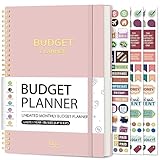
- Effective Budget Planning - Take control of your finances with the budget account book. This comprehensive planner allows you to plan and track your income, expenses, savings, and financial goals in one convenient place. With its intuitive layout and easy-to-use sections, you can stay organized and make informed decisions to achieve financial success.
- User-Friendly Layout - The budget planner features a user-friendly layout designed for easy navigation and organization. Each month, you'll find dedicated budget pages where you can set financial goals, track your income, and plan your expenses. Additional sections include debt trackers, savings goals, bill payment trackers, and more, making it simple to stay on top of your finances.
- Undated Monthly Calendar & Bonus Stickers - Featuring undated calendar each month, you'll have ample space to mark paydays, bills due, appointments, and important dates. Say goodbye to difficult writing spaces. Plus, we've included 3 cute sticker sheets that allow you to personalize your financial organizer and make budgeting more fun. Dates are not pre-printed and are completed by the user.
- Reliable and Convenient Design - Our monthly budget planner is designed for your convenience and built to last. The elastic band keeps everything securely in place, and the dual-sided pocket provides extra storage. Experience a budget planner that combines practicality and durability.
- Master Budgeting with Ease - Our financial planner includes a complete guidebook that provides valuable insights and instructions for optimal usage. From setting financial goals to tracking expenses, this guidebook offers step-by-step guidance and practical tips. Whether you're new to budgeting or an experienced user, this resource will help you make the most of your budget planner, empowering you to achieve financial success.
Insurance applies to eligible deposits or share deposits, not investments merely because they were sold by a bank or credit union. For unusual ownership arrangements or balances above the standard limit, confirm coverage with the relevant agency rather than relying on account names alone.
Independent reader supportYour contribution helps us test, update, and keep practical guides available for everyone.Why do I need a bank or credit union account?
An account can provide a place to keep money and receive income by direct deposit, as well as a way to make payments and access other financial services. Whether you need a particular account depends on how you receive, store, and use money. Compare the costs and functions with your actual needs, including any fees or access limitations.
Quick Recap
Best Value

- EFFECTIVELY MANAGE YOUR MONEY - Our budget planner helps you take control of your finances by providing sections for financial goals, savings, debts, daily expenses, monthly budget, monthly budget review. This finance planner is a good finance book and will help you manage your money effectively.
- PREMIUM QUALITY - Our budget planner is made with high-quality 100gsm paper that reduces ink leakage, fraying, and shade issues. The sturdy and flexible cover,, helps protect the pages. The metal lay-flat twin-wire binding ensures durability and longevity.
- ORGANIZED MONTHLY GOALS & BUDGETS - Our 12-month budget planner helps you set monthly goals, budgets, reviews, and develop good monetary habits, strategies, and action plans. Write down monthly financial goals, put reminders of bills and payments on the calendar, plan your monthly budget in each category, track daily expenses, and review the monthly budget at the end of the month.
- FLEXIBLE USAGE - Our undated finance planner allows you to start at any time and place, making it convenient to use. It has a perfect size of 8.6x5.9 inches and fits in every bag, so it's always at hand.
- CREATE FINANCIAL FREEDOM - Our budget planner is your chance to develop monthly habits, monetary strategies, and action plans to start your journey to long-term financial freedom. It allows you to track monetary flow and review each area for improvements. With this 1-Years budget book, you can take the first step towards financial freedom.
Product prices and availability are accurate as of the date/time indicated and are subject to change. Any price and availability information displayed on Amazon at the time of purchase will apply.




