Soybean oil remains the largest individual feedstock in U.S. biomass-based diesel production, but its share has narrowed as other vegetable oils, animal fats and waste-derived oils gain ground. In marketing year (MY) 2024/25, soybean oil supplied 34 percent of disclosed total feedstock use, at 11.8 billion pounds—more than 1 billion pounds below the previous marketing year, according to the USDA Economic Research Service (ERS).
That shift is not simply a story of replacing soy with one substitute. Feedstock volumes moved in different directions, imports became more important, and the combined category includes both biodiesel and renewable diesel. The figures below are U.S. marketing-year data, not calendar-year 2025 totals.
What is trimming soybean oil’s lead?
USDA ERS’s December 2025 Oil Crops Outlook reports that soybean oil accounted for 34 percent of total feedstock used for U.S. biomass-based diesel production in MY 2024/25. The 11.8 billion pounds used was down by more than 1 billion pounds from MY 2023/24.
Other inputs include oils from crops, animal fats and used oils or greases. USDA’s Foreign Agricultural Service (FAS) has described soybean oil losing share to tallow and canola oil; ERS’s more recent report says corn oil and tallow use reached records in MY 2024/25. These are different commodity classes, not interchangeable versions of one vegetable-oil market.
Free tools Windows power users keep installed
One-click scans. No signup required.
#1 Best Overall
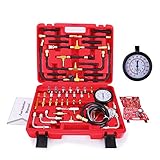
- Dual Dial For Accurate Reading, With A 140 PSI /10 Bar Scale
- Deluxe Manometer Fuel Injection Pressure Tester Gauge Kit
- Set comes in a specially designed molded case to make storage easy and organized.
- A time saving quick coupler connection at the end of he gauge hose makes a speedy and efficient couple possible with most adapters.
- The included adapters, hoses and fittings cover all fuel injection systems and most cars and trucks world wide!
- Vegetable oils: soybean, canola and corn oil.
- Animal fats: including tallow.
- Waste-derived feedstocks: including used cooking oil and other oils or greases.
The USDA FAS account of the changing feedstock market is available in U.S. Renewable Diesel Production Growth Drastically Impacts Global Feedstock Trade.
Volume fell as well as soy’s share
A smaller share does not by itself mean that a feedstock’s use fell: its share can decline if competing inputs grow faster. In this case, however, ERS reports both a lower soybean-oil volume and a broader decline in disclosed vegetable oils and fats. Their combined use in biomass-based diesel production fell nearly 3 billion pounds year over year, to 34 billion pounds in MY 2024/25. Canola oil use also fell by more than 1 billion pounds, while corn oil and tallow use reached records, according to the same ERS outlook.
Rank #2
![[2-Pack] Reusable Ethanol Testing Kit - Wide Mouth Fuel Test Bottle for E85 and Ethanol Levels - Fewer Spills and Clear Results in Minutes - Test Hundreds of Times - Two Ethanol Test Bottles Included](https://m.media-amazon.com/images/I/51n+oPbsvaL._SL160_.jpg)
- Wide Mouth Design for Fewer Spills: Designed specifically with a wide mouth to easily pour gasoline and water into the bottle without spills and leaks. No more getting gas on your hands or searching for a funnel to fill and test your ethanol levels
- Reusable Over and Over: This fuel test bottle allows you to measure ethanol or E85 levels in your gasoline hundreds of times, with a screen-printed label made to last
- Quick and Clear Results: Test your gasoline levels in 5 minutes and three simple steps. Add water to the Water Fill Line. Then add gas to the Gasoline Fill Line. Shake well and wait five minutes. Gasoline and water will separate to provide clear results
- Easy to Read Label: With bright Water and Gasoline Fill lines and clear percentage levels, measuring gasohol, ethanol or E85 levels in your fuel has never been easier
- Protect Your Engine in Minutes: Ensure correct ethanol levels to protect and maintain your engine with our quick 5 minute test. Whether you are looking for an ethanol test kit or an E85 test kit, this bottle will correctly measure alcohol levels in both types of gasoline
The 34-billion-pound figure covers disclosed vegetable oils and fats; it is not the total of every feedstock used. Nor should it be confused with the 37.2 billion pounds of feedstocks ERS reported for MY 2023/24. That earlier total, cited in ERS’s feedstock trade chart, is for a different marketing year and a broader feedstock measure.
Imports are part of the changing supply mix
Domestic production is not the only source of feedstock. ERS found that foreign exporters’ share of feedstocks supplied to the United States rose from 13 percent in MY 2020/21 to 29 percent in MY 2023/24. The agency identifies increased imports of used cooking oil, tallow and canola oil as part of that change. These figures describe the share supplied by foreign exporters through MY 2023/24; they are not an import-share estimate for MY 2024/25.
Recommended Free Tools
Rank #3
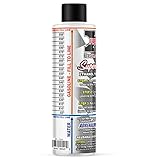
- Test your fuel for proper ethanol levels to ensure it does not damage your engine. Test kit also tests for e85.
- Simple test to discover the percentage of ethanol alcohol in gasoline. With readings of e10, e15, e20, e25, e80, e85 and e90
- High levels of ethanol could damage your fuel system and lower your fuel mileage.
- Ethanol can damage motors not equipped or designed to use it, test your gasoline first.
- Easy to read label and instructions that is laminated to prevent fading or the ink rubbing off. Testing bottle can be reused over and over.
ERS’s analysis of exporters supplying U.S. biomass-based diesel feedstocks provides that comparison. It helps explain why a change in U.S. feedstock composition can reflect both what producers use and where those inputs come from.
Biomass-based diesel combines two fuel pathways
USDA ERS uses “biomass-based diesel” to include biodiesel and renewable diesel. Biodiesel is blended with conventional diesel, while renewable diesel is a drop-in fuel. Renewable diesel production first exceeded biodiesel production in MY 2022/23, according to ERS’s production comparison.
Rank #4

- 【Protect Your Engine】This ethanol tester E85 can get the ethanol level in gasoline and E85 pump gas in just 5 minutes, testing the fuel's ethanol content at peak levels to make sure it won't damage your engine.【Please note】The lid is designed with a self release safety point. Simply twist the lid until you feel slight resistance, then stop. This ensures a secure fit without loosening
- 【Reduce Spills】The wide mouth style of gasoline fuel test bottle is designed to reduce spills and prevent leaks by making it easy to pour gasoline and water into the bottle for testing without the use of a funnel, preventing gasoline from getting on your hands
- 【Test Procedure】Only three simple tests are required to find the percentage of ethanol in gasoline/E85 pump gas; First add water to the blue water line, then pour gasoline to the red gasoline line, then tighten the cap, shake the ethanol tester E85 for 5 seconds, and let it rest on a flat surface for 5 minutes; The gasoline and water will separate to provide a clear result
- 【Reusable and Durable】The E85 Fuel Test Kit is made of high density material, which is durable and corrosion resistant, allowing you to measure ethanol or E85 in gasoline hundreds of times
- 【Easy To Read Percentages】Fade and wipe proof instructions are screen printed for long lasting durability and legibility, and the transparent bottle helps to visualize the testing process
Because the combined category spans different fuel pathways and plant types, an overall feedstock shift does not establish that every biodiesel or renewable-diesel producer changed its recipe in the same way. The EIA feedstock table separates plant categories, but its broader tables also include biofuels beyond biodiesel and renewable diesel and note that feedstocks can include refinery co-processing. Comparisons need to use the relevant fuel and plant rows rather than treating every listed biofuel input as part of one total.
Independent reader supportYour contribution helps us test, update, and keep practical guides available for everyone.Why the period and denominator matter
MY 2024/25 is the latest detailed marketing-year period in the ERS outlook cited here. It is not calendar year 2025. ERS says the Energy Information Administration finalized the MY 2024/25 feedstock usage data on November 28, 2025, and its reported totals cover feedstocks disclosed in the underlying data.
Quick wins for a faster PC:
Clear out junk files and repair common Windows errorsFree Scan →Fix the driver behind crashes, sound loss and screen glitchesFind Drivers →Repair Windows errors before they cause bigger problemsFix Now →Best Value
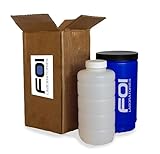
- LAB TESTING NOT INCLUDED — This purchase is the life-safety FOI diesel fuel sample collection and shipping kit. It provides the materials and documentation needed to properly collect in continuity and submit a diesel fuel sample to a laboratory. Laboratory analysis and testing fees are purchased separately.
- FIRST STEP IN THE CONTINUITY WORKFLOW — The standby sample kit establishes the prepared starting point for an FOI fuel-quality event. Having the correct sampling materials, documentation, and shipping pathway, stand-by ready, allows the continuity workflow and chain of custody to begin at the time the sample is taken rather than after materials must be sourced.
- ESTABLISHES DOCUMENTED SAMPLE CUSTODY — The included Sample Information Form (SIF), container, secondary containment, absorbent materials, isolation packaging, and instructions support a documented chain of custody, tracking the sample from the source thru final record.
- WHAT'S INCLUDED — A engineered life-safety diesel-compatible sample container, secondary containment, absorbent material, isolation packaging, shipping carton, Sample Information Form, and collection/shipping instructions for shipping a diesel sample safely.
- LABORATORY ANALYSIS AVAILABLE SEPARATELY — After collection, the sample may be submitted to FOI Laboratories for the appropriate ASTM D975 / NFPA 110 fuel-quality testing package. Laboratory testing is not included with the purchase of this kit.
The 34-percent soybean-oil figure is a share of total feedstock used, not a share of vegetable oils alone. A separate historical ERS statistic says 46 percent of U.S. soybean-oil production went to biofuel in MY 2022/23. That figure uses a different denominator and an earlier year, so it should not be read as a competing estimate of soybean oil’s share of biomass-based diesel feedstock.
ERS compiles data from USDA and EIA and publishes statistics on both calendar-year and marketing-year bases in its U.S. Bioenergy Statistics. EIA also publishes monthly data. A monthly calendar-year observation, an annual calendar-year total and a marketing-year figure are not direct comparisons unless the periods and categories are aligned.
What the figures say about market pressure
The feedstock shift does not establish one cause. ERS says uncertainty in 2025 around renewable volume obligations and small refinery exemptions curtailed production. USDA FAS points to competition from lower-cost Canadian canola and feedstocks with lower carbon intensity. These are agency explanations for market conditions, not proof that any one factor accounts for the entire change in feedstock shares.
The practical takeaway is that soybean oil remains a major individual input, but it no longer represents as large a portion of the disclosed total as before. Other feedstocks—including tallow and corn oil—have gained importance, imports contribute more to supply than they did in MY 2020/21, and total use can move differently from any single feedstock’s share.
Windows Errors? Fix Them Before They Spread
Repair common Windows errors and clear accumulated junk for a smoother, more stable PC - no reinstall needed.Free scan · no reinstallCrashes, No Sound, or Screen Glitches?
Random freezes, missing sound and display glitches usually trace back to one bad driver. Find and replace yours safely.Free scan · under a minuteQuick Recap
Product prices and availability are accurate as of the date/time indicated and are subject to change. Any price and availability information displayed on Amazon at the time of purchase will apply.




