2025 was a turning point for AI PCs, but not because artificial intelligence suddenly transformed everyday computing. The year brought NPUs into mainstream Windows laptops, expanded local-AI software, and made “AI PC” a standard buying label. Yet PC replacement demand was also driven by Windows 10’s end of support, aging business fleets, education refreshes and ordinary upgrade cycles.
The more accurate verdict is that 2025 established the hardware and software foundation for AI PCs to become routine. It did not make an AI-equipped computer essential for every household or business.
What is an AI PC?
There is no single universal definition. Gartner uses a relatively broad one: a computer with an embedded neural processing unit (NPU). Under that definition, the category includes Windows x86 PCs, Windows-on-Arm systems, Apple-silicon Macs, laptops and desktops. Gartner’s definition is therefore wider than Microsoft’s Copilot+ branding.
- AI PC: A broad market term for a computer with local AI acceleration, usually an NPU and sometimes a powerful GPU.
- Copilot+ PC: Microsoft’s narrower Windows category for systems meeting defined hardware and software requirements for selected local AI experiences. See Microsoft’s current Copilot+ requirements and features.
- AI-capable PC: A flexible vendor or analyst term that may include systems with NPUs below Copilot+ thresholds.
- GPU-accelerated AI PC: A computer using a discrete GPU for local generative AI, image creation, video effects or gaming features, whether or not it qualifies as a Copilot+ PC.
These categories overlap, but they are not interchangeable. A laptop with any NPU, a Copilot+ laptop, a Mac with Apple silicon and a workstation with an Nvidia GPU can all be described as AI-capable while offering very different experiences.
#1 Best Overall

- Stunning 15.6" FHD IPS Display: Experience crisp 1920x1080 resolution on this 15.6 inch laptop with an IPS panel that delivers wide viewing angles and vivid colors. The narrow-bezel design maximizes screen real estate for comfortable viewing on this Win 11 laptop, whether you're studying or working.
- Celeron J4105 Processor & 256GB SSD: Powered by a reliable Celeron J4105 processor paired with 12GB DDR4 memory and a fast 256GB M.2 SSD. This laptop computer supports SSD expansion up to 2TB and TF card expansion up to 1TB, so your storage grows with your needs. Delivers smooth multitasking for daily productivity.
- AI-Powered Win 11 Laptop: Built-in AI features enhance your productivity with smart assistance for writing, summarizing, and task management. Pre-installed with Win 11 and includes Office 365 subscription. This student laptop is backed by 1-year warranty and 24/7 customer support.
- All-Day 7000mAh Battery & 180° Hinge: The high-capacity 7000mAh battery keeps this laptop powered through long classes or meetings. The 180-degree lay-flat hinge lets you share your screen effortlessly during presentations. This durable laptop computer adapts to your dynamic workflow.
- Versatile Connectivity Hub: Equipped with USB 3.2, Type-C, Mini HDMI, and 3.5mm audio jack to connect all your peripherals. Stay online anywhere with high-speed 5G WiFi and Bluetooth 4.2. This college laptop keeps you connected at home, in the library, or on the go.
What does an NPU do?
An NPU is a specialized processor for neural-network inference. It is designed to handle suitable AI operations efficiently and with less power than relying entirely on a CPU or GPU.
It does not replace either component. The CPU remains the general-purpose processor, while the GPU handles graphics and many larger AI workloads. The NPU is best understood as an additional accelerator for supported tasks such as camera effects, audio processing and small local models.
Manufacturers often advertise TOPS, meaning tera operations per second. TOPS is a theoretical throughput measure, not a complete performance benchmark. Comparisons depend on precision, such as INT8 or FP16, whether the figure covers the NPU or the whole platform, memory bandwidth, model size, quantization, software optimization and thermal limits. A higher TOPS number does not automatically mean a better computer.
Why 2025 looked like the inflection point
Hardware became widely available
By 2025, all major PC silicon platforms had an AI story:
- Intel Core Ultra: CPU, integrated graphics and AI acceleration in familiar x86 systems. Intel’s product information notes that features depend on the system manufacturer and configuration.
- AMD Ryzen AI: x86 processors combining CPU cores, Radeon graphics and a dedicated AI engine. AMD also cautions that OEM and software enablement varies by model.
- Qualcomm Snapdragon X: Arm-based Windows platforms emphasizing battery efficiency and thin designs.
- Apple silicon: M-series Macs with dedicated neural-processing hardware and Apple Intelligence integration.
- Nvidia GPUs: Discrete graphics processors already used for local generative AI, creative applications, upscaling and frame generation.
Intel’s AI PC architecture explanation describes the CPU, GPU and NPU as complementary parts of the system.
Local AI became a product feature
The industry’s case for local processing is straightforward: an installed model can reduce latency, continue working during poor connectivity, lower cloud usage and limit the data sent to a remote service. It can also use less power for the right workload.
Those are possibilities, not guarantees. The application must support the NPU, the required model must be installed, and many popular AI services still use cloud processing. “Local” also does not automatically mean private: telemetry, synchronization, application settings, enterprise policy and privacy terms still matter.
Microsoft created a visible buying label
Copilot+ gave manufacturers a common way to distinguish basic AI acceleration from systems intended to support more demanding Windows AI experiences. That made AI hardware easier to market, although feature availability still varies by processor, application, language, region and Microsoft’s rollout schedule.
What’s actually slowing this PC down?
Pick the symptom - the matching free tool is one click away.
Rank #2
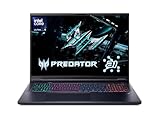
- Desktop-Level Performance, Anywhere: Get legendary gaming performance with the Intel Core Ultra 9 275HX processor, delivering ultra-smooth gameplay and future-ready AI (Up to 13 NPU TOPS). Offload tasks like background removal and audio optimization to the NPU for seamless streaming and gaming, while Intel Application Optimization enhances performance on classic titles.
- Game-Changing Realism: Powered by NVIDIA Blackwell architecture, GeForce RTX 5070 Ti Laptop GPU unlocks the game changing realism of full ray tracing. Equipped with a massive level of 992 AI TOPS horsepower, the RTX 50 Series enables new experiences and next-level graphics fidelity. Experience cinematic quality visuals at unprecedented speed with fourth-gen RT Cores and breakthrough neural rendering technologies accelerated with fifth-gen Tensor Cores.
- Supreme Speed. Superior Visuals. Powered by AI: DLSS is a revolutionary suite of neural rendering technologies that uses AI to boost FPS, reduce latency, and improve image quality. DLSS 4 brings a new Multi Frame Generation and enhanced Ray Reconstruction and Super Resolution, powered by GeForce RTX 50 Series GPUs and fifth-generation Tensor Cores.
- The Ultimate in Ray Tracing and AI: NVIDIA RTX is the most advanced platform for full ray tracing and neural rendering technologies that are revolutionizing the ways we play and create. Over 700 games and applications use RTX to deliver realistic graphics and incredibly fast performance with cutting-edge AI features like DLSS Multi Frame Generation.
- Immersive Depth and Detail: At 18 inches with a 16:10 aspect ratio, the pristine WQXGA screen offering vibrant colors with up to 100% DCI-P3 operates at a fast 240Hz refresh and 3ms overdrive response time. Alongside the suite of features from NVIDIA G-SYNC and NVIDIA Advanced Optimus, you're guaranteed that whatever's on-screen is a distinct viewing delight.
Windows 10 created replacement pressure
Windows 10 reached end of support on October 14, 2025. That encouraged many organizations and households to review aging computers. It did not automatically require every Windows 10 user to buy a new AI PC: compatible machines could be upgraded to Windows 11, while other options included extended security support, another operating system or delaying replacement.
IDC identified commercial and education replacement programs, including Windows 11 migration, as major sources of PC demand in 2025. Its February 2025 outlook projected 273 million traditional PC shipments, including 138 million commercial shipments and 41.7 million education shipments. Consumer shipments were expected to grow only 0.2%.
Forecast versus reality
The most revealing part of the AI PC story is how much the forecast changed.
| Source and date | AI PC estimate | Market share or context |
|---|---|---|
| Gartner, September 2024 | 114.2 million units in 2025 | 43% of all PC shipments |
| Gartner, August 2025 revision | 77.8 million units in 2025 | 31% of the worldwide PC market |
| Gartner, August 2025 outlook | 143.1 million units in 2026 | 54.7% of the worldwide PC market |
| Counterpoint, January 2025 | More than 25% of laptops shipped in 2024 | Counted GenAI-capable laptops, including some powerful GPU systems |
Gartner attributed its revision to tariffs and delayed purchases caused by market uncertainty. The two Gartner figures should not be treated as a measured collapse in installed AI PCs: the first was a forecast made before 2025, and the second was a later forecast using updated conditions. The difference does show that adoption was less inevitable and less immediate than the original headline suggested.
Recommended Free Tools
Analyst totals also differ because “AI PC” may mean any NPU-equipped machine, a system above a particular NPU threshold, a Copilot+ PC, a laptop with a discrete AI-capable GPU, or all PCs rather than laptops alone. The percentages are not directly comparable without checking the definitions.
What users could actually do locally
Supported applications can use an NPU or GPU for:
- Webcam framing, eye-contact correction and lighting adjustments.
- Background blur, voice isolation and noise suppression.
- Live captions and translation.
- Meeting transcription and summaries.
- Text rewriting, proofreading and summarization.
- Image generation, editing and background removal.
- Audio cleanup and source separation.
- Local chatbots and smaller language models.
- Code assistance and developer tools.
- Private document search when the model and index remain on the device.
- Generative effects in photo and video software.
- Gaming upscaling, frame generation and image enhancement, typically through the GPU.
Whether any feature works depends on the operating system, processor, NPU capability, GPU, app version, language, region, model and Internet connection. In 2025, software support was still catching up with the hardware. As Computerworld’s coverage noted, operating systems and applications had not yet fully exploited NPUs.
Do AI PCs need the Internet?
Sometimes, but not always. An installed model and application may work offline for tasks such as selected transcription, image processing or local document search. Cloud-based Copilot, ChatGPT, Adobe and other services may require an Internet connection. Many products use a hybrid approach, keeping some low-latency work local while sending larger requests to the cloud.
Are AI PCs faster or more private?
Not across the board. An NPU can improve efficiency for supported AI functions, but it may have little effect on browsing, ordinary office work, most games, CPU-heavy compilation or software that does not use it. Overall performance still depends on the CPU, GPU, cooling, memory, display and application design.
Windows Errors? Fix Them Before They Spread
Repair common Windows errors and clear accumulated junk for a smoother, more stable PC - no reinstall needed.Free scan · no reinstallOutdated Drivers Are Slowing You Down
One free scan finds every outdated or missing driver and matches the right update for your exact hardware.Free scan · exact hardware matchRank #3

- It's possible on your Intel AI PC - Equipped with an Intel Core Ultra 7 processor (Series 2), the Aspire 14 Al brings new AI experiences in productivity, creativity and security through a combination of CPU, GPU and NPU. This combo delivers the speed and responsiveness to handle any task with ease -along with all-day battery life of up to 22 hours and smooth multitasking performance. (Battery life was measured under specific test settings pursuant to video playback scenarios)
- New AI Superpowers - Discover the power of Recall (preview), improved Windows search, and Click to Do (preview) on Copilot plus PCs. Effortlessly locate past content, perform natural searches, and interact with text and images – all while ensuring your data remains private and you stay productive. ( Copilot plus PC experiences vary by device and market and may require updates continuing to roll out through 2025; Recall and Click to Do will be coming to European Economic Area later in 2025; timing varies. See aka.ms/copilotpluspcs)
- Indulge Your Eyes - Immerse yourself in a world of vibrant detail with a breathtaking 14" WUXGA 1920 x 1200 ultra high-resolution display. This expansive, panoramic screen is your canvas for entertainment, artistic creativity, and captivating AI experiences that will leave you in awe.
- Smart and Effortless AI - Intelligent AI solutions are at your fingertips with AcerSense. Streamline settings, optimize your video presence, and elevate communication - all with intuitive AI that’s easy to use and enhances productivity seamlessly. Just press the AcerSense key on the backlit keyboard for instant access and experience the magic of AI
- Style and Substance - The Aspire 14 Al boasts a sleek, durable, and lightweight aluminum chassis, with an ultra-modern design and a 180° lie-flat hinge for versatile and convenient use on the go. Ideal for work, study, or creative pursuits wherever you are.
Local inference can improve privacy by reducing cloud transmission, but it is not a guarantee. Check the application’s data handling, telemetry, synchronization and enterprise-policy settings before treating local processing as a privacy feature.
The platform choices
Windows on Arm
Qualcomm Snapdragon X systems emphasized battery efficiency, integrated AI acceleration and thin-and-light designs. Their financial appeal can be strong for people who travel or replace a laptop infrequently and value battery life.
The trade-off is compatibility. Legacy x86 applications may run through emulation, but unsupported drivers, peripherals, specialized software and some games can behave differently. Gartner expected Arm laptops to gain consumer share as compatibility improved, while x86 remained more attractive for many business deployments.
Intel Core Ultra
Intel’s advantage is broad x86 compatibility and enterprise familiarity, with CPU, GPU and NPU capabilities in one platform. Selected systems also include Intel vPro manageability. Actual AI features vary by laptop configuration, so the processor family alone is not enough to evaluate a purchase.
Do these 3 things before closing this tab:
1Fix the driver behind crashes, sound loss and screen glitches2Clear out junk files and repair common Windows errors3Scan for outdated or missing drivers - takes under a minuteAMD Ryzen AI
Ryzen AI combines x86 compatibility, a dedicated AI engine and, in selected systems, strong integrated graphics. It spans consumer, business and creator laptops. Battery life, thermals and software support remain characteristics of the complete laptop rather than the processor name alone.
Apple silicon Macs
Under Gartner’s broad NPU-based definition, Apple-silicon Macs are part of the AI PC category, although Apple does not generally use Microsoft’s Copilot+ label. Apple’s M-series systems offer tight hardware-software integration and local media and graphics capabilities. Apple Intelligence may combine local processing with Private Cloud Compute rather than running every feature entirely on the Mac.
The main financial question is ecosystem fit. A Mac may be a poor value for someone dependent on Windows-only applications, specialized peripherals, particular enterprise tools or upgradeable components. Apple’s current Mac range is listed at Apple’s official Mac page.
Independent reader supportYour contribution helps us test, update, and keep practical guides available for everyone.What businesses gained—and what they questioned
Businesses considered AI PCs for future-proofing, video conferencing, possible reductions in cloud usage, local processing of sensitive information, battery life and longer fleet lifetimes. But AI was often an additional reason to refresh, not the sole justification.
Quick wins for a faster PC:
Scan for outdated or missing drivers - takes under a minuteDriver Scan →Repair Windows errors before they cause bigger problemsFix Now →Rank #4

- 【POWERFUL INTEL N150 CPU (UP TO 3.6GHZ)】 Powered by the 15W Intel Twin Lake N150 4-Core processor, this 15.6" laptop smoothly handles 20+ browser tabs and 1080P Zoom video calls simultaneously with zero lag. Ideal for college students and remote workers needing quiet, high-efficiency performance.
- 【8-SEC FAST BOOT & LAG-FREE DAILY USE】 Pre-installed with Windows 11 Home, this laptop delivers lightning-fast 8-second boots and instant app launches. Built for 3-5 years of everyday stability, it easily runs online classes and office tasks without the annoying lag of cheap budget PCs.
- 【16GB RAM + 512GB NVME SSD & EXPANDABLE】 Features 16GB DDR4 RAM and a huge 512GB M.2 NVMe SSD (up to 3500MB/s speed) for fast multitasking and file loading. Includes an expandable DDR4 SODIMM slot and a Micro SD slot supporting up to 1TB extra storage for 250,000+ media files.
- 【15.6" FHD DISPLAY & 175° FLAT HINGE】 Features a crisp 15.6-inch 1920x1080 Full HD screen with an 85% screen-to-body ratio for sharp visuals. The 175° flat-lay hinge allows project teams and students to easily lay the screen flat and share documents across the table during group meetings.
- 【USA FINAL ASSEMBLY & 2-YEAR WARRANTY】 Finalized and quality-tested in the USA for maximum reliability. Backed by an industry-leading 2-Year Manufacturer Warranty, 90-Day Hassle-Free Returns, and US-based customer service with fast 50-hour local replacement support for complete peace of mind.
The main objections were practical:
- No clear return on investment for many roles.
- Too few applications using the NPU consistently.
- Cloud subscriptions already meeting the organization’s needs.
- Arm compatibility and driver concerns.
- Software licensing, data governance and privacy complications.
- Fleet-management complexity.
- Higher memory needs for local models.
- Uncertainty about vendor-specific features and support longevity.
- Difficulty comparing NPU performance from TOPS alone.
- AI features that improve meetings or marketing demonstrations without changing core workflows.
An AI PC is financially sensible for an organization already replacing machines when its applications support local acceleration, battery life matters, data locality is valuable, and the fleet will remain deployed for at least four years. It is harder to justify a large premium when users mainly work in browsers, existing PCs already meet Windows 11 requirements, or all AI processing is cloud-based.
Who should buy one?
Consumers
Buy an AI PC if you are already due for a replacement, want a thin laptop with strong battery life, use transcription or AI-enabled creative tools, want to experiment with local models, or expect to keep the computer for several years.
Do not upgrade solely for the badge if your current computer is fast enough, you mainly browse and stream, the advertised services are cloud-based, or the new machine compromises on RAM, storage, ports or application compatibility.
Students
Prioritize price, battery life, keyboard quality, repairability, warranty and compatibility with school software. An NPU is a useful bonus for calls and selected productivity tools, but it should not displace adequate memory or storage from the budget.
The Tool Desk
Outbyte PC Repair FREEClear out junk files and repair common Windows errorsFree Scan →Outbyte Driver Updater FREEFix the driver behind crashes, sound loss and screen glitchesFind Drivers →Creators and developers
Check the GPU, sustained performance, memory and application support first. NPUs may help with effects, transcription and selected developer tools, while demanding image, video or local-model workloads may depend more heavily on GPU capacity and memory.
IT departments
Run a pilot with the organization’s applications, identity tools, peripherals, security controls and management platform. Confirm regional and language availability, cloud-versus-local data handling, support terms and the cost of any required AI subscriptions.
Local-AI enthusiasts
Compare memory, GPU performance, memory bandwidth, model compatibility and software ecosystems—not just NPU TOPS. A small local model may run efficiently on an NPU, while a larger model may be constrained by memory or better suited to a discrete GPU.
A practical buying checklist
Before paying more for an AI PC, verify:
- CPU generation and sustained performance.
- NPU capability and the applications that actually support it.
- GPU capability for creative, gaming or larger AI workloads.
- At least 16 GB of RAM for mainstream use; consider more for local models, creative work and long ownership.
- Storage capacity and upgrade options.
- Independent battery testing rather than processor marketing alone.
- Display, keyboard, webcam and microphone quality.
- Ports, drivers and peripheral compatibility.
- Windows, macOS or Windows-on-Arm application compatibility.
- Enterprise management, warranty and support where relevant.
- Repairability and upgradeability.
- Whether advertised AI features are available in your country and language.
- Whether a cloud subscription or separate software purchase is required.
There is no universal AI-PC price or mandatory AI-PC subscription. Cost varies by processor, RAM, storage, display, manufacturer and promotion. Intel warns that some features may require additional purchases, subscriptions, enablement or particular configurations. Compare the exact model and configuration rather than assuming every product in a category offers the same value.
Free tools Windows power users keep installed
One-click scans. No signup required.
The verdict
2025 was the year AI PCs became difficult for the industry to ignore. NPUs became a standard part of new-platform design, Microsoft gave Windows systems a recognizable category, Apple continued its integrated local-AI approach, and local AI moved from prototype language into product specifications.
But the year was not an overnight computing revolution. Gartner’s forecast fell from 114.2 million AI PCs, or 43% of shipments, to 77.8 million, or 31%. IDC’s outlook pointed to commercial, education and Windows 11 refresh cycles as major demand drivers. The strongest interpretation is therefore normalization rather than indispensability.
Quick Recap
Product prices and availability are accurate as of the date/time indicated and are subject to change. Any price and availability information displayed on Amazon at the time of purchase will apply.




