In the U.S., a good used 13-inch MacBook Air with M1, 8GB memory and 256GB storage is generally worth about $400–$550 as of August 2026. Aim nearer $400–$500 for a private-sale unit; pay toward $500–$600 only for a credible refurbisher, strong battery, or better return protection. Above $600, compare the new $599 MacBook Neo before buying. Apple no longer sells the M1 Air as a normal current-generation retail model, so prices depend heavily on condition, configuration, seller and warranty.
How much does the 13-inch MacBook Air M1 cost now?
The ranges below are U.S. buying targets, not fixed prices or official Apple pricing. Listings and stock change, and the condition and configuration can matter more than the seller’s headline label.
| Type or configuration | Reasonable target | What to check |
|---|---|---|
| Used, 8GB/256GB | $350–$500 | Battery health, Activation Lock, cosmetic and functional condition, and return terms. |
| Certified or manufacturer-refurbished, 8GB/256GB | $450–$600 | Who performed the refurbishment and what warranty and returns actually apply. |
| Excellent-condition or retailer-refurbished unit | $500–$650 | Whether the condition and protection justify paying more than for a comparable used unit. |
| 16GB or 512GB configuration | $550–$750 | Battery and condition; upgrades do not make this a newer-generation Mac. |
| 8GB/256GB above $700 | Usually hard to justify | Compare checkout prices for newer Macs before paying a premium. |
Recent listing examples show how wide the spread can be. A Walmart restored 8GB/256GB listing was shown at $419 when crawled in late July 2026; that is a marketplace snapshot, not a guaranteed current offer or seller endorsement (Walmart listing). Apple’s refurbished store showed a 13.3-inch M1 Air with 8GB memory and 1TB storage at $1,059, including a one-year limited warranty and 14-day returns. That is a different, unusually storage-heavy configuration—not a useful like-for-like benchmark for the common 256GB model (Apple refurbished listing).
Historical deal coverage has reported remaining or restored 8GB/256GB units around $599 and an earlier promotional price of $499.99. Those figures help show past pricing, but they do not establish that either price is available now (Tom’s Guide; TechRadar).
#1 Best Overall

- BUILT FOR COLLEGE. AND BEYOND — MacBook Air with the M5 chip packs blazing speed and powerful AI capabilities into an incredibly portable design. And with up to 18 hours of battery life,* this thin and light powerhouse is ready to take on almost any major, just about anywhere.
- TEAR THROUGH TOUGH ASSIGNMENTS — With its faster CPU and unified memory, the M5 chip delivers even more performance and fluidity across apps, making multitasking and creative workflows smooth and responsive. A powerful Neural Engine and next-generation GPU with Neural Accelerators give you a powerful platform for AI.
- MAKE QUICK WORK OF YOUR TO-DO LIST — Apple Intelligence helps you write, express yourself, and get things done effortlessly — whether it’s for school or everyday life. With groundbreaking privacy protections, it gives you peace of mind that no one else can access your data — not even Apple.*
- UP TO 18 HOURS OF BATTERY LIFE — MacBook Air delivers incredible battery life with amazing performance, so you can power through a full day of classes without worrying about plugging in.
- A BRILLIANT 13.6-INCH DISPLAY* — The gorgeous Liquid Retina display on MacBook Air supports 1 billion colors, making photos and videos pop with rich contrast and sharp detail, and text appears supercrisp. So everything — from class presentations to movies to games — looks truly stunning.
Why M1 MacBook Air prices vary
- Condition and seller: Private-party used, retailer-refurbished, marketplace “restored” and Apple Certified Refurbished are not equivalent. Inspection standards and remedies vary by seller.
- Battery: Two visually similar laptops can have very different remaining capacity and likely service needs.
- Memory and storage: The common base configuration is 8GB unified memory and a 256GB SSD. Higher-capacity units cost more, but neither memory nor storage can be upgraded by the buyer later.
- Warranty and returns: A real return window or credible warranty can make a modest premium worthwhile. Confirm the terms for that exact listing rather than relying on “refurbished” or “certified” in its title.
- Included accessories and condition details: Check whether the charger and cable are included and whether they are genuine Apple equipment. Cosmetic grade, seller reputation and stock also affect asking prices.
Apple Certified Refurbished generally offers the strongest direct Apple support and return terms when the model is in stock, but inventory can be limited and prices high. Retailer-certified products may include inspection and a retailer warranty, whose scope varies. Marketplace “renewed” or “restored” units can be cheaper but require close review of the seller, battery practices and return terms. Private-party sales can cost less and usually offer the least protection. A $50–$100 premium for credible returns may be reasonable; a much larger premium over a comparable used unit needs a compelling reason.
What did the M1 MacBook Air cost when new?
The 2020 base M1 MacBook Air launched in the U.S. at $999 with 8GB memory and a 256GB SSD. That was its original MSRP, not a current fair price for a used 2020 laptop. A past sale price, an old-stock listing and today’s refurbished or resale price are different comparisons; judge a listing against current alternatives and the exact machine’s condition.
Rank #2

- Retina display; 13.3-inch (diagonal) LED-backlit display with IPS technology (2560x1600 native resolution)
- Apple M1 chip with 8 cores (4 performance cores and 4 efficiency cores), a 7-core GPU and a 16-core Neural Engine
- 8GB memory | 128GB SSD
- Backlit Magic Keyboard | Touch ID sensor | 720p FaceTime HD camera
- 802.11ax Wi-Fi 6 wireless networking, IEEE 802.11a/b/g/n/ac compatible | Bluetooth 5.0 wireless technology
Is the M1 MacBook Air still worth buying in 2026?
It can be a good low-cost Mac for web browsing, office work, school, streaming, coding and light creative applications. Apple lists the M1 MacBook Air (2020) as compatible with macOS Tahoe 26, the current major release covered by Apple’s compatibility page published June 8, 2026 (Apple’s macOS Tahoe compatibility list). This confirms present compatibility, not a guaranteed number of future macOS versions.
Use the price and condition together
- Under $400: Potential bargain, but investigate battery, seller reputation, device locks, screen and keyboard carefully.
- $400–$500: Attractive for a clean, unlocked 8GB/256GB unit with a usable return window.
- $500–$600: Reasonable when refurbishment, battery health or returns provide real added value.
- $600–$700: Consider only for a meaningful upgrade such as 16GB memory or 512GB storage, unusually good condition, or strong Apple-backed protection.
- Over $700: Compare newer Macs closely; above $900 for 8GB/256GB is generally poor value.
The M1 Air supports Apple Intelligence in compatible macOS releases, but availability depends on the installed operating-system version, language, region and individual feature. That does not guarantee parity with newer Apple silicon systems.
Do these 3 things before closing this tab:
1Clear out junk files and repair common Windows errors2Scan for outdated or missing drivers - takes under a minute3Repair Windows errors before they cause bigger problemsRank #3

- This pre-owned product is not Apple certified, but has been professionally inspected, tested and cleaned by Amazon-qualified suppliers.
- There will be no visible cosmetic imperfections when held at an arm’s length. There will be no visible cosmetic imperfections when held at an arm’s length.
- This product will have a battery which exceeds 80% capacity relative to new.
- Accessories will not be original, but will be compatible and fully functional. Product may come in generic Box.
- This product is eligible for a replacement or refund within 90 days of receipt if you are not satisfied.
Specifications that affect what it is worth
The product is the MacBook Air (M1, 2020), sometimes listed as “MacBook Air 13.3-inch” or “M1 2020.” Common U.S. base-model identifiers include MGN63LL/A (Space Gray), MGN93LL/A (Silver) and MGND3LL/A (Gold). Apple’s specifications describe a 13.3-inch, 2560-by-1600 Retina display with 400-nit brightness; an 8-core M1 CPU with either a 7-core or 8-core GPU; 8GB standard unified memory; and 256GB standard SSD storage (Apple technical specifications).
- Ports and screens: Two Thunderbolt/USB 4 ports and a 3.5mm headphone jack; support for one external display up to 6K at 60Hz. Multiple peripherals or displays may require a hub or dock.
- Camera and wireless: 720p FaceTime HD camera and Wi-Fi 6.
- Weight and design: 2.8 pounds and fanless operation.
- Battery claim: Apple rates it for up to 15 hours of wireless web use or up to 18 hours of video playback under Apple’s test conditions. These are controlled-condition ratings, not a promise of typical runtime from a used battery.
The two-port layout, single external-display support and older camera are meaningful trade-offs if you routinely dock the laptop, use multiple monitors, or rely on video calls. The memory and SSD are not user-upgradable, so buy the configuration you need rather than expecting to expand it later.
Rank #4

- Apple-designed M1 chip for a giant leap in CPU, GPU, and machine learning performance
- Charge less with up to 18 hours of battery life - 13.3-inch Retina display with P3 wide color
- 8-core CPU delivers up to 3.5x faster performance to tackle projects faster than ever before
- Up to eight GPU cores with up to 5x faster graphics - FaceTime HD camera for clearer, sharper video calls
- 16-core Neural Engine for advanced machine learning - 8GB of unified memory so everything you do is fast and fluid
Used and refurbished buying checklist
- Ask for the exact configuration and serial number. Match the serial number shown on the device to the listing and verify the memory and storage before paying.
- Confirm the Mac is transferable. Activation Lock must be disabled, the previous owner’s account removed, and the Mac erased and ready for setup. Do not buy a unit that remains tied to another person’s Apple Account.
- Check for organization management. Start setup if possible and make sure no remote-management or organization-enrollment screen appears. A Mac managed by an employer or school may not be usable as a personal device.
- Review battery information. On current macOS, go to Apple menu → System Settings → General → About → System Report, then select Power under Hardware. On older macOS, use Apple menu → About This Mac → System Report → Power. Check cycle count, condition and maximum capacity where shown; the exact display varies by macOS version and reporting tool.
- Price the battery realistically. As a buying guide, 90% or higher maximum capacity is excellent; 80%–89% may be acceptable at the right price; below 80% should be priced as a unit likely to need battery service. “Normal” condition alone is less informative than capacity and cycle count. If a seller will not share battery details, do not pay a premium.
- Test the hardware. Look for display pressure marks, dead pixels or abnormal tint; test every keyboard key, trackpad click and Touch ID; check both USB-C ports for charging and data; and test the camera, microphones, speakers, Wi-Fi and Bluetooth.
- Get the terms in writing. Confirm the charger and cable, return period, warranty provider and coverage, and any condition exclusions before checkout. Avoid units with liquid damage or unexplained shutdowns.
M1 MacBook Air vs. MacBook Neo
Apple introduced the 13-inch MacBook Neo in 2026 as a current entry-level alternative. Its listed starting price is $599, or $499 for education, with 8GB unified memory and 256GB SSD storage (Apple’s MacBook Neo announcement). Compare actual checkout prices and needs rather than assuming the newer chip is faster in every task; no performance conclusion follows from chip names alone.
| Feature | 13-inch MacBook Air (M1, 2020) | 13-inch MacBook Neo (2026) |
|---|---|---|
| Price context | Typically used or refurbished; $400–$550 is a sensible target for clean 8GB/256GB units in August 2026. | $599 starting price; $499 education price, as announced by Apple. |
| Chip | Apple M1, 8-core CPU; 7-core or 8-core GPU. | A18 Pro. |
| Memory and storage | Common base: 8GB unified memory, 256GB SSD; neither is user-upgradable. | 8GB unified memory, 256GB SSD in the entry configuration. |
| Display | 13.3-inch Retina, 2560×1600, 400 nits. | 13.0-inch display; refer to Apple’s specifications for full details. |
| Camera | 720p FaceTime HD. | 1080p camera. |
| Ports and external display | Two Thunderbolt/USB 4 ports; one external display up to 6K at 60Hz. | More limited USB-C arrangement; one external 4K display. |
| Wireless | Wi-Fi 6. | Wi-Fi 6E. |
| Battery and warranty | Used or refurbished battery condition and seller terms vary; Apple-rated figures are up to 15 hours wireless web and 18 hours video playback under its test conditions. | New-device battery and warranty; consult the specific offer and Apple specifications for terms and battery claims. |
| Better fit | Buy when a clean unit is substantially cheaper and its ports, display and macOS compatibility suit you. | Consider when the price approaches $599 and a new device, 1080p camera and current hardware matter more. |
The Neo’s A18 Pro is not an M-series chip, so its newer name alone does not establish that it outperforms the M1 in every workload. Apple’s specifications are available on its MacBook Neo technical specifications page. If you need more than 8GB of memory, heavier sustained performance or a longer expected support runway, compare the actual price of a newer MacBook Air as well. Windows laptops can offer more ports or upgradeable parts at low prices, but they do not provide macOS or Apple ecosystem integration.
Quick Recap
Best Value
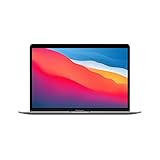
- Apple-designed M1 chip for a giant leap in CPU, GPU, and machine learning performance
- Charge less with up to 18 hours of battery life - 13.3-inch Retina display with P3 wide color
- 8-core CPU delivers up to 3.5x faster performance to tackle projects faster than ever before
- Up to eight GPU cores with up to 5x faster graphics - FaceTime HD camera for clearer, sharper video calls
- 16-core Neural Engine for advanced machine learning - 8GB of unified memory so everything you do is fast and fluid
Product prices and availability are accurate as of the date/time indicated and are subject to change. Any price and availability information displayed on Amazon at the time of purchase will apply.




