The Tool Desk
Outbyte Driver Updater FREEFix the driver behind crashes, sound loss and screen glitchesFind Drivers →Outbyte PC Repair FREEClear out junk files and repair common Windows errorsFree Scan →Verdict: Vultr is a credible 2026 choice for technically capable users who want flexible cloud servers, broad geographic coverage, hourly billing, GPUs, and bare metal without hyperscaler complexity. It is not automatically the cheapest option, and it is not managed hosting: you remain responsible for operating-system security, applications, monitoring, backups, and recovery.
Vultr fits developers, agencies, startups, and infrastructure teams that can self-administer Linux. DigitalOcean may be worth paying more for when tutorials and managed simplicity matter; Hetzner can win on European price-performance; Akamai Connected Cloud/Linode is compelling for customers who value Akamai’s ecosystem; and AWS, Azure, or Google Cloud is usually better when enterprise governance and managed services outweigh simplicity.
Quick verdict
| Category | Assessment |
|---|---|
| Raw compute value | Strong, but dependent on region, plan and add-ons |
| Deployment | Straightforward for technical users |
| Managed services | Useful and expanding, but shallower than hyperscalers |
| Global reach | A major strength; verify capacity in your required location |
| Beginner friendliness | Moderate: the console is approachable, server administration is not |
| Support confidence | Mixed user sentiment; match expectations to your plan and risk |
| Backups | Available, separately charged, and still your responsibility to test |
| Best use case | Flexible VPS and cloud infrastructure |
| Main risk | Underestimating total cost or operational work |
This assessment is current to August 16, 2026. Product inventory, regional capacity, offers and prices can change, so confirm them in the Vultr pricing calculator before ordering.
What Vultr is
Vultr is an independent cloud infrastructure company operated by The Constant Company. It occupies the space between low-cost VPS hosts and large hyperscalers: you get virtual machines and infrastructure controls rather than a fully managed website platform. Vultr says more than 80 million cloud servers have been launched, a vendor-reported scale figure rather than an audited market-share measure (Vultr documentation).
#1 Best Overall

- 【Five Gigabit Ports】1 Gigabit WAN Port plus 2 Gigabit WAN/LAN Ports plus 2 Gigabit LAN Port. Up to 3 WAN ports optimize bandwidth usage through one device.
- 【One USB WAN Port】Mobile broadband via 4G/3G modem is supported for WAN backup by connecting to the USB port. For complete list of compatible 4G/3G modems, please visit TP-Link website.
- 【Abundant Security Features】Advanced firewall policies, DoS defense, IP/MAC/URL filtering, speed test and more security functions protect your network and data.
- 【Highly Secure VPN】Supports up to 20× LAN-to-LAN IPsec, 16× OpenVPN, 16× L2TP, and 16× PPTP VPN connections.
- Security - SPI Firewall, VPN Pass through, FTP/H.323/PPTP/SIP/IPsec ALG, DoS Defence, Ping of Death and Local Management. Standards and Protocols IEEE 802.3, 802.3u, 802.3ab, IEEE 802.3x, IEEE 802.1q
Its catalog includes Cloud Compute, Optimized Cloud Compute, High Frequency, High Performance, VX1 Cloud Compute, Cloud GPU, Bare Metal, Kubernetes, Managed Databases, Block Storage, Object Storage, File System, CDN, DNS, load balancers, firewalls, VPC networking, backups and snapshots, plus newer services such as Serverless Inference (product catalog).
Who it serves well
- Developers running websites, APIs, bots, SaaS products or game servers.
- Agencies managing multiple modest deployments.
- Teams needing a particular country or region.
- AI developers who need GPU capacity without adopting a full hyperscaler architecture.
- Operators comfortable automating through an API, CLI or Terraform.
Who should look elsewhere
- Nontechnical buyers wanting cPanel-style shared hosting.
- Businesses that need the provider to patch and administer the operating system and application.
- Organizations requiring extensive native compliance, governance and managed-service integrations.
- Production teams without independent backups, monitoring, failover and a tested restore procedure.
Vultr pricing: the headline is only the starting point
A G2 pricing page listed these starting signals on April 9, 2026. They are not quotations for a particular region or configuration and should not replace the live calculator.
| Product | Starting signal shown by G2 |
|---|---|
| Cloud Compute | $2.50/month |
| Block Storage | $1/month |
| Object Storage | $5/month |
| Kubernetes Engine | $10/month |
| DDoS Protection | $10/month |
| Managed Databases | $15/month |
| Optimized Cloud Compute | $28/month |
| Cloud GPU | $90/month |
| Bare Metal | $120/month |
See G2’s Vultr pricing page for the dated source and then verify the configuration directly with Vultr.
How billing works
- Servers are billed hourly, up to 672 hours per month for non-GPU servers and up to 730 hours for GPU instances.
- Billing starts when deployment completes. A stopped server continues to incur charges; destroy it to end server billing (billing rules).
- Invoices are issued on the first day of the month for the preceding period, in USD. Sales tax or VAT may be added.
- Documented bandwidth overage is $0.01 per GB (rate documentation).
- Stored snapshots are documented at $0.05 per GB per month.
- Windows licensing, automatic backups, DDoS protection, reserved IPs, NAT gateways, load balancers and other resources can add separate charges.
- Regional prices can differ because of capacity, power, bandwidth, labor, tax and compliance costs (regional pricing guidance).
Five bills to model before deployment
| Workload | Include in the calculation | What the published signals do—and do not—tell you |
|---|---|---|
| Low-traffic WordPress or static site | Cloud Compute, public IPv4 if required, backups, and expected transfer | The $2.50/month G2 signal is a starting point, not proof that the smallest plan has your location, IPv4 or adequate capacity. |
| Small API with managed database | Compute plus Managed Databases, private networking and backups | G2’s $15/month database signal excludes your chosen database size, region and retention settings. |
| Production app | Compute, block storage, backups, load balancer, reserved IP, monitoring, DDoS option and taxes | Component prices must be entered together; a VM-only comparison is misleading. |
| GPU workload | GPU hourly rate, storage, image transfer, runtime and data egress | The $90/month signal does not guarantee a specific accelerator or regional availability. |
| Stopped server or bandwidth-heavy service | Elapsed stopped hours, snapshot storage and excess GB | Stopping does not create a zero-cost state, and excess transfer is charged at the documented rate. |
For each scenario, select the exact region, plan, operating system, IPv4 choice, storage and add-ons in the live calculator. Do not call the smallest advertised plan “free” or production-ready without checking those fields.
Compute options that matter
| Family | Practical fit |
|---|---|
| Cloud Compute | Shared CPU for low-traffic sites, CMS installations, development environments and small databases. |
| High Frequency | Higher clock speeds and NVMe storage for CPU-sensitive or latency-sensitive workloads. |
| High Performance | Newer Intel Xeon or AMD EPYC processors with NVMe storage. |
| VX1 Cloud Compute | Dedicated CPU resources, high-throughput networking and NVMe and/or block-storage options. |
| Cloud GPU | Inference, graphics and model experimentation, subject to quota and regional capacity. |
| Bare Metal | Dedicated physical resources without a virtualization layer. |
Vultr describes smaller VX1 plans as supporting up to 15 Gbps networking, scaling to 50 Gbps, with provisioned IOPS and throughput options (VX1 documentation). These are vendor specifications, not independent benchmark results. Local NVMe on VX1 is not automatically durable: deleting an instance can permanently destroy local data.
Rank #2
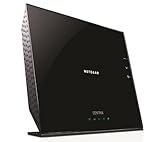
- All-in-One - Automatic Back-up, Media Server, WiFi Router.Five (5) 10/100/1000 (1 WAN and 4 LAN) Gigabit Ethernet ports with auto-sensing technology
- Automatic continuous back-up for your PC & Mac—ReadySHARE Vault and Apple Time Machine-compatible
- Upgradeable internal storage.EZ Mobile Connect—Scan QR code to connect to your home network
- Two (2) SuperSpeed USB 3.0 ports - up to 10X faster than USB 2.0.Microsoft Windows 8 7 Vista, XP 2000, Mac OS, UNIX or Linux
- NETGEAR genie app for simplified network management.802.11n Dual Band Gigabit
Deployment and day-to-day usability
The console is clear for users who understand regions, SSH and network boundaries. Vultr also supports REST API, CLI and Terraform automation.
- Open Products, choose Compute and click Deploy.
- Select the instance type, location, plan category and plan.
- Choose an operating system, Marketplace application, ISO, backup or snapshot.
- Add an SSH key, startup script or Cloud-Init configuration and firewall group.
- Choose public IPv4, IPv6-only or VPC-only connectivity as appropriate.
- Select backups and DDoS protection if required.
- Set the hostname and label, review the estimate, and deploy.
Console labels can change; confirm the current path in the provisioning guide. A documented API pattern is:
curl "https://api.vultr.com/v2/instances"
  -X POST
  -H "Authorization: Bearer ${VULTR_API_KEY}"
  -H "Content-Type: application/json"
  --data '{
    "region": "VULTR_LOCATION",
    "plan": "INSTANCE_PLAN",
    "os_id": OS_ID,
    "label": "INSTANCE_LABEL",
    "hostname": "HOSTNAME"
  }'
The documentation also shows vultr-cli instance create --region VULTR_LOCATION --plan INSTANCE_PLAN --os OS_ID --label INSTANCE_LABEL --host HOSTNAME. Its Terraform example uses provider version ~> 2.26, region del, plan vc2-2c-4gb and Ubuntu 24.04 LTS x64 (OS ID 2284); treat those as examples, not permanent availability guarantees.
Networking, security and reliability
Network choices
- Public IPv4 and IPv6, including IPv6-only deployment.
- VPC networks, VPC-only instances and NAT Gateways.
- Firewall Groups, reserved IPs and load balancers.
- BGP and advanced routing for suitable customers.
- CDN and DNS services.
IPv6-only can reduce address-related cost but may break IPv4-only clients, payment providers, mail systems, monitoring and legacy software. VPC-only instances use private addresses; NAT Gateway provides outbound internet access and is billed separately (VPC billing guidance).
Security remains your job
Use SSH keys, disable password login where practical, patch the OS, restrict firewall rules, protect secrets, monitor authentication and apply application-layer rate limits. Optional DDoS protection is not a web-application firewall, patching service, backup system or incident-response team.
Rank #3

- 【WiFi Serial Port Server/Bridge/Repeater/Router】Industrial 2.4GHz Serial Port Server WiFi Bridge Wireless Repeater WiFi to Ethernet Adapter;can achieve WiFi to Wired or Wired to WiFi function; Support WiFi 802.11b/g/n, WiFi rate:300Mbps(theoretical value);
- 【Multiple Application Methods】Serial port mode, support WiFi, Serial port conversion (the forwarding function is enabled by default (instant forwarding, UDP protocol, broadcasting allowed); WiFi Bridge (IP layer or MAC layer transparent transmission);WiFi Repeater (Wireless Signal Repeater): can extend the distance of WiFi signal coverage, WiFi transfer and WiFi access point (WiFi AP hotspots); Router mode (support WiFi WAN uplink and WAN/LAN exchange)
- 【Power & Parameters】USB or DC optional powered mode, Support wide voltage DC5V-24V power supply, two-level automatic overvoltage protection, 27V overvoltage protection point;(Typical Standard 5V/2A, ripple less than 100mV); Dual UART serial ports (TTL level),One 10/100Mbps adaptive Ethernet port, one RJ45 female socket (2*UART serial port-support TTL level (LVTTL-3.3V) or CMOS level-3.3V); 2*2.4GHz external antennas.
- 【Suitable for WiFi/Wired or Serial Port Devices】Good Partner for monitoring, electronic scales, DVR, IP camera, medical devices, IoT devices, video transmission, Industrial PLC, AGV, PS3, Network Printer, Robots, Telescope and more with RJ45 Ethernet port or WiFi Network devices and RS-232 Port Serial interface Device Server applications.
- 【Function and Technical Application】Serial transparent transmission (serial data to Ethernet packet) supports one-to-one transparent transmission and one-to-many transparent transmission, ordinary transparent transmission modules only support one-to-one transparent transmission, Support IP layer (default) and MAC layer transparent transmission in two bridge modes, can solve some special application for MAC layer encryption,
Backups and snapshots
A snapshot is a point-in-time image for cloning or recovery; an automatic backup is scheduled provider storage. Neither replaces application-level database dumps, off-provider replication or a tested 3-2-1 plan. Snapshot storage is separately charged at $0.05/GB/month. Vultr warns that restoring a backup overwrites disk data and cannot be undone; a redeployed snapshot does not preserve the original IP. Downsizing through snapshots is generally unsafe because reducing disk capacity can cause data loss.
SLA and uptime
Secondary coverage reports a Vultr 100% uptime SLA for specified network and host-node availability. Read the current legal terms for scope, exclusions, customer obligations, credit calculations and claim deadlines. An infrastructure guarantee is not a promise that your application, database, DNS or entire region will remain available.
Crashes, No Sound, or Screen Glitches?
Random freezes, missing sound and display glitches usually trace back to one bad driver. Find and replace yours safely.Free scan · under a minuteWindows Errors? Fix Them Before They Spread
Repair common Windows errors and clear accumulated junk for a smoother, more stable PC - no reinstall needed.Free scan · no reinstallSupport and user experience
G2 displayed Vultr at 4.3/5 from 286 reviews, including 70% five-star and 6% one-star reviews at the time shown. That is a self-selected sample, not a controlled reliability study (G2 reviews). Community discussions contain both positive reports about performance and location choice and negative reports about support delays, downtime or networking. Those anecdotes cannot establish failure rates; experience can vary by region, product, workload, account and incident.
The practical conclusion is to test support before a critical launch, keep provider-independent recovery options and avoid relying on a single ticket for an urgent incident.
Vultr versus alternatives
| Provider | Choose it when | Trade-off |
|---|---|---|
| DigitalOcean | Tutorials, community education, polished workflows and managed simplicity matter most. | Comparable raw compute can cost more; compare included services and total cost. |
| Akamai Connected Cloud/Linode | You value Akamai’s network and edge ecosystem or already use Linode tooling. | Verify current branding, plans and regional prices. |
| Hetzner Cloud | European price-performance dominates and your team accepts fewer managed conveniences. | Geography, support model and product availability may not fit global workloads. |
| AWS Lightsail | You want predictable bundles and a path into the AWS ecosystem. | Complexity and cost can rise as architecture expands. |
| Google Cloud Compute Engine or Azure Virtual Machines | You need hyperscaler identity, governance, compliance, analytics or managed services. | Usually excessive for one VPS or a small website. |
Vendor comparison material is useful for feature descriptions but is not neutral performance evidence. Compare the same region, CPU class, storage, transfer, backups, IP requirements and support expectations.
Decision checklist
- Region: confirm latency, capacity and multi-region requirements.
- Compute: decide shared versus dedicated CPU, sustained versus bursty load, NVMe scratch versus durable storage, and GPU quota.
- Network: establish whether IPv4, VPC, NAT, load balancing or DDoS controls are required.
- Recovery: define recovery-point and recovery-time objectives, then test an independent restore.
- Operations: assign patching, monitoring, alerting, credential and incident responsibilities.
- Total cost: add compute, IPv4, storage, backups, snapshots, DDoS, load balancer, NAT, overage, taxes and Windows licensing.
- Risk: decide whether ticket support and a single provider are acceptable.
Who should choose Vultr?
Choose Vultr when you want broad location choice, a simple control plane, flexible hourly infrastructure, inexpensive entry-level compute, or access to GPUs and bare metal—and your team can operate the server securely. Choose DigitalOcean for education and managed convenience, Hetzner for suitable European price-first deployments, Akamai Connected Cloud for Akamai integration, or a hyperscaler when enterprise services and governance justify the complexity.
Quick wins for a faster PC:
Repair Windows errors before they cause bigger problemsFix Now →Scan for outdated or missing drivers - takes under a minuteDriver Scan →Quick Recap
Common mistakes to avoid
- Assuming stopping a server stops billing.
- Comparing only the VM price while omitting storage, IPv4, backups, DDoS, transfer and tax.
- Treating a snapshot as a complete disaster-recovery plan.
- Assuming a 100% infrastructure SLA means 100% application uptime.
- Choosing IPv6-only without checking every client and third-party dependency.
- Treating local NVMe as durable storage.
- Using review averages as measured uptime or support performance.
Product prices and availability are accurate as of the date/time indicated and are subject to change. Any price and availability information displayed on Amazon at the time of purchase will apply.




