SOC 2 is an independent attestation examination of a service organization’s controls—not a government license or universal certification. Security is required in every SOC 2 report; availability, processing integrity, confidentiality, and privacy are included when they fit the organization’s services, risks, and commitments. A Type I report assesses control design and implementation at a specified date. A Type II report also tests whether controls operated effectively over a specified period.
What SOC 2 is—and what it is not
SOC stands for System and Organization Controls. The American Institute of Certified Public Accountants (AICPA) developed the SOC reporting suite, including SOC 2, for independent examinations of controls at service organizations. SaaS companies, cloud providers, data platforms, managed-service firms, and other technology providers commonly use SOC 2 reports to answer customer questions about how they protect and handle information.


A SOC 2 report describes a defined system, its commitments, selected Trust Services Criteria, and the auditor’s examination and conclusions. It can help a customer assess a vendor, but it does not guarantee the vendor is secure, prevent breaches, or establish compliance with every law. SOC 2 is not generally a universal statutory requirement; it is often a customer, procurement, contractual, or market requirement. The AICPA’s current Trust Services Criteria resource is the 2017 criteria with revised Points of Focus issued in 2022.
Calling a company “SOC 2 certified” is common shorthand, but technically imprecise: the deliverable is an independent CPA firm’s SOC 2 report after an attestation engagement. Prefer “received a SOC 2 report” or “completed a SOC 2 examination.”
The Tool Desk
Outbyte Driver Updater FREEFix the driver behind crashes, sound loss and screen glitchesFind Drivers →Outbyte PC Repair FREEClear out junk files and repair common Windows errorsFree Scan →#1 Best Overall
How SOC 2 differs from other SOC reports
- SOC 1: Focuses on controls at a service organization that may be relevant to customers’ internal control over financial reporting.
- SOC 2: Examines controls relevant to one or more Trust Services Criteria.
- SOC 3: Covers similar criteria in a more general-use report with less detail, designed for wider distribution. See the AICPA’s SOC 3 overview.
- SOC for Cybersecurity and SOC for Supply Chain: Separate SOC-suite offerings with different subject matter and purposes; neither should be treated as a synonym for SOC 2.
Who should consider a SOC 2 examination?
SOC 2 is most relevant when an organization provides a service that handles customer information or makes meaningful commitments about how that service protects data, stays available, processes information, or uses personal information. It can be useful when enterprise customers ask for independent assurance during vendor-risk reviews.
- Consider it if your company runs SaaS, cloud infrastructure, APIs, managed services, data platforms, or outsourced business processes.
- Consider it if you store, process, transmit, or otherwise handle customer data, or make contractual security or availability commitments.
- It may be premature if the product is pre-launch, there is no meaningful customer environment, or basic access, change, incident, backup, and vulnerability practices are not yet in place.
- Check what the customer actually requires. SOC 2 does not automatically replace ISO 27001, HIPAA, PCI DSS, FedRAMP, or contractual obligations.
The examination is rooted in AICPA standards in the United States, but organizations and customers worldwide use SOC 2 reports. Acceptance depends on the particular customer and jurisdiction.
Type I versus Type II: choose the report customers need
| Question | Type I | Type II |
|---|---|---|
| What does it assess? | Whether controls are suitably designed and implemented at a specified date. | Whether controls are suitably designed and operated effectively over a specified period. |
| Evidence basis | Evidence at a point in time. | Evidence of operation across the examination period, often involving repeated or ongoing activities. |
| Typical buyer value | Can demonstrate an initial control-design milestone when a customer accepts it. | Offers evidence of sustained control operation and is generally more persuasive for enterprise buyers. |
| Timing implication | Usually faster because it does not require testing controls over an operating period. | Requires an agreed examination period; length varies by engagement and customer expectations. |
The AICPA’s SOC 2 comparison brochure and Deloitte’s SOC report overview describe this distinction. There is no single Type II observation period to assume: agree it with the auditor and confirm that it meets customer expectations. Some practical guides describe periods of several months, often six to twelve, but that is not a universal AICPA rule.
Choose Type I when a customer explicitly accepts it and the near-term need is evidence of control design at a date. Choose Type II when buyers expect operating-effectiveness evidence and the organization can sustain controls consistently through the examination period. Type I is not a shortcut around weak operations; it can reveal design gaps without resolving them.
Choose the Trust Services Criteria that fit the service
The five categories are security, availability, processing integrity, confidentiality, and privacy. Security is mandatory in every SOC 2 report. The other categories are not five automatic checklists: include them when the service, data, risk, customer promises, and contracts make them relevant. The AICPA criteria and this practical Trust Services Criteria overview describe the categories.
Rank #2
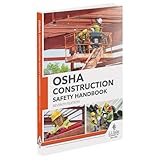
- 2024 OSHA Construction Safety Book is the seventh edition with the new OSHA HazCom final rule on 5/20/24. While the rule takes effect 7/19/24, the compliance dates don’t begin until 1/19/26 per 29 CFR 1910.1200(j).
- Construction Site Book offers quick access to essential OSHA regulations, jobsite hazards, and practical safety tips. It also helps employees identify hazards and prevent injuries and illnesses.
- Features easy-to-read format, full-color images, chapter quizzes with answer key, and comes in a compact size making it a convenient reference for employees.
- Critical topics include Confined Space Entry; Cranes & Derricks; Electrical Safety; Emergency Response; Ergonomics & Back Safety; Excavations; Fall Protection; First Aid & Bloodborne Pathogens; HazCom; Health & Wellness; Jobsite Exposures; Lockout/Tagout; Ladders & Stairways; Materials Handling/Storage; Motor Vehicles; PPE; Scaffolds; Site Safety & Security; Slips, Trips & Falls; Tool Safety; Welding, Cutting & Brazing; and Work Zone Safety.
- Specifications: 5 1/4” x 7 1/4", English, Soft bound. 7th Edition. Copyright 2024.
Security
Security concerns protection against unauthorized access, use, disclosure, modification, or destruction. It is required in every report. Common control areas include governance, risk assessment, access provisioning and removal, authentication and MFA, privileged access, cloud and network security, vulnerability management, logging, incident response, change management, continuity, and vendor risk. Useful evidence can include dated access reviews, approved change records, vulnerability remediation, incident records, and monitoring reviews.
Availability
Include availability when customers depend on the service meeting defined uptime or continuity commitments. Relevant controls may address monitoring, capacity, backups, disaster recovery, and business continuity. Evidence can include service commitments, outage records, alert reviews, recovery objectives, and documented backup restoration or continuity exercises.
Processing integrity
Include processing integrity when the service must process transactions or data completely, accurately, timely, and validly—for example, payment processing, billing calculations, data transformations, automated workflows, or report generation. Validation rules, reconciliations, exception handling, and error-resolution records can support the control story.
Confidentiality
Include confidentiality when the organization handles information designated as confidential, such as customer data, credentials, intellectual property, or proprietary business information. Controls may cover classification, access restriction, encryption, retention, secure disposal, and confidentiality agreements; evidence should connect those measures to actual data flows and handling practices.
Privacy
Include privacy when the organization collects, uses, retains, discloses, or disposes of personal information and makes privacy commitments. Relevant practices can include notices, consent and preferences, data-subject requests, retention and deletion, privacy-risk assessment, third-party processing, and incident notification. A privacy criterion in a SOC 2 report is not, by itself, proof of compliance with every privacy law.
Scope the system before writing policies or buying software
The scope says what service and supporting system the report covers. A scope that is too broad creates unnecessary work; one that excludes systems material to the service can leave customers with an incomplete or misleading picture. Document the boundary and exclusions clearly, then review them with the auditor and customers whose requirements matter.
Scoping worksheet
- Service: Which product or service is examined? Is it the whole company or a business unit? Are support, implementation, professional services, or managed operations included?
- Environment: Identify cloud providers and production accounts or regions, as well as relevant development and staging environments, identity provider, source-code repositories, CI/CD, endpoint management, ticketing, support, logging, monitoring, and backup systems.
- People: Include employees, contractors, administrators, developers, support staff, and security or compliance owners who operate or support the service. Account for distributed teams.
- Data: Map customer content, personal and financial information, health information if applicable, credentials, secrets, logs, metadata, backups, and support tickets.
- Vendors: Identify cloud infrastructure, payment, email, messaging, support, monitoring, HR, payroll, and managed-security providers, plus any other subservice organizations.
- Criteria: Start with mandatory security; justify each other criterion against actual services, data, risk, customer commitments, and procurement expectations.
- Commitments: Gather contracts, service-level promises, public security statements, and privacy representations, then check that the scope and controls address them.
The system description should explain the service, system components, infrastructure, software, people, procedures, data, boundaries, exclusions, and relevant control objectives. An accurate description helps readers understand what was examined; it is not a generic company profile.
Recommended Free Tools
What controls and evidence does SOC 2 require?
The AICPA criteria do not dictate one software architecture or universal control count. The organization designs controls for its system, risks, and commitments. Policies matter, but a policy document is not proof that a control operates. For each control, define the owner, frequency, procedure, inputs, expected output, reviewer, evidence location, escalation route, and exception handling.
Common control domains
- Governance and risk: Assign accountable owners, assess threats and vulnerabilities, document business and customer impact, and record risk treatment and review frequency.
- Identity and personnel: Use controlled onboarding, role changes, and offboarding; enforce MFA, especially for privileged access; review access periodically; train personnel and retain completion evidence.
- Change and development: Protect source code and deployment pipelines; define review, testing, approval, and production-release practices; document emergency changes and follow-up review.
- Vulnerability management and monitoring: Track scans, findings, remediation decisions, logs, alerts, and the human review or response behind technical tools.
- Incident response: Maintain procedures, roles, escalation paths, and records of incidents or exercises, including decisions and follow-up actions.
- Continuity and recovery: Set relevant recovery objectives, maintain backups, and test restoration rather than relying only on a configured backup service or written policy.
- Vendor management: Assess vendors that support the service, document review and monitoring, and evaluate relevant vendor reports without treating them as a substitute for your own oversight.
- Data handling and privacy: Document data flows, classification, retention, deletion, disclosure, and customer or individual request processes where applicable.
Evidence quality: weak versus useful
| Weak evidence | More useful evidence | Why it helps |
|---|---|---|
| A policy saying access is reviewed. | A dated access-review record showing systems and accounts reviewed, reviewer, decisions, and follow-up. | Shows the control was performed and what happened. |
| A screenshot of a backup configuration. | A dated restoration-test record with scope, result, issues, and remediation. | Shows recovery was exercised, not merely configured. |
| A vulnerability scanner dashboard alone. | Findings with ownership, severity decisions, remediation or risk acceptance, and follow-up evidence. | Connects a tool’s output to accountable action. |
| A pull request marked approved. | Records that show review, testing, authorized deployment, and treatment of emergency changes as applicable. | Helps demonstrate the production change control, not just code review. |
Good evidence is dated, attributable, complete, reproducible, tied to the control, retained for the relevant period, and reviewable by the auditor. A tool can provide evidence, but it does not establish ownership, judgment, or effective operation by itself.
A practical SOC 2 readiness checklist
- Confirm the business case: Identify the customer or contract requirement, target report date, accepted report type, relevant criteria, internal owner, and available budget.
- Select an auditor early: Discuss scope, evidence expectations, report wording, testing approach, and a proposed Type II period before locking in control design.
- Complete a gap assessment: Inventory existing policies and safeguards, controls performed inconsistently, missing evidence, vendor gaps, system-description issues, and customer commitments not reflected in practice.
- Prioritize remediation: Address high-risk issues such as MFA, joiner-mover-leaver workflows, access review, production-change approval, logging, vulnerability remediation, incident response, vendor review, training, and tested backups.
- Assign control owners: For each recurring control, set a frequency, procedure, evidence location, reviewer, escalation path, and exception process.
- Prepare the system description and evidence repository: Make boundaries, data flows, system components, and exclusions clear; organize dated records so an auditor can trace each control.
- Run a readiness review: Check whether controls are operating consistently, evidence is complete, vendors have been reviewed, and relevant staff know their responsibilities.
- Schedule the examination: Agree timing and examination period with the auditor and verify customer acceptance before relying on a target date.
How the examination works
- Planning and scope: The firm agrees the system boundary, criteria, period or date, and engagement approach.
- System description and walkthroughs: Management describes the system and controls; the auditor asks how controls are designed and performed.
- Evidence requests and testing: The auditor obtains records and performs procedures to evaluate controls. Type II testing addresses operation across the agreed period.
- Exceptions: The auditor discusses departures or evidence issues. Understand their significance and remediation; do not assume every exception has the same impact.
- Representations and report: Management provides required representations, the auditor finalizes the report, and the organization handles distribution under applicable confidentiality terms.
The AICPA highlights professional standards, licensing, and peer review in its SOC suite information. The CPA firm—not a compliance software platform—performs the independent attestation and issues the report.
Independent reader supportYour contribution helps us test, update, and keep practical guides available for everyone.Timeline and cost: build a realistic plan, not a promise
There is no universal SOC 2 timetable or price. Readiness depends on existing maturity, scope, people, systems, integrations, criteria, remediation speed, auditor availability, and report type. A Type II journey includes scoping and auditor selection, readiness and remediation, the examination period, testing, and report issuance.
Free tools Windows power users keep installed
One-click scans. No signup required.
One vendor-published example estimates one to three months of Type I preparation, two to five weeks of formal audit work, and two to six weeks for report preparation and delivery. Those are Vanta’s estimates, not AICPA requirements or a guaranteed timetable; see its SOC 2 audit timeline. The Type II examination period is a separate engagement variable that must be agreed with the auditor and matched to buyer requirements.
Budget for the full effort, not just a software subscription. Cost categories commonly include auditor fees, readiness help if used, compliance software, penetration testing or vulnerability assessments, security tooling, employee time, engineering remediation, legal or privacy work, and ongoing evidence and renewal work. Obtain organization-specific quotes; a platform’s price is not the total cost of SOC 2.
How to choose an auditor
Compare firms on professional qualifications, independence, experience, method, communication, and fit—not solely on a platform directory or a discounted quote. The AICPA’s SOC suite guidance emphasizes professional standards and auditor quality.
- Is the firm appropriately licensed and qualified for the engagement, and does it participate in an appropriate peer-review program?
- Has it examined organizations with a similar business model, technology, and system scope?
- Will target customers accept its reports and proposed scope?
- What evidence and examination procedures does it expect, and how does it handle exceptions?
- What Type II period does it propose, and does that satisfy customer expectations?
- How are fees, scope changes, timing, and communication handled?
- How does the firm protect its independence, particularly if readiness services or platform relationships are involved?
Ask for qualifications and peer-review information directly. Platform directories can help identify firms, but listing alone is not a substitute for diligence. For example, directories are available from Drata and Sprinto.
Best Value

- Federal Motor Carrier Safety Administration (FMCSA) Manual: The essential resource for commercial motor vehicle (CMV) operators to ensure compliance with DOT regulations.
- Critical Topics: Explore comprehensive how-to information on compliance fundamentals, driver qualification and licensing, drug and alcohol testing, hours-of-service management, vehicle inspection and maintenance, audits and penalties, CSA program, and more.
- Simplified Compliance: Breaks down complex FMCSA regulations and compliance information into plain English, offering added context, best practices, background info, risk-management tips, a Q&A guide, and key insights for easier understanding.
- Specifications: Loose-leaf, 3-ring bound, 950+ pages.
- Published Every 6 Months: J. J. Keller ensures up-to-date compliance guidance with new releases every 6 months.
Manual process or compliance platform?
A small, technically mature team with few systems and a manageable evidence load may be able to coordinate work manually. Spreadsheets and shared documents avoid software expense and preserve workflow control, but recurring evidence, deadlines, and auditor coordination can become difficult to scale.
A compliance platform can organize tasks, policies, controls, integrations, evidence, and audit collaboration. Some offer continuous monitoring, risk and vendor workflows, trust centers, or questionnaire support. Compare integration depth, custom controls, auditor flexibility, framework mapping, API access, access reviews, support, contract terms, and the ability to use your own auditor.
Platforms can automate collection and coordination; they cannot make the organization compliant by themselves. They do not replace engineering remediation, management approvals, incident decisions, recovery exercises, personnel accountability, or auditor judgment. Automated checks can be incomplete, and a green dashboard is not proof every control worked.
For example, Vanta’s pricing page presents personalized pricing and plan tiers; Drata’s plans page also uses personalized pricing and describes a Foundation plan for up to 50 full-time equivalent employees; and Sprinto’s pricing page presents a Foundation plan without a universal dollar price in the page described here. These pages are vendor information, not a total-cost comparison. Request current terms directly and compare the subscription with auditor, remediation, and ongoing operating costs.
Crashes, No Sound, or Screen Glitches?
Random freezes, missing sound and display glitches usually trace back to one bad driver. Find and replace yours safely.Free scan · under a minuteWindows Errors? Fix Them Before They Spread
Repair common Windows errors and clear accumulated junk for a smoother, more stable PC - no reinstall needed.Free scan · no reinstallHow customers should read a SOC 2 report
A report is confidential and more detailed than a public badge or a vendor’s short security statement. When assessing one, review the items below rather than treating the report title as a complete answer.
- Type and period: Is it Type I or Type II, and what date or examination period does it cover?
- Criteria and boundaries: Which criteria are included, what system and services are in scope, and what is excluded?
- Auditor and opinion: Who issued it, and what conclusion and qualifications appear in the report?
- Exceptions: What controls had exceptions, how are they described, and are they material to the service you use?
- Complementary user entity controls: What responsibilities does the report say customers must perform themselves?
- Subservice organizations: Which important vendors are involved, and are they included using an inclusive method or excluded using a carve-out method?
- Report date and distribution: Is the report current enough for your review, and what restrictions govern sharing or use?
A vendor’s report applies to its stated system and period. It does not establish that every vendor is secure or eliminate your own vendor-risk review.
Maintain controls after the report
Issuance is a milestone, not the end of the program. Keep controls running and evidence organized so the next examination reflects actual operations rather than a last-minute scramble.
Quick Recap
- Monthly: Review recurring evidence and unresolved security or control tasks; track vulnerabilities, incidents, changes, and exceptions.
- Quarterly or at the defined control frequency: Perform access reviews, review relevant vendor changes, and confirm control owners completed assigned activities.
- At least annually or when material changes occur: Revisit risk assessment, policies, system description, service commitments, and scope; run relevant incident, continuity, or restoration exercises.
- Continuously: Update the program when architecture, vendors, services, personnel, data flows, or customer commitments change, and retain records for the examination period.
Product prices and availability are accurate as of the date/time indicated and are subject to change. Any price and availability information displayed on Amazon at the time of purchase will apply.
Do these 3 things before closing this tab:
1Repair Windows errors before they cause bigger problems2Scan for outdated or missing drivers - takes under a minute3Clear out junk files and repair common Windows errors



