The Tool Desk
Outbyte Driver Updater FREEScan for outdated or missing drivers - takes under a minuteDriver Scan →Outbyte PC Repair FREERepair Windows errors before they cause bigger problemsFix Now →AI can help integrate renewable power, coordinate flexible demand and improve energy operations—but it also adds electricity demand, water use and pressure on local grids. Its contribution to sustainable energy will depend on whether measured benefits exceed those costs, and whether automation can be deployed safely on a physical system that still needs wires, equipment, skilled people and accountable decisions.
What AI and hyperautomation mean in energy
AI includes techniques such as machine learning, computer vision and generative models. Automation uses software, rules or controls to carry out defined tasks. Hyperautomation links these capabilities with data integration, workflow orchestration, process mining, robotic process automation, digital twins, connected devices and human approvals so a process can run from detection to action and follow-up.
The practical question is not whether AI will run the grid. It is which decisions can be automated within tested limits, which should remain recommendations, and who is accountable when conditions fall outside those limits.
| Stage | Capability | Energy example |
|---|---|---|
| 1. Digitization | Records and measurements become digital. | Electronic work orders and smart-meter data. |
| 2. Monitoring | Systems display conditions and flag anomalies. | Alerts for unusual transformer temperatures. |
| 3. Prediction | Models estimate future output, demand or failure. | Solar forecasts or battery-health estimates. |
| 4. Assisted decisions | Software recommends an action for a person to review. | A maintenance recommendation with supporting evidence. |
| 5. Bounded automation | Approved actions execute automatically within explicit constraints. | Adjusting a controllable load within comfort and safety limits. |
| 6. Hyperautomation | Connected systems coordinate a complete process, escalating exceptions. | A sensor alert triggers a validated diagnosis, draft work order, technician review and recorded outcome. |
A dashboard or model by itself is not hyperautomation. The value comes from the dependable operating loop: data arrives, an action is selected under policy, the appropriate person or control system handles it, and the result is logged and used to improve the process.
Recommended Free Tools
#1 Best Overall
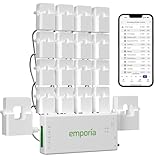
- SAFETY YOU CAN TRUST WITH UL CERTIFICATION: With Emporia Energy, your home energy monitoring is safe, reliable, and certified. The Emporia Vue is UL Listed, meaning it has met rigorous safety standards for electrical products in the U.S. and Canada. This certification ensures that every component has been thoroughly tested to prevent hazards, such as overheating, short-circuiting, or fire, offering you peace of mind as you manage your home’s energy consumption.
- INSTALLS IN CIRCUIT PANEL of most homes with clamp-on sensors. Supports Single phase, Single-split phase, and 2-wire systems. 3-wire systems; 3-phase, 4-wire Wye systems with earthed (TN or TT) neutral (no-Delta) are supported with an additional 200A sensor (sold separately).
- 24/7 ENERGY MANAGEMENT AND MONITORING: Automate, manage and control your home's real power anywhere, anytime to prevent costly repairs, conserve energy, and save costs. Monitor solar / net metering. PROTECTED BY A 1-YEAR WARRANTY.
- LOWER YOUR ELECTRIC BILL: Configure settings in the Emporia Energy App to automate energy management for time of use, peak demand, excess solar, and rewards programs. You can even see live reporting and invaluable savings opportunities instantly. Gauge real-time spending and get actionable notifications and automated energy management to help you reduce costs.
- REAL-TIME ENERGY DATA: REQUIRES 2.4 GHz WIFI WITH AN INTERNET CONNECTION to monitor energy use with iPhone / Android / Web app. Vue sensors collect energy data and are accurate from ±2%. The Vue is UL and CE Listed for your safety. 1 second data is only available in the app (when actively open) and retained 3 hours. Minute and hour data are retained in the cloud. 1 minute data is retained 7 days, 1 hour data is retained indefinitely. Export cloud data whenever you want in the app.
Where AI can create practical value
Renewable generation and asset maintenance
Forecasting can estimate wind and solar output by combining weather information with observed plant performance. Better forecasts help operators plan reserves, storage, dispatch and market participation; they do not create electricity or eliminate variability. Models can also flag likely faults in turbines, inverters and balance-of-plant equipment, help prioritize inspections, and identify assets performing below comparable sites.
A useful maintenance workflow connects abnormal sensor patterns to a confidence and criticality assessment, then to a work order for technician validation and scheduling. Drone or camera inspection can help identify visible defects, but the result still needs suitable imagery, reliable asset records and a process for verifying findings. Forecast and maintenance improvements should be assessed against a simple baseline and actual operational outcomes, not model accuracy alone.
Grid planning and operations
Utilities and system operators can apply AI to load forecasting, congestion prediction, fault detection, outage restoration, renewable forecasting, interconnection analysis and distributed-resource coordination. The U.S. Department of Energy identifies opportunities across planning, permitting, operations, reliability, resilience and EV charging-network optimization in its U.S.-focused AI for Energy assessment.
Dynamic line-rating support and improved operations may help make better use of existing infrastructure, but software cannot replace needed transmission or distribution construction. The IEA estimates that AI could unlock up to 175 GW of additional transmission capacity on existing lines in its analysis; that is modeled potential, not new physical capacity guaranteed at every location. The same IEA analysis estimates up to USD 110 billion in annual power-plant operations and maintenance savings by 2035 in a widespread-adoption case. Both figures are scenario estimates, not assured project results. See the IEA’s analysis of AI for energy optimization and innovation.
Do these 3 things before closing this tab:
1Scan for outdated or missing drivers - takes under a minute2Clear out junk files and repair common Windows errors3Fix the driver behind crashes, sound loss and screen glitchesStorage, electric vehicles and flexible demand
Optimization software can coordinate utility batteries, commercial storage, home batteries and EV charging against grid conditions, tariffs and customer requirements. It can estimate battery state of charge and health, schedule charging and discharging, and coordinate revenue opportunities across energy and ancillary-service markets where rules permit.
Optimizing only for near-term price or revenue can cause faster battery degradation or leave too little reserve for emergencies. A defensible objective includes battery health, safety limits, local network constraints, customer commitments and resilience needs. Similar safeguards apply to demand response: shifting industrial processes, HVAC, water heating, refrigeration or data-center workloads is useful only if production, comfort, food safety, latency and consent requirements are preserved.
Rank #2
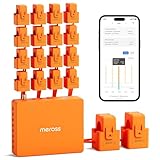
- SAFE & RELIABLE: Meross smart energy consumption monitor is ETL‑certified and compliant with the UL 61010 testing standard, ensuring safe and reliable home energy monitoring. Works with most US homes: single-phase 2-wire systems, single-split phase 3-wire systems, and 3-phase 4-wire Wye systems with earthed (TN or TT) neutral (no Delta). Easy clamp‑on design installs in minutes. Invert CT readings in the app—no physical flipping. PROTECTED BY 2-YEAR WARRANTY for worry-free use.
- TRACK ENERGY & CUT BILLS: Track power, voltage, current, and power factor within ±1% accuracy. Clear power usage and cost charts by minute/hour/day/month/year help you easily understand your energy use. Store up to 5 years of data and export hourly reports for deep analysis. Most users save 10–20% on energy costs by spotting energy hogs and getting accurate insights to cut their bills.
- 24/7 ENERGY MONITORING + SMART ALERTS: Real-time home energy monitoring from anywhere. Set custom alerts for unusual usage spikes and threshold breaches for total peace of mind. Catch issues early with no subscriptions, no cloud lock‑in, and no hidden fees — all built-in. Supports 2 main circuits (200A) + 16 branch circuits (60A), making it perfect for precise, circuit-level energy monitoring.
- MAXIMIZE YOUR SOLAR SAVINGS (HOME ASSISTANT): This solar energy monitor integrates with Home Assistant to detect solar surplus and automatically power EV chargers, water heaters, and other high‑use appliances. Stop wasting solar energy—use it yourself and cut your electricity bill faster. The perfect home energy monitor for solar homes.
- LOCAL DATA, FULL PRIVACY, NO SUBSCRIPTIONS: Connect seamlessly with Home Assistant for advanced energy automation. All energy data stays local—no cloud, no delays, no privacy concerns. Take full control of your home energy, reduce waste, and protect your privacy. Supports Open API and Web Control.
Buildings and industrial energy use
In buildings, automation can tune HVAC, identify faults, respond to occupancy and coordinate onsite solar, storage and flexible loads. Industrial systems can optimize process settings, steam and compressed-air networks, heat recovery, maintenance timing and production schedules against energy prices or carbon intensity. The IEA’s widespread-adoption scenario estimates approximately 8% energy savings by 2035 in light industry; it is a modeled sectoral outcome, not a promise of equivalent savings for an individual facility.
AI cannot repair poor commissioning, missing sensors, incompatible building controls or inaccessible plant data. Any control change must also protect indoor air quality, worker safety, product quality and comfort. Energy savings that disrupt production or shift costs onto vulnerable occupants are not a sound sustainability outcome.
Business processes at energy companies
Many organizations can start with lower-risk administrative workflows before attempting autonomous grid control. Examples include processing meter data and invoices, preparing filing drafts, reviewing permits, scheduling field service, triaging customer requests, analyzing power-purchase agreements, or creating a proposed work order from a sensor alert. These tasks still require validation, access controls and accountable owners, but generally present a less direct safety risk than automatic switching or dispatch.
How the future energy system will be organized
AI-enabled energy operations need a connected stack, not a standalone model. The European Commission highlights digital twins, shared energy-data capabilities, forecasting, predictive maintenance, outage mitigation and low-latency edge inference as enablers in its overview of AI and a smarter, greener energy future.
- Physical layer: generators, inverters, batteries, wires, transformers, meters, chargers, industrial equipment and building controls.
- Data and connectivity: SCADA, IoT gateways, advanced metering infrastructure, weather and market feeds, asset systems, GIS, customer systems, edge devices and cloud platforms.
- Intelligence: forecasting, optimization, anomaly detection, computer vision, digital twins and, where suitable, language or reinforcement-learning models.
- Orchestration: APIs, workflow engines, event-driven automation, process mining, rules and policy engines, approvals and exception handling.
- Governance: identity controls, cybersecurity, model monitoring, audit records, data provenance, safety limits, incident response and regulatory accountability.
For critical operations, cloud and edge capabilities have different strengths. Cloud services offer centralized fleet analysis and substantial computing capacity. Edge systems can reduce latency, limit data movement and keep some operations available during connectivity loss. A critical control path should not depend exclusively on a cloud connection; fallback behavior must be defined and tested.
Digital twins and generative AI: useful, but not interchangeable with control
What a digital twin can—and cannot—be
A digital twin can combine engineering models, asset telemetry, weather, maintenance records, GIS, market conditions and simulation. Depending on its quality and connection to operations, it might be a static model, a dashboard, a simulation, a live operational model or part of a closed-loop control system. Those are different levels of capability, not synonyms.
What’s actually slowing this PC down?
Pick the symptom - the matching free tool is one click away.
Rank #3
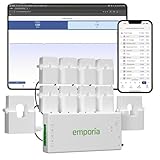
- SAFETY YOU CAN TRUST WITH UL CERTIFICATION: With Emporia Energy, your home energy monitoring is safe, reliable, and certified. The Emporia Vue is UL Listed, meaning it has met rigorous safety standards for electrical products in the U.S. and Canada. This certification ensures that every component has been thoroughly tested to prevent hazards, such as overheating, short-circuiting, or fire, offering you peace of mind as you manage your home’s energy consumption.
- INSTALLS IN CIRCUIT PANEL of most homes with clamp-on sensors. Supports Single phase, Single-split phase, and 2-wire systems. 3-wire systems; 3-phase, 4-wire Wye systems with earthed (TN or TT) neutral (no-Delta) are supported with an additional 200A sensor (sold separately).
- 24/7 ENERGY MANAGEMENT AND MONITORING: Automate, manage and control your home's real power anywhere, anytime to prevent costly repairs, conserve energy, and save costs. Monitor solar / net metering. PROTECTED BY A 1-YEAR WARRANTY.
- LOWER YOUR ELECTRIC BILL: Configure settings in the Emporia Energy App to automate energy management for time of use, peak demand, excess solar, and rewards programs. You can even see live reporting and invaluable savings opportunities instantly. Gauge real-time spending and get actionable notifications and automated energy management to help you reduce costs.
- REAL-TIME ENERGY DATA: REQUIRES 2.4 GHz WIFI WITH AN INTERNET CONNECTION to monitor energy use with iPhone / Android / Web app. Vue sensors collect energy data and are accurate from ±2%. The Vue is UL and CE Listed for your safety. 1 second data is only available in the app (when actively open) and retained 3 hours. Minute and hour data are retained in the cloud. 1 minute data is retained 7 days, 1 hour data is retained indefinitely. Export cloud data whenever you want in the app.
Teams can use simulation to examine grid upgrades, failure scenarios, renewable-plant operation, storage strategies or restoration plans. A model built on incomplete, stale or poorly calibrated data can make an incorrect assumption look precise. Before relying on a twin, establish which assets and variables it represents, how often its data updates, how the model is validated and what actions—if any—it is authorized to trigger.
Generative AI for operator and office support
Language models can help staff search approved technical manuals, summarize shift logs, extract information from permits and contracts, draft routine filings, or explain a detected anomaly in plain language. For consequential work, outputs should be grounded in approved material, cite that material, respect role-based access and pass validation before use. Retrieval-augmented generation can connect answers to an approved knowledge base, but does not itself guarantee correctness.
Do not treat a generated answer as an approved switching instruction, protection-system change, safety procedure, engineering calculation, compliance submission or autonomous market bid. Those uses require controls appropriate to their safety, financial and regulatory consequences, including explicit human approval where required.
AI’s environmental footprint is part of the energy question
Energy organizations use AI to reduce waste and coordinate cleaner supply, while AI infrastructure itself consumes electricity and resources. The IEA’s Energy and AI report, published April 10, 2025, gives a global data-center electricity-demand scenario range of 700–1,700 TWh by 2035. The range reflects uncertainty in adoption, efficiency and infrastructure growth; it is not a single certain forecast. The IEA’s executive summary and full report set out that context.
Data centers also raise local questions about cooling water, grid connections, backup generation, power prices and the timing and location of electricity use. Servers and chips have embodied emissions and depend on mineral supply chains; new facilities and network upgrades also have physical footprints. A renewable energy contract or annual certificate alone does not establish that a facility is supplied with low-carbon electricity at every hour or that its demand caused additional clean generation.
The IEA’s April 16, 2026 analysis of key questions on energy and AI discusses potential ways to integrate data-center growth, including non-firm grid connections and demand response. Workload shifting, geographic routing, batch scheduling, GPU power caps, cooling optimization, batteries and onsite generation may make some facilities more flexible. Not every workload can move or pause: latency-sensitive inference, safety-critical services and some training jobs have limited flexibility.
Rank #4

- ⚡ EASY INSTALLATION: Installs in circuit panel of most homes with clamp-on sensors. Supports single-phase up to 240VAC line-neutral; single, split-phase 120/240VAC; and three-phase up to 415Y/240VAC (no Delta). The branch lines can automatically match different phases and have no restrictions in terms of quantity and voltage.Panels with access only to busbars will need flexible sensors available from SEM-Meter.
- ⚡ ENERGY MONITORING ANYTIME, ANYWHERE: Monitor your home's real power anywhere, anytime to prevent costly repairs, conserve energy, and save costs. Monitor solar / net metering. Light commercial 3 phase option available as a separate bundle. Protected by a 1-year warranty.
- ⚡ VARIOUS ELECTRICAL APPLIANCE MONITORING: Comes with 16 50A sensors to accurately monitor your air conditioner, furnace, water heater, washer, dryer, range, etc.
- ⚡ LOWER YOUR ELECTRIC BILL: SEM-Meter measures real-time spending and gets actionable notifications to understand where savings can be made, both to lower your electric bill and to conserve energy and protect the planet’s resources. Be an environmentalist.
- ⚡ REAL-TIME ENERGY DATA: Connect SEM-Meter device via 2.4GHz WiFi to monitor energy usage, with an accuracy range of 1%. View usage in real time through Android/Apple software. Statistics of power usage in now/day/week/month/year format: the validity period of hourly exported data is 90 days, and the exported data of day/month/year data is permanent, available at any time Export from application.
Assess net impact rather than labeling AI inherently green or inherently harmful. A credible accounting considers:
- Electricity consumed by the AI system, by time and location, and its carbon intensity.
- Water consumption and the water stress of the relevant location.
- Hardware and facility embodied emissions, alongside backup power and grid infrastructure.
- Measured or carefully modeled energy and emissions avoided, plus any additional renewable generation enabled.
- Reliability, resilience and community effects, including how costs and benefits are distributed.
- Whether improvements are additional to what would have happened anyway, rather than only contractual or paper offsets.
The World Economic Forum treats AI as part of an energy, water, land and minerals nexus in its resilient AI value-chain framework and net-positive AI energy framework. The latter cites more than 130 real-world use cases, which is a framework’s compilation rather than an independently audited record of outcomes.
Why AI is necessary for complexity, but cannot replace infrastructure
A renewable-heavy system is more distributed, variable, electrified and exposed to weather and changing customer behavior. Forecasting and coordination can help balance that complexity. They cannot build a transmission line, upgrade a substation, provide storage, simplify permitting, create market rules, standardize equipment or supply qualified operators.
AI is not always the right tool. A rule-based controller, statistical forecast, conventional optimization, physics-based simulation, standard maintenance threshold, better sensor or manual engineering review may be cheaper, safer and easier to validate. Prefer a simpler method when the process is stable and well understood, data are scarce, a deterministic rule is adequate, failure consequences are severe, or the organization cannot monitor and maintain a more complex model.
Independent reader supportYour contribution helps us test, update, and keep practical guides available for everyone.Risks that determine whether automation is safe and durable
- Data quality and drift: faulty sensors, inconsistent timestamps, changing weather or equipment, and new market rules can undermine predictions after deployment.
- Alert quality: false positives can overload maintenance teams and erode trust; false negatives can miss costly or dangerous failures.
- Unsafe execution and cyber compromise: a workflow may act outside validated conditions, while attackers may manipulate data, credentials, models or control paths.
- Model concentration: operators relying on the same vendor or model can experience correlated failure rather than independent errors.
- Weak interoperability: incompatible asset identifiers, data formats and APIs can frustrate coordination among utilities, manufacturers, aggregators and regulators.
- Optimization side effects: efficiency can drive rebound demand, while cost or carbon optimization can erode reserve margins unless emergency capacity, critical loads and restoration priorities are explicit.
- Automation debt and loss of expertise: unmanaged workflows become difficult to maintain, and staff may lose the manual skills and institutional knowledge needed during abnormal events.
- Unequal outcomes: smart-energy benefits may accrue to customers with resources and technology while others face higher costs or poorer service.
Workforce planning matters: automation changes repetitive tasks but increases the need for control-room judgment, OT/IT integration, cybersecurity, data engineering and model validation. Preserve clear override authority, manual procedures and training for exceptional conditions.
A practical deployment roadmap
1. Establish the foundation
Inventory assets, sensors, protocols, owners and existing systems. Map data access and quality, identify a high-frequency problem with a clear operational owner, and set a baseline before changing the process. Include integration, security, edge or cloud costs, workforce time and equipment work in the business case.
Crashes, No Sound, or Screen Glitches?
Random freezes, missing sound and display glitches usually trace back to one bad driver. Find and replace yours safely.Free scan · under a minuteWindows Errors? Fix Them Before They Spread
Repair common Windows errors and clear accumulated junk for a smoother, more stable PC - no reinstall needed.Free scan · no reinstallBest Value

- EM16P MODEL & LOCAL CONTROL & DATA PRIVACY: Access your home energy monitor data locally via Built-in Web UI, Open API, and MQTT without relying on cloud services. Unlike cloud-dependent monitors, Refoss ensures your data stays within your home network. Direct local access protects your privacy while giving you 100% full control of your home energy system.
- NATIVE HOME ASSISTANT & OPENCLAW AI: Experience seamless Native Home Assistant integration right out of the box—no firmware flashing or complex coding required. Featuring ✨NEW✨ OpenClaw Support, it enables AI-driven automation for smarter, real-time energy management and seamless smart home control.
- MAXIMIZE SOLAR & ZERO FEED-IN AUTOMATION: Designed for solar homes, the power monitor works with the Refoss app and Home Assistant to automatically use surplus solar power. Appliances like EV chargers, washing machines, and water heaters are powered during midday peaks, maximizing solar self-consumption and reducing low-value electricity feed-in to the grid. Optimizes usage and reduces bills.
- REAL-TIME MONITORING & ±1% ACCURACY: Monitor voltage, current, active power, and power factor of major appliances. Provides ±1% accuracy (200A: 2–200A; 60A: 1–60A) and ±2% at low current. Daily data stored up to 5 years and exportable. With no subscriptions or hidden fees, you get deep historical insights to help you identify every energy-saving opportunity and save 10–20% on monthly bills.
- SMART ALERTS & CIRCUIT-LEVEL CONTROL: Set usage targets for each individual circuit and receive instant alerts when appliances exceed normal consumption. Refoss app supports automation and peak management to optimize schedules, reduce peaks, and improve efficiency. Real-time electricity usage monitor for circuit-level insights.
2. Start with assistance, not authority
Test forecasting, anomaly detection, maintenance recommendations, document search or reporting support in a shadow or advisory mode. Compare performance with a non-AI baseline, validate across seasons and abnormal conditions, and record when staff accept or reject recommendations.
3. Connect recommendations to controlled workflows
Automate low-risk steps such as draft work orders, permit review queues, field-service scheduling or demand-response enrollment only after roles, approvals, audit trails and exception routes are established. Measure whether the workflow improves actual completion time or operational outcomes rather than merely increasing automation volume.
4. Add bounded autonomy when evidence supports it
For load adjustment, storage dispatch, microgrid balancing or plant optimization, define hard operating limits, override mechanisms, offline fallback and incident response. Test the system against known scenarios and confirm that it behaves safely when data are missing, communications fail or conditions depart from training examples.
5. Expand coordination across assets and organizations
Multi-asset orchestration, market participation and cross-organization energy-data exchange require interoperable data definitions, contractual clarity, security controls and regulatory acceptance. Scale only when results persist across sites and seasons, not merely because a pilot worked under one set of conditions.
Quick wins for a faster PC:
Fix the driver behind crashes, sound loss and screen glitchesFind Drivers →Clear out junk files and repair common Windows errorsFree Scan →How to judge a project and choose a platform
Utilities should evaluate reliability and resilience, integration with SCADA, EMS, ADMS, GIS and AMI, cybersecurity segmentation, operator overrides, extreme-weather performance, latency, data portability and regulatory acceptance. Renewable owners should compare forecast accuracy with a simple baseline, curtailment, availability, detection-to-repair time, revenue effects, battery degradation and offline operation. Industrial buyers should track energy per unit of production, peak demand, production losses, safety and quality constraints, and integration with historians, PLCs, MES and building systems.
For any buyer, ask what would have happened without the system; whether savings are measured or modeled; whether absolute consumption or only energy intensity changed; whether emissions fell at the relevant time and location; whether gains persisted as staff, weather and operating conditions changed; and whether data can be exported if the vendor changes.
- Require a counterfactual and a baseline that include seasonal and abnormal conditions.
- Separate software performance from implementation costs such as sensors, data cleanup, integration, security and training.
- Define safety limits, auditability, explainability needs, human authority and failure behavior before granting control access.
- Confirm data ownership, model-change notification, vendor support, lifecycle commitments and exit options.
- Compare the AI proposal with rule-based control, conventional optimization or equipment improvements.
- Track energy, carbon, water, reliability, customer impact and workforce effects rather than one efficiency figure.
Product choice should follow the operating environment rather than a universal ranking. AWS IoT SiteWise is an industrial asset-data and analytics option; AWS bills by usage across services, and its pricing examples include a USD 200 monthly SiteWise Edge data-processing pack per active gateway and USD 10 per active user per month for SiteWise Monitor. These are examples, not universal quotes; check the current regional terms at AWS IoT SiteWise pricing.
Schneider Electric’s EcoStruxure Energy Hub targets building and site energy management. Its official U.S. information describes subscription plans based on plan, device credits and term, without a universal public price: EcoStruxure Energy Hub. Microsoft’s IoT Edge runtime is open source and free, while connected Azure services can incur usage charges; it is a building block for custom deployments rather than a turnkey energy system: Azure IoT Edge.
IBM Maximo Application Suite and Siemens industrial IoT offerings may fit larger asset-intensive organizations, but suitability and cost depend on existing systems, deployment and contract terms. The available IBM pricing page does not establish a universal comparable price, and no universal public price is established for Siemens’ industrial IoT offering. See IBM Maximo pricing and Siemens Industrial IoT.
Quick Recap
Product prices and availability are accurate as of the date/time indicated and are subject to change. Any price and availability information displayed on Amazon at the time of purchase will apply.




