Quick wins for a faster PC:
Repair Windows errors before they cause bigger problemsFix Now →Fix the driver behind crashes, sound loss and screen glitchesFind Drivers →Digital payments have evolved from electronic transfers and card networks into a layered mix of bank transfers, mobile wallets, instant-payment systems and tokenized money. But paying by phone does not tell you which system moves the money, when it settles, whether a transfer can be reversed or what protection applies. Those distinctions explain both the convenience of digital payments and their trade-offs.
What counts as a digital payment?
A digital payment is a transfer of value initiated, recorded or processed electronically rather than by handing over physical cash. It includes card purchases, online bank transfers, ACH, direct debits, mobile-money transfers, peer-to-peer payments, QR transactions and payments made through digital wallets. Buy now, pay later (BNPL) is a credit arrangement presented at checkout; cryptocurrency and stablecoin transfers use digital assets; a central-bank digital currency (CBDC) would be a digital form of central-bank money.
Several terms describe different things. Digital refers to the electronic process; mobile describes the device or channel; contactless describes how credentials are presented, often through near-field communication (NFC); cashless describes a setting or economy in which cash is not used for a transaction. Instant usually refers to rapid payment processing or funds availability. None of these terms alone tells you whether a payment is final, reversible or available to everyone.
A digital payment can be processed in batches, remain pending, rely on an intermediary or settle after the customer sees an approval. A wallet can make checkout feel immediate while the underlying card or bank transfer follows its own timetable.
The Tool Desk
Outbyte PC Repair FREEClear out junk files and repair common Windows errorsFree Scan →Outbyte Driver Updater FREEFix the driver behind crashes, sound loss and screen glitchesFind Drivers →#1 Best Overall

- With Square Terminal, you can ring up sales, accept payments, and print receipts, all with one device. Use it at the counter or ring up customers anywhere in your store.
- Accept all major credit and debit cards and pay one low rate with no hidden fees and no long-term contracts.
- Process chip cards in just two seconds.
- Get your money as soon as the next business day.
- Use it cordlessly with the built-in battery, designed to last all day.
The payment stack: what happens behind the interface?
A useful way to understand payments is to separate their layers. The customer sees an app, card terminal or checkout page; institutions and infrastructure determine how an instruction is authorized, routed and settled.
- Interface: A physical card, phone wallet, banking app, checkout page, QR code or payment link.
- Credential or account: A card number or token, bank account, stored wallet balance or digital-asset address.
- Authentication and risk checks: Steps to establish that an account or device is being used with permission and assess transaction risk.
- Merchant and payment providers: The merchant, processor and often an acquiring institution that receives and routes the transaction.
- Network or rail: A card network, ACH system, instant-payment system, mobile-money network or blockchain that carries instructions or value.
- Issuing or receiving institution: The institution that maintains the payer’s account, the payee’s account, or both.
- Clearing, settlement and dispute rules: Processes for calculating obligations, transferring funds between institutions and handling errors or complaints.
Some providers combine several roles, and the exact arrangement depends on the payment method and country. A payment brand visible at checkout may not operate the underlying bank-transfer or settlement rail.
Four terms that are not interchangeable
- Authorization: An approval or decline. For a card purchase, approval normally allows the merchant to proceed; it is not proof that funds have reached the merchant.
- Clearing: The exchange of transaction information and calculation of what participating institutions owe.
- Settlement: The transfer of funds or settlement assets between institutions.
- Finality: The point at which a transfer is legally and operationally final under the system’s rules. Consumer remedies or separate disputes may still exist, depending on the transaction and law.
A card may be authorized at checkout and settled later. An instant-payment rail may make funds available quickly, but its rules for mistakes, scams and recovery can differ from card chargeback protections.
Push payments, pull payments and system design
In a push payment, the payer initiates a transfer to the recipient. In a pull payment, a merchant or payee collects funds under a prior authorization or mandate, as with many direct debits. Push payments can avoid some unauthorized recurring debits, but a scammer can still manipulate someone into sending an authorized transfer.
Free tools Windows power users keep installed
One-click scans. No signup required.
A closed-loop system controls much of its own account, acceptance and transfer environment. An open-loop system connects multiple providers under common rules. A closed loop can make the experience cohesive; an open loop can support broader interoperability, but requires coordination among participants.
How common digital payments work
Card payments
- The customer presents a card or a wallet credential at checkout.
- The merchant sends transaction details to its processor or acquirer.
- The transaction is routed through the relevant card network to the card issuer.
- The issuer checks the account, transaction and risk signals, then approves or declines.
- The merchant receives the authorization. The card network and institutions later clear and settle the transaction under their rules.
- A customer may still be able to dispute a transaction after settlement; the available process and outcome depend on the reason, rules and applicable protections.
Account-to-account transfers
- The payer selects an account and provides an instruction through a bank, payment app or authorized provider.
- The payer authenticates, and the originating institution checks authorization, funds, fraud and other applicable requirements.
- The instruction travels over a rail such as ACH, an instant-payment system or another bank-transfer network.
- The receiving institution posts the payment or makes funds available according to the rail and its rules.
- Settlement timing, availability and the possibility of recovery depend on the payment system, participating institutions and transaction circumstances.
Wallets and QR codes
A wallet may hold a tokenized card credential, connect to a bank account, contain a stored balance or combine these options. It is usually an interface and credential-management layer—not necessarily the rail that settles the payment.
With a consumer-presented QR code, the customer displays a code for the merchant to scan. With a merchant-presented QR code, the merchant displays the code for the customer to scan. A QR system might initiate a card transaction, bank transfer or stored-value payment, or operate within a closed loop. Static codes are reusable and provide less transaction-specific context; dynamic codes can encode details such as the amount and recipient.
How digital payments evolved
Payment technology did not advance through a single replacement of old methods by new ones. New interfaces and rails layered over existing banking and payment arrangements, with cash continuing to serve needs that electronic systems do not always meet.
What’s actually slowing this PC down?
Pick the symptom - the matching free tool is one click away.
Rank #2

- Use the, easy-to-use, and customizable POS to get started.
- Accept contactless payments, chip cards, Apple Pay, and Google Pay from anywhere, with improved connectivity, extended battery life, and enhanced security. Pay one low rate for every tap or dip.
- No long-term commitments or contracts, no monthly fees- and with offline payments, keep taking payments for up to 24 hours.
- Safely and securely accepts payments anywhere. Plus, get data security, 24/7 fraud prevention, and payment-dispute management at no extra cost.
- Use the, easy-to-use, and customizable POS to get started.
- Cash and paper instruments: Cash can pass directly between people without a bank account or connected device. Checks are paper instructions that require processing and clearing. Both remain useful for reasons including offline access, privacy and resilience.
- Electronic banking and cards: Electronic funds transfers, automated teller machine networks, credit cards and debit cards made it possible to move value and pay merchants electronically. The modern card ecosystem added issuers, merchant acquirers, processors and networks; authorization and final settlement remained distinct steps.
- Internet commerce: Payment gateways and online banking enabled remote purchases. Card-not-present transactions could not rely on a physical chip or in-person check, increasing the importance of address checks, security codes, fraud scoring and later authentication tools such as 3-D Secure.
- Contactless and mobile: NFC cards and phone wallets brought credentials to a tap. Biometrics or device passcodes can authenticate wallet use. In parallel, QR codes and in-app checkout made digital payments practical for merchants without specialized contactless hardware.
- Peer-to-peer and mobile money: Apps made it easier to address payments by phone number, alias or QR code. Mobile-money systems, especially where conventional bank branches are limited, can use agent networks to convert between cash and electronic value.
- Instant payments: Fast-payment systems aim to move funds between end users in near real time, often around the clock. The Bank for International Settlements (BIS) identifies public-sector participation, non-bank access, useful applications and cross-border links as important design and adoption factors in its analysis of fast-payment systems.
- Tokenization and programmable money: Payment providers, banks and public institutions are exploring ways to represent credentials, deposits or other assets digitally and attach rules to their transfer. The BIS describes tokenization as combining records of assets with transfer rules on a programmable platform; that does not mean every token uses a blockchain or that blockchain replaces conventional banking infrastructure. See the BIS discussion of tokenization.
Growth in remote commerce, bank-account access, smartphones, merchant demand for efficient checkout and reconciliation, and the need for faster disbursements all helped drive the shift. Public policy and financial-inclusion goals also shaped payment infrastructure. The World Bank’s Global Findex 2025 draws on a survey of approximately 148,000 adults in 141 economies conducted during 2024 and examines account use alongside mobile-phone ownership, internet access and digital safety.
How the main payment types compare
There is no universal ranking: speed, reach, price and consumer recourse vary by provider, market and transaction. The table is a framework, not a promise about every system or purchase.
| Method | Typical timing | Main strength | Important trade-off | Common fit |
|---|---|---|---|---|
| Credit card | Authorization is usually immediate; settlement occurs later | Broad acceptance, credit and established dispute processes | Merchant fees, card-not-present fraud and the possibility of costly revolving debt | Retail purchases where acceptance and purchase disputes matter |
| Debit card | Authorization is usually immediate; settlement occurs later | Familiarity and broad merchant acceptance | Connects spending to a bank account; protections and fees vary | Everyday purchases |
| ACH and other bank transfers | Batch, scheduled or rail-dependent | Useful for payroll, bills, recurring payments and bulk transfers | Traditional processing may be slower; return and dispute rules differ from card rules | Payroll, bills and business payments |
| Instant payment | Often near real time, subject to the system and participants | Rapid funds availability and cash-flow movement | Scams or mistaken transfers can be difficult to recover | Person-to-person transfers, urgent payouts and eligible business payments |
| Digital wallet | Checkout can be quick; the underlying rail determines processing | Convenience, mobile checkout and, in some wallets, tokenization | Device or platform dependence; does not remove underlying fees | Mobile and in-app purchases |
| QR payment | Often seconds when the system is supported | Low hardware requirements for merchant acceptance | Code replacement or recipient-misdirection risk; systems are not all interoperable | Small merchants and supported peer-to-peer payments |
| BNPL | Checkout decision is rapid; repayment follows the credit agreement | Spreads purchase payments over time | Debt can accumulate across providers; terms, refunds and reporting vary | Selected purchases when the borrower understands the repayment terms |
| Stablecoin | Network-dependent; confirmation and redemption are separate considerations | Can support specialized digital-asset transfers and settlement use cases | Issuer, reserve, legal, access and consumer-protection risks | Specific use cases where counterparties can manage those risks |
Cards, bank transfers and instant payments
Cards combine a familiar checkout process with network rules and, for credit cards, a credit line. Their acceptance and dispute mechanisms can be valuable for purchases, although merchant costs and fraud exposure matter. ACH and other bank transfers can suit recurring or bulk payments but may have slower or more variable timing. Instant-payment systems can improve availability and cash flow; speed does not guarantee stronger recovery rights.
In the United States, the Federal Reserve’s initial findings for its 2025 Payments Study report 236.6 billion noncash payments in 2024. Cards represented more than three-quarters by number, while ACH represented almost three-quarters by value. These figures describe the U.S. and measure different things—transaction count and value—not a global payment mix. See the Federal Reserve study findings.
Wallets, mobile money and QR systems
A digital wallet can store cards and other credentials for easier checkout, but the wallet itself does not determine settlement timing or erase the costs and protections of the underlying payment method. EMVCo explains how payment tokenization replaces a primary account number with a constrained token that can be limited to a device, merchant or transaction setting.
Mobile money is not synonymous with a smartphone wallet: some services are linked to mobile numbers and accessible through basic phones, with agents supporting cash-in and cash-out. Their reach depends on agent availability, system interoperability and local rules. QR payments likewise vary: a code might point to a bank transfer, card transaction or stored balance, so the logo on a code is not enough to identify the rail.
BNPL, cryptocurrency, stablecoins and CBDCs
BNPL is credit embedded in the checkout flow, not simply a new way to route a payment. It may help a consumer spread a planned purchase, but multiple loans can make total obligations harder to see. Disclosure, credit reporting, late fees, hardship treatment and refund handling differ across providers and jurisdictions.
Cryptocurrency payments can involve a native digital asset transferred on a blockchain, while stablecoins are designed to maintain a value linked to a reference asset. A custodial wallet provider may hold keys and process transfers for users; a self-hosted wallet puts key control with the user. A blockchain transfer, a provider’s internal ledger and a merchant’s eventual conversion to fiat currency are not the same event.
Rank #3

- 【Universal Compatibility】 - The MDB Payment Device to PC Converter is designed to connect a variety of MDB devices such as acceptors, bill receivers, and card readers effortlessly. It offers seamless integration with any vending equipment compliant with MDB specifications, ensuring versatility in your payment solutions.
- 【User-Friendly Interface】 - This USB adapter features a straightforward setup process. Simply connect it to your computer, and the adapter transforms MDB protocols into RS-232 serial protocols. This allows for easy communication between your vending machine and your PC, simplifying operations while providing reliable performance.
- 【Enhanced Control】 - With capabilities to control up to eight MDB-compatible devices simultaneously, this converter enhances your management efficiency. Whether you’re handling dispensers or bill acceptors, experience effective monitoring and command over your vending machine operations like never before.
- 【Robust Functionality】 - The MDB-PC USB converter supports a variety of interfaces, including cash interfaces (10H and 60H) and USD interfaces (40H). This broad support mechanism ensures compatibility across multiple configurations, making it an ideal solution for complex setups.
- 【Comprehensive Package】 - Each converter comes complete with required cables, a user guide, and a user agreement, providing everything you need for successful installation. Designed for easy implementation, enjoy a plug-and-play experience with reliable support for all essential MDB functions.
The BIS estimated stablecoin transaction volume at approximately $28 trillion in 2025, while cautioning that adjusted economic activity is substantially lower after excluding activity such as transfers between wallets controlled by the same party. Gross volume is not a count of consumer purchases, merchant acceptance or settled economic activity. See the BIS analysis of stablecoin activity and cross-border payments.
A CBDC would be a digital liability of a central bank. Retail designs would serve the public; wholesale designs would support transactions among financial institutions. A CBDC could use intermediated wallets or other models, and choices about privacy, offline use and programmability would be policy decisions. It differs from a digital balance at a commercial bank, which is a claim on that bank. CBDCs are not inevitable: legal authority, public demand, privacy design and financial-stability consequences all matter.
Security, authentication and fraud
Payment security has developed from magnetic-stripe credentials toward chip transactions, contactless cryptograms, network tokens, device authentication, risk-based checks and passkeys. These measures can reduce particular risks, but no single technology proves that a payment is honest or guarantees that a customer can recover money.
Authentication is not authorization
Authentication establishes or estimates who is using an account or device. Authorization determines whether the transaction should be approved under the account, merchant and risk rules. Even a correctly authenticated customer may be tricked into sending money to a scammer.
Recommended Free Tools
EMV 3-D Secure lets merchants and issuers exchange data to authenticate consumers and assess remote card transactions. It can reduce fraud while avoiding unnecessary checkout challenges, but more friction can also lead to abandoned purchases. Frictionless approval depends on data quality and issuer decisions, and liability allocation varies by jurisdiction and transaction. Read the EMVCo overview of 3-D Secure.
Passkeys are FIDO credentials used with a device-unlock method such as a biometric, PIN or pattern. They are designed to resist phishing more effectively than passwords, but do not prevent social engineering, fraudulent merchants or authorized transfers. EMVCo explains how passkeys can be used in payments.
Different problems require different defenses
- Stolen credentials, account takeover and wallet takeover: Tokenization can limit the value of exposed card details, while account alerts, access controls and recovery procedures address other parts of the risk. Tokens do not prevent an attacker from taking over an account or manipulating its owner.
- Phishing, malware, SIM swapping and impersonation: Attackers may steal login data or control a phone number. Passkeys can help resist credential phishing, but a convincing scam can still persuade a user to authorize a payment.
- QR-code fraud: A substituted code may direct payment to the wrong recipient. Check the named payee and amount before confirming, especially when a code is placed over another one.
- Authorized-push-payment scams: A person may knowingly press “send” after being deceived by an investment, romance, invoice or emergency scam. This differs from a transfer made without the account holder’s permission, and recovery may be harder.
- Merchant fraud, refund abuse and friendly fraud: Merchants can be fraudulent, while a customer may dispute a legitimate transaction or exploit a refund process. Dispute handling must distinguish fraud from a disagreement about delivery, quality or terms.
- Synthetic identities and mule accounts: Fraudsters can use fabricated or mixed identity details to open accounts, or recruit account holders to receive and move illicit funds.
- Deepfakes and social engineering: Realistic voice or image impersonation can intensify pressure on consumers, employees and merchants. Verification should not rely solely on a familiar-sounding voice or message.
An unauthorized payment is one the account holder did not authorize. An authorized fraud case involves a victim manipulated into approving the transfer. A service or transaction dispute arises when the customer authorized payment but contests what was delivered or the terms. The distinction affects both investigation and potential recourse.
Benefits, limits and cash’s continuing role
What digital payments can improve
- Convenient remote, contactless and recurring checkout.
- More complete transaction records and potentially easier accounting and reconciliation.
- Faster disbursements for payroll, refunds, insurance claims, tax payments or marketplace payouts when the rail supports them.
- Reduced cash handling and the possibility of broader merchant and geographic reach.
- New services embedded in commerce, from subscriptions to payment links.
What they can make harder
- Access depends on some combination of an account, identity documents, device, electricity, network coverage and digital skills.
- Personal and transaction data can create privacy concerns, and reliance on a small number of providers can create concentration or outage risks.
- Automated fraud can scale quickly; complicated fees and layered providers can make costs and responsibility hard to understand.
- Transfers may cross systems that do not interoperate, while some rapid payments are difficult to reverse.
- Account recovery can be difficult after a lost phone, provider suspension or compromised credential.
Cash still works without a phone, battery or network and can support privacy, budgeting and transactions by people without suitable digital access. The BIS’s payment statistics track growing cashless activity while showing that cash remains significant. The practical goal is not to assume cash has vanished, but to understand which alternatives a person can access when digital systems fail or exclude them.
Rank #4

- Effortless payments and printing: Accept card payments and print payment receipts on the spot with the built-in 40 mm thermal printer.
- Faster sales processing: Use pre-set menus and catalogs to make transactions faster and smoother for you and your customers.
- Reliable and portable: Featuring a 6.5" HD touchscreen made from Corning Gorilla Glass and a powerful battery that lasts all day.
- Seamless connectivity: Stay connected with free mobile data and WiFi, ensuring uninterrupted transactions.
- Real-time payment tracking: Monitor payments and issue refunds right from your device, so you're always in control.
Financial inclusion is also more than having an account on paper. The World Bank’s Global Findex 2025 includes comparable indicators on mobile access, internet use and digital safety, as well as account ownership and use. Access to a phone or a payment rail does not by itself guarantee connectivity, safe account recovery, affordability or recourse.
Independent reader supportYour contribution helps us test, update, and keep practical guides available for everyone.Why payment systems differ by country
Payment habits follow infrastructure, policy, merchant acceptance and consumer protections—not a single global path. Mature banking and card systems may coexist with newer instant-payment competition. In other settings, mobile money, agent networks or public digital infrastructure can make electronic transfers possible without extensive branch networks.
The U.S. figures illustrate why a single label such as “card economy” can be incomplete: cards dominated noncash payments by count in 2024, while ACH dominated by value. India’s UPI, Brazil’s Pix, the UK’s Faster Payments, Sweden’s Swish, U.S. FedNow and The Clearing House RTP, and European instant-credit-transfer infrastructure are examples of distinct systems, not directly comparable rankings. Transaction counts, value, active users, pricing, merchant acceptance and cross-border connectivity measure different things.
In emerging markets, mobile-first adoption, agent networks, QR acceptance and digital public infrastructure can extend access. Constraints may include poor connectivity, cash-in/cash-out dependence, identity or documentation barriers, limited consumer recourse and account-recovery challenges. The World Bank describes digital public infrastructure as foundational systems, including payment infrastructure, that can support transactions and public services.
Do these 3 things before closing this tab:
1Scan for outdated or missing drivers - takes under a minute2Repair Windows errors before they cause bigger problems3Fix the driver behind crashes, sound loss and screen glitchesCross-border payments have extra layers
International payments may involve multiple currencies, correspondent banks, compliance checks, local holidays and cutoff times, different data standards and different consumer-protection rules. Foreign-exchange spreads, liquidity needs and settlement risk can add cost and delay. Connecting domestic instant-payment systems may help, but requires compatible messages, operating arrangements, participation and rules. The BIS discusses interlinking fast-payment systems, aligning standards and improving correspondent banking in its cross-border payments analysis.
Regulation and public infrastructure
Payment rules address who may provide a service, how customer data is used, how identity and financial crime risks are handled, what protections apply to unauthorized payments and how systems remain operational. Themes include payment-institution licensing, open banking, strong customer authentication, privacy, anti-money-laundering and know-your-customer controls, interchange, cybersecurity, operational resilience and stablecoin reserves or redemption.
In Europe, the Instant Payments Regulation is part of the changing payments framework alongside PSD3 and the proposed Payment Services Regulation. Legislative status and implementation dates can change; consult the European Commission’s payment-services overview for current information rather than treating proposals as already in force.
Payment infrastructure can be public, private, bank-owned, consortium-based or open-access. Public rails may broaden access or spur competition; private networks can invest in reach and services. Each design raises questions about interoperability, pricing, resilience, governance and who can participate. The BIS describes central banks as potential operators, overseers and catalysts in its analysis of competition in retail digital payments, while noting the continuing strength of incumbent banks and card networks in important markets.
Best Value
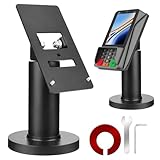
- Compatibility - This POS display stand is compatible for Pax A35, Pax S300. Note: Please carefully confirm the POS machine model before purchasing.
- Easy Installation - Installs quickly using the included type adhesive tape or can be permanently installed to any surface via a drilled hole and bolt mount. And can be removed by heating the area with a hairdryer and using string/thread to detach it if needed.
- Adjustable Card Terminal Mount - The 360-degree swivel allows cashiers to effortlessly turn the device left and right to assist customers without leaving their side, while the 65-degree tilt ensures the terminal is positioned at the optimal angle for various counter heights.
- Commercial Strength - Steel construction gives this universal POS stand durability for use as counter payment terminal in almost any setting.
- Perfect Height - The Pax A35 credit card payment machine stands' ideal height of 4.7" is designed for optimal counter alignment. It provides ample clearance for card insertion and can be adjusted using the tilt feature. Once the perfect tilt angle is set, secure it in place with the included Allen key and wrench to prevent unwanted movement.
Choosing a payment method or provider
For consumers
Compare the method against the transaction, not just its speed. Ask whether it is accepted, what it costs, how quickly funds move, what fraud and dispute protections apply, how private the transaction is, whether it works during an outage and how easy it is to recover access. For credit products, include borrowing cost and repayment consequences; for cross-border use, consider currency conversion and local acceptance.
For merchants
Compare total cost and operational fit rather than a headline percentage alone. Fixed fees, currency conversion, chargebacks, refunds, hardware, payouts, fraud tools, minimums and contract terms can change the economics. Also assess authorization rates, checkout conversion, settlement timing, recurring billing, local payment coverage, reconciliation, integration, support, data portability, account holds and business continuity.
Stripe, PayPal, Square, Adyen, Braintree, Shopify Payments and Authorize.net are examples of commercial infrastructure providers with different orientations. A merchant should compare current regional terms and product capabilities against its channels, transaction size, volume, chargeback exposure, markets and required payment methods; a familiar brand or low advertised rate alone does not establish fit.
For banks, providers and policymakers
Providers must weigh rail access, liquidity, compliance expense, API reliability, fraud-loss allocation, data governance and resilience. Policymakers must balance inclusion, competition, consumer protection, privacy, affordability for small merchants, monetary sovereignty and financial stability. A faster or more open system can still fail if users cannot access it safely or obtain meaningful recourse.
What comes next
Likely development is plural rather than a single winning technology. Instant bank transfers may gain more use cases; wallets may become more embedded in commerce; passkeys may simplify authentication; tokenized deposits, stablecoins and CBDCs may serve specific settlement needs. AI may help detect fraud and support customers, while also giving scammers new tools. None of these developments removes the need for clear rules, recoverable access, resilient infrastructure and useful alternatives when systems are unavailable.
Tokenization should not be confused with replacing banks. It can integrate records of assets with rules for transfers, potentially combining messaging, reconciliation and settlement, while remaining within or alongside existing financial structures. Whether any tokenized system is useful depends on governance, interoperability, legal treatment and real demand.
For any new payment model, the practical questions remain: who holds the money or asset, who can access it, how a transaction is authenticated, when it becomes final, what happens during an outage and who helps when something goes wrong? Those answers matter more to consumers and merchants than whether the interface is a card, phone, QR code or blockchain app.
Quick Recap
Product prices and availability are accurate as of the date/time indicated and are subject to change. Any price and availability information displayed on Amazon at the time of purchase will apply.




