
The Tool Desk
Outbyte Driver Updater FREEFix the driver behind crashes, sound loss and screen glitchesFind Drivers →Outbyte PC Repair FREEClear out junk files and repair common Windows errorsFree Scan →Intel did not make this statement recently, and it was not made by current CEO Lip-Bu Tan. Pat Gelsinger, Intel’s CEO at the time, described 18A as the company’s “biggest bet” in a 2023 interview and said more directly in a February 2024 follow-up that he had “bet the whole company on 18A.”
That bet is beginning to produce tangible results: Intel says 18A-based products have entered volume production and that yields are ahead of internal projections. But the larger investment case remains unresolved. Intel still faces substantial Foundry losses, limited external-customer revenue, and the harder commercial test of turning 18A—and its successor, 14A—into a profitable contract-manufacturing business.
As an Amazon Associate I earn from qualifying purchases.
What Pat Gelsinger actually said
In a 2023 Stratechery interview, Gelsinger resisted the exact phrase “betting the entire company,” but called 18A Intel’s biggest bet. He explained that Intel was moving rapidly through several process generations while spending heavily on development and manufacturing capacity. He also said the company was effectively putting all of its products onto 18A.
PC Slower Than It Used to Be?
A free scan shows the junk files, broken settings and background clutter dragging Windows down - then fixes them in one click.Free scan · Windows 10 & 11Crashes, No Sound, or Screen Glitches?
Random freezes, missing sound and display glitches usually trace back to one bad driver. Find and replace yours safely.Free scan · under a minuteIn a February 2024 interview reported by PC Gamer, the wording became unequivocal: “I’ve bet the whole company on 18A.” The two statements are related, but they should not be presented as one quote from one interview.
#1 Best Overall

- Intel Core i5 2.50 GHz processor offers hyper-threading architecture that delivers high performance for demanding applications with improved onboard graphics and turbo boost
- The processor features Socket LGA-1700 socket for installation on the PCB
- Its 18 MB of L3 cache is good enough to carry routine data and process them in a flash giving you fast and smooth performance
- Built-in Intel UHD Graphics 730 controller for improved graphics and visual quality. Supports up to 4 monitors.
Gelsinger’s language described the scale of Intel’s recovery strategy—not a legal guarantee that every part of the company would succeed or fail with one manufacturing node. Intel’s products, foundry operations, capital spending, chip designs, packaging, and future process generations all remain relevant to the outcome.
Why 18A mattered so much to Intel
Intel had lost process leadership to Taiwan Semiconductor Manufacturing Co. (TSMC), which increasingly manufactured chips designed by Intel’s competitors and customers. Gelsinger’s turnaround plan attempted to close that gap through an unusually compressed schedule known as “five nodes in four years.”
The sequence was:
- Intel 7
- Intel 4
- Intel 3
- Intel 20A
- Intel 18A
The plan was designed to move Intel rapidly through several generations of manufacturing technology and reach a competitive position with 18A. The intermediate nodes were important, but they were also stepping stones in a broader recovery program. The compressed schedule increased the need for capital, engineering execution, reliable yields, and timely product designs.
18A had two strategic jobs:
- Power Intel’s own products: The process was intended to support multiple generations of client and server processors.
- Establish Intel Foundry: Intel needed to show outside chip designers that it could manufacture advanced processors competitively, not merely design them.
Intel later said 18A was the foundation of at least three generations of its client and server products. That internal demand could provide early wafer volume and help Intel learn how to operate the process at scale. However, internal production alone would not prove that Intel had become a successful merchant foundry.
What Intel 18A is
“18A” is Intel’s name for a process generation. It should not be treated as a literal measurement that makes every physical feature on an 18A chip exactly 18 angstroms. Semiconductor node names are company-specific and are not directly comparable across manufacturers.
The process combines two major technologies:
- RibbonFET: Intel’s gate-all-around transistor architecture. The gate surrounds the transistor channel more completely, giving the manufacturer greater control over current flow.
- PowerVia: Intel’s backside-power-delivery technology. Much of the power-distribution network is moved to the rear of the wafer instead of sharing the front side with signal wiring.
Intel’s strategic argument is that separating power delivery from signal routing reduces congestion on the front side of the chip. That can create more design flexibility and potentially improve performance, power efficiency, and transistor density. Gelsinger discussed the significance of this combination in the Stratechery interview.
These concepts must be kept separate from commercial outcomes. A node name, transistor architecture, and backside-power demonstration do not by themselves establish a product’s performance, a wafer’s yield, or a foundry’s profitability.
The financial gamble behind the technology
Intel had to spend heavily before it could know whether the 18A roadmap would generate adequate returns. Process development, new or upgraded fabrication capacity, equipment, engineering talent, and customer-design support all require capital before revenue arrives.
Gelsinger described Intel as moving through several nodes at high speed while consuming substantial financial resources. That created a difficult timing problem: Intel needed to invest in future manufacturing capability while its existing business was under pressure and while the commercial demand for external foundry services remained uncertain.
The original strategy relied on two sources of volume. Intel’s own processors could provide an initial manufacturing base, while outside customers were expected to add scale and improve the economics of later investments. If either side failed, the financial model would be weaker:
Rank #2
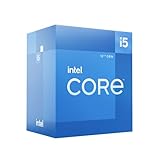
- Intel Core i5-12600 desktop processor of the 12th generation.
- The Intel Core i5 desktop processors of the 12th Generation with support for PCIe 5.0 and 4.0 as well as DDR5 and DDR4 are optimized for gamers and productivity for high performance.
- Intel Laminar RM1 included.
- Compatible with Intel 600 series chipset motherboards. Processor base power consumption: 65 W
- Without competitive Intel products, the company might not generate enough internal demand.
- Without external customers, Intel Foundry could remain a costly internal manufacturing operation rather than a diversified contract business.
What changed after Gelsinger
After Gelsinger left Intel and Lip-Bu Tan became CEO, the company adopted a more selective approach to foundry expansion.
In 2025, Intel said it could achieve a reasonable return on investment from 18A using Intel products alone. The company also said the much higher capital requirements of 14A would require meaningful external-customer participation. Tan rejected the assumption that Intel should build capacity first and simply expect customers to arrive afterward. Those comments marked a shift from an aggressive “build the capability and attract demand” approach toward a model more tightly linked to customer commitments.
In early 2026, Intel CFO David Zinsner said Tan had initially considered focusing external foundry efforts on 14A and treating 18A largely as an internal node. Zinsner later said improving 18A progress and inbound interest in 18A-P had changed that view, according to Tom’s Hardware.
This distinction matters to investors. Intel can use 18A successfully for its own processors without proving that outside customers are willing to trust the process with large, commercially important designs.
Has 18A reached production?
Intel’s official materials indicate that 18A-based products entered high-volume production ramps. In its first-quarter 2026 earnings materials, Intel said 18A yields were running ahead of internal projections and that Core Ultra Series 3 products based on 18A were in a full volume-production ramp. Intel also said 18A wafers were being produced in Oregon and Arizona.
Free tools Windows power users keep installed
One-click scans. No signup required.
Intel described these products as the first revenue-generating chips using both gate-all-around transistors and backside power delivery. Its Q1 2026 earnings-call materials and Q4 2025 materials support those statements.
“Volume production ramp” is an important milestone, but it is not synonymous with mature or profitable manufacturing. It does not necessarily mean that:
- Yields match those of an established competing process.
- Wafer costs are already attractive.
- Capacity is fully utilized.
- External customers have adopted 18A broadly.
- Intel Foundry is profitable at the node level.
Intel’s claims about yields are company-reported internal comparisons. They show progress against Intel’s expectations, but they do not by themselves establish industry-wide process leadership.
The financial evidence so far
Intel’s reported Foundry figures show why the story is more complicated than a successful product ramp.
Do these 3 things before closing this tab:
1Fix the driver behind crashes, sound loss and screen glitches2Clear out junk files and repair common Windows errors3Scan for outdated or missing drivers - takes under a minute| Period | Intel Foundry revenue | External Foundry revenue | Foundry operating result |
|---|---|---|---|
| Q4 2025 | $4.5 billion | $222 million | $2.5 billion operating loss |
| Q2 2026 | $5.8 billion | $293 million | Approximately $2.1 billion operating loss |
The Q4 figures come from Intel’s earnings materials. The Q2 2026 figures and additional customer context were reported by Tom’s Hardware.
Rank #3

- Game and multitask without compromise powered by Intel’s performance hybrid architecture on an unlocked processor.
- Discrete graphics required
- Compatible with Intel 600 series and 700 series chipset-based motherboards
- Intel and reg; Core and reg; i5 processor offers hyper-threading architecture that delivers high performance for demanding applications with improved onboard graphics and turbo boost
- The processor features Socket LGA-1700 socket for installation on the PCB
Intel Foundry revenue includes substantial internal manufacturing and other activities. Therefore, it should not be read as equivalent to revenue from outside customers. External Foundry revenue is the more useful measure for judging the contract-manufacturing thesis, and the reported figures remained small relative to total Foundry revenue.
Tom’s Hardware also reported Fortinet as the first publicly disclosed external foundry customer under Tan, but that project used Intel 4 rather than 18A. That is evidence of external foundry activity, not proof that Intel has won a major external 18A production customer.
Why 18A-P matters
18A-P is a performance-enhanced variant of 18A intended to improve the platform’s commercial appeal. By March 2026, Intel’s CFO said the company was seeing inbound interest in 18A-P and that Tan was becoming more open to offering 18A to outside customers.
That is encouraging, but “inbound interest” is not the same as a signed production commitment. Semiconductor customers can move through several stages:
- Early technical discussions.
- Design enablement and evaluation.
- Test chips or risk production.
- Tape-out.
- Initial production.
- High-volume revenue shipments.
A report of interest does not establish that a customer has completed those later steps. Reporting also indicated that process variability and uncertainty about whether yields had reached industry-standard levels remained relevant concerns.
The key question is whether 18A-P can convert technical progress into repeatable customer commitments, predictable schedules, competitive wafer pricing, and attractive margins.
Why 14A may be the harder test
Intel increasingly ties the long-term economics of its foundry strategy to 14A. Unlike a process designed primarily to restore Intel’s own product roadmap, 14A is being developed from the start as a foundry-oriented node, with external-customer input informing its design.
Recommended Free Tools
Intel has said the higher capital requirements of 14A make outside-customer participation economically important. The company expected early 14A design commitments beginning in the second half of 2026 and expanding into the first half of 2027, according to its Q1 2026 earnings materials.
This produces a useful framework:
- 18A tests manufacturing execution and internal product production.
- 18A-P tests whether Intel’s advanced platform can attract external interest.
- 14A tests whether Intel can build a commercially sustainable external foundry.
Under this framework, 18A is important but not the final referendum on Intel Foundry.
Independent reader supportYour contribution helps us test, update, and keep practical guides available for everyone.How to judge whether the bet is working
1. Technical execution
Look for consistent evidence that the process delivers its promised performance, power, density, and backside-power benefits while defect levels and yields improve over time.
Rank #4

- 13th Gen Intel Core processors offer revolutionary design for beyond real-world performance. From extreme multitasking, immersive streaming, and faster creating, do what you do
- 14 cores (6 P-cores plus 8 E-cores) and 20 threads
- Up to 5.1 GHz unlocked. 24M Cache
- Integrated Intel UHD Graphics 770 included
- Compatible with Intel 600 series (might need BIOS update) and 700 series chipset-based motherboards
2. Product execution
Intel needs its 18A-based client and server products to ship in meaningful volume and compete effectively in their target markets. A strong process cannot compensate indefinitely for weak product architecture, poor pricing, or delayed launches.
What’s actually slowing this PC down?
Pick the symptom - the matching free tool is one click away.
3. Manufacturing scale
Early production must expand beyond an initial ramp. Investors should watch whether output scales, wafer costs decline with utilization, and Intel can provide customers with dependable capacity.
4. External-customer conversion
The most important foundry milestones are not general statements of interest. They are named design wins, tape-outs, production commitments, and growing external revenue.
5. Financial returns
Intel Foundry’s losses need to narrow as production scales. The company must also be able to fund 14A and later nodes without creating destabilizing pressure on the balance sheet.
How 18A could succeed without fully restoring Intel
There is no single binary outcome. Several scenarios are possible:
- 18A could manufacture Intel’s products successfully while failing to attract major outside customers.
- Intel could use 18A as a bridge to a more commercially successful 18A-P or 14A.
- Technical yields could improve while wafer costs remain too high for attractive margins.
- Intel Foundry revenue could grow while losses remain excessive.
- Intel could regain manufacturing capability but still struggle if its processor designs are not competitive.
Other risks include customers using 18A only for test chips or small programs, delays in customer design enablement, and dependence on government-supported projects rather than broad commercial demand. U.S. manufacturing can offer strategic supply-chain value, but domestic production alone does not guarantee cost competitiveness with established global manufacturing ecosystems.
Verdict: an important milestone, not a completed turnaround
As of August 18, 2026, the evidence supports a qualified conclusion. Gelsinger’s “bet the whole company” description accurately captured the scale of Intel’s 2023–2024 process-recovery strategy. 18A has moved beyond a paper roadmap: Intel says its products are in volume-production ramps, yields are ahead of internal projections, and the process is supporting revenue-generating chips.
That means 18A appears to have passed an important internal-production test. It has not yet proved the entire Intel turnaround. External Foundry revenue remains modest, Foundry continues to report large operating losses, and the evidence for broad external 18A adoption is still limited. The longer-term investment case increasingly depends on whether 18A-P attracts real production programs and whether 14A can turn Intel’s technical recovery into a sustainable, profitable foundry business.
For investors, the right question is not simply whether 18A “works.” It is whether Intel can convert a technically advancing process into competitive products, reliable capacity, committed external customers, and acceptable returns on the capital required to build the next generation.
Quick wins for a faster PC:
Clear out junk files and repair common Windows errorsFree Scan →Fix the driver behind crashes, sound loss and screen glitchesFind Drivers →Quick Recap
Product prices and availability are accurate as of the date/time indicated and are subject to change. Any price and availability information displayed on Amazon at the time of purchase will apply.




