The right payment gateway is the one that fits your customers, sales channels, risk profile, and operating needs—not necessarily the one with the lowest advertised rate. Before choosing, compare payment methods and countries, the full cost per transaction, checkout and integration options, PCI responsibilities, payout terms, and how easily the system can support your business as it grows. Pricing and eligibility vary by country, industry, transaction mix, and contract; US prices below are explicitly identified and were listed on August 16, 2026.
What a payment gateway does—and what it does not
A payment gateway securely collects and transmits payment details. In a typical card transaction, the customer submits payment information, the gateway sends it to the processor, and the processor and acquiring bank route an authorization request through the card network to the customer’s issuing bank. The issuer approves or declines it. If approved, the transaction can be captured; settlement and payout follow, less applicable fees, refunds, reserves, and adjustments. Authorization is not the same as final settlement or money in your bank account.
- Gateway: Technology that securely collects and transmits payment information.
- Processor: Service that communicates with banks and card networks to authorize and settle transactions.
- Acquirer: Financial institution that enables a merchant to accept card payments.
- Payment service provider (PSP): A provider that may bundle gateway, processing, acquiring, fraud tools, reporting, payouts, and other functions.
- Merchant account: A dedicated account structure used by some traditional processors to receive card settlement funds.
- Aggregated account: A model in which multiple merchants operate under a provider’s master acquiring relationship.
Providers use these terms differently, and one product may combine several parts of the payment stack. Stripe’s overview explains the gateway’s intermediary role: Stripe’s guide to payment gateways.
Match the solution to your business model
E-commerce
Check for hosted or embedded checkout, cards and digital wallets, address verification and fraud controls, full and partial refunds, webhooks, and reconciliation with orders and shipping systems. Make sure the checkout works on mobile and supports the countries and currencies your customers use.
The Tool Desk
Outbyte PC Repair FREERepair Windows errors before they cause bigger problemsFix Now →Outbyte Driver Updater FREEScan for outdated or missing drivers - takes under a minuteDriver Scan →#1 Best Overall

- With Square Terminal, you can ring up sales, accept payments, and print receipts, all with one device. Use it at the counter or ring up customers anywhere in your store.
- Accept all major credit and debit cards and pay one low rate with no hidden fees and no long-term contracts.
- Process chip cards in just two seconds.
- Get your money as soon as the next business day.
- Use it cordlessly with the built-in battery, designed to last all day.
SaaS and subscriptions
Recurring businesses need more than a way to charge a saved card. Look for tokenization, recurring and usage-based billing, failed-payment retries, card account updates, proration, upgrades, cancellations, and customer self-service. Adyen documents tokenization for one-click purchases, subscriptions, and irregular recurring charges such as automatic top-ups: Adyen tokenization documentation.
Marketplaces and platforms
Confirm support for seller or connected accounts, onboarding and identity verification, split payments, scheduled payouts, refunds and dispute allocation, tax reporting, and negative balances or reserves. A standard checkout product may not provide the controls needed to pay multiple sellers.
Omnichannel retailers
Look for a common view of online and in-person transactions, POS integration, synchronized inventory and orders, in-store refunds for online purchases, and reporting that finance teams can reconcile across channels.
Professional services and B2B
Payment links, invoicing, ACH or other bank debit, a virtual terminal, larger-transaction support, manual authorization and capture, and invoice reconciliation may matter more than a highly customized consumer checkout. Authorize.net advertises online, in-person, and phone payments, recurring billing, stored customer payment information, cards, eChecks, PayPal, and digital wallets: Authorize.net payment solutions.
Quick wins for a faster PC:
Fix the driver behind crashes, sound loss and screen glitchesFind Drivers →Repair Windows errors before they cause bigger problemsFix Now →Write down requirements before comparing providers
Build a short requirements sheet so provider proposals describe the same business. Include:
- Business profile: Legal entity and operating country, industry and products, monthly and annual volume, average and maximum order value, growth, seasonal patterns, and any regulated or higher-risk characteristics.
- Transaction profile: One-time versus recurring payments, domestic versus international mix, card-present versus card-not-present share, refund and dispute history, authorization and capture timing, and need for preauthorization or delayed capture.
- Customer profile: Customer countries, preferred currencies and payment methods, mobile versus desktop usage, guest checkout needs, and demand for wallets, bank debit, or installment payments.
- Technical profile: Commerce platform, apps, billing system, API and webhook needs, engineering capacity, plugins or no-code requirements, data warehouse and accounting integrations, and migration needs.
- Operational profile: Payout timing and currency, reconciliation and exports, support hours and escalation, tax and accounting workflows, and tolerance for risk reviews or reserves.
Make non-negotiables explicit—for example, required ACH support, subscription retries, marketplace payouts, settlement in specified currencies, or a hosted checkout. Verify that a provider supports each requirement for your merchant country, business category, integration, and intended payment flow.
Rank #2

- Get your money as soon as the next business day.
- Get set up quickly with no long-term commitments. Download the Square Point of Sale app for free, create an account, and start taking payments anywhere.
- Run your business all in one place with the free Square Point of Sale app. Track your sales, manage inventory, accept tips, send receipts digitally, and more.
- Works with Apple devices with a Lightning connector.
Choose payment methods customers actually use
A longer payment-method list is not automatically better. Confirm that the provider offers the methods relevant to your customers and that each is available to your business in its country, currency, and integration. Options may include major and regional card brands, Apple Pay and Google Pay, PayPal or another wallet, ACH and bank transfers, SEPA Direct Debit, buy now, pay later, local bank methods, real-time payments, and cash-based or voucher methods in some markets.
For each method, check whether it supports recurring or stored payments if needed, refunds and disputes, your desired settlement destination, and appropriate authentication. Stripe advertises more than 100 payment methods, 195 countries, and over 135 currencies, but those provider-level figures do not guarantee that every method, currency, or country is available to every merchant. Check the current terms for your business at Stripe pricing. Adyen describes card acceptance through one technical integration; availability and pricing still vary by method, country, and integration: Adyen card payment documentation.
Crashes, No Sound, or Screen Glitches?
Random freezes, missing sound and display glitches usually trace back to one bad driver. Find and replace yours safely.Free scan · under a minuteWindows Errors? Fix Them Before They Spread
Repair common Windows errors and clear accumulated junk for a smoother, more stable PC - no reinstall needed.Free scan · no reinstallCompare total cost, not the headline rate
Estimate the effective cost for your actual payment mix. Include percentage and fixed transaction fees, international and currency-conversion charges, method-specific costs, monthly software or gateway charges, payout fees, and other mandatory fees. Also ask how refunds are treated and price chargebacks, retrievals, failed payments, account updates, 3D Secure, recurring billing, fraud tools, instant payouts, POS hardware, minimums, volume commitments, and reserves where applicable.
Effective payment cost includes all of those charges for a period; divide that total by the corresponding processed volume to estimate an effective rate. Do not add a fee that does not apply to your transaction, and do not assume that a quoted percentage includes tools that another provider charges separately.
Example: fixed fees and order size
Using the US standard Stripe rate listed on August 16, 2026, a successful domestic card payment at 2.9% + $0.30 costs $1.75 on a $50 order: $1.45 percentage fee plus $0.30 fixed fee. That is an effective rate of 3.5% for that transaction. At the same listed rate, the fixed fee has a larger proportional effect on a $10 order than on a $500 order. This is an illustration, not a universal price; see Stripe’s US pricing page and confirm current terms before contracting.
Published US pricing signals
The following figures were listed on August 16, 2026. They describe US pricing signals, not globally comparable offers; providers may price different products, methods, plans, and merchant profiles differently.
Rank #3
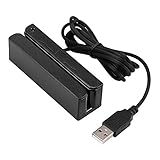
- MSR90 is a USB emulation keyboard interface that not need any driver or software,USB simply plug and play
- Reads up to 3 tracks of information,can reads ISO7811, AAMVA, CA DMV and most other card data formats
- Threaded inserts for mounting. LED indicator, green light is on when connecting,green light blinks when cards swiped
- Bi-directional swipe reading, superior reading of high jitter, scratched, and worn magstripe cards, reliable for over 1,000,000 card swipes
- Configuration software makes configuration changes easy,works with: Windows OS and Mac OS
| Provider | Public pricing signal | Qualification |
|---|---|---|
| Stripe | 2.9% + $0.30 for successful domestic card transactions; listed additions include 1.5% for international cards, 1% when currency conversion is required, and 0.5% for manually entered cards. | US standard pricing; custom pricing is available. Confirm which additions apply to the payment flow. |
| PayPal Checkout | 3.49% + $0.49 for PayPal and Venmo transactions; 2.99% + $0.49 for credit and debit cards under Checkout. | US pricing; fees vary by product and transaction type. |
| PayPal Expanded Checkout | 2.89% + $0.29 for credit and debit cards. | PayPal describes this option as placing more checkout, refund, and unauthorized-transaction responsibility on the merchant. |
| Square | Base rates vary by plan and channel; a 1.5% international transaction fee applies to cards issued outside the account’s country. | Check the account’s pricing and subscription settings, and the stated exclusions. |
| Adyen | Standard pricing uses an interchange-plus-plus model involving provider markup, transaction fee, interchange, and scheme fees. | Merchant-specific pricing, typically obtained through a sales process. |
| Authorize.net | Pricing depends on the account and processor arrangement. | Gateway capabilities may be combined with different processing arrangements. |
Official pricing details: Stripe, PayPal US business fees, PayPal Checkout, Square fees, and Adyen’s fee model. Public pricing pages are not directly comparable: hosted checkout, acquiring, billing, fraud, and dispute tools may be bundled by one provider and priced separately by another.
Flat-rate versus interchange-plus pricing
Flat-rate pricing can make budgeting simpler for smaller or variable-volume businesses, but may become expensive at scale and obscure differences by card type, method, or geography. Interchange-plus or IC++ may suit higher-volume merchants with the finance resources to assess underlying interchange, scheme fees, assessments, and processor markup. It can offer more cost transparency, but monthly costs vary and are harder to forecast. Adyen’s documented IC++ structure includes provider markup or commission, a per-transaction fee, interchange, and scheme fees: Adyen pricing model.
Decide how much control checkout needs
Checkout design affects customer experience, engineering work, and security responsibilities. Evaluate field count, mobile usability, guest checkout, autofill and saved payments, wallet availability, clear errors, retries, authentication, localization, accessibility, loading behavior, redirects, and whether the cart survives authentication.
| Checkout model | Often suits | Main benefit | Main trade-off |
|---|---|---|---|
| Full redirect or hosted checkout | Small businesses and rapid launches | Less implementation work and less direct handling of card data | Less design and data-flow control; redirects and provider limitations can affect the experience. |
| Embedded provider fields | Businesses seeking a branded checkout while outsourcing card fields | More layout control than a full redirect | More website and script-security responsibility; PCI assessment depends on the full implementation. |
| Direct API or custom card handling | Businesses with substantial engineering and security resources | Maximum control over specialized flows | Highest compliance, breach-exposure, testing, and maintenance burden. |
An iframe or provider-hosted field does not by itself make a merchant PCI compliant. Payment-page origin, scripts, data flows, and all applicable SAQ criteria matter.
Free tools Windows power users keep installed
One-click scans. No signup required.
Understand PCI DSS, security, and authentication
Outsourcing payment processing does not remove a merchant’s security obligations. PCI DSS v4.0.1’s new requirements became effective March 31, 2025; PCI SSC said the revision did not change that date. See PCI SSC’s v4.0.1 announcement and its SAQ A update.
For potential SAQ A eligibility, payment-account functions must be outsourced to PCI DSS-compliant third parties, and the merchant must not electronically store, process, or transmit account data on its systems or premises. Eligibility depends on meeting every criterion. PCI SSC says an e-commerce site using an embedded payment form must confirm that it is not susceptible to script attacks that could affect the e-commerce system: PCI SSC FAQ 1588. PCI SSC also distinguishes SAQ A and SAQ A-EP based on where payment-page elements originate: PCI SSC guidance on SAQ A versus SAQ A-EP. Ask your acquirer, provider, or qualified assessor which validation applies to your implementation.
Rank #4
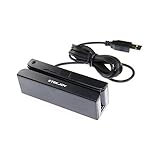
- USB interface, keyboard emulation, no need to install software to read, configuration software for changing settings available.
- Read data from all 3 tracks, high and low coercivity cards, ISO7811, AAMVA, CA DMV and most magnetic card data formats.
- Work on Windows, Mac and other USB capable systems. Work with TXT, notepad, Word, Excel, POS systems and son on.
- Compact size, with 145cm USB cord, two 3mm-diameter screw holes for fixing at the bottom, a LED indicator light
- Perfect for POS, Banking, Loyalty, Access Control, ID verification and other applications.
Compare tokenization, encryption, hosted fields, network tokens, account updater, 3D Secure, address and CVV checks, device intelligence, velocity rules, bot and account-takeover controls, signed webhooks, role-based access, audit logs, API-key controls, payout-change protections, and the provider’s Attestation of Compliance. Stripe describes PCI as a shared responsibility and says merchants still need to attest even when Stripe is a PCI Level 1 service provider: Stripe security guide.
3D Secure can authenticate a cardholder before an online purchase. It may be required in some jurisdictions or applied selectively; Stripe notes Strong Customer Authentication requirements in the EEA and similar obligations in some other jurisdictions, while 3DS is optional in many regions: Stripe 3D Secure documentation. Authentication can help manage certain fraud risks, but challenges can add checkout friction, liability shift is not automatic for every transaction, and no single tool eliminates fraud or disputes. Compare whether fraud and chargeback tools are included, add-ons, charged per transaction, or limited to particular plans. PayPal, for example, lists optional tools with additional transaction fees: PayPal Checkout details.
Recommended Free Tools
For subscriptions, check token and billing portability
Ask whether stored credentials can support merchant-initiated payments, how recurring transactions must be initiated, and whether the service includes account updating, network tokens, retries and dunning, consent or mandate storage, trial conversion, proration, tax handling, partial refunds, plan changes, and cancellation timing.
A provider change may be straightforward for one-time payments but difficult for a subscription business. Tokens, customer consent, bank mandates, billing state, and retry history may not transfer directly. Before signing, request written details on secure token export or migration, whether customers must reauthenticate or renew consent, and which records will need to be recreated.
Independent reader supportYour contribution helps us test, update, and keep practical guides available for everyone.Check international reach, payouts, and account stability
Separate four questions: where the provider can onboard your business, where your customers can pay from, which local methods and currencies are supported for your integration, and where and in what currency funds can be settled. Also compare local acquiring, foreign-exchange spread, cross-border fees, tax and invoicing support, sanctions restrictions, local-entity requirements, data-residency obligations, authentication, and regional dispute handling. Broad provider-level country or currency claims do not guarantee eligibility for a particular merchant category, payment method, or settlement destination.
Square states that cards issued outside the country of the Square account may incur a 1.5% international transaction fee in addition to base processing fees, subject to its stated exclusions: Square fee details.
Do these 3 things before closing this tab:
1Clear out junk files and repair common Windows errors2Fix the driver behind crashes, sound loss and screen glitches3Repair Windows errors before they cause bigger problemsBest Value

- Pay one transparent rate per swipe for Visa, Mastercard, Discover and American Express.
- Works in conjunction with most downloadable Square point-of-sale apps on your device. Customers can pay, tip and sign directly on your device. Track payments in cash, gift cards and more. Also lets you send receipts via e-mail or text message, makes it easy to apply discounts, keeps a data and sales history log and more.
- Accepts magstripe credit card payments, including those from Visa, Mastercard, Discover and American Express (fees apply).
- App sends deposits to your bank account within 1 to 2 business days, or enjoy instant deposits (fees apply).
Ask about standard payout timing, instant payout availability and cost, settlement currency, rolling or other reserves, delayed settlement, negative balances, volume limits, account reviews, restricted industries, termination rights, dispute-related holds, and support escalation. These terms depend on contract and risk review; no provider can guarantee that an account will never be reviewed or restricted. Cash-flow predictability can matter more than a small difference in processing rate.
Compare providers by scenario, not by a universal ranking
| Provider | Worth evaluating when… | Check especially | Potential mismatch |
|---|---|---|---|
| Stripe | You are a startup, SaaS company, e-commerce business, or developer-led merchant seeking APIs, hosted checkout, billing, wallets, and broad international options. | Available methods for your country and business, US fee additions if applicable, PCI responsibilities, and underwriting fit. | You need a traditional merchant-account relationship, unusual-risk certainty, or negotiated acquiring economics from the outset. |
| PayPal Checkout | Your customers value PayPal or, in the US, Venmo; you want wallet checkout, Pay Later, payment links, or invoicing. | Separate wallet and card rates, checkout control, eligibility rules, and responsibility for refunds and unauthorized transactions. | You require maximum checkout customization or specialized global acquiring. |
| Square | You are a local retailer, restaurant, or appointment business combining POS, online selling, invoicing, and in-person payments. | Plan and channel rates, international-card surcharge, and fit with your needed custom flows. | You operate a complex international marketplace or need extensive payment routing. |
| Adyen | You are a larger or international merchant, retailer, or platform seeking local methods, tokenization, and enterprise payment operations. | Merchant-specific IC++ pricing, onboarding process, and country and method availability. | You are a very small merchant seeking immediate self-service onboarding and simple published flat rates. |
| Authorize.net | You are an established merchant, work with a traditional merchant-account provider, or need recurring billing, eChecks, phone payments, or stored customer profiles. | Processor and merchant-account terms, gateway capabilities, and how the integration fits your existing systems. | You need a developer-first, integrated global platform or broad localized international-method coverage. |
These are evaluation starting points, not endorsements or guarantees of approval. A subscription business should assess billing and token migration; a marketplace should verify connected-account and seller-payout capabilities before building; high-volume merchants should request written custom offers rather than assuming public flat rates will apply.
Use a weighted scorecard and request comparable quotes
Score each provider against your own requirements. One reasonable starting allocation is:
| Criterion | Suggested weight |
|---|---|
| Required payment methods and geographic coverage | 20% |
| Total effective cost | 20% |
| Checkout conversion and customer experience | 15% |
| Reliability and authorization performance | 15% |
| Security, PCI support, and fraud controls | 10% |
| Recurring billing and tokenization | 8% |
| Integration and developer experience | 5% |
| Reporting, reconciliation, and support | 5% |
| Total | 100% |
Adjust the weights to your business: subscription sellers should raise billing and tokenization; global retailers should prioritize local acquiring and methods; small local businesses may value setup and omnichannel operations more than routing sophistication.
Give each provider the same transaction profile and ask for a written schedule showing percentage and fixed fees, interchange-plus markup, international and conversion charges, ACH and bank-debit rates, wallet and buy-now-pay-later pricing, refund treatment, chargeback and fraud-tool fees, 3DS and billing fees, payout charges, minimums, volume tiers, reserves, and termination terms. Model your actual order sizes and card mix, not just a single headline percentage.
Test integration and the whole payment lifecycle
Review documentation, SDKs and languages, hosted checkout, mobile support, API versioning, sandbox quality, test payment methods, webhooks, idempotency, error codes, retries, rate limits, observability, reconciliation APIs, exports, plugin maintenance, migration tools, and technical support. In implementation, use idempotency keys to avoid duplicate charges, verify webhook signatures, store provider transaction IDs, and treat webhooks—not a browser redirect or client-side success message—as authoritative for asynchronous payment status. Maintain internal states for authorization, capture, refund, and dispute, and reconcile provider reports with orders and bank deposits.
In a sandbox and controlled production rollout, test successful and declined payments, soft declines and retries, 3DS challenge and frictionless flows, duplicate requests, timeouts, delayed or repeated webhooks, partial and full refunds, disputes, expired and updated cards, subscription retries, currency conversion, and payout reconciliation. Use feature flags, parallel reporting, daily reconciliation, customer-support scripts, and a rollback plan; critical businesses may also need a contingency payment method.
Complete contract and operational due diligence
Before launch, obtain the provider’s Attestation of Compliance and PCI responsibility matrix, data-processing agreement and subprocessor list, security and data-retention documentation, uptime and incident commitments, reserve and termination terms, prohibited-business policy, and written token-migration terms. Confirm support hours and escalation routes for technical failures, disputes, and stuck payouts. Do not assume a sales quote settles the treatment of holds, refunds, reserves, or termination; check the contract and applicable policies.
Quick Recap
- Document your current profile: Record monthly volume, average order value, card and geography mix, refunds, disputes, declines, payment methods, fees, payout timing, recurring volume, and higher-risk products or transactions.
- Set non-negotiables: Specify required methods, currencies, channels, subscriptions, marketplace payouts, integrations, and support coverage.
- Request equivalent written pricing: Compare all applicable fees and terms using the same transaction assumptions.
- Test lifecycle and failure cases: Exercise authorization through payout, including retries, authentication, refunds, disputes, and webhook failures.
- Validate compliance and contract terms: Confirm the relevant PCI path, data protections, underwriting, reserves, support, and portability.
- Launch gradually: Start in a sandbox, then a small production cohort; monitor transactions, reconcile daily, and retain a tested rollback path.
Product prices and availability are accurate as of the date/time indicated and are subject to change. Any price and availability information displayed on Amazon at the time of purchase will apply.




