The withholding rule depends first on the kind of payment and how it reaches you. A taxable eligible rollover distribution from an employer plan that is paid to you generally has mandatory 20% federal withholding; ordinary nonperiodic payments usually default to 10%; and periodic pension or annuity payments use a different form and calculation method. Withholding is a tax prepayment, not a final bill.
Start by classifying the payment
Before choosing a withholding rate, identify both the payment type and the payment path. Federal rules distinguish periodic pension or annuity payments, other nonperiodic payments, and eligible rollover distributions from employer plans. They also treat a payment made to you differently from money sent directly to another retirement account.


| Payment type | Typical federal withholding rule | Form |
|---|---|---|
| Periodic pension or annuity payment | The payer calculates withholding using applicable methods and your election. | W-4P |
| Nonperiodic payment that is not an eligible rollover distribution | Usually 10% by default; you can generally elect another rate. | W-4R |
| Taxable eligible rollover distribution from an employer plan paid to you | Generally mandatory 20% withholding; you cannot elect a lower rate. | W-4R for any permitted additional withholding election |
These are ordinary U.S. federal rules. State withholding, foreign recipients, treaty claims, and individual circumstances can change the result.
How much is withheld from a 401(k) withdrawal?
If it is an eligible rollover distribution paid to you
The plan generally must withhold 20% of the taxable portion of an eligible rollover distribution paid to you, even if you intend to deposit the money into another retirement account later. You cannot lower that required withholding by electing a smaller rate on Form W-4R. The IRS explains the rule in its pensions and annuity withholding guidance.
Do these 3 things before closing this tab:
1Repair Windows errors before they cause bigger problems2Fix the driver behind crashes, sound loss and screen glitches3Clear out junk files and repair common Windows errors#1 Best Overall
A direct rollover works differently: if the plan sends the eligible amount directly to another eligible retirement plan or IRA, mandatory withholding does not apply to the amount transferred directly. Choosing a direct rollover is therefore distinct from receiving a check and rolling it over yourself.
If it is another nonperiodic payment
A nonperiodic payment that is not an eligible rollover distribution generally has 10% federal withholding by default. Under the IRS’s 2026 Form W-4R, you can generally elect a rate from 0% through 100%. The form generally does not allow a rate below 10% when payment is delivered outside the United States and its territories.
Rank #2
How withholding works for IRA distributions
A traditional IRA distribution paid to its owner generally follows the nonperiodic-payment rule, not the employer-plan 20% eligible-rollover rule. The usual default is 10%, and the owner can generally choose a different rate or opt out when permitted. For details on IRA distributions and withholding, see IRS Publication 590-B (2025).
A distribution paid to you is not the same as a trustee-to-trustee transfer between IRAs. A direct transfer avoids the scenario in which a distribution is paid to you and withholding is applied to that payment.
Rank #3
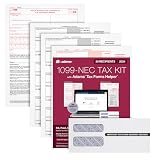
- Get the 3 up 1099 NEC forms you need to report nonemployee compensation for up to 30 recipients; includes 3-part 1099 NEC tax forms, peel and seal envelopes, 3 1096 summary reports & access to Helper
- Use Form 1099 NEC to report nonemployee compensation to the IRS and your recipients; the NEC is an IRS continuous-use form with a fill-in-the-year date field good for multiple tax years
- White 3-Part 1099 NEC forms print 3 to a page on 10 micro perforated sheets per copy with copies A, B, 1 & 2; includes scannable red ink copies required for paper filing; IRS has removed Copy-C
- Includes access to Adams Tax Forms Helper— with QuickBooks Online integration; fill forms faster, eFile and much more; share employee/recipient forms with PDF File Share; fees apply for PDF File Share
- Mail or eFile your 2024 1099-NEC to the IRS and furnish copies to your recipients by January 31, 2025; IRS eFile law! If you're filing 10 or more returns, you must eFile; easily eFile on the Helper
Choose the correct form
Periodic payments: Form W-4P
Use Form W-4P for periodic pension or annuity payments. The payer applies the relevant withholding methods using the information and election you provide. The IRS’s Publication 15-T (2026) describes current federal withholding methods and directs payees to the IRS Tax Withholding Estimator for help completing W-4P when they have other income or receive payments for only part of the year.
Nonperiodic payments and eligible rollover distributions: Form W-4R
Use Form W-4R for nonperiodic payments and eligible rollover distributions. It lets you request a permitted rate, but it does not let you override the mandatory 20% withholding on an eligible rollover distribution paid to you.
Independent reader supportYour contribution helps us test, update, and keep practical guides available for everyone.Why 20% withholding can leave a rollover short
Suppose an eligible rollover distribution from a 401(k) is $10,000. The plan withholds $2,000 and pays you $8,000, as illustrated by the IRS’s rollover guidance. If you roll over only the $8,000 you received, the withheld $2,000 was not rolled over. To roll over the full $10,000, you generally need to contribute the missing $2,000 from other funds within the applicable rollover period.
The IRS describes 60 days as the general deadline for completing a rollover after receiving a distribution; eligibility rules and exceptions require care. If you are under 59½, the amount not rolled over may also be subject to a 10% additional tax unless an exception applies. Consult the IRS rollover guidance before acting on a distribution.
Recommended Free Tools
Best Value

- Used Book in Good Condition
Withholding is not the same as your tax bill
Withholding is money sent to the government toward your tax liability. It does not determine how much of a distribution is taxable or guarantee that you have prepaid enough. A default rate may be too low for your overall situation, particularly if you have other income. Consider estimating your annual tax separately; depending on your circumstances, you may need to adjust withholding or make estimated tax payments. The IRS discusses withholding and estimated tax in Publication 505 (2026).
Foreign and state rules can differ
The rates above describe ordinary federal withholding for U.S. domestic situations. Nonresident alien status, treaty claims, the source of the payment, delivery outside the United States, and state law can affect the rules. Do not apply the ordinary domestic rates to a foreign-recipient situation without checking the relevant current IRS international guidance and asking the payer which rules apply.
Quick Recap
Product prices and availability are accurate as of the date/time indicated and are subject to change. Any price and availability information displayed on Amazon at the time of purchase will apply.




