The gross rent multiplier (GRM) is a quick way to compare a rental property’s price with its gross rent: divide the property’s price by its gross rent for the same period. It can help screen similar properties or produce a rough value indication, but it excludes expenses, so it cannot tell you whether a property will be profitable.
What the gross rent multiplier measures
GRM expresses the relationship between a rental property’s price or market value and its gross rental income. Because it uses rent before operating expenses, it is a screening ratio rather than a measure of net return. The California State Board of Equalization describes GRM as a multiplier based on gross rents and comparable sales, distinguishing it from broader gross-income multipliers that may include other income sources (California State Board of Equalization).
How to calculate GRM
GRM = property price or market value ÷ annual gross rent
Use gross rent before expenses or deductions. For example, a property priced at $300,000 with annual gross rent of $30,000 has a GRM of 10 ($300,000 ÷ $30,000). This is illustrative arithmetic, not a market benchmark.
Do these 3 things before closing this tab:
1Repair Windows errors before they cause bigger problems2Scan for outdated or missing drivers - takes under a minute3Clear out junk files and repair common Windows errors#1 Best Overall

- Profitability calculations; cash flow function Calculates NPV and IRR for uneven cash flows
- Time-value-of-money and Amortization keys solve problems including: pension calculations, loans, mortgages, etc.
- Ideal calculator for students, managers and statisticians
- Built-in functionality : List-based one- and two-variable statistics with four regression options: linear, logarithmic, exponential and power
- The BA II Plus calculator is approved for use on the following professional exams: Chartered Financial Analyst exam. GARP Financial Risk Manager (FRM) exam. Certified Management Accountants exam
When rent figures are monthly
For an annual GRM, multiply monthly rent by 12 before dividing the price by rent. Alternatively, calculate a monthly multiplier by dividing the price by monthly rent, but compare it only with other monthly multipliers. The Wisconsin Property Assessment Manual notes that monthly GRM can be convenient when the rental figures available are monthly (Wisconsin Property Assessment Manual). Mixing a monthly and annual basis makes the result misleading.
How to use GRM to estimate a rough value
You can reverse the calculation to get a screening-level value indication:
Rank #2

- PROFESSIONAL FINANCIAL CALCULATOR : Built-in TVM, IRR, NPV. Engineered for business analysts, real estate investors, accountants, and finance students.
- ADVANCED CASH FLOW & AMORTIZATION : Execute time value of money, break-even analysis, depreciation schedules, and bond pricing. Trusted for professional exam prep", MBA coursework, and banking certifications.
- CATIGA CF-300 : Flip-open hard case with a snap-close design for a secure fit. Compact and portable: designed for daily professional use in office, classroom, or on-site.
- ALL-IN-ONE FOR PROFESSIONALS : From NPV/IRR for real estate analysis to statistical calculations for business analysts. Handles probability, linear regression, and complex financial formulas.
- MORTGAGE, LOAN & INVESTMENT CALCULATOR : Covers bond pricing, loan amortization, investment analysis, and exam-level computations. Your go-to accounting calculator, business calculator, and real estate calculator in one device.
Estimated value = comparable-market GRM × subject property’s gross rent for the same period
For instance, if well-matched comparable sales support a GRM of 10 and the subject property has $30,000 in annual gross rent, the indicated value is $300,000. The result is not a conclusive appraisal or a guarantee of a sale price. J.P. Morgan discusses GRM both as price divided by rent and as a way to estimate value from a comparable multiplier (J.P. Morgan: What Is a Good Gross Rent Multiplier?).
The Tool Desk
Outbyte Driver Updater FREEFix the driver behind crashes, sound loss and screen glitchesFind Drivers →Outbyte PC Repair FREEClear out junk files and repair common Windows errorsFree Scan →Rank #3
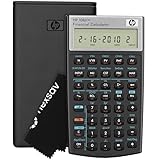
- HP 10BII+ FOR STUDENTS & PROFESSIONALS – This HP calculator is built for business, finance, accounting, and statistics courses. Perfect for learners and professionals who need to solve common financial problems quickly without memorizing formulas or relying on spreadsheets.
- 100+ FUNCTIONS FOR REAL WORLD MATH – Quickly solve time value of money, interest rates, loan payments, NPV, IRR, cash flows, and more. The 10bII+ also includes probability distributions for statistics courses—a feature not often found in financial calculators.
- ALGORITHMIC INPUT WITH DEDICATED KEYS – This high-school/college calculator uses algebraic and chain logic with minimal keystrokes. Layout appears the same as standard calculators for easy learning. Dedicated keys give quick access to commonly used financial and statistical functions
- APPROVED FOR MAJOR EXAMS – The HP 10bII+ algebra calculator is permitted for use on SAT, PSAT/NMSQT, and AP tests. An ideal statistics calculator and business calculator for school finance and accounting students preparing for class, coursework, or standardized exams.
- INCLUDES TRAVEL CASE, CLEANING CLOTH & BATTERIES– Slim, durable, and easy to keep on hand or store in a backpack or locker. Includes a protective case, cleaning cloth, and batteries so it’s ready out of the box. Large screen with clear contrast (non-backlit) is easy to read during exams or lectures.
Choose comparable properties carefully
A GRM is useful only to the extent that its price and rent inputs are comparable. Appraisal guidance from the California State Board of Equalization says multipliers are derived from sale prices and gross rents of closely comparable properties (California State Board of Equalization).
- Market and location: Multipliers can differ across markets, including between metropolitan areas and smaller cities.
- Property type and risk: Compare properties with similar types and risk characteristics.
- Rent basis: Match monthly with monthly or annual with annual, and use the same definition of gross rent.
- Condition and expenses: GRM does not reflect operating costs, so a similar multiplier does not mean similar net economics.
Use recent transactions and rents for closely comparable properties where possible. The California Department of Real Estate identifies GRM analysis as a direct-capitalization technique in appraisal, but the ratio by itself does not complete an appraisal (California Department of Real Estate reference).
Rank #4

- Solves time-value-of-money calculations such as annuities, mortgages, leases, savings, and more
- Performs cash-flow analysis for up to 32 uneven cash flows with up to 4-digit frequencies
- Calculates various financial functions: Net Future Value Net present Value Modified Internal Rate of Return Internal Rate of Return Modified Duration Payback Discounted Payback
- The Texas Instruments BAII Plus Professional features an Automatic Power Down (APD) function for extended battery life
- Prompted display guides you through financial calculations showing current variable and label. Ten-digit display
Is a low or high GRM better?
There is no universal “good” GRM. A lower number means the price is lower relative to gross rent on the basis you selected; it does not establish that the property will produce stronger cash flow or make a better investment. Market, property type, risk, and expenses all matter. Use GRM to compare like with like, not as a stand-alone investment rule.
What GRM leaves out—and what to analyze next
Since GRM uses gross rent instead of net operating income (NOI), it does not account for costs such as property taxes, insurance, repairs, management, utilities, or vacancy assumptions. Two properties with the same GRM can therefore have very different operating results. The Corporate Finance Institute cautions against using GRM in isolation, while J.P. Morgan contrasts it with cap rate, which uses annual NOI (Corporate Finance Institute: Gross Rent Multiplier; J.P. Morgan).
Best Value

- Brand New in box; The product ships with all relevant accessories
- Dedicated keys allow easy access to common financial and statistics functions
- Easy-to-use design provides business, finance and statistical calculations fast
- Specially designed to meet the mathematical needs
After a GRM screen, estimate realistic rental income and operating expenses, then review NOI, cap rate, financing, capital needs, vacancy, and taxes. Rental income’s tax treatment is a separate issue from the valuation ratio: the IRS explains that rent is generally income for tax purposes and addresses expenses and depreciation under separate rules (IRS Publication 527).
Quick Recap
Product prices and availability are accurate as of the date/time indicated and are subject to change. Any price and availability information displayed on Amazon at the time of purchase will apply.




