PC Slower Than It Used to Be?
A free scan shows the junk files, broken settings and background clutter dragging Windows down - then fixes them in one click.Free scan · Windows 10 & 11Crashes, No Sound, or Screen Glitches?
Random freezes, missing sound and display glitches usually trace back to one bad driver. Find and replace yours safely.Free scan · under a minuteThe Trump administration has extended a temporary Jones Act waiver, allowing some foreign-flag ships to carry eligible energy and agriculture-related cargo between U.S. points. The policy may ease shipping bottlenecks, but the available evidence does not show how much—if at all—it has lowered gasoline prices at the pump. Analysts cited by Reuters expected any reduction to be small, potentially only pennies per gallon.
What the Jones Act requires
The Jones Act is the domestic-waterborne-commerce provision of the Merchant Marine Act of 1920, codified at 46 U.S.C. § 55102. The Maritime Administration (MARAD) says merchandise transported between U.S. points generally must travel on a vessel that is U.S.-built, U.S.-owned, and authorized for coastwise trade. MARAD’s domestic-shipping overview describes the law and its waiver framework.
A waiver changes which vessels may carry specified cargo on qualifying voyages; it does not repeal the Jones Act or open every domestic route to every foreign ship. Federal waiver authority is set out in 46 U.S.C. § 501. MARAD describes two paths: the Department of Homeland Security may grant a waiver at the Secretary of War’s request when needed to address an immediate adverse effect on military operations, or the President may determine that a waiver is necessary for national defense after MARAD finds that coastwise-qualified vessels are unavailable to meet national-defense requirements.
What changed in the 2026 waiver
The initial March waiver
The first waiver, issued March 17, 2026, covered 60 days and ended May 17. U.S. Customs and Border Protection guidance said covered commodities could move on foreign-flag vessels during that period, subject to cargo documentation, vessel reporting, and entrance and clearance requirements. The initial bulletin required covered product to be loaded before 11:59 p.m. EDT on May 17; that deadline applied to the March waiver, not the later extension. CBP’s CSMS # 68180454 guidance sets out those implementation details.
Do these 3 things before closing this tab:
1Fix the driver behind crashes, sound loss and screen glitches2Repair Windows errors before they cause bigger problems3Scan for outdated or missing drivers - takes under a minute#1 Best Overall
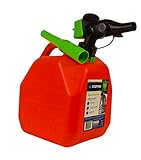
- 2 GALLON GAS CAN: The Scepter SmartControl fuel container features squeeze-control flow for spill-free filling; Easily refill lawnmowers, chainsaws, yard tools, recreational vehicles, cars, ATVs, motorcycles, and other gas-powered equipment
- CONTROLLABLE FLOW WITHOUT SPILLS: SmartControl controllable flow rate means no spilling, allowing you to squeeze less for a little, or squeeze more for a lot; bonus funnel with convenient storage ring making filling cars, ATVS or other equipment easier
- HEAVY DUTY GAS CONTAINER: High-density polyethylene construction prevents corrosion, denting, and breakage; The 5-layer HDPE design prevents vapor leaks and preserves gasoline longer; Storage ring conveniently holds the bonus funnel when not in use
- FAST FILLING JERRY CAN: Integrated air vent in the spout and included funnel provide fast flows saving time and hassle; SmartControl controllable flow rate means you squeeze less for a little gas, or squeeze more for a lot
- SAFETY FEATURES: EPA / CARB & Child Safety Compliant with child safety lock; Flame mitigation device prevents internal vapor ignition for added protection; Dust cap protects spout during storage
The August extension
An extension took effect August 17 and lasts 90 days, according to the Associated Press and Reuters reports of August 10. Its scope is narrower: it covers energy sources and agriculture-related commodities, including fertilizers and soybean oil, and individual voyages are reviewed, with the Pentagon consulting MARAD on eligibility. MARAD’s domestic-shipping page, updated October 2, lists a separate August 17 extension and October voyage reports. As of October 3, 2026, the extension was in effect; later amendments or extensions are not established here.
Reuters reported that the administration shifted from blanket relief to case-by-case review after objections from shipbuilders and congressional allies. It also reported, citing U.S. government data, that about 208 exemptions had been granted in roughly four and a half months through August 3. That is a dated count of exemptions, not evidence of a particular price effect.
Rank #2

- Fits Your Needs - Type I safety cans have a single opening for filling and pouring fluids. They are used to safely store, transport, and dispense flammable liquids.
- Easy to Use - Comes with a funnel to help with filling and pouring. The gasketed spout cap self-closes to prevent leaks or spills, and the cap assembly opens automatically to vent internal vapors
- Safe - Features a fixed handle, double interlock no-weld bottom seam, and a non-sparking flame arrestor that helps prevent liquid inside the can from igniting and keeps flames from spreading
- Compliant - Meets OSHA Standard 1910.106 and NFPA code 30 requirements, FM, UL and ULC approved; lead-free technology featuring environmentally friendly hot dipped 24-gauge galvanized steel
- Made in America - US-Made from galvanized steel which resists rust, dents, and certain chemicals. Has a baked on powder-coat finish that resists scratches, chipping, fading, and other wear
Could the waiver lower gasoline prices?
The possible route to lower prices is logistical: allowing additional ships to carry eligible cargo between U.S. ports can expand the pool of vessels available for those movements. The administration said deliveries of gasoline, diesel, and jet fuel increased. But more deliveries do not by themselves prove that consumers paid less because of the waiver. Retail prices also depend on factors such as crude-oil prices, refining capacity, fuel specifications, taxes, pipelines, and local supply conditions.
Reuters reported that some analysts and industry experts expected any gasoline-price reduction to be only pennies per gallon. That is a qualitative forecast reported by Reuters, not a precise estimate or a measurement of realized savings. The sources reviewed do not provide a primary causal estimate isolating the waiver’s effect on retail gasoline prices, so a nationwide savings figure or guaranteed pass-through cannot be supported.
The Tool Desk
Outbyte PC Repair FREERepair Windows errors before they cause bigger problemsFix Now →Outbyte Driver Updater FREEFix the driver behind crashes, sound loss and screen glitchesFind Drivers →Rank #3

- EASY TO POUR GAS CAN – Amazon exclusive, 5-gallon fuel container for easy refilling of lawnmowers, chainsaws, yard tools, recreational vehicles, ATVs, motorcycles, and other gas-powered equipment
- CONTROLLABLE FLOW WITHOUT SPILLS – SmartControl controllable flow rate means no spilling, allowing you to squeeze less for a little, or squeeze more for a lot; bonus funnel with convenient storage ring making filling cars, ATVS or other equipment easier
- FAST FILLS – Integrated air vent in spout and included funnel makes for fast flows of up to 3 gallons per minute, saving you time and hassle
- FLAME MITIGATION DEVICE – Flame mitigation device helps prevent internal vapor ignition to provide an added layer of protection for a cleaner, safer experience
- SAFE & DURABLE – EPA / CARB & Child Safety Compliant, the 5-layer construction prevents vapor leaks and preserves gasoline longer
In a May 12, 2026 Senate floor speech, Senator Bill Cassidy argued that the waiver would not significantly lower California prices, pointing to refinery capacity, special fuel formulations, taxes, pipeline constraints, and international oil prices. That is his economic and political argument, not a measured causal study. Two Democratic House committee ranking members separately asserted that the waiver had done nothing to lower gas prices and questioned whether covered voyages met the military-operations threshold. Their letter is an oversight and advocacy document, not conclusive evidence of the price effect.
Independent reader supportYour contribution helps us test, update, and keep practical guides available for everyone.Why supporters and critics disagree
The case for temporary flexibility
The administration says the extension is intended “to ensure our military and key industries maintain uninterrupted access to critical resources,” according to White House spokeswoman Taylor Rogers, as quoted by the Associated Press. The American Petroleum Institute has described targeted waivers as useful flexibility for moving energy between U.S. ports. Supporters’ argument is that temporary access to more ships can help relieve bottlenecks and maintain deliveries during a disruption; whether that translates into lower consumer prices depends on where cargo moves and how local markets respond.
Rank #4

- 5 Gallon Capacity: This Type II utility container offers a generous 5-gallon capacity, providing dependable storage space for a wide range of household, workshop, indoor, and outdoor needs.
- Easy Use & Controlled Dispensing: Designed with an ergonomic thumb-trigger system that allows smooth, controlled dispensing. Its portable design makes filling and handling simple and convenient.
- Rotating Spout for Accessible Pouring: Features a downward-rotating spout that helps direct flow where needed, supporting clean, spill-controlled transfers into compatible openings and containers.
- Durable Construction: Constructed from high-quality materials to withstand regular use. Built for long-lasting reliability whether stored on a shelf, in a garage, or on the go.
- Self-Venting Type II Design: Type II design includes a built-in self-venting mechanism that supports steady dispensing and reduces splashing. Backed by manufacturer support and a 3-year limited warranty.
The concerns about repeated or broad waivers
Opponents argue that waivers should meet the statutory national-defense standard and warn that broad or recurring exemptions could weaken investment in U.S. vessels, shipyards, and mariner jobs. Representatives Rick Larsen and Salud Carbajal questioned specific voyages and requested records explaining the defense basis and vessel-availability analysis. The American Maritime Partnership has called for rigorous review of U.S.-vessel availability. These are calls for scrutiny and concerns about possible effects; the available sources do not quantify the net impact on maritime capacity or readiness.
What to watch when judging the policy
The debate turns on more than whether a waiver exists. A useful assessment asks:
Recommended Free Tools
- Authority: Does each approved voyage meet the applicable national-defense basis?
- Scope: Which cargoes and routes qualify under the extension?
- Vessel availability: Were coastwise-qualified U.S. vessels available when the cargo needed to move?
- Consumer impact: Did added shipping capacity reduce delivered fuel costs and retail prices in the affected regions?
- Longer-term effects: How does the policy affect U.S. mariners, shipbuilding, and maritime readiness?
The published accounts describe these questions but do not settle or quantify the full trade-off. A reported rise in deliveries may support the claim that the waiver changed shipping activity; it cannot, on its own, answer whether the policy saved drivers money.
Quick Recap
Product prices and availability are accurate as of the date/time indicated and are subject to change. Any price and availability information displayed on Amazon at the time of purchase will apply.




