What’s actually slowing this PC down?
Pick the symptom - the matching free tool is one click away.
AMD’s “highest market share gains from Intel in 15 years” refers to a specific quarter, not a current market ranking. In Q1 2021, Mercury Research data reported by HotHardware put AMD at 8.9% of the server CPU market, up 1.8 percentage points from the prior quarter. Mercury Research president Dean McCarron described that sequential gain as the fastest since Q2 2006. HotHardware’s report
What the 15-year claim measures
The headline describes the pace of AMD’s share increase in one quarter: Q1 2021 versus Q4 2020. It does not mean AMD had its largest-ever share, gained 15 percentage points, or overtook Intel. The reported 8.9% was AMD’s share after the increase; the 1.8-point figure is the quarter-over-quarter change.
The underlying Mercury Research table is not available in the cited freely accessible report, so the figures should be treated as contemporaneous reported estimates rather than independently recalculated values. They also describe server CPUs in that period, not the present-day market.
Why EPYC gained ground
The shift was cumulative rather than the result of one processor launch. AMD’s Zen-based EPYC roadmap gave buyers a succession of server products positioned around performance, core density, energy efficiency and total cost of ownership. At the same time, EPYC became available across more systems from original equipment manufacturers (OEMs) and original design manufacturers (ODMs), making adoption more practical for businesses and cloud providers.
#1 Best Overall

- For AMD EPYC 9754 128 Core Bergamo 2.25GHz (100-000001234) EPYC 9004 Series Socket SP5 ZEN4 256MB L3 Bulk / Tray Pack (Unlocked) Server Processor
The Q1 2021 coverage linked the rise to EPYC adoption and contrasted AMD’s higher-value server CPUs with the volume-driven share peak it had reached in 2006. This matters because market-share movement can come from a different mix of products and customers, not only from selling more processors at lower prices.
Unit share and revenue share are different
A unit-share estimate counts processors sold or shipped under the methodology used by the analyst. Revenue share measures a company’s portion of sales value. A vendor can gain more revenue share than unit share if it sells a higher-priced product mix, or the reverse if it sells more lower-priced units.
Rank #2

- Dual Processor Support: Supports and includes 2 AMD EPYC processors installed for enhanced computing performance
- Processor Configuration: Features 2 installed AMD EPYC processors for powerful server operations
- AMD Processor Technology: Equipped with AMD processor manufacturer components for reliable performance
- EPYC Processor Type: Utilizes AMD EPYC processor type designed for enterprise-level server applications
- 5th Generation Processing: Powered by 5th Gen AMD EPYC 9115 processors running at 2.60 GHz with hexadeca-core architecture
AMD’s 2025 presentation put EPYC revenue market share at approximately 40%. That is an AMD-reported figure, not a Mercury Research estimate, and it should not be compared directly with Mercury Research’s 8.9% server CPU share for Q1 2021. The measures, dates and sources differ.
Which EPYC generation is relevant now?
EPYC 7003 (Milan): the generation behind the 2021 moment
The Q1 2021 gain coincided with the EPYC 7003 generation, codenamed Milan. AMD’s launch-era positioning offered up to 64 cores and 128 threads. Those specifications help explain the competitive context at the time; they are not a description of AMD’s newest server processors.
Recommended Free Tools
Rank #3

- High Performance Server: Features an AMD EPYC 7313 processor with a speed of 1.44 GHz and 32 GB of DDR4 memory for fast performance.
- Expandable Storage: Includes an P408i-a storage controller and 8 SFF drive bays for flexible storage options.
- Modern Design: Has a sleek, modern style with a black finish and ergonomic keyboard for comfortable use.
- Easy Setup: Comes with an 800W power supply and pre-installed operating system for quick installation.
- Reliable Connectivity: Offers multiple USB and Ethernet ports for seamless connectivity to other devices.
EPYC 9005 (Turin): the newer platform family
AMD announced EPYC 9005 in October 2024, based on Zen 5 and compatible with the SP5 platform. The announced range spans 8 to 192 cores. AMD claimed up to 2.7 times the performance for its top 192-core EPYC 9005 SKU versus the competition cited in its announcement; that is a vendor comparison, not an independent benchmark result. AMD’s EPYC 9005 announcement
AMD’s 2024 annual report said more than 450 EPYC server platforms were available from major OEMs and ODMs. It also characterized EPYC as “the CPU of choice for the modern data center” and said “share gains accelerated.” Those are company statements about its business and market position. AMD’s 2024 annual report
Rank #4

- HPE ProLiant DL145 Gen11 – P87460-005 – SMART CHOICE MODEL – COMPACT EDGE SOLUTION: Preconfigured and factory-tested for fast deployment and cost efficiency. Includes AMD EPYC 8024P (8 cores, 2.40 GHz), 16GB DDR5 ECC SmartMemory, 2 SFF chassis, 480GB SATA 6G Read Intensive SSD, Broadcom 1GbE OCP NIC, and single 700W Platinum PSU—ideal for IoT gateways, retail POS, and light virtualization.
- PERFORMANCE AND MEMORY – EFFICIENT FOR LIGHT WORKLOADS: The AMD EPYC 8024P delivers 8 cores at 2.40 GHz for edge compute tasks. Includes 16GB DDR5 RDIMM ECC (1x16GB) and supports up to 768GB across six DIMM slots—ideal for small-scale virtualization and real-time analytics.
- STORAGE – READY FOR OS AND DATA Includes one HPE 480GB SATA 6G Read Intensive SSD for quick deployment. Supports additional SFF drives for storage flexibility—perfect for edge workloads and local data storage.
- ENTERPRISE DESIGN – POWER AND CONNECTIVITY: Single 700W Platinum hot-plug power supply ensures reliable power delivery. Broadcom BCM5719 OCP NIC offers four 1GbE ports for edge networking and connectivity.
- SECURITY AND MANAGEMENT – BUILT-IN PROTECTION: HPE iLO6 with Intelligent Provisioning, TPM 2.0, Silicon Root of Trust, and secure boot protect against threats. Compatible with HPE OneView and Compute Ops Management for simplified lifecycle management.
Does EPYC beat Intel Xeon?
There is no universal winner based on the 2021 share change or a core-count headline. A sound comparison needs to match the processors and systems to the same workload, time period and purchasing context. EPYC and Xeon options should be assessed on:
- Workload performance: benchmark the applications the server will actually run, including virtualization, databases, analytics or AI workloads, rather than relying on core count alone.
- Energy use and total cost: account for power, cooling, licensing, utilization and the expected operating life of the system alongside processor price.
- Platform compatibility: check socket, motherboard, firmware, memory support and expansion needs. An EPYC-compatible server is not interchangeable with a Xeon platform.
- Availability and support: compare complete systems offered by the relevant OEM or cloud provider, including service, warranties and deployment lead times.
AMD describes its EPYC portfolio as serving enterprise, cloud and AI workloads, with a broad OEM/ODM ecosystem. That breadth helps explain why market share is not simply a contest between specifications: customers also need a supported system that fits their infrastructure.
Free tools Windows power users keep installed
One-click scans. No signup required.
Best Value
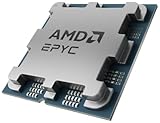
- The processor features Socket AM5 socket for installation on the PCB
- EPYC product line processor for better usability and increased efficiency
- Dodeca-core (12 Core) processor core allows multitasking with great reliability and fast processing speed
- 64 MB of L3 cache memory provides excellent hit rate in short access time enabling improved system performance
- Processor with 3.40 GHz clock speed for reliable and fast execution of instructions to ensure maximum convenience and feasibility
How to read the headline as a buyer or investor
For a buyer, the Q1 2021 statistic is historical context, not a recommendation to choose a particular processor. Compare current server configurations for the exact software and operating requirements, and verify support with the system vendor.
For an investor, keep the denominator and source attached to every market-share figure. A quarterly unit-share estimate for all server CPUs, an AMD-reported revenue-share figure, and a narrower comparison of EPYC with Xeon answer different questions. The 2021 report does not establish AMD’s share in 2026, nor does the company-reported 2025 revenue figure supply an independent current unit-share estimate.
Quick Recap
Product prices and availability are accurate as of the date/time indicated and are subject to change. Any price and availability information displayed on Amazon at the time of purchase will apply.




