Windows Errors? Fix Them Before They Spread
Repair common Windows errors and clear accumulated junk for a smoother, more stable PC - no reinstall needed.Free scan · no reinstallCrashes, No Sound, or Screen Glitches?
Random freezes, missing sound and display glitches usually trace back to one bad driver. Find and replace yours safely.Free scan · under a minuteSpain’s NVIDIA-linked ARM supercomputer was announced as a Barcelona Supercomputing Center development project in 2011—not as a completed national production system. The plan paired NVIDIA Tegra ARM CPUs with CUDA GPUs; BSC later documented ARMv8 prototype work, while its production MareNostrum 5 system uses Intel CPUs and NVIDIA Hopper GPUs.
What did Spain and NVIDIA announce in 2011?
NVIDIA said the Barcelona Supercomputing Center (BSC) was developing a hybrid supercomputer combining low-power Tegra processors based on ARM with NVIDIA CUDA GPUs. NVIDIA described it as the first ARM-based CPU/GPU hybrid supercomputer. That wording describes the announced development effort, not proof that a finished Tegra-based system entered production.
| # | Preview | Product | Price | |
|---|---|---|---|---|
| 1 |

|
NVD RTX PRO 6000 Blackwell Professional Workstation Edition Graphics Card for AI, Design,... | $19,999.99 | Buy on Amazon |
| 2 |
|
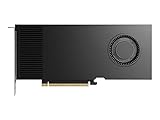
NVIDIA RTX PRO 4000 Blackwell Graphics Card - 24GB GDDR7 ECC Memory, PCIe 5.0 x16, 4X DisplayPort... | $3,102.45 | Buy on Amazon |
| 3 |

|
PNY NVIDIA RTX A6000 | $5,937.14 | Buy on Amazon |
NVIDIA’s November 2011 announcement stated that BSC was developing a system using “energy-efficient, low-power NVIDIA® Tegra™ ARM CPUs, together with high-performance NVIDIA® CUDA® GPUs.” The announcement made the project notable for exploring a low-power CPU architecture alongside GPU acceleration, but it did not establish a deployed nationwide Spanish supercomputer.
Did Barcelona build an ARM supercomputer?
BSC’s subsequent history records an MN4 CTE-ARM prototype cluster built from 64-bit ARMv8 processors. BSC says the purpose was to introduce emerging technologies progressively and test their suitability for future MareNostrum systems. This is institutional evidence of ARM experimentation at the center, but it does not show that the original Tegra design became MareNostrum’s main production system.
#1 Best Overall
- PLEASE NOTE: Exporting an NVIDIA RTX Pro 6000 GPU outside the US requires strict adherence to the U.S. Export Administration Regulations (EAR) and issuance of an export license from the Bureau of Industry and Security (BIS). Compliance and Know Your Customer (KYC) screening may be required as a condition of order acceptance. [NVIDIA Blackwell Streaming Multiprocessor] The new SM features increased processing throughput, and new neural shaders that integrate neural networks inside of programmable shaders | DLSS 4: Multi Frame Generation ensures ultra-smooth frame pacing for lifelike simulations.
- [Double-Flow-Through Design] The RTX PRO 6000 Blackwell features a double-flow-through cooling design, optimizing efficiency and airflow to sustain peak performance under 600W power loads. | [5th Gen Tensor Cores] Deliver up to 3X the performance of the previous generation and support for FP4 precision for faster AI model processing times with reduced memory usage, enabling local fine-tuning of LLMs and generative AI | [4th Gen Ray Tracing Cores] Double the ray-triangle intersection rate of the previous generation to create photoreal, physically accurate scenes and immersive 3D designs with RTX Mega Geometry, which enables up to 100X more ray-traced triangles.
- [PCIe Gen 5] Support for PCIe Gen 5 provides double the bandwidth of PCIe Gen 4, improving data-transfer speeds from CPU memory and unlocking faster performance for data-intensive tasks like AI, data science, and 3D modeling. | [GDDR7 Memory] With 96 GB of GPU memory and 1.8 TB ps bandwidth, it can tackle massive 3D and AI projects, fine-tune AI models locally, explore large-scale VR environments, and drive larger multi-app workflows.
- [DisplayPort 2.1] Achieve unparalleled visual clarity and performance, driving high resolution displays at up to 8K at 240 Hz and 16K at 60 Hz. Increased bandwidth enables seamless multi-monitor setups while HDR and higher color depth support ensures superior color accuracy for precision work, such as video editing, 3D design, and live broadcasting.
- [Universal MIG] Divide a single RTX PRO 6000 Blackwell into multiple isolated instances, each with dedicated resources, allowing for concurrent execution of multiple workloads, optimized GPU utilization, and secure isolation of different applications or users. [WARRANTY] 3 YR Manufacturer's Warranty. Bulk OEM Packaging. Retail Packaging is NOT included.
The distinction matters: the 2011 announcement named Tegra ARM CPUs, while BSC’s later account describes ARMv8 processors in a prototype cluster. They are related stages in an exploration of ARM computing, not evidence that the same Tegra supercomputer was completed and deployed as a production machine.
How does the ARM prototype compare with MareNostrum 5?
| System or project | CPU architecture | Accelerators | Status and purpose | Scale or performance |
|---|---|---|---|---|
| 2011 Tegra project | NVIDIA Tegra ARM CPUs | NVIDIA CUDA GPUs | Development project announced by NVIDIA with BSC; a completed production deployment is not established by the announcement. | Not stated in the announcement. |
| MN4 CTE-ARM prototype | 64-bit ARMv8 processors | Not stated on BSC’s history page. | Prototype cluster for evaluating emerging technology for possible future MareNostrum systems. | Not stated on BSC’s history page. |
| MareNostrum 5 accelerated partition | Intel Sapphire Rapids processors | NVIDIA Hopper GPUs | Production accelerated partition of BSC’s EuroHPC pre-exascale system. | BSC lists 1,120 nodes with four Hopper GPUs each and 230 PFlops peak performance. |
BSC’s MareNostrum 5 technical page identifies its accelerated partition as Intel Sapphire Rapids-based with NVIDIA Hopper GPUs. That is the relevant production comparison: ARM was tested in prototype work, whereas the listed accelerated partition combines Intel CPUs and NVIDIA GPUs.
Rank #2
- Professional GPU with Blackwell Architecture
- Blackwell Architecture
- 24GB GDDR7 with PCIe 5.0 & Ray Tracing
- AI Workstation
What is Spain’s current NVIDIA supercomputer project?
The newer project is an AI-focused expansion of MareNostrum 5 for the Barcelona AI Factory, not a revival of the 2011 Tegra plan. The EU’s Barcelona AI Factory description says the facility is built around MareNostrum 5 and adds AI architectures and services, including support for large-language-model training and inference.
In January 2026, Spain’s Ministry of Science said the MareNostrum 5 expansion for the BSC AI Factory was scheduled for installation in the first half of 2026. Its notice names Supermicro for hardware, IBM for storage and software, VAST for storage, and NVIDIA for hardware and software. The schedule is a stated installation plan; the notice alone does not confirm that installation was completed.
Rank #3
- NVIDIA Ampere Architecture-based CUDA Cores - Double-speed processing for single-precision floating point (FP32) operations and improved power efficiency provide significant performance improvements for graphics and simulation workflows, such as complex 3D computer-aided design (CAD) and computer-aided engineering (CAE), on the desktop.
- Second-Generation RT Cores - With up to 2X the throughput over the previous generation and the ability to concurrently run ray tracing with either shading or denoising capabilities, second-generation RT Cores deliver massive speedups for workloads like photorealistic rendering of movie content, architectural design evaluations, and virtual prototyping of product designs. This technology also speeds up the rendering of ray-traced motion blur for faster results with greater visual accuracy.
- Third-Generation Tensor Cores - New Tensor Float 32 (TF32) precision provides up to 5X the training throughput over the previous generation to accelerate AI and data science model training without requiring any code changes. Hardware support for structural sparsity doubles the throughput for inferencing. Tensor Cores also bring AI to graphics with capabilities like DLSS, AI denoising, and enhanced editing for select applications.
- Third-Generation NVIDIA NVLink - Increased GPU-to-GPU interconnect bandwidth provides a single scalable memory to accelerate graphics and compute workloads and tackle larger datasets.
- 48 Gigabytes (GB) of GPU Memory - Ultra-fast GDDR6 memory, scalable up to 96 GB with NVLink, gives data scientists, engineers, and creative professionals the large memory necessary to work with massive datasets and workloads like data science and simulation.
NVIDIA’s June 2026 European announcement lists BSC’s MareNostrum 5 AI upgrade among 35 NVIDIA AI supercomputers in development across Europe. This supports NVIDIA’s continuing role in Spain’s AI infrastructure, but the project’s architecture and purpose are distinct from the historical ARM prototype.
Why the distinction matters
The story is a progression from an announced low-power ARM-and-GPU concept, to ARMv8 prototype testing, to a production system with a different CPU architecture, and then to an AI-oriented expansion. Treating these as one machine would blur both the technical changes and the status of each project.
Quick Recap
- 2011: NVIDIA and BSC announced development of a Tegra ARM CPU and CUDA GPU hybrid.
- Later prototype work: BSC documented an ARMv8 cluster for technology evaluation.
- MareNostrum 5: Its accelerated production partition uses Intel Sapphire Rapids CPUs and NVIDIA Hopper GPUs.
- AI Factory expansion: The 2026 plan adds AI capacity and services around MareNostrum 5, with NVIDIA among several named suppliers.
Product prices and availability are accurate as of the date/time indicated and are subject to change. Any price and availability information displayed on Amazon at the time of purchase will apply.




